 |
 |
 |
 |
 |
 |
 |
 |
 |
 |
 |
 |
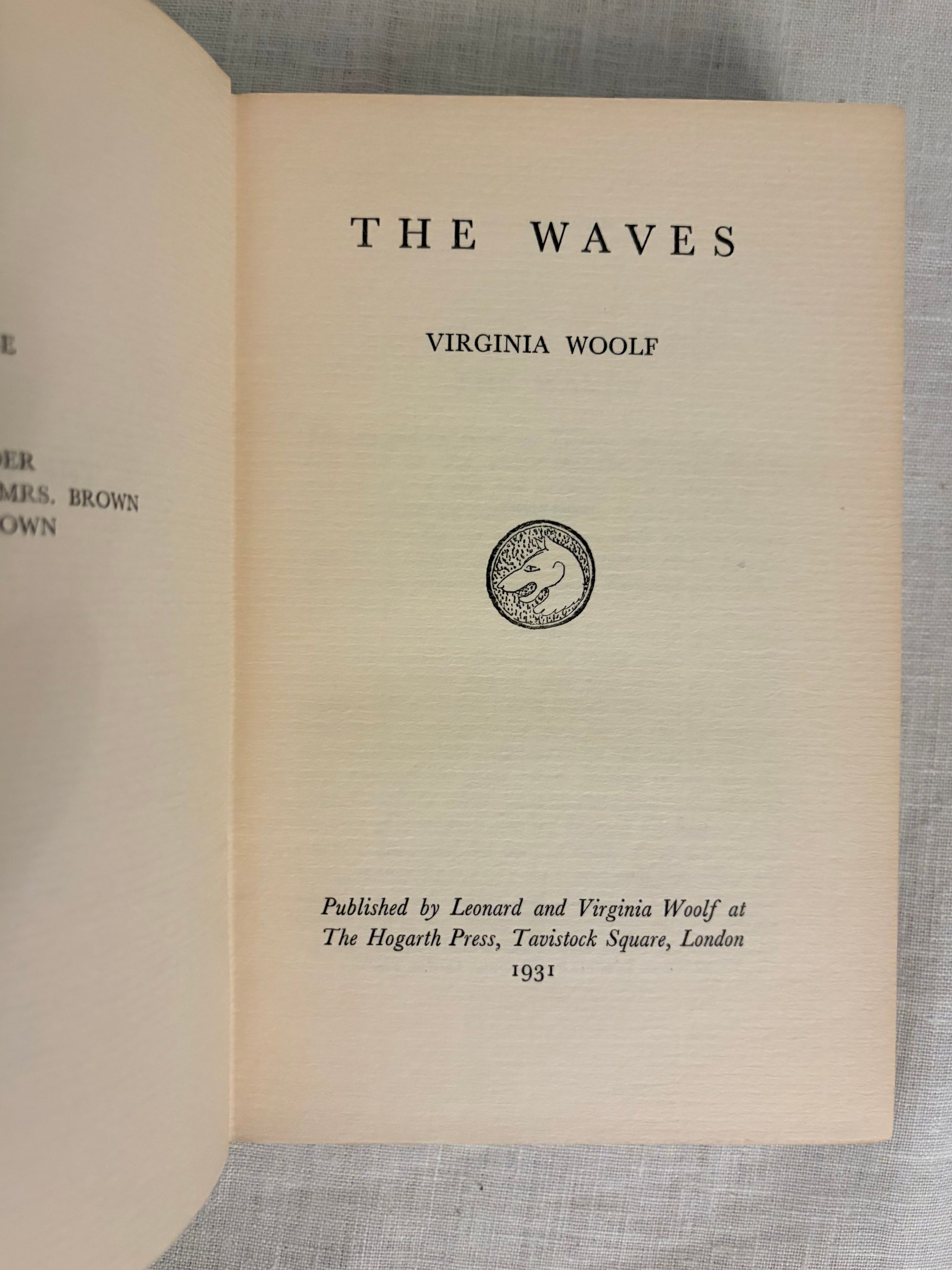


The Waves
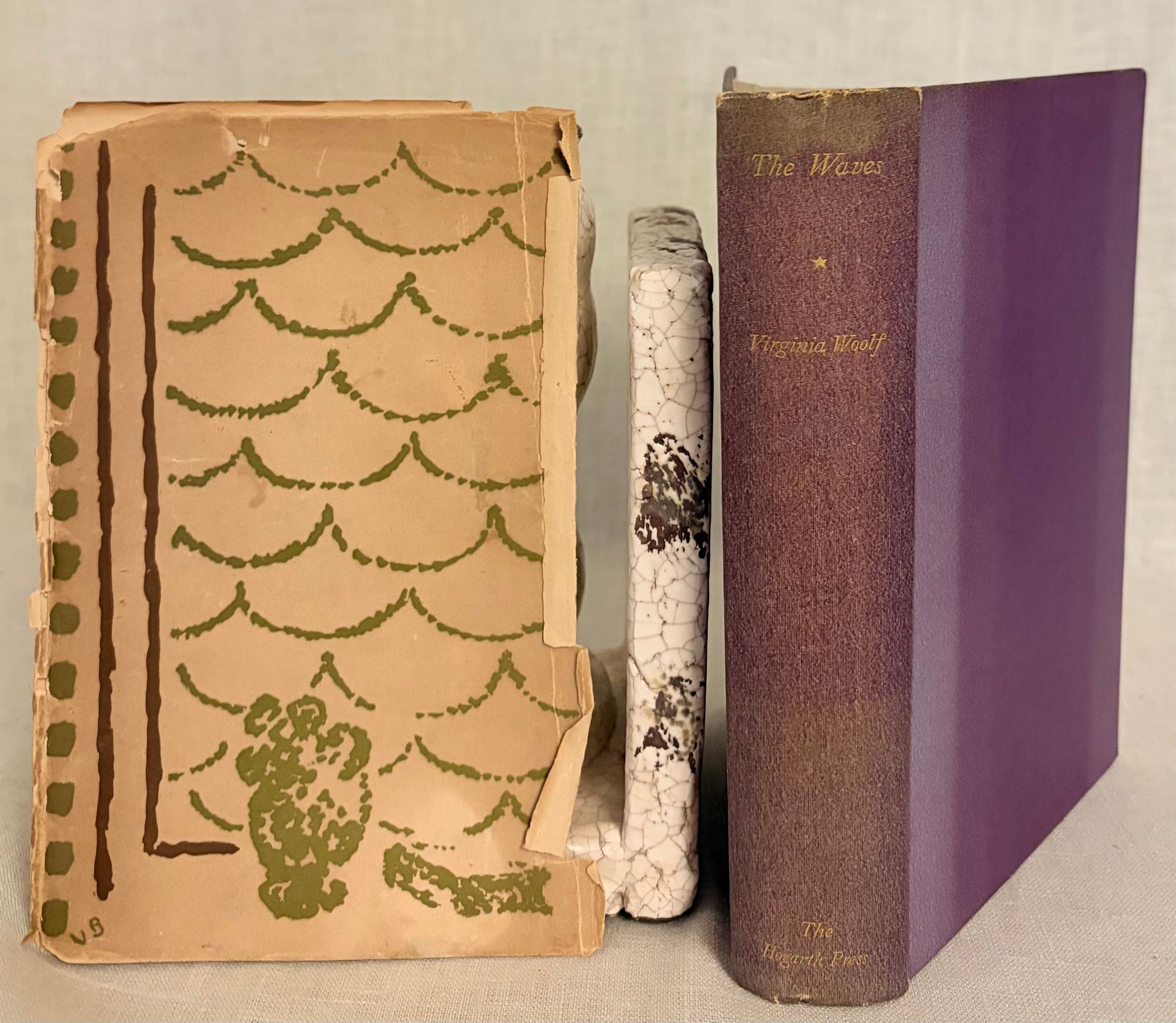
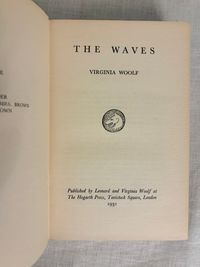
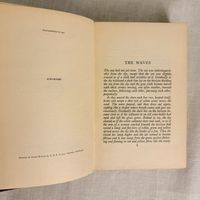
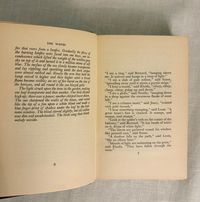
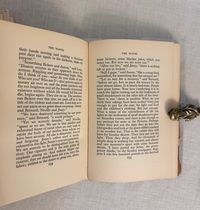
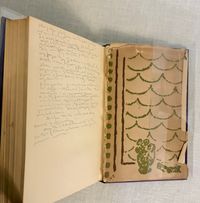
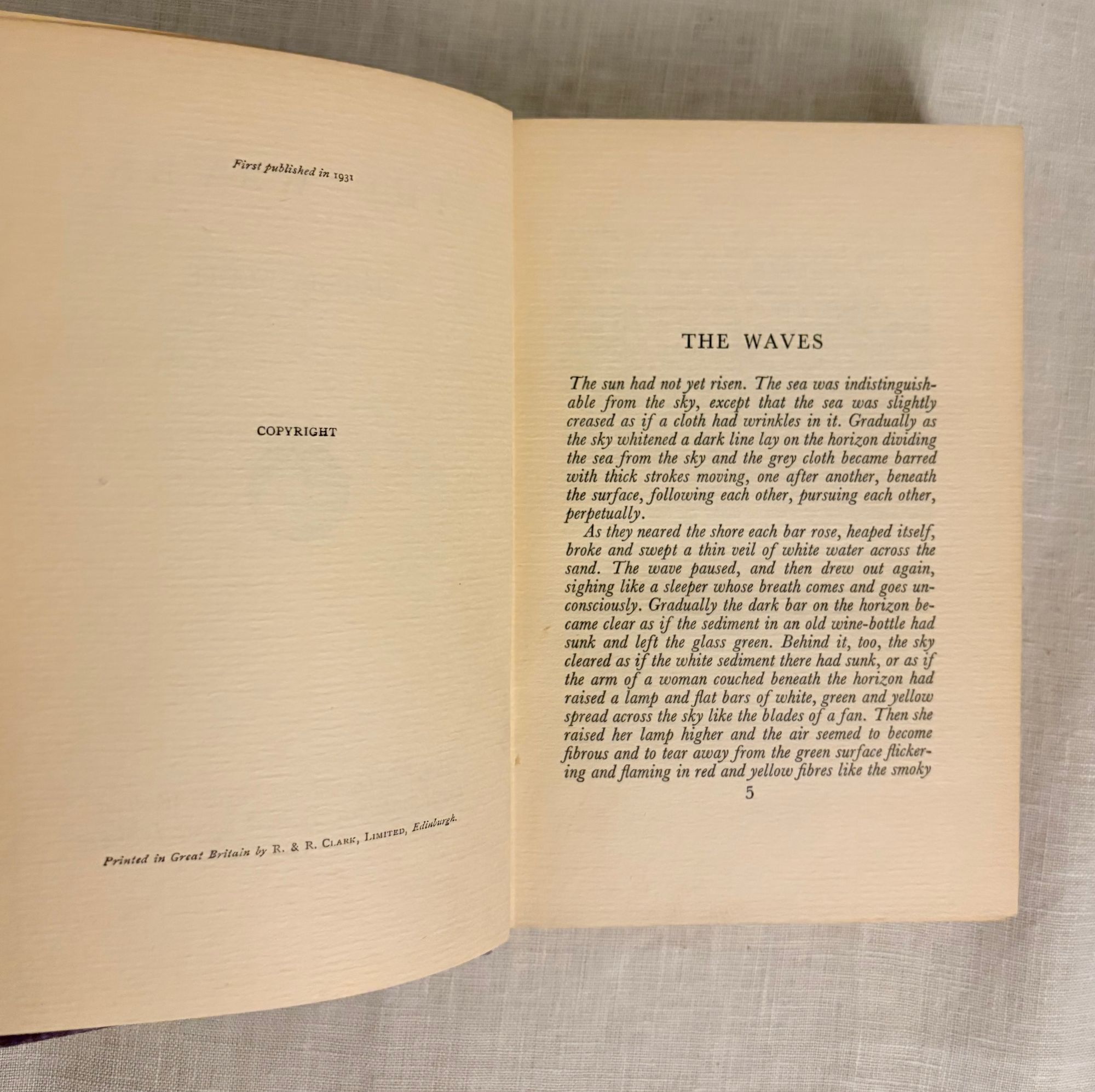
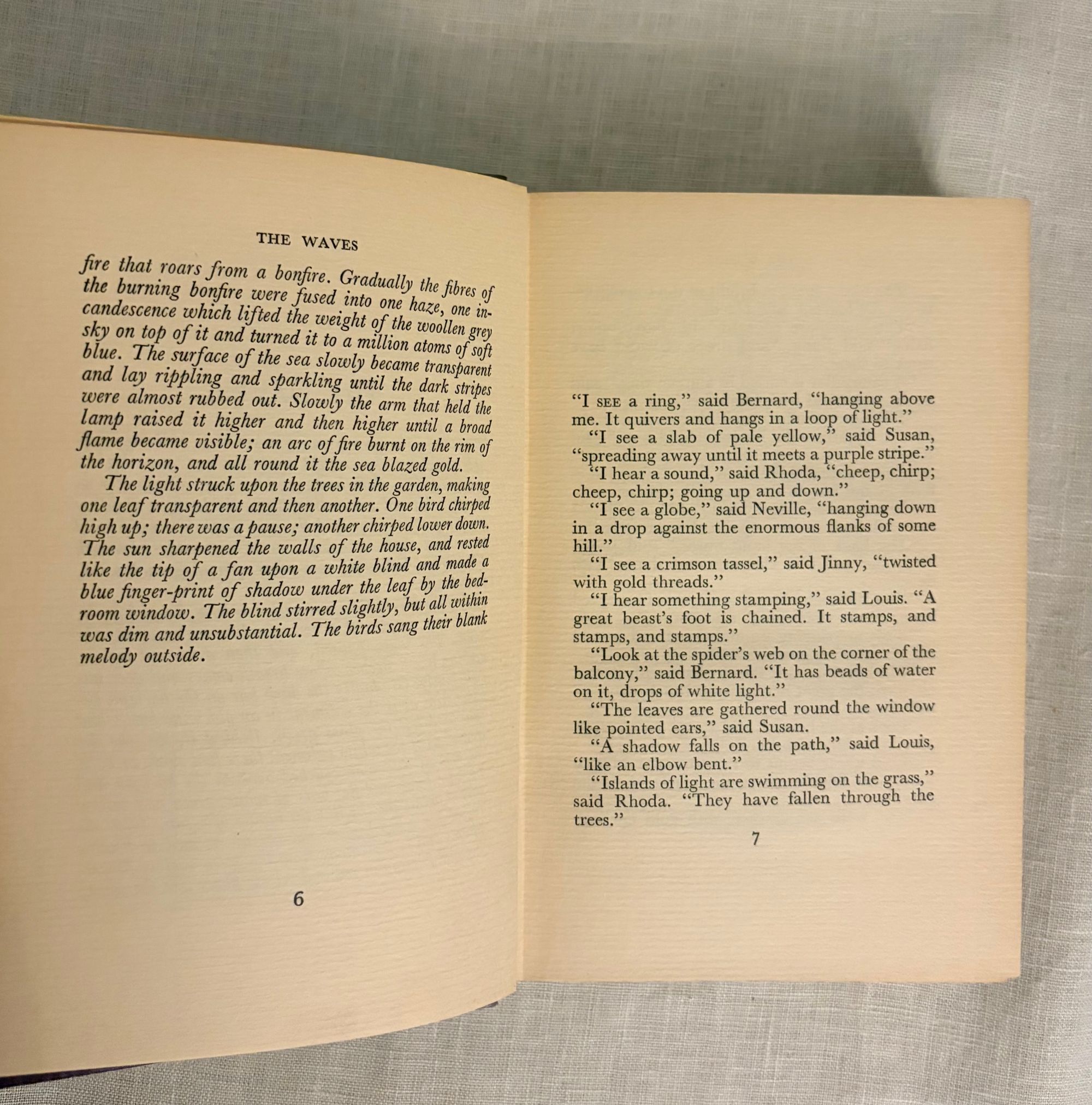
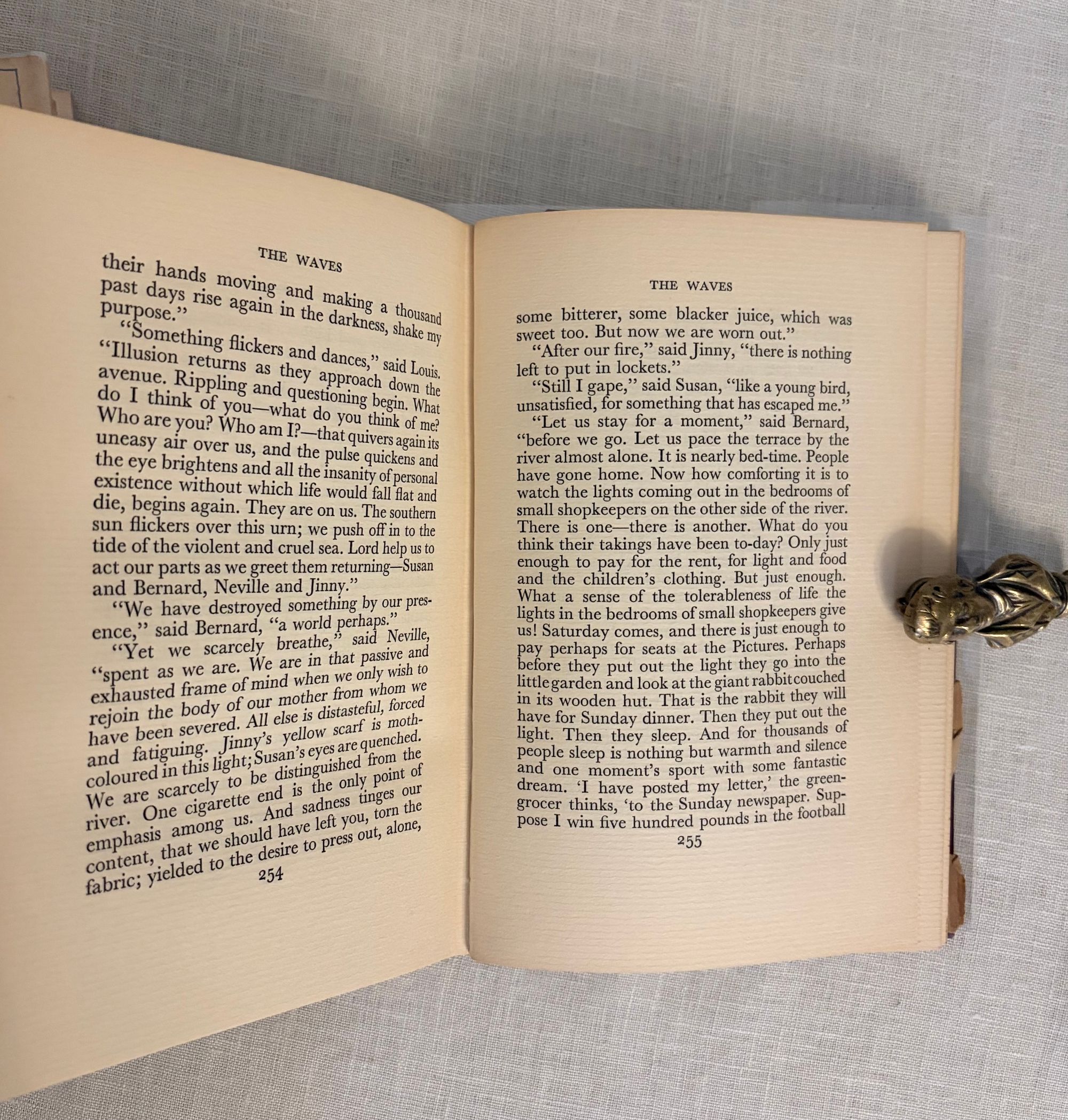
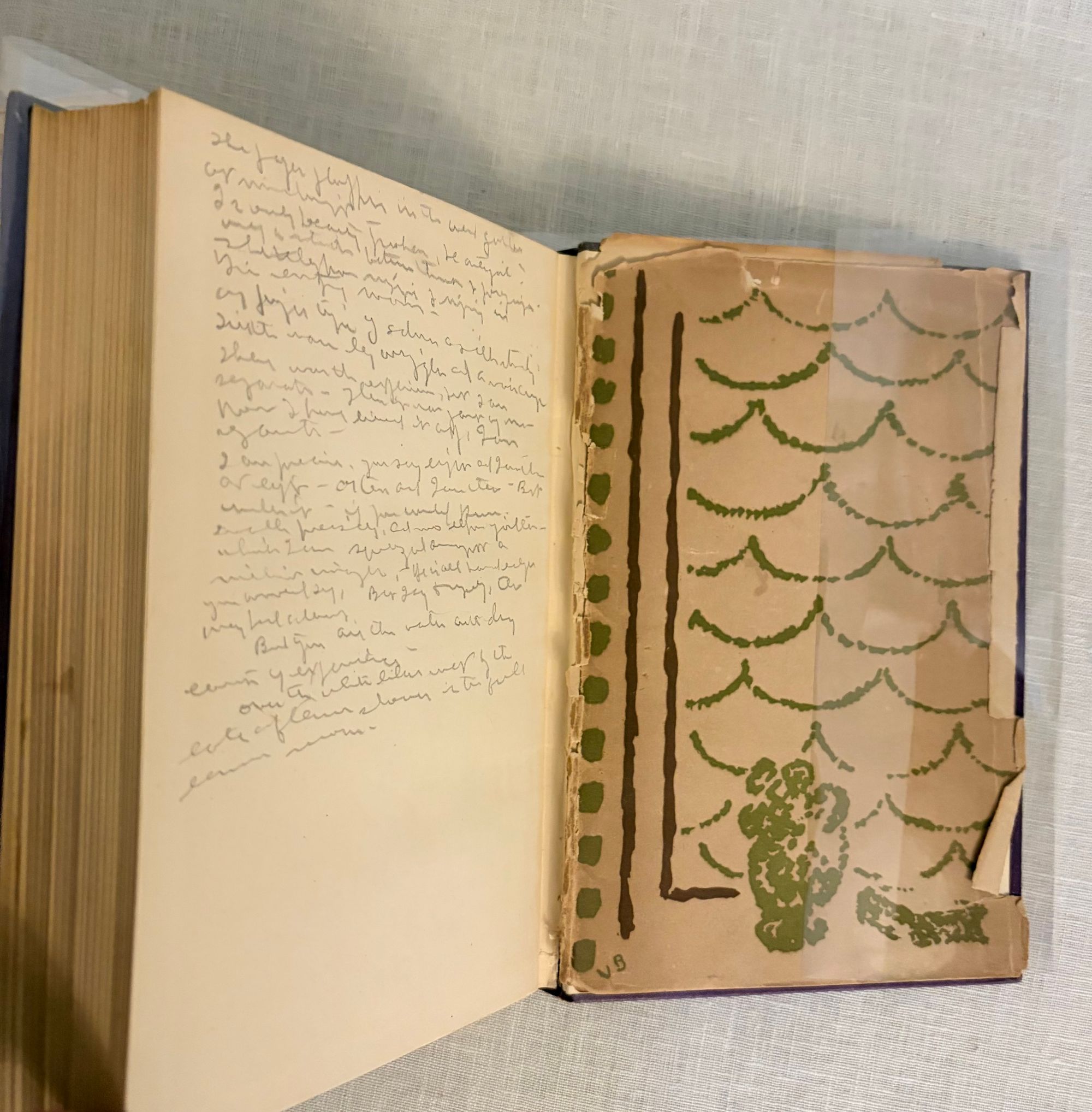
Published by Hogarth Press Ltd., London, 1931. Copyright edition. First EditionHard cover 8vo, in the original purple cloth with titles in silver to the spine. Fragment of the original dust jacket consists of the rear face and its flap only, with the cover artist's initials, V.B. (Vanessa Bell, sister of Virginia Woolf.)[2], 324 [325] [5]pp. Printed by R.and R. Clark, Edinburgh. "Copyright" to copyright page, dated 1931.**CONDITION: Very Good. Book is sunned to outer edges of front board and spine, which has a small (1/4 inch or smaller) split to cloth at foot, and minor crimping at head. Rear inner hinge with half inch crack near foot. An intriguing yet impenetrable annotation to the rear fly leaf in pencil appears to be a poem perhaps, or a reader reflection of a feminist nature. Remnants of a quarter-sized water stain to the rear board is mirrored on the inner face of the jacket fragment. Now in a mylar protector. A few light spots of soiling to text block edges. Jacket is Poor condition, as noted above.**This highly acclaimed experimental novel of Bloomsbury Author VIRGINIA WOOLF (1882-1941) was self-published by The Hogarth Press from their house at London's 52 Tavistock Square. Woolf's bookish enthusiasms had, at different times, spanned the gamut of writing, letterpress printing, and even, with Vanessa, a stint at bookbinding as a young woman, ( M. Tidcombe, p. 165) although this later work was commercially printed. **The story, told in a series of shifting inner monologues, follows the fortunes of a group of life-long friends, three men and three women and is said to have semi-autobiographical similarities to various of the Bloomsury set. One of their group, Percival, (the seventh character) inspires a mid-life meetup for a dinner in London before his departure for India. From boarding school, or summer holidays, from a Alpine finishing school, to punting Oxbridge collegians, or at the commercial clerk's office, ballrooms, eating-houses and finer restaurants of London, Edinburgh, or amongst the farmlands of the fens, all scenes invoke the author's plea for her characters' better self-understanding of their biases, class and sexuality hangups, and artistic potential. The novel stream of consciousness style made this an important work of modernist fiction. REF: See Marian Tidcombe, "Women Bookbinders 1880-1920" (1996) on Virginia and Vanessa Stephens' bookbinding training at the London workshop of Sylvia Stebbing and Anastasia Power circa 1902. Watson 473. (AMJ)
Ref: FICT20 9881
$595.00