 |
 |
 |
 |
 |
 |
 |
 |
 |
 |
 |
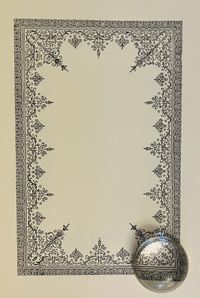 |
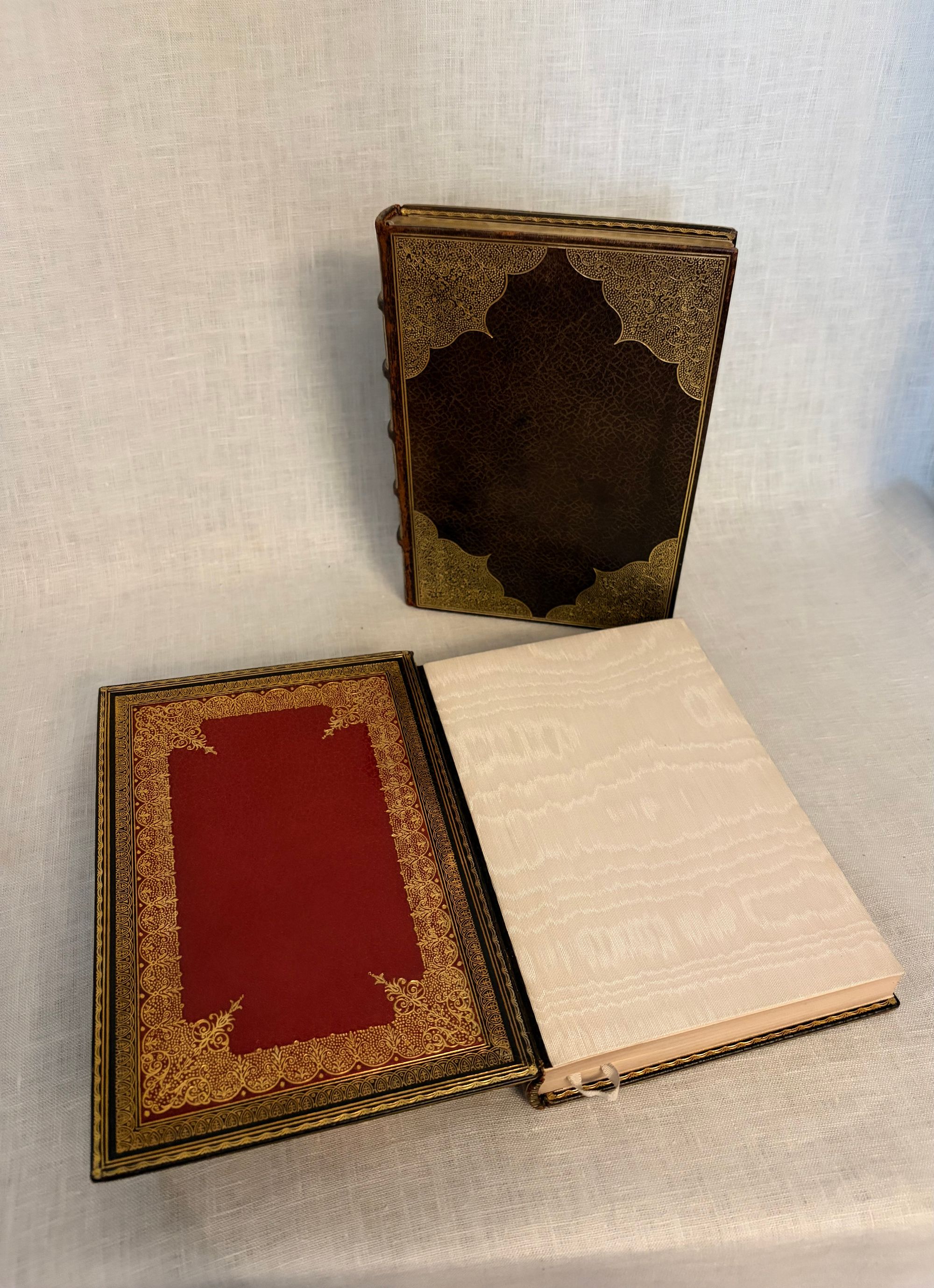
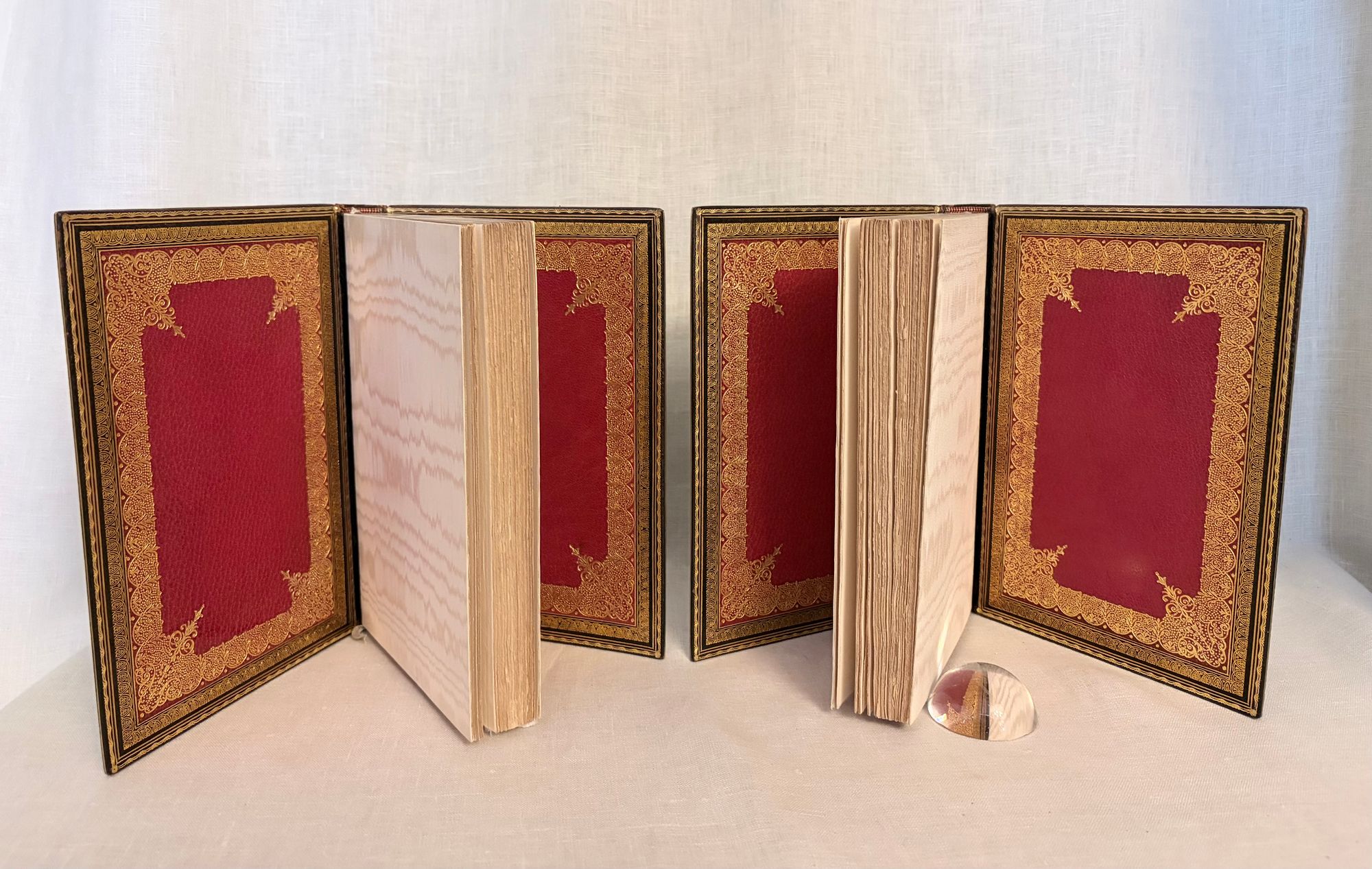
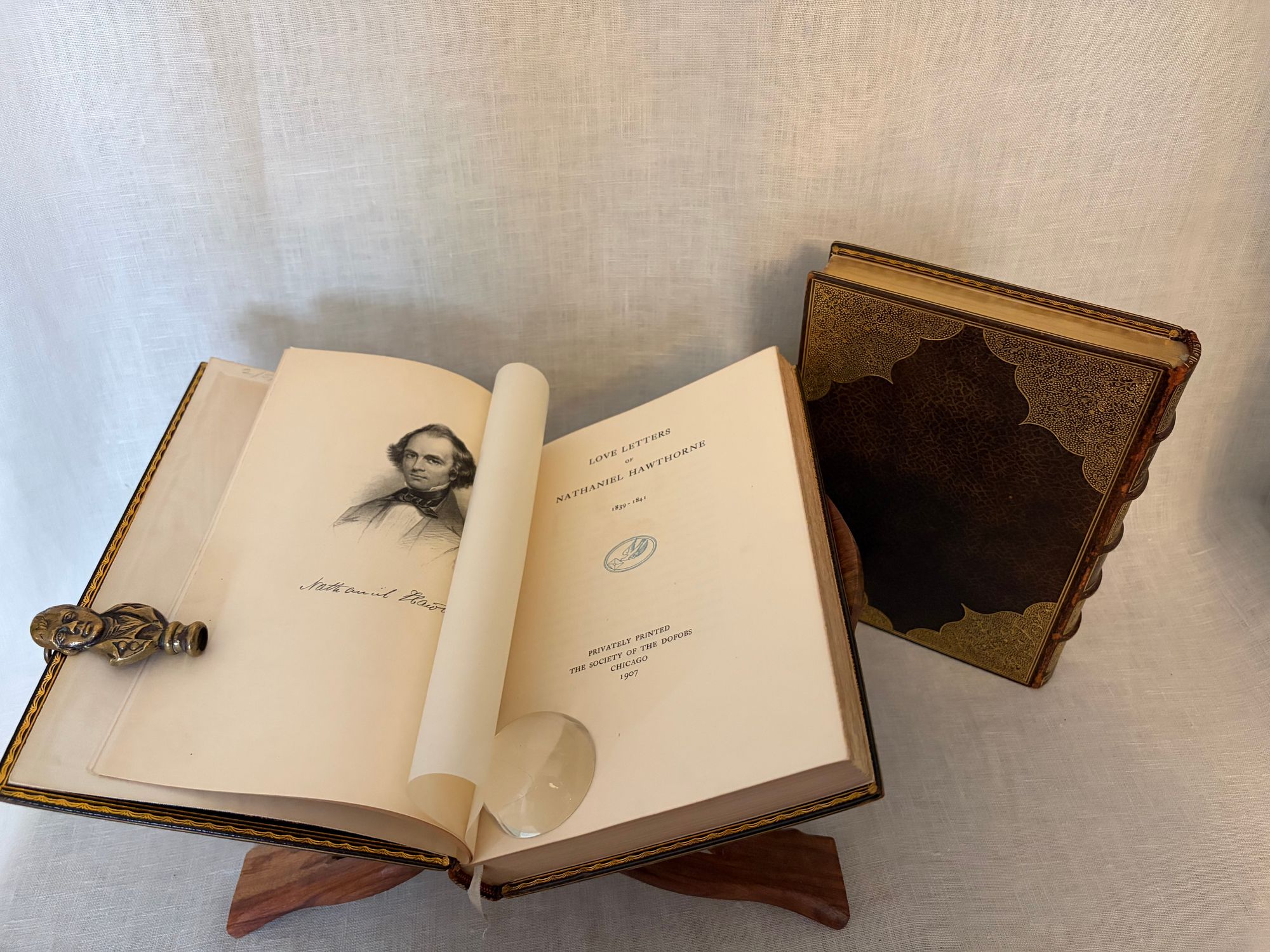
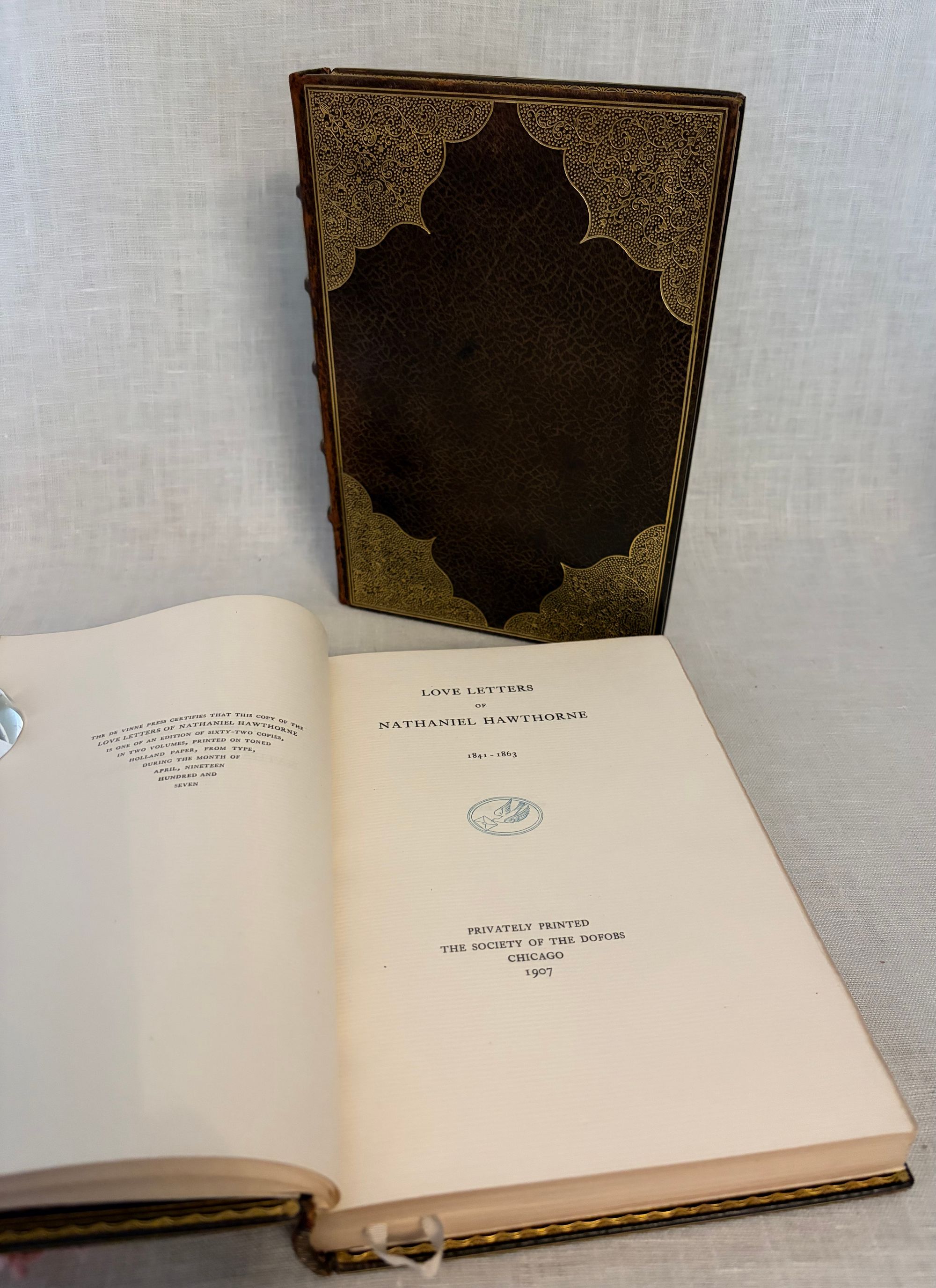
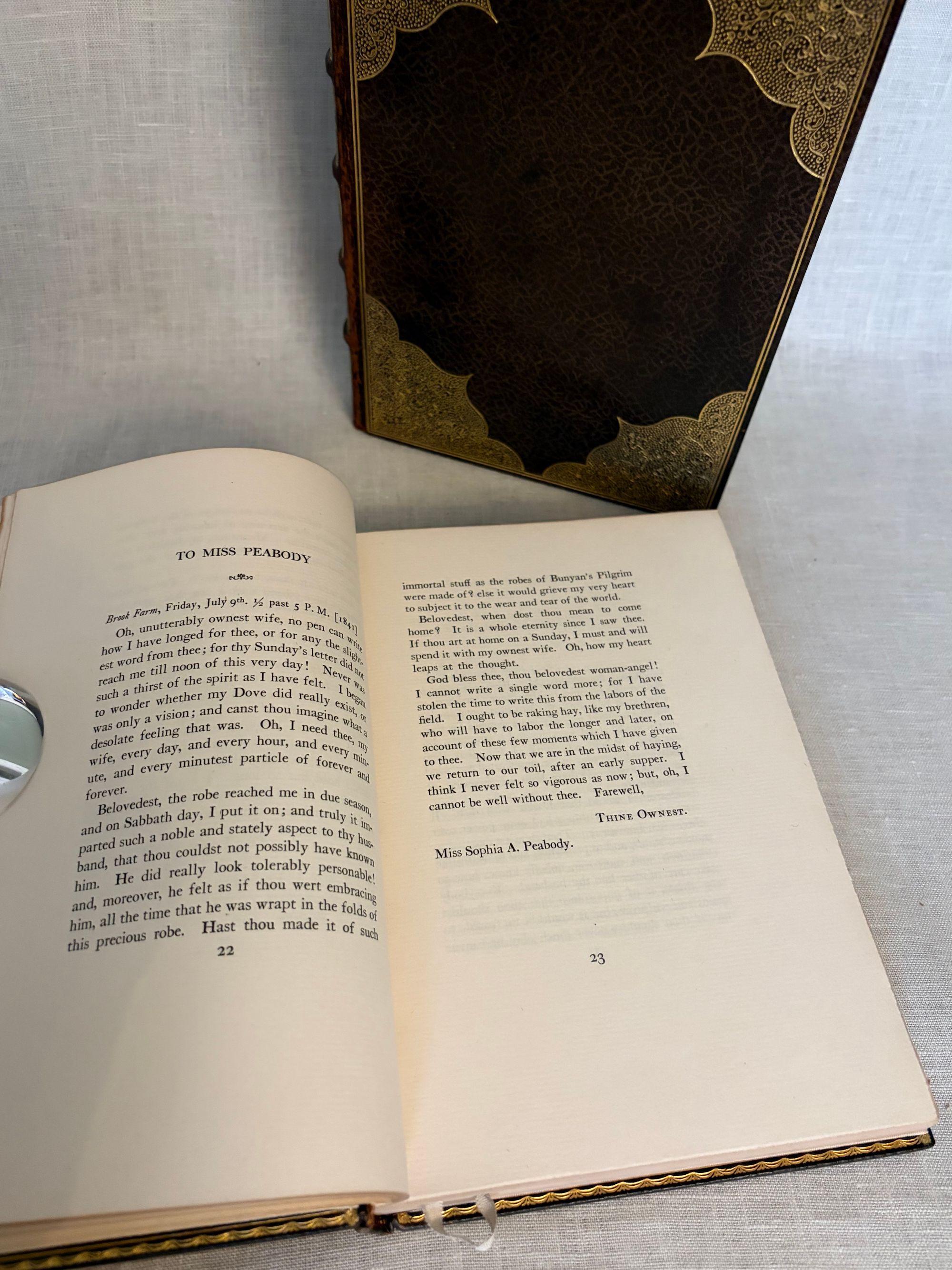
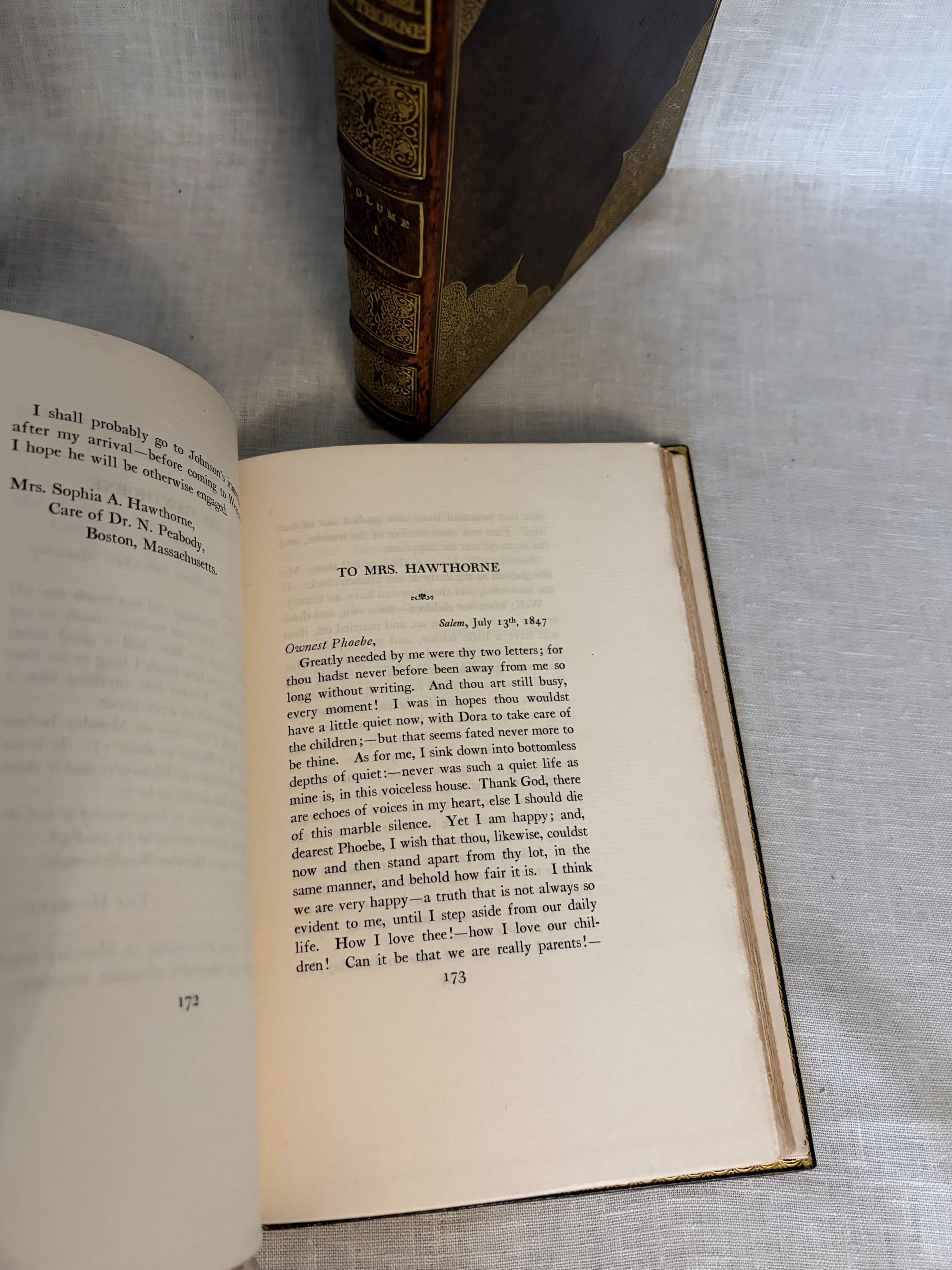
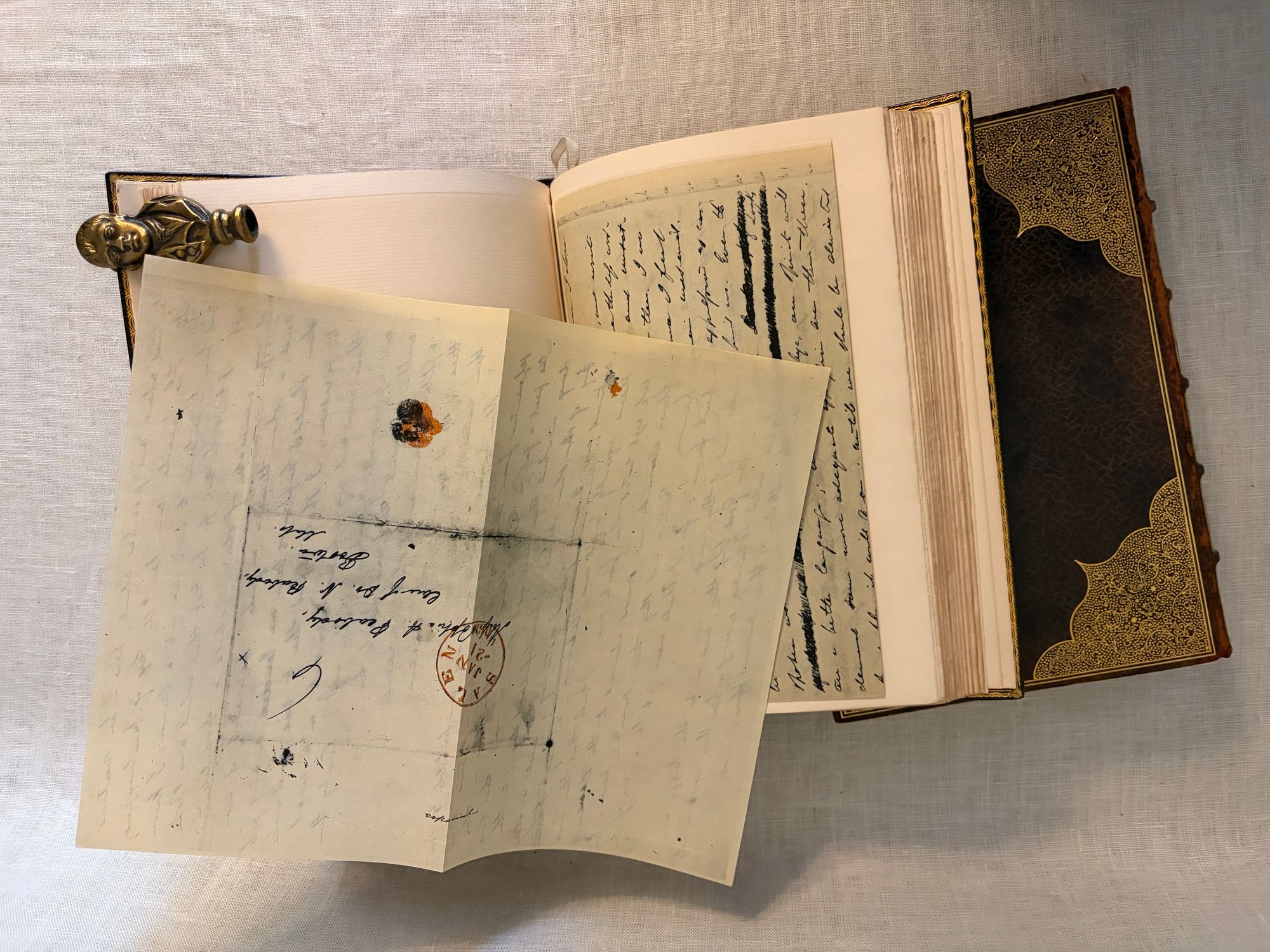
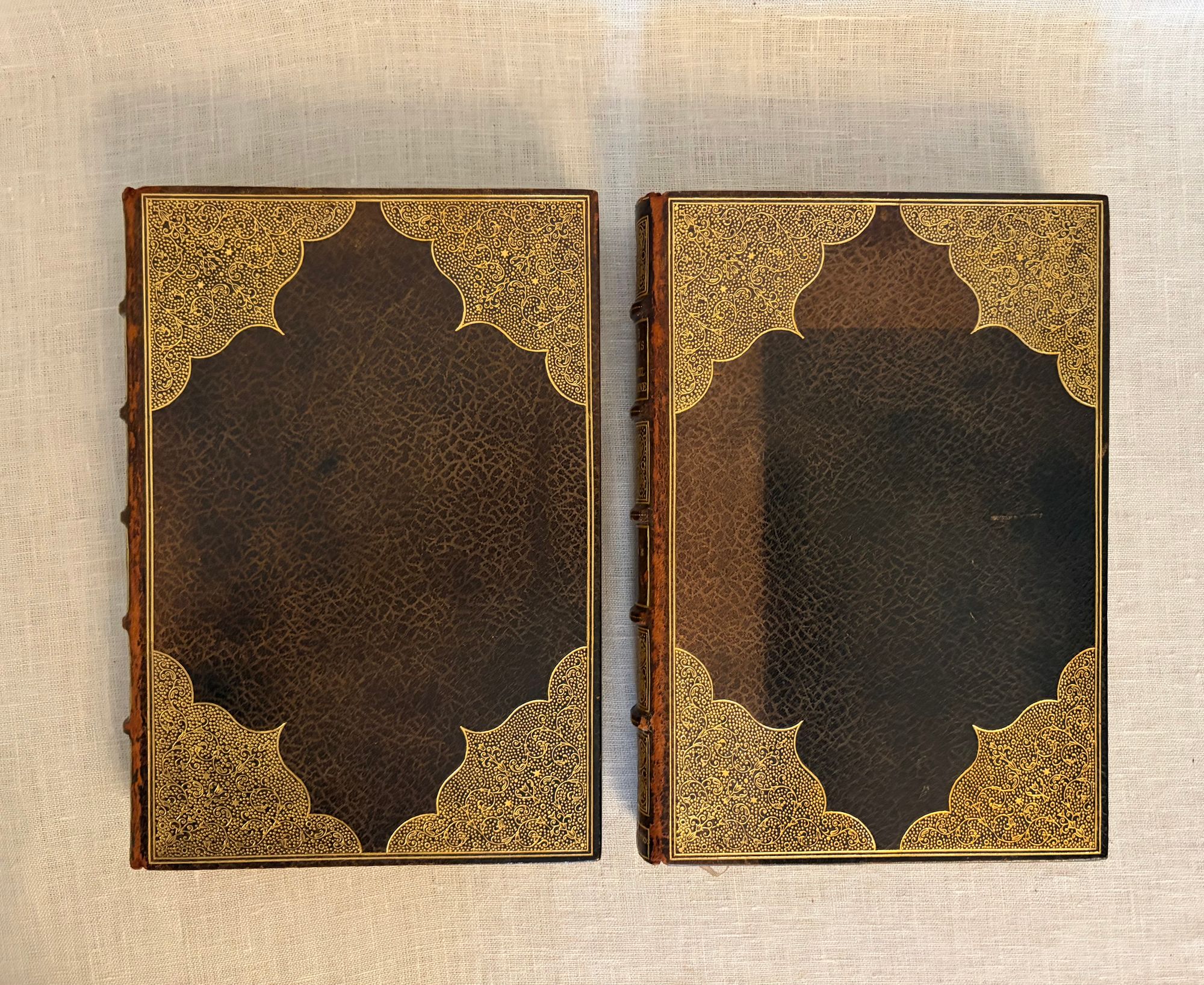
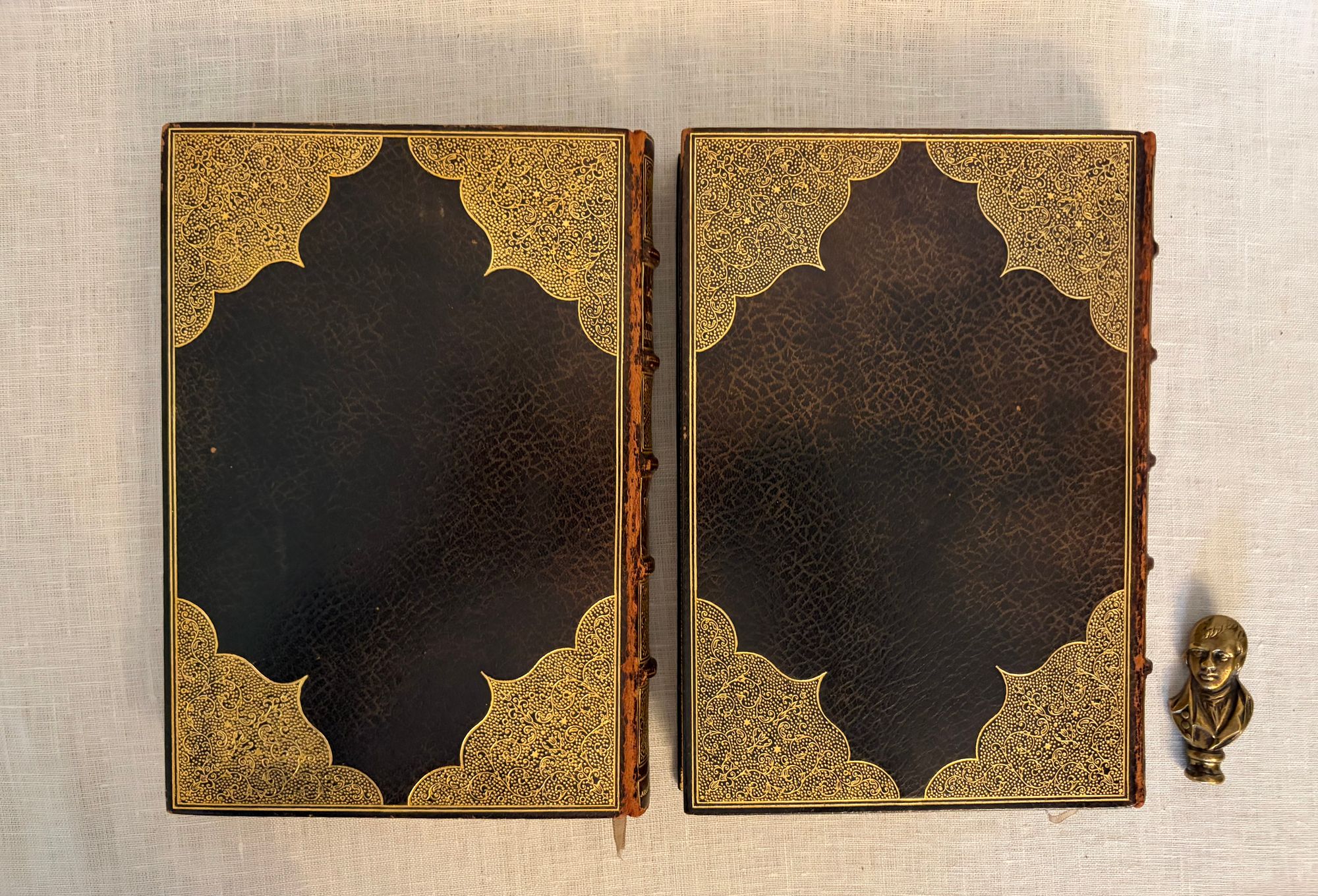
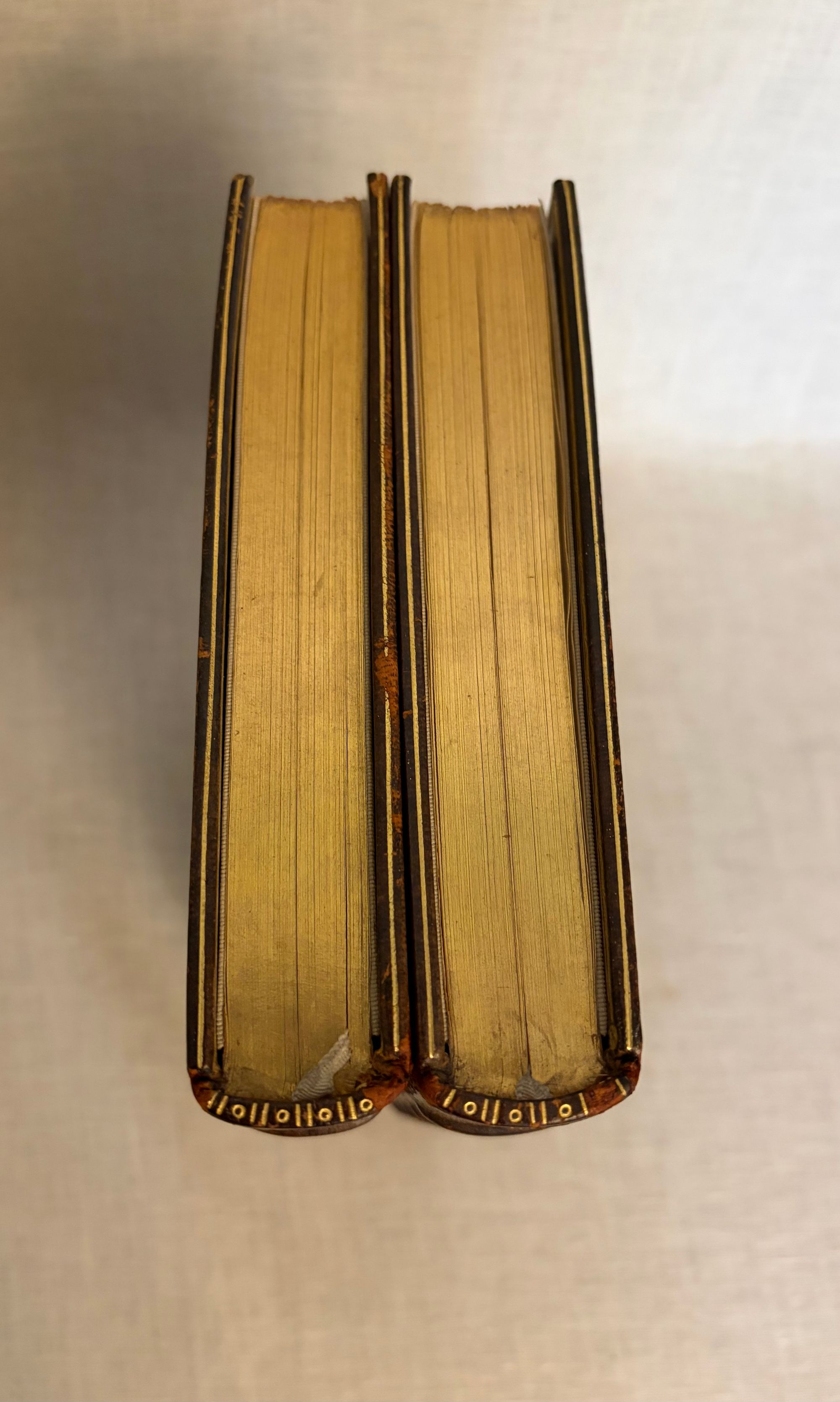
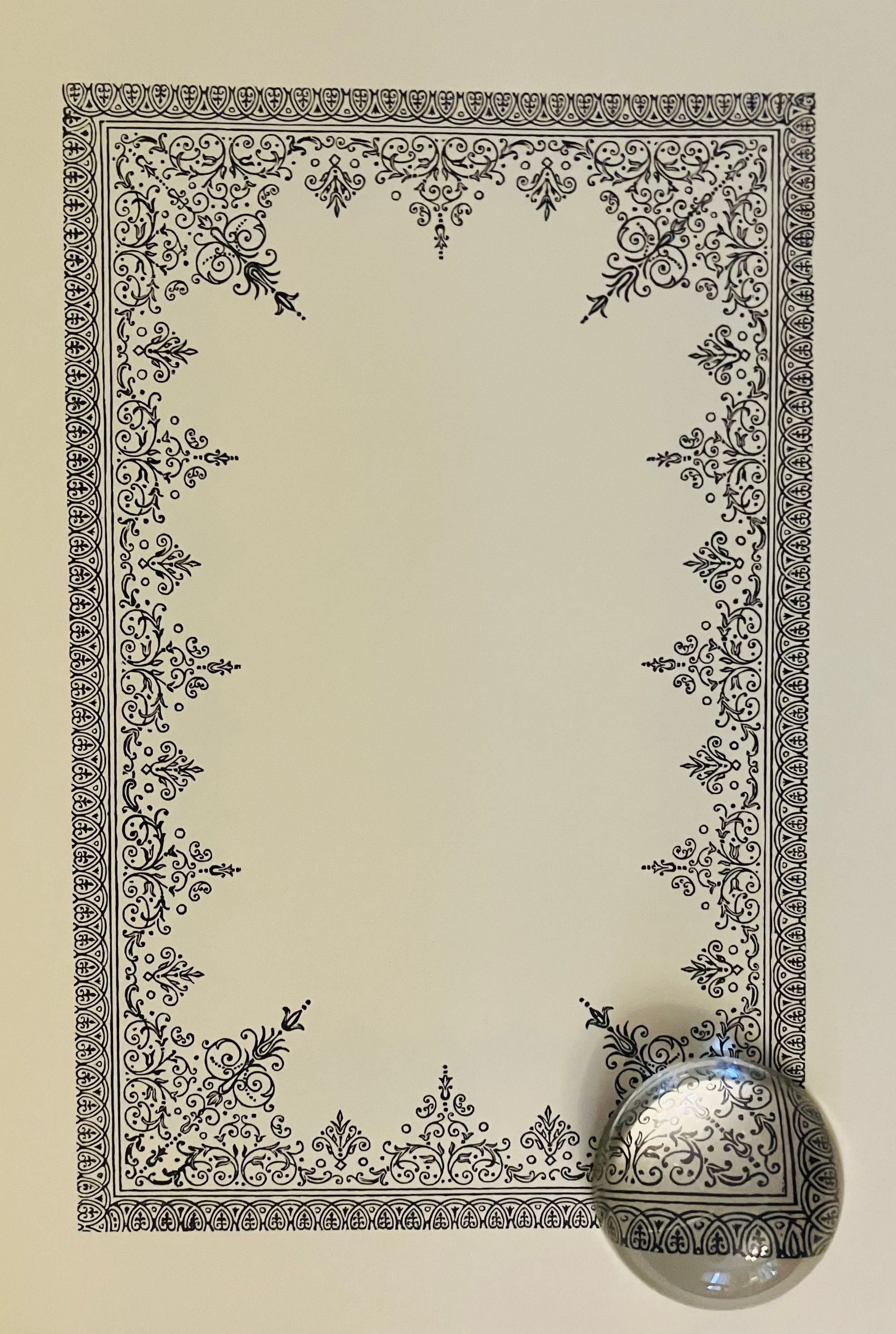
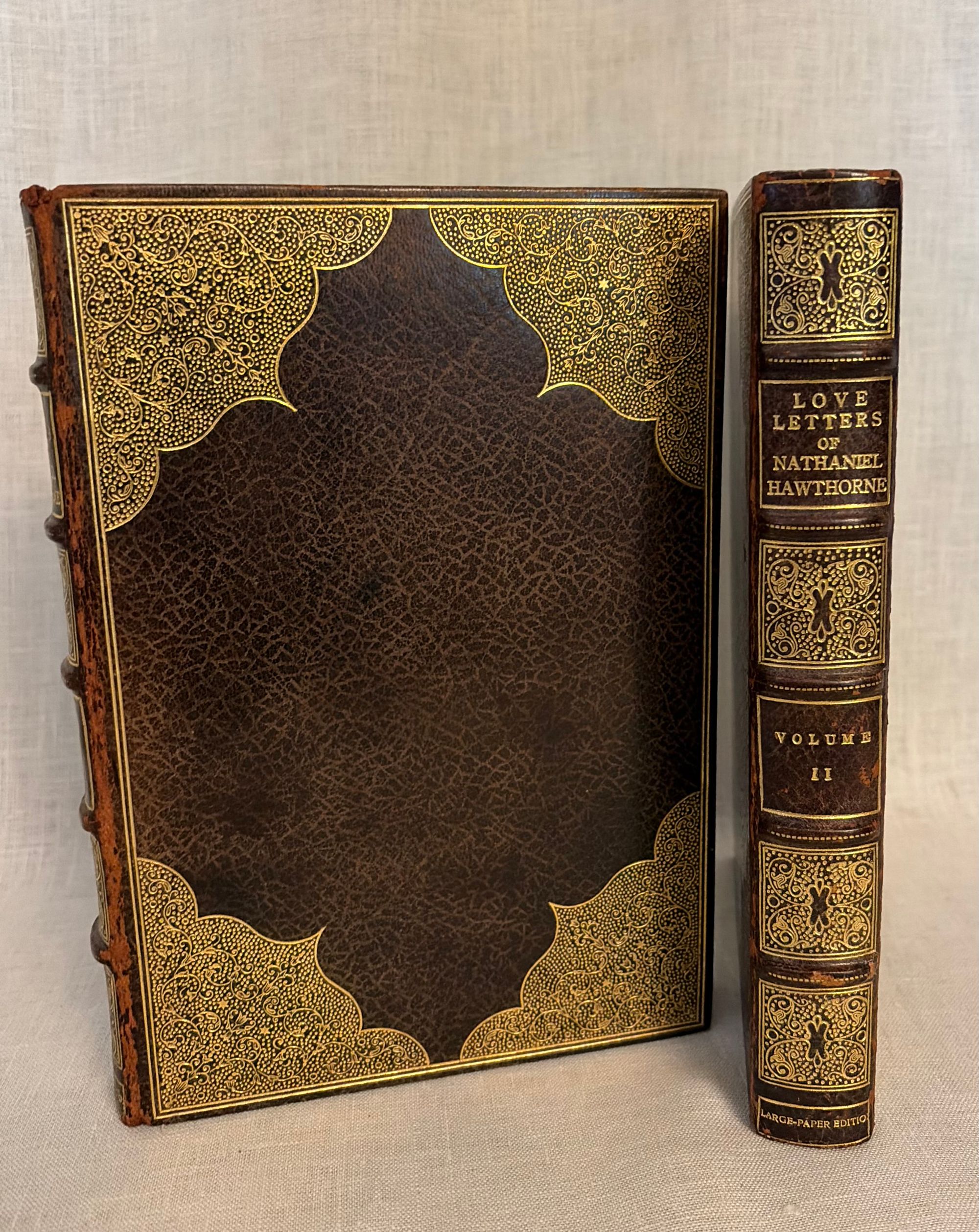
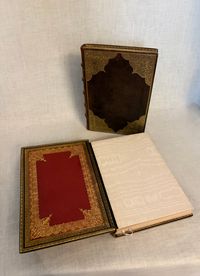
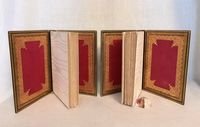
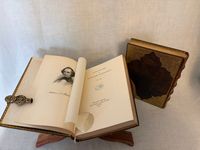
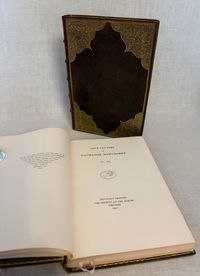
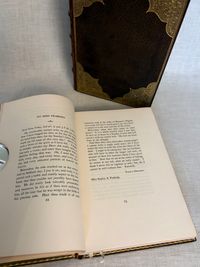
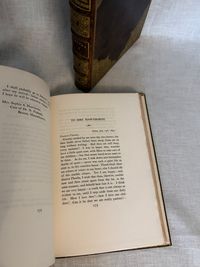
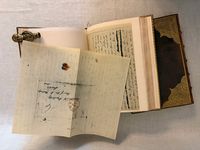
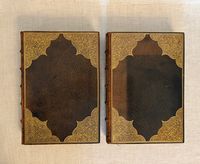
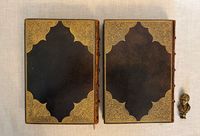
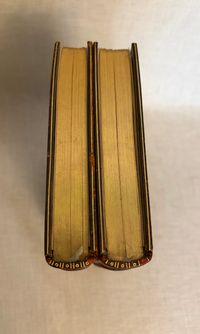
Hard cover 8vo, complete in two volumes, First Edition, limited to 62 copies. Unsigned, but finely bound by Boston's Harcourt Bindery in full crushed morocco, with a combination embossed and hand tooling, including two beautiful, elaborately designed die embossed red morocco doublures with gilt decoration. (Last photo is of the die used on the doublure. S. Ellenport. No. 8.) Doublures are faced with cream watered silk endpapers. Outer boards feature moorish-inspired gothic design elements with hand tooled ogee-shaped arches, the arabesques filled with an arrangement of die stamped twining gilt stems, small tulips, open circles, and two stars symmetrically at corners, within a field of stippled dots, or pointillé. All this is imitative of the work of France's " MM binder," who used a similar arrangement of star shapes at the corners in his much admired and visually complex Restoration bookbindings circa the mid-16th century. (cf. MS 1546 Bibliothéque Mazarine, at L.A. Miller, Virtual Bookbindingsdotorg). The distinctive fenestration seen at Boston's Isabella Stewart Gardner Museum's courtyard may be another possible source of design inspiration for the outer case of this Boston-based book binding, as also similarly depicted in Ruskin's "The Stones of Venice" of the 1850's. (See the fifth photo in our number 9457). The spine has five raised bands, rolled with gilt dashes, enclosing double-ruled compartments decorated with squares of similar hand tooling and featuring a distinctive concentric central motif of joined ogee curves and tear shapes, somewhat resembling butterflies. Titles to the second and fourth compartments with "Large Paper Edition" edition at foot. Board edges are ruled, top edge gilt, and end caps tooled in Harcourt Bindery-identified configuration of lines and open circles. Letterpress printed by the DeVinne Press on toned Holland paper. Tissue-guarded frontispiece portrait of Hawthorne precedes title page Vol. I, the latter printed in blue and black inks. Printed recto only. 2 facsimile letter MS included, with the famous April 13, 1841 "Brook Farm letter" memorably invoking Miss Margaret Fuller's "Transcendental heifer." Pagination: [4], xi, [1], 248, (249), [7]. VOL. II: [6], [iv], 285pp. (286,) [5]. **CONDITION: Very Good Plus. Hinges are in order. Sunning affects Vol. II front board, also with one inch long scuff. Flaking at joints has now been treated with an appropriate archival solution; details on request and photos are updated. Light shelf wear spine head and foot, and at tips. Otherwise, clean and square. Collector's bookplate to fly.***This touching, timeless collection of love letters between the "House of Seven Gables" novelist, Salem, Mass. resident, NATHANIEL HAWTHORNE, (1804-1864) and his near neighbor, the Boston-born artist, illustrator and author, SOPHIA PEABODY, extends from the headiest days of early betrothal of 1839 through to the 1860's. Hawthorne's letters depict spiritual, intellectual and physical longing in the face of involuntary separation. A number of their Transcendentalist friends are mentioned: Ralph Waldo Emerson, Miss Margaret Fuller and others. Faced with a lack of funds, Hawthorne writes a number of these early notes from the Customs-House at Boston where he is unhappily employed as a surveyor, prior to literary fame. Sophia's ill health is alluded to, as is the art she shares with her future husband. They would eventually wed in sister Elizabeth Peabody's bookstore. The Peabody sisters: Elizabeth, Mary and Sophia, were all notable progressive Bostonian women. **DOFOB-in-chief and copyright holder, WILLIAM K. BIXBY, (1857-1931) was the source of this collection. A self-made, St. Louis millionaire-philanthropist, Bixby manufactured railway cars with American Car and Foundry Company, despite having only a high school education, retiring in 1905 to collect and curate a massive collection of Hawthorneiana, American history ephemera, art and other other rare books and manuscripts. (Dict. of Missouri Biography,1995). The Hawthorne materials were exhibited at New York's Grolier Club in December, 1904, and later traveled to California's Huntington Library. (R. Stewart, "Letters to Sophia," Huntington Libr. Quarterly, Aug. 1944, Vol. 7, No. 4). ***The DOFOBS (usually parsed as "Damned Old Fools On Books") were a group of Midwest bibliophiles primarily from the Chicago area. A foundational essay, "Deliberations of A DOFOB," by Adrian H. Joline, appears at Project Gutenberg in a collection of bookish essays, " At the Library Table," (1909). A brief excerpt: "In the neighboring city of Chicago they have a club which boasts the name of "The Dofobs". It is not a pretty name, but it means much to the members. Every two or three years it produces a Year Book and it has printed "The Love Letters of Nathaniel Hawthorne", a copy of which now and then appears at the auction block and is sold for a fabulous price. Aside from such occasional diversions, these people indulge in pure Dofobery... It signifies a peculiar relation towards books and bookish things; not a mania for books, but a comfortable enjoyment of them; not a craving for them solely because they happen to be old, or rare, or famous, but a delight in them and in the associations which cluster about them, in talking about them, in scribbling about them." (Proj.Gutenberg)** REFS: "Catalogue of the Works of the Devine Press..." (New York, Grolier Club, 1929,) No. 196, p. 81. Sketch of the doublure die used on this book, taken from Samuel B. Ellenport, "An Essay on the Development & Usage of Brass Plate Dies Including a Catalogue Raisonné ...of the Harcourt Bindery," (Boston, Harcourt Bindery, 1980). No. 8. **An exceedingly scarce first edition, with no sales of this title seen since 1964. (AMJ).
Ref: FINE 9856
$3200.00