 |
 |
 |
 |
 |
 |
 |
 |
 |
 |
 |
 |
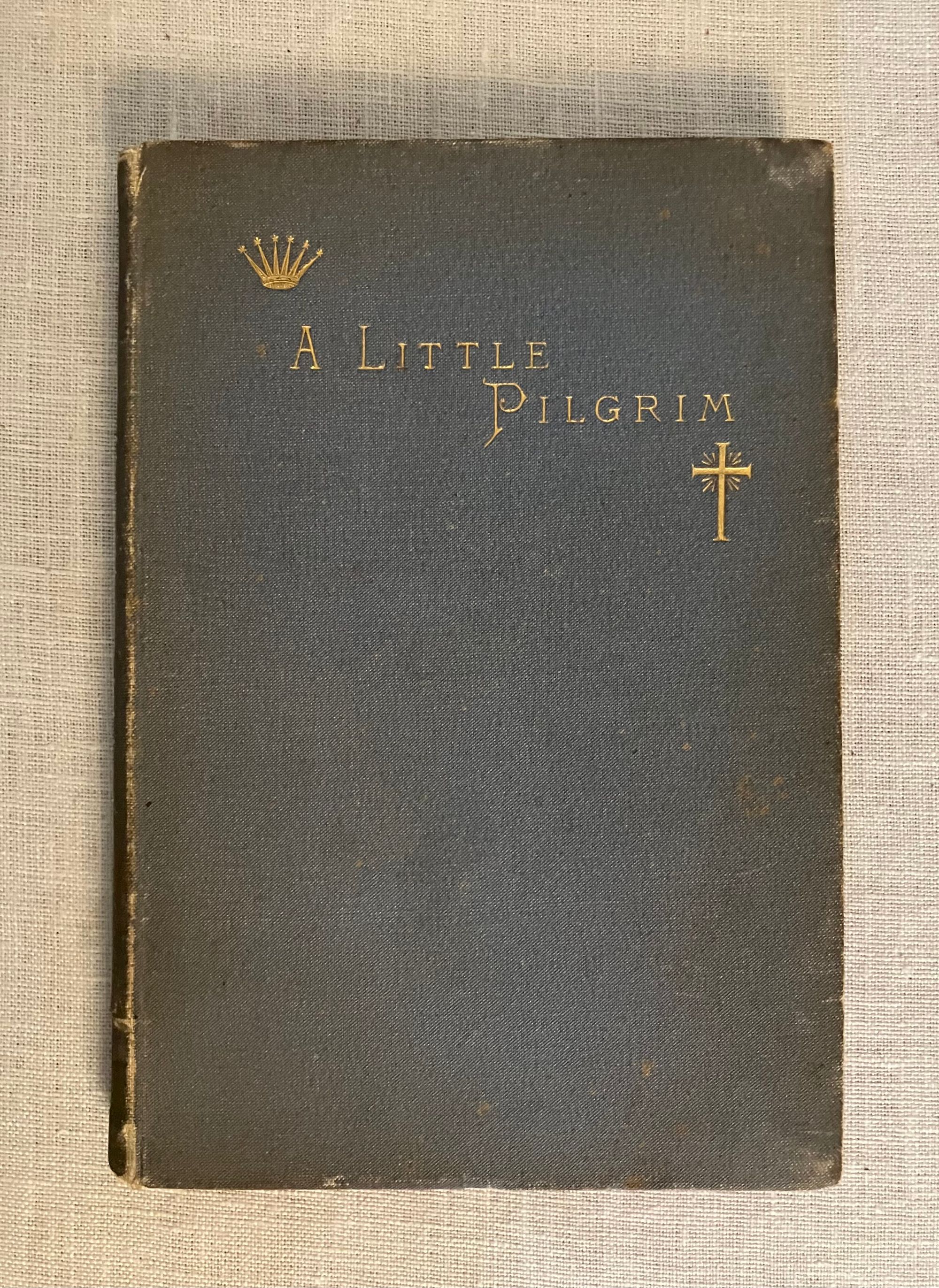
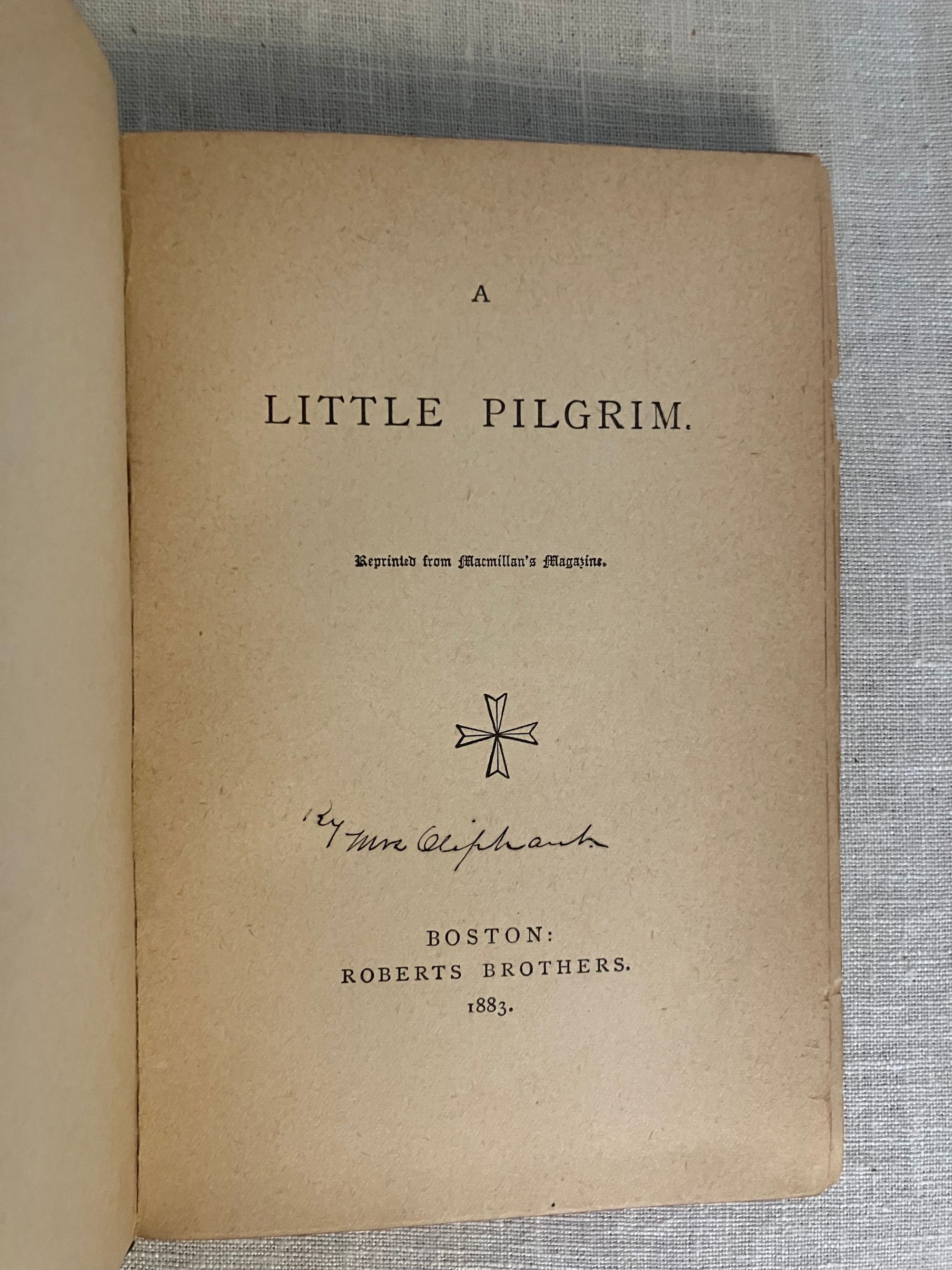
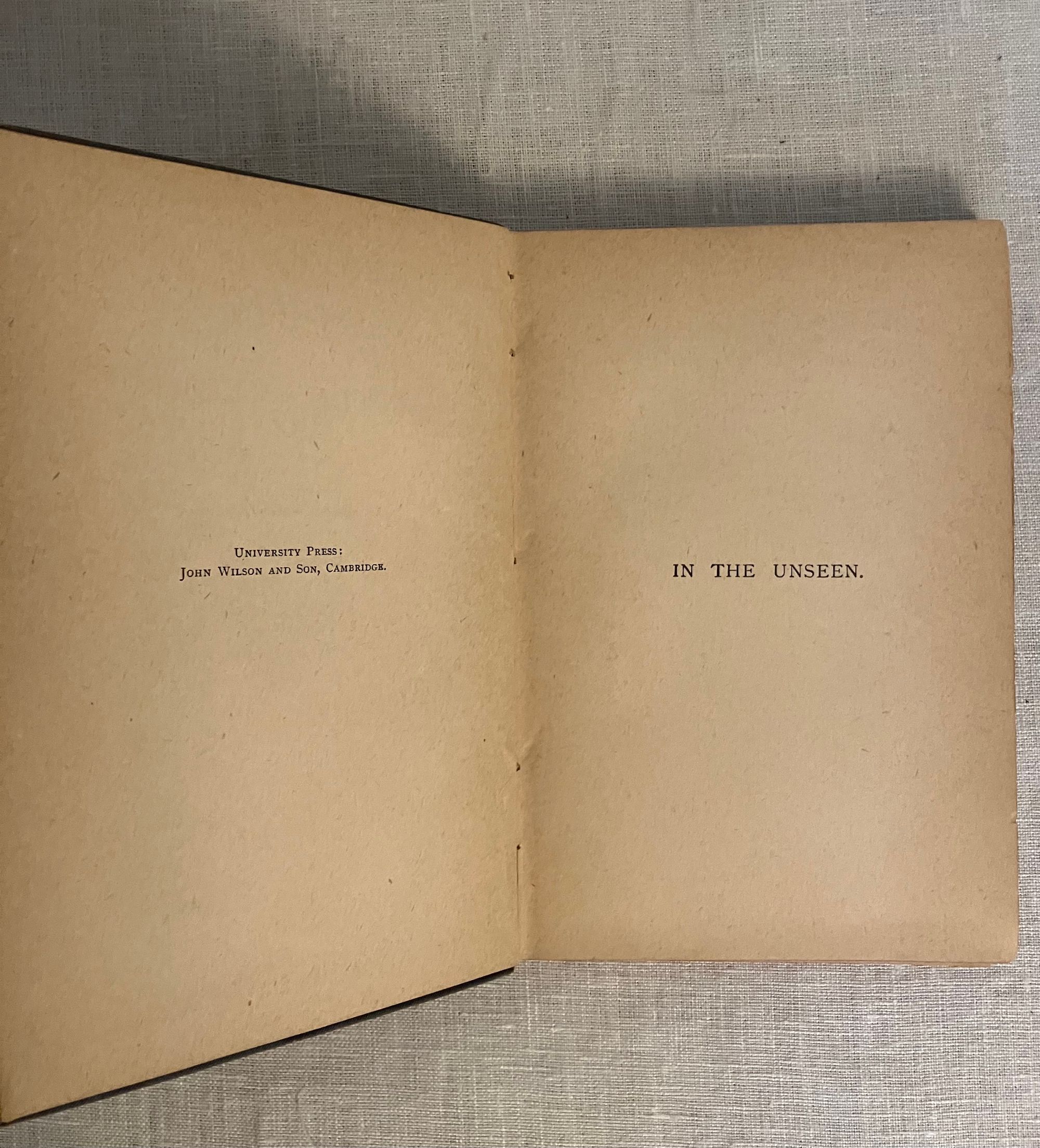
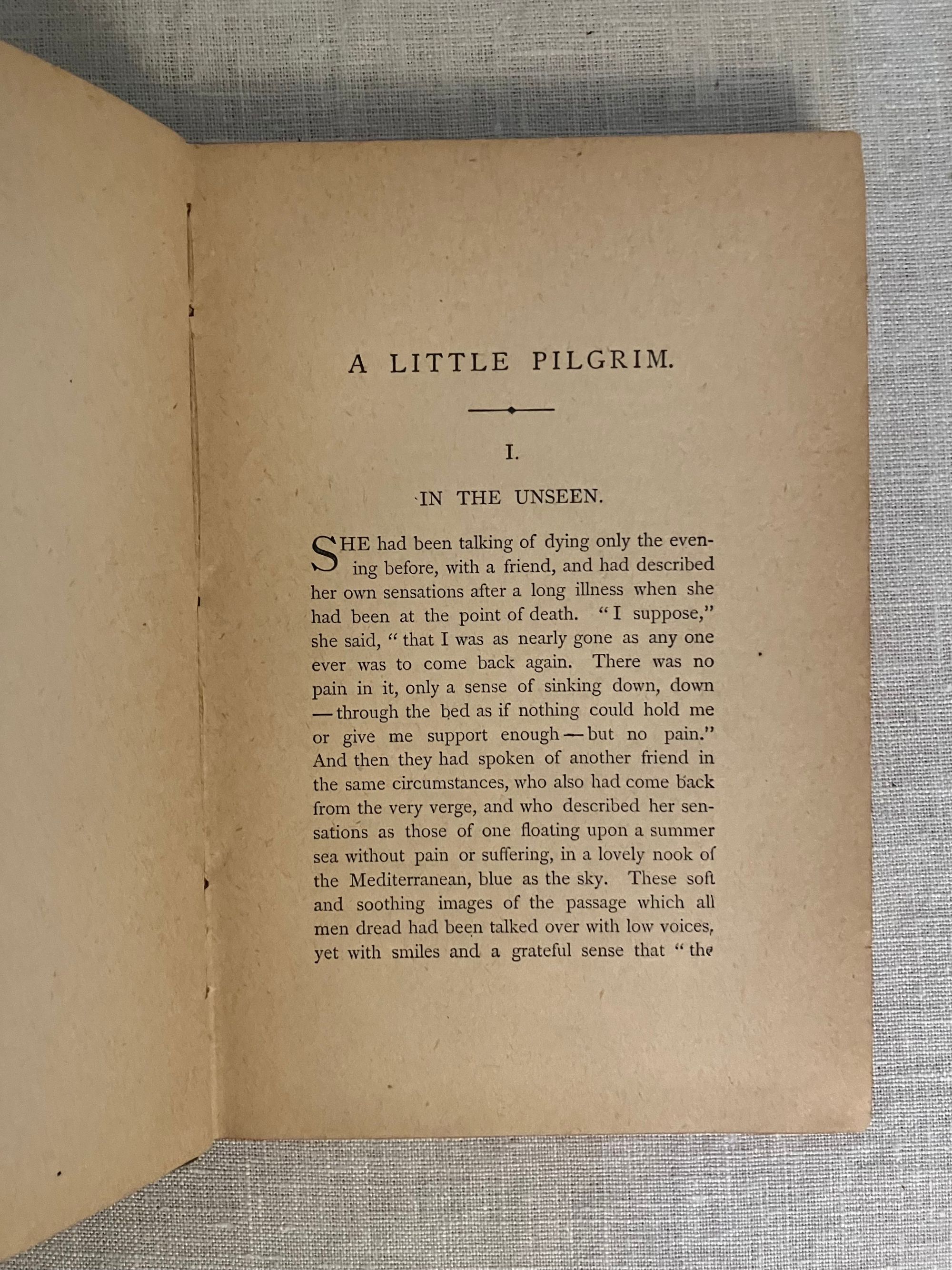
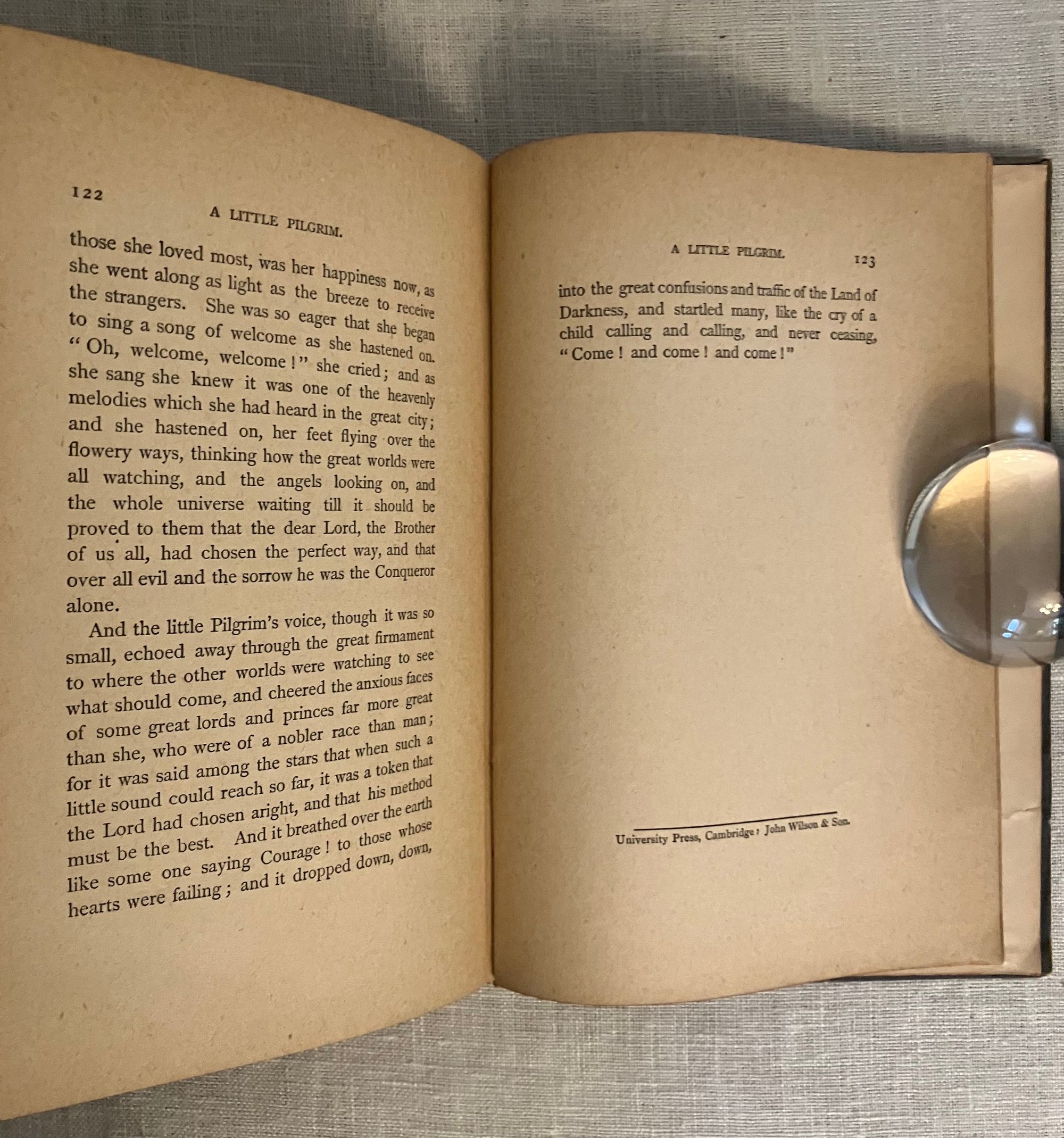


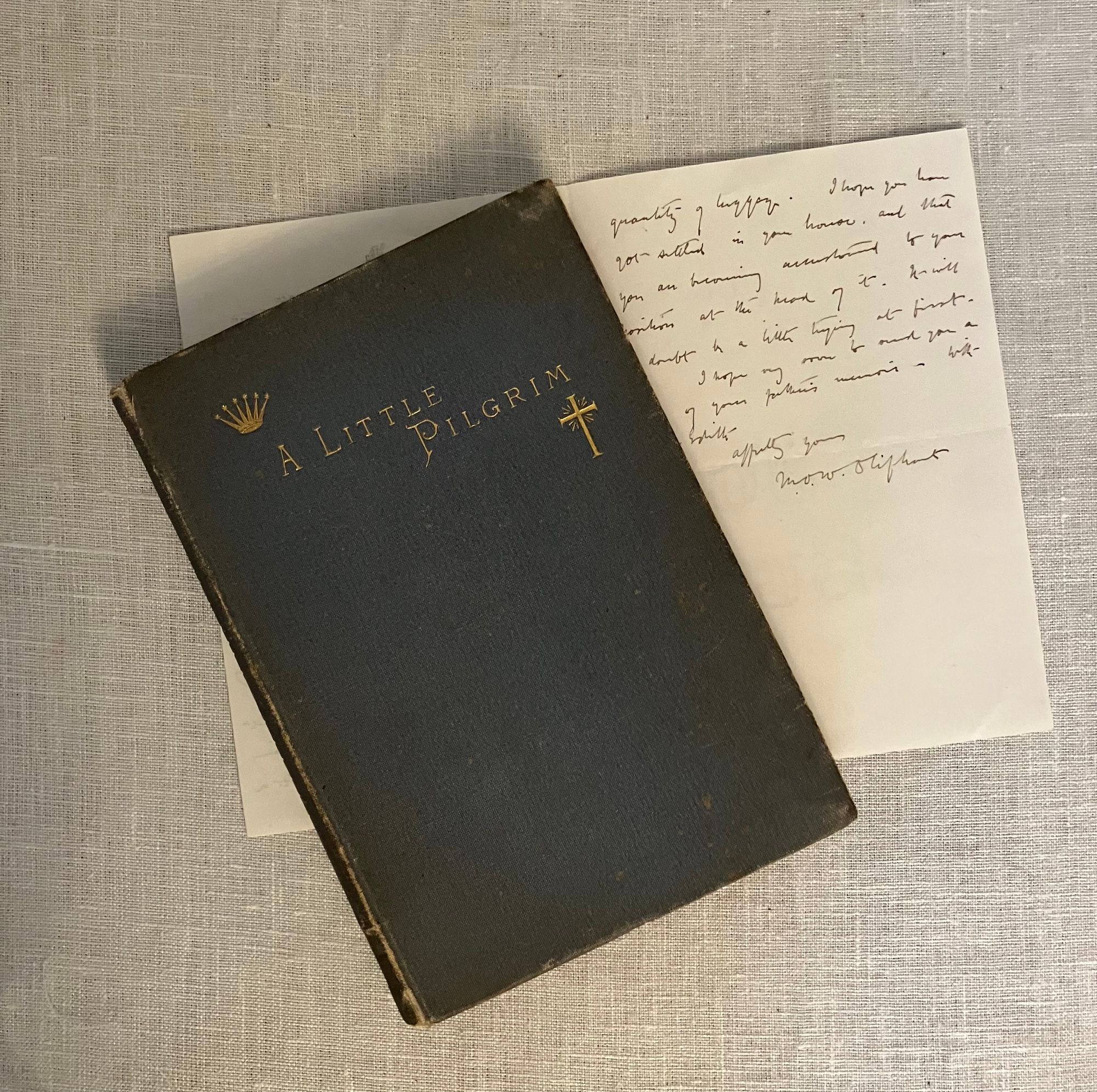
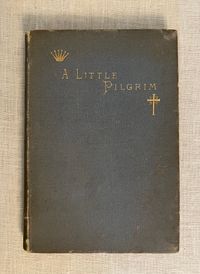
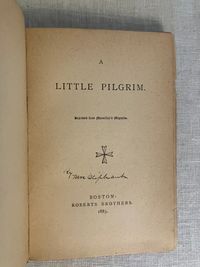
An early, assumed second printing, of the 1882 American Roberts Brother's edition of 1882. Hard cover, 16mo in mid-blue cloth, the titles blocked in gold to the front board, with vignette illustrations of a coronet and cross, the titles in gold to the spine vertically, page edges stained red. "By Mrs. Oliphant " added by hand in old ink to title page (which otherwise lists no author); not the author's signature however. With gift inscription dated Dec. 1883. Each story with a half title page. No table of contents nor copyright, as issued. Printed by John Wilson and Son, Cambridge. Collation: [3 blank], [1] title page, [2 - 4], colophon, half-title: "In the Unseen," [1 blank], 5-61pp. [blank], [half-title: "The Little Pilgrim Goes Up Higher."] [blank], 5-123pp. CONDITION: Good. Slight rubbing and soiling to boards, edge wear along joints, tips, board edges. Split to cloth lower joint area of spine has been re-glued. 1/16th inch loss of cloth at head and foot of spine. Pages moderately age-toned. A couple of loose pages in first signature. Book now in a mylar protector. Condition of ALS is about Fine.** The two stories here were originally serialized in London's Macmillan's Magazine prior to being released there in book form under the alternative title, " A Little Pilgrim in the Unseen" in 1882. Our book appears to be a second issue of the hard cover American edition published by Boston's Roberts Brothers first released in the preceding year, 1882. (A soft cover issue was also published in New York in 1883 by George Munro, part of their Seaside Library" series). ** Sometimes described as "juvenile Christian allegory," these two short stories can also definitely be placed within the Spiritualist and even Speculative Fiction realms of women-produced Victorian fiction. "In the Unseen" muses on the death of a young woman, the Pilgrim, who, with an older more experienced female spirit-guide, negotiates the passage between earthly and heavenly realms, including the possibility of contact with those left behind. The story is set in a rapturous place of waiting described as a peaceful, sunlit garden. Dante's Inferno is mentioned; a fair comparison to literary spiritual passage, in the latter case to the underworld. The Pilgrim's sense of loss, sadness and constraints of her life resonate in a semi-autobiographical way with some of the Author's own biography. This included the devastating loss of several children, including her only daughter Margaret, (Maggie is the name of her spirit guide), who was lost in 1864 and buried beside her father in Rome. She also lost at least one infant and her two sons, in 1890 and 1894. The early death of her husband, the glass worker Frank Oliphant, came after an ill-fated last ditch effort to soothe the discomforts of tuberculosis with the Italian trip in 1859. These events launched the literary career of Margaret Oliphant as a matter of survival. The heavy financial obligation of caring for her family also extended to the support of her brother William's two sons, as severe melancholia left him unable to do so. The spectre of so much early death was thus a formative experience as well as a source of creative inspiration for these stories. (cf. Mrs. Harry Cogshill, "The Autobiography and Letters of Mrs. M.O.W. Oliphant," Edinburgh and London, William Blackwood and Sons, 1899). The incredibly prolific Scottish novelist and author of short fiction as well as numerous other non-fiction books and articles, MRS. MARGARET OLIPHANT WILSON OLIPHANT, (1828-1927) was born in Wallyford, near Lasswade to the southeast of Edinburgh. Her works was famously popular with Queen Victoria, who is said to have bought-in every copy of her books for the Royal Library at Windsor, nearby which the author lived from 1865. (Windsor Local History Group, Windelsora 12, 1993). Mrs. Oliphant also wrote many other well-considered "ghostly stories" among the numerous genres of writing in which she partook. Much of her work-life was spent in the employ as contributor and editor to "Blackwood's Edinburgh Magazine," for which she also completed a company history begun by the founder, "Annals of a Publishing House: William Blackwood and His Sons" (1897-98.)** THIS BOOK IS PROVIDED WITH A MRS. OLIPHANT-signed ALS on watermarked letterpress stationery headed "Windsor" (on Joynson Superfine watermarked stock) dated 2nd October (no year). Addressed to "My dear Mary," she refers to a cheque sent to a Mr. Wiley, saying that [Mary] had told her the rent (?) was to be 6 Pounds a week." She speaks of just returning from a trip with a quantity of luggage, and wishes Mary good luck as the new mistress of her own home. She mentions hoping to soon send Mary a copy of her father's memoir. Deduction: The note may be addressed to her niece Mary Anne Oliphant, who married Thomas Stubbs Walker in 1867. Mary was the daughter of Mrs. Margaret Oliphant's cousin, Laurence Oliphant, author, MP, traveler, diplomat and with some "eccentric" views on Christian mysticism. ("Laurence Oliphant", DNB) about whom Mrs. Margaret Oliphant had written a biography titled: " Memoir of the Life of Laurence Oliphant and of Alice Oliphant, His Wife," (William Blackwood and Sons, Edinburgh and London, 1891, a popular title which was reprinted a number of times. (Further issues by Harper & Brothers, New York (1891), Bernhard Tauchnitz (1891,) and a "New Edition" by Blackwood, 1892). The work was also widely reviewed in the London press at the time (cf. British Library catalogue). Hence, a possible interesting connection may perhaps be explored between these two familially-related authors' views on mysticism, the afterlife and spiritualism. Watson 955. OCLC 3581247. Title and bibliography generally discussed in Bleiler (1983); see 1255 and 1259. (AMJ)
Ref: WAUTH 9835
$325.00