 |
 |
 |
 |
 |
 |
 |
 |
 |
 |
 |
 |
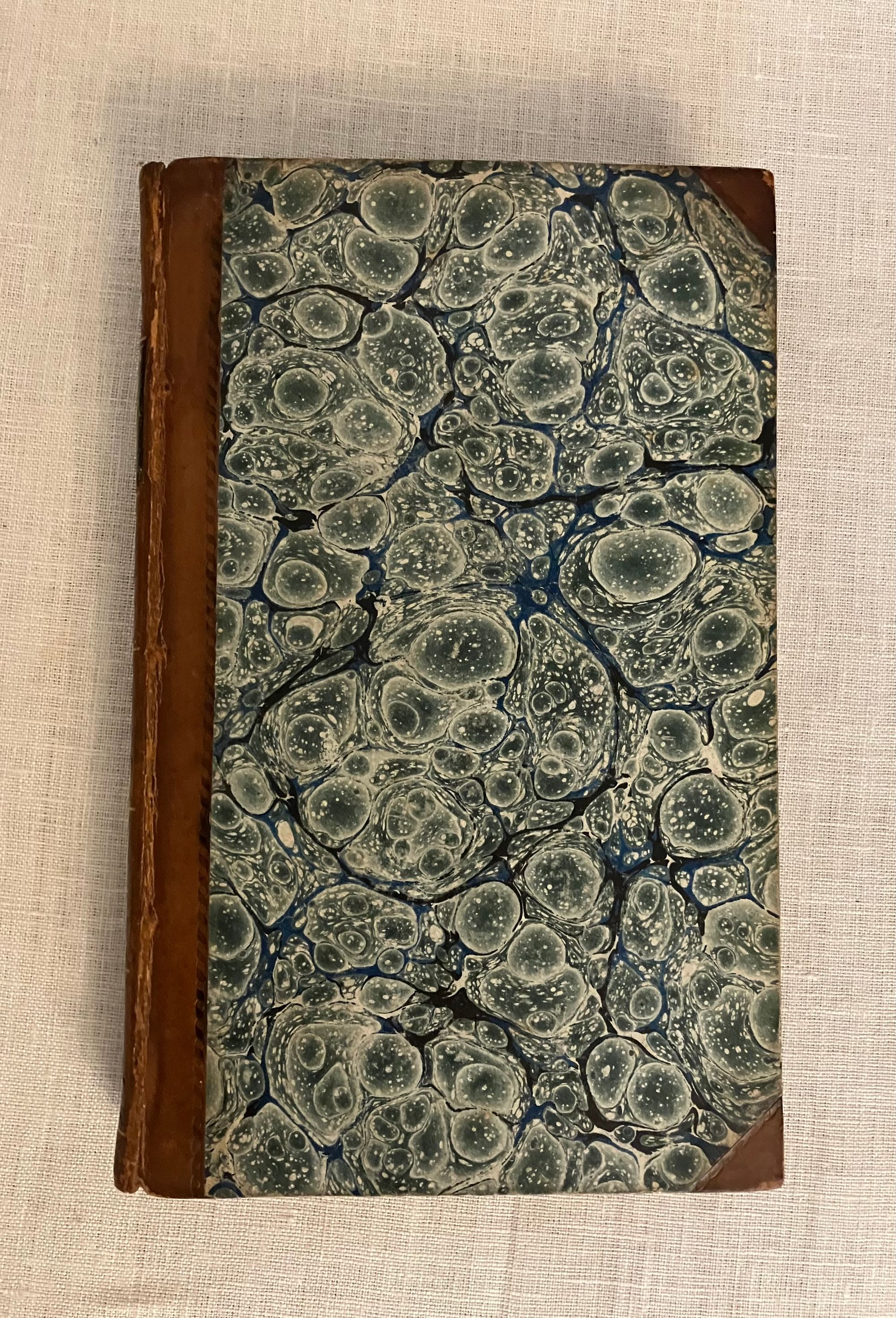
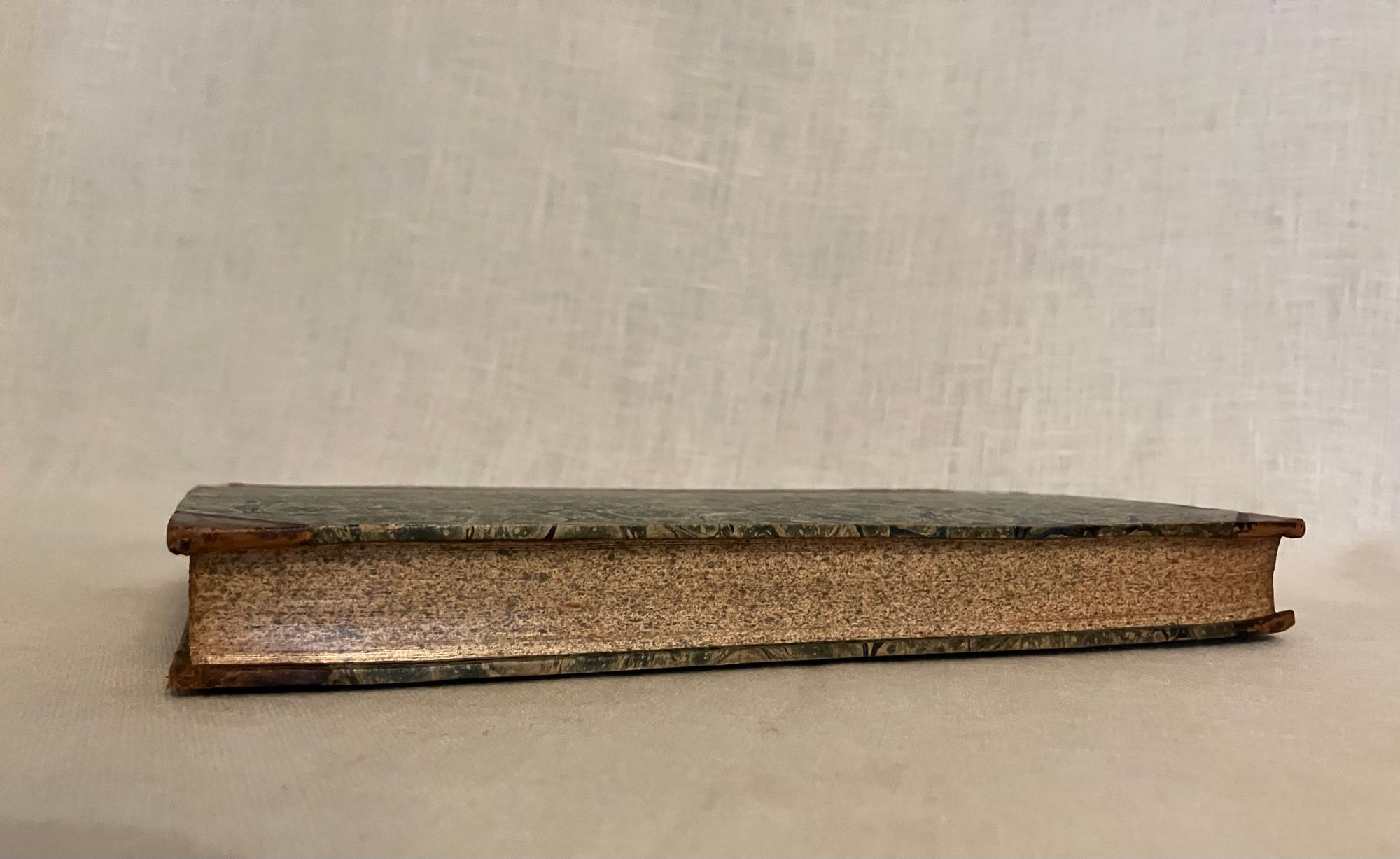
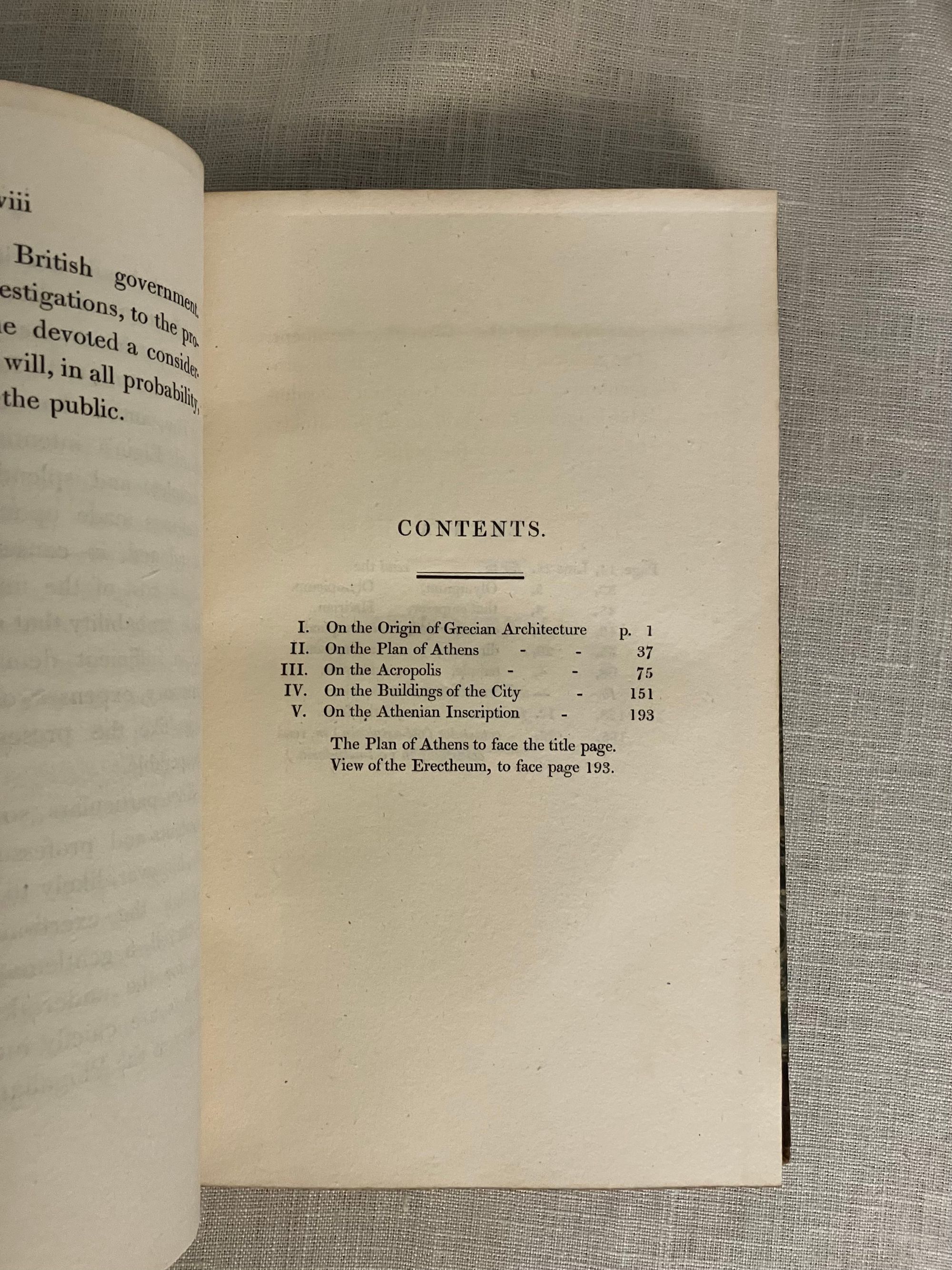
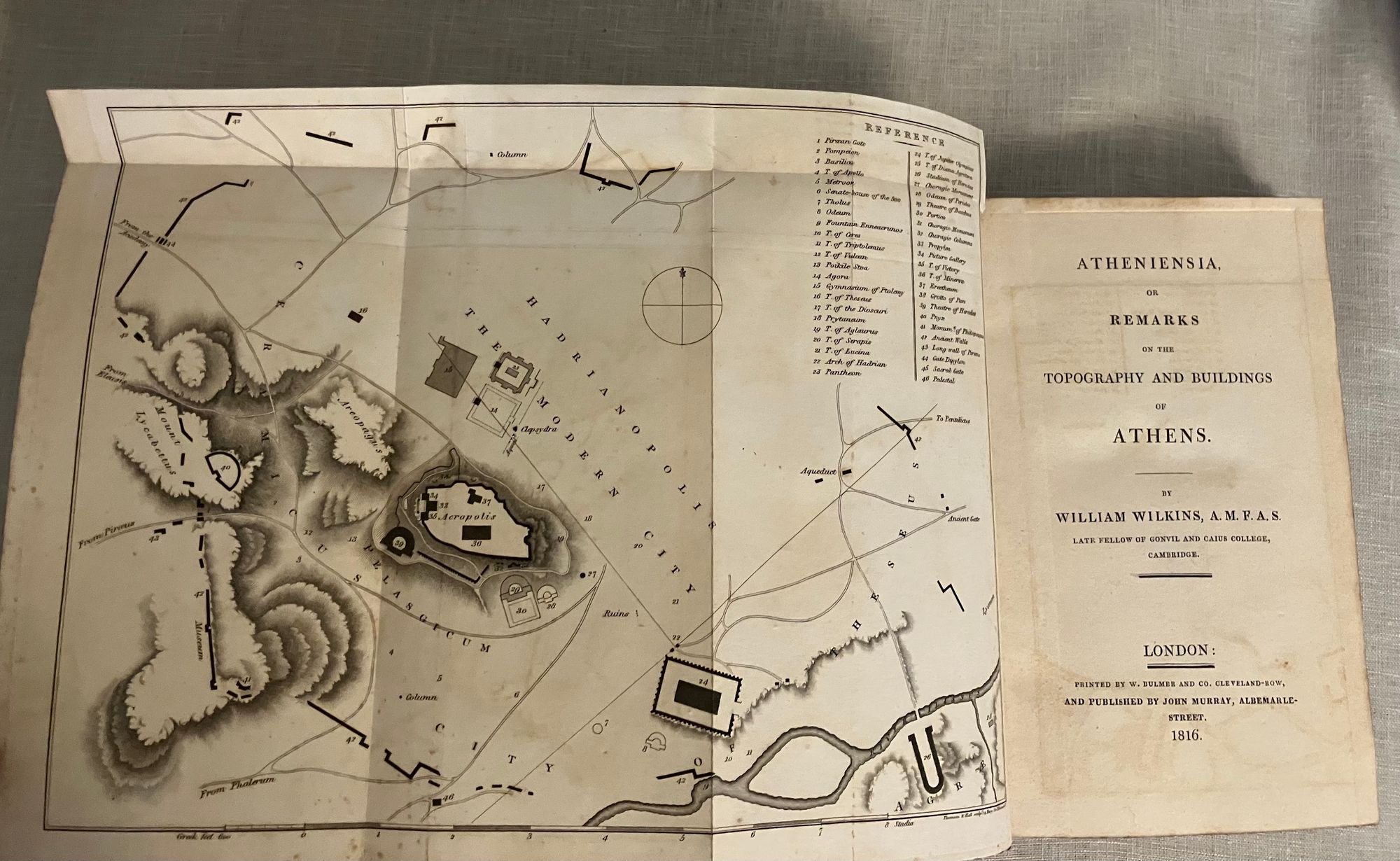
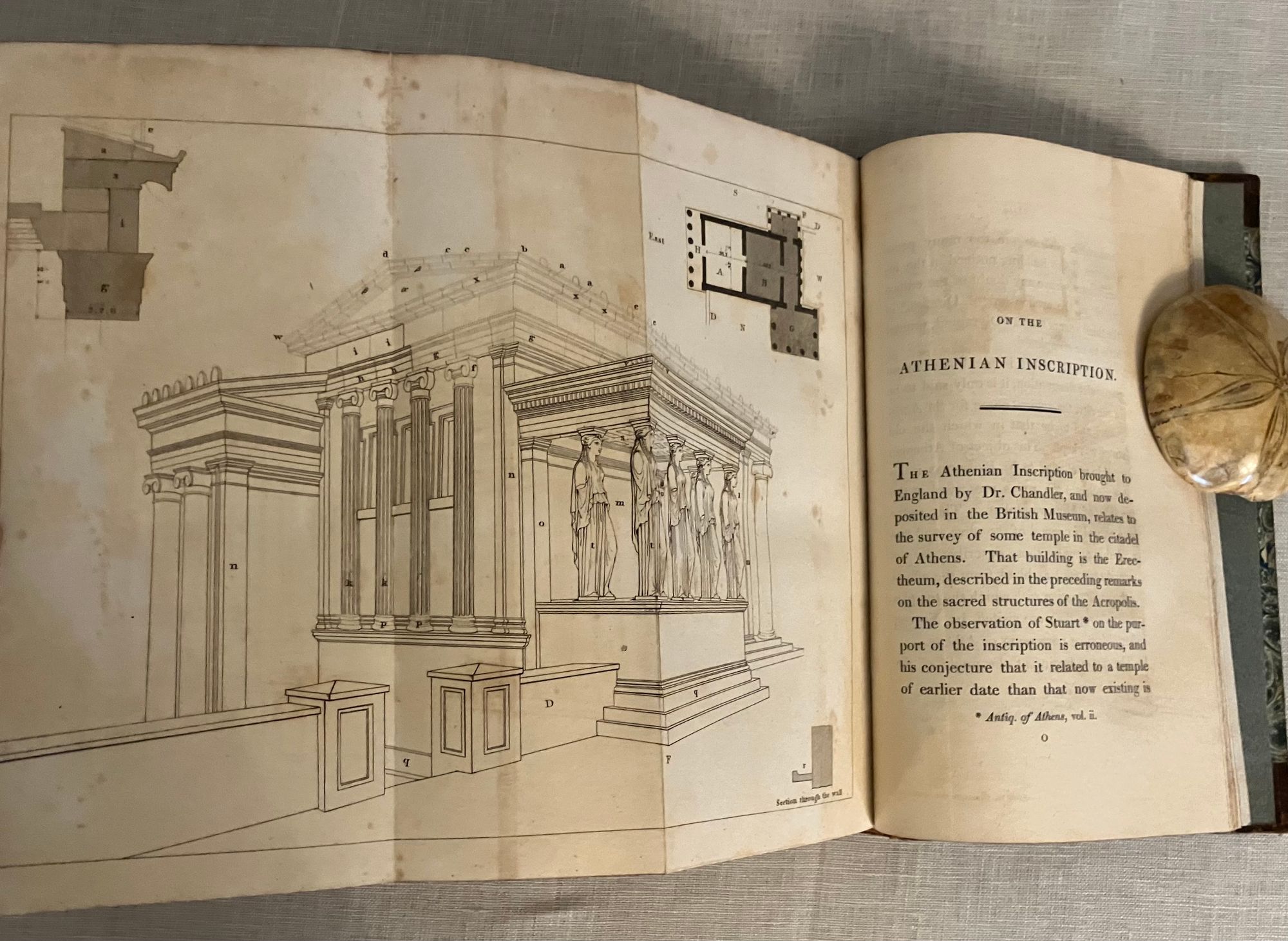
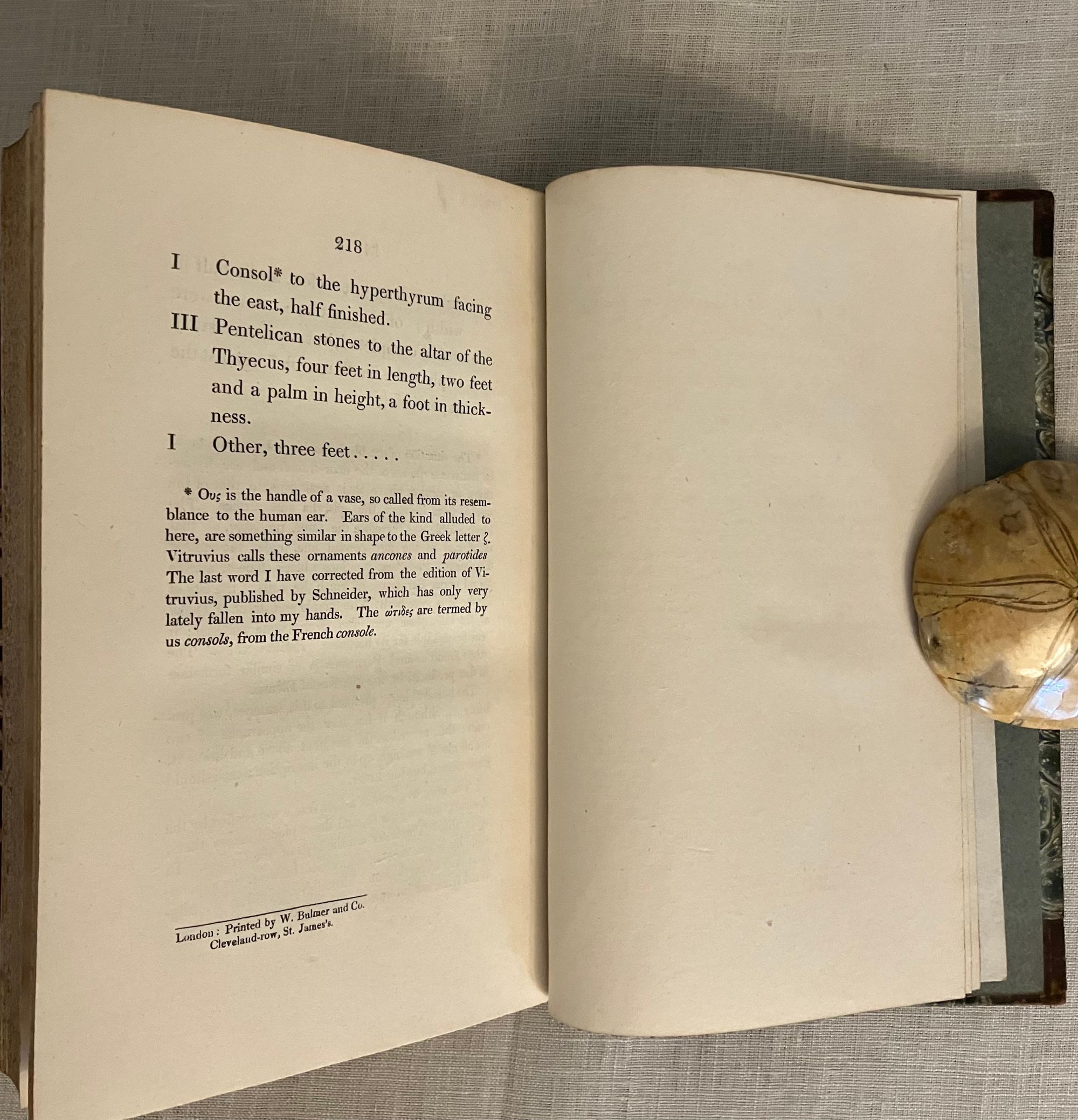


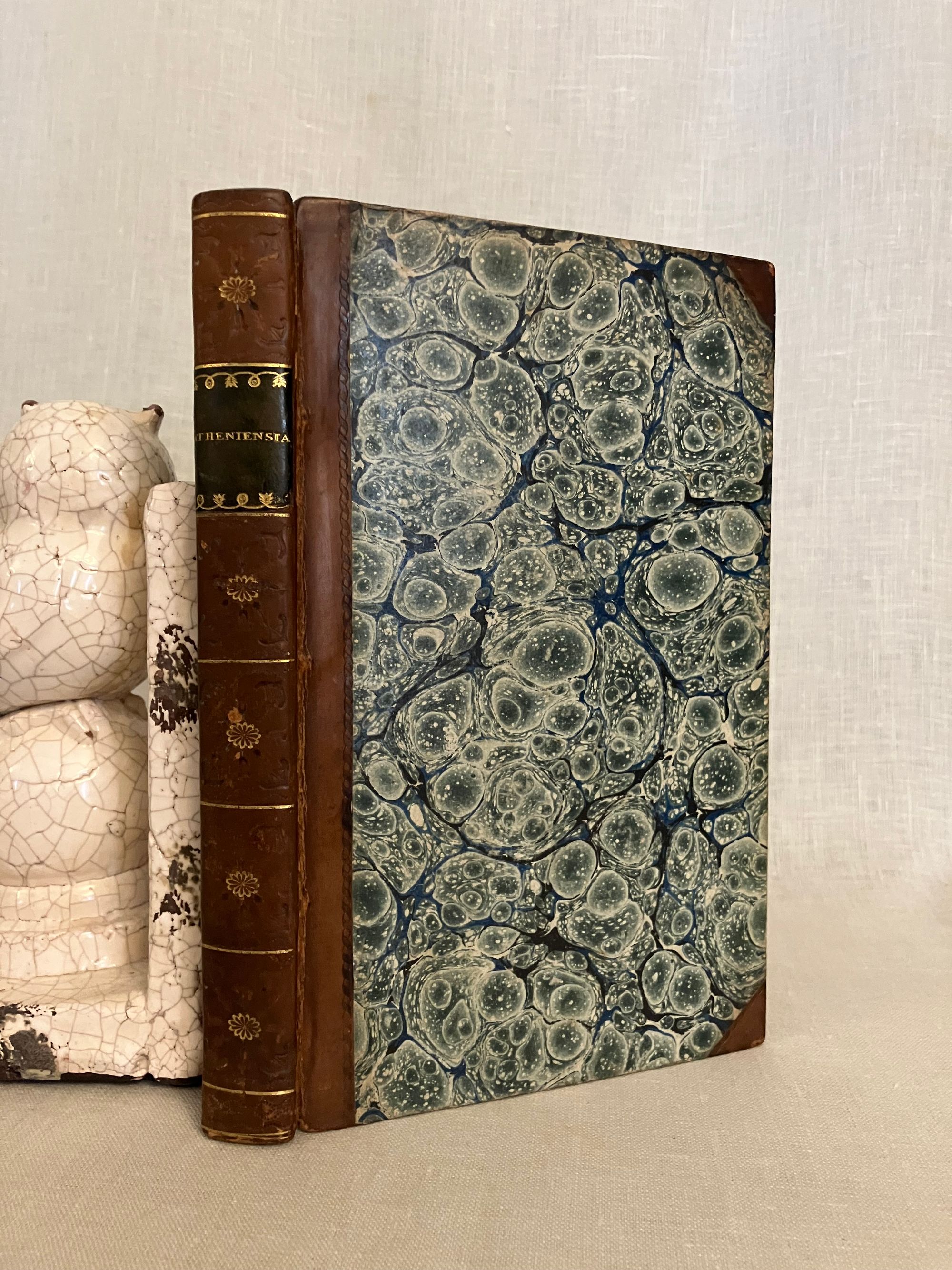
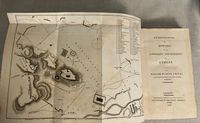
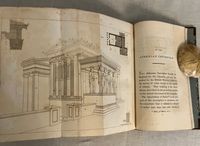
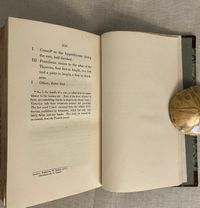
Hard cover, 8vo, in three-quarter leather binding edged with a delicate rope roll, green marbled paper-covered boards, attractive speckled and glazed text block edges, the spine ruled in gilt into seven faux compartments, with the onlaid black morocco title label in the second, and the remaining compartments decorated with blindstamped corner "wishbone" shapes and gilt flower to center of each. Inside are green endpapers, an engraved armorial estate bookplate to front endpaper. [2], viii, [4], 218 pp. [4]pp., complete with both the folding map frontispiece, and one additional folding plate after p.192, as called for. Printed on rag paper by W. Balmer and Co., Cleveland-Row, St. James's. Map engraved by Thomson & Hall, 14 St. Bury, Bloomsb'y. **CONDITION: Near Fine. Very light rubbing along joints. Boards clean and unscathed. Light offset to bottom of title page from map and similar to page opposite plate after p.192. Pages are uniformly bright with no foxing seen. The folding architectural plate has some spots light foxing and a bit of browning, as seen. Binding is firm with hinges in order. **London Architect and architectural historian at Cambridge, WILLIAM WILKINS, A.M.F.A.S. (1778-1839), prefaces his remarks to explain the deliberate postponement of publication as to not "muddy the waters" of ongoing negotiations between Lord Elgin and others for the sale of the Elgin Marbles (taken in the opening years of the nineteenth century from the Parthenon in Athens)...and the Phigalian marbles (discovered in 1812 and later purchased in 1814; these frieze figures were originally atop the pediment at the Temple of Apollo at Phigalia,) to the British Museum. The Author's "Advertisement" note in the prelims describes the work as being begun upon during a trip to Greece in1802. It was initially intended to supplement a manuscript being composed by Horace Walpole, Lord Orford, but for various reasons that project was abandoned and Wilkins published this as a solo endeavor.**While the tone of some of Wilkins's remarks will be found to exhibit imperialistic hubris, there is no question that he carefully traces the history of Greek architecture, in its various forms and iterations, in a logical and classically informed manner, dating the development of the Doric and Ionic orders with reference to classical authors. He cites the use of natural materials (bundled reeds) found in buildings in the cradle of civilization of the Nile delta and Syria, as visual models for their later translation to stone-carved adaptations by the ancient Greeks. The Pellopenisian Wars, Siege of Troy and other foreign incursions from Constantinople, Rome, Venice, France and England are all seen to have played a role in both the creation-- and ultimate destruction-- of this great architectural heritage. Also, a travel book for the erudite. OCLC 10562596. (AMJ)
Ref: GRK 9805
$1150.00