 |
 |
 |
 |
 |
 |
 |
 |
 |
 |
 |
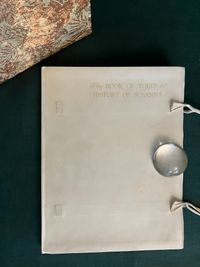 |
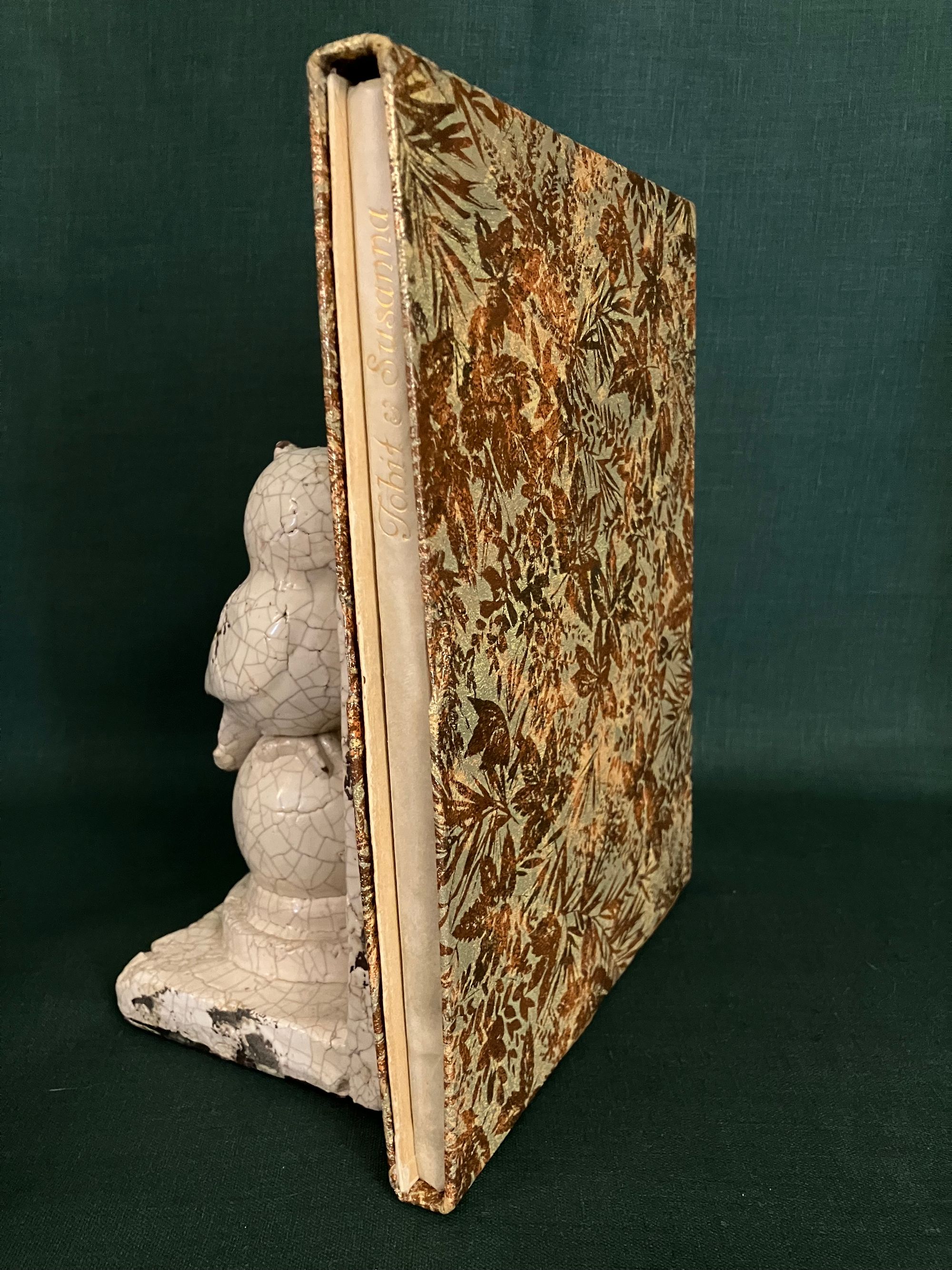
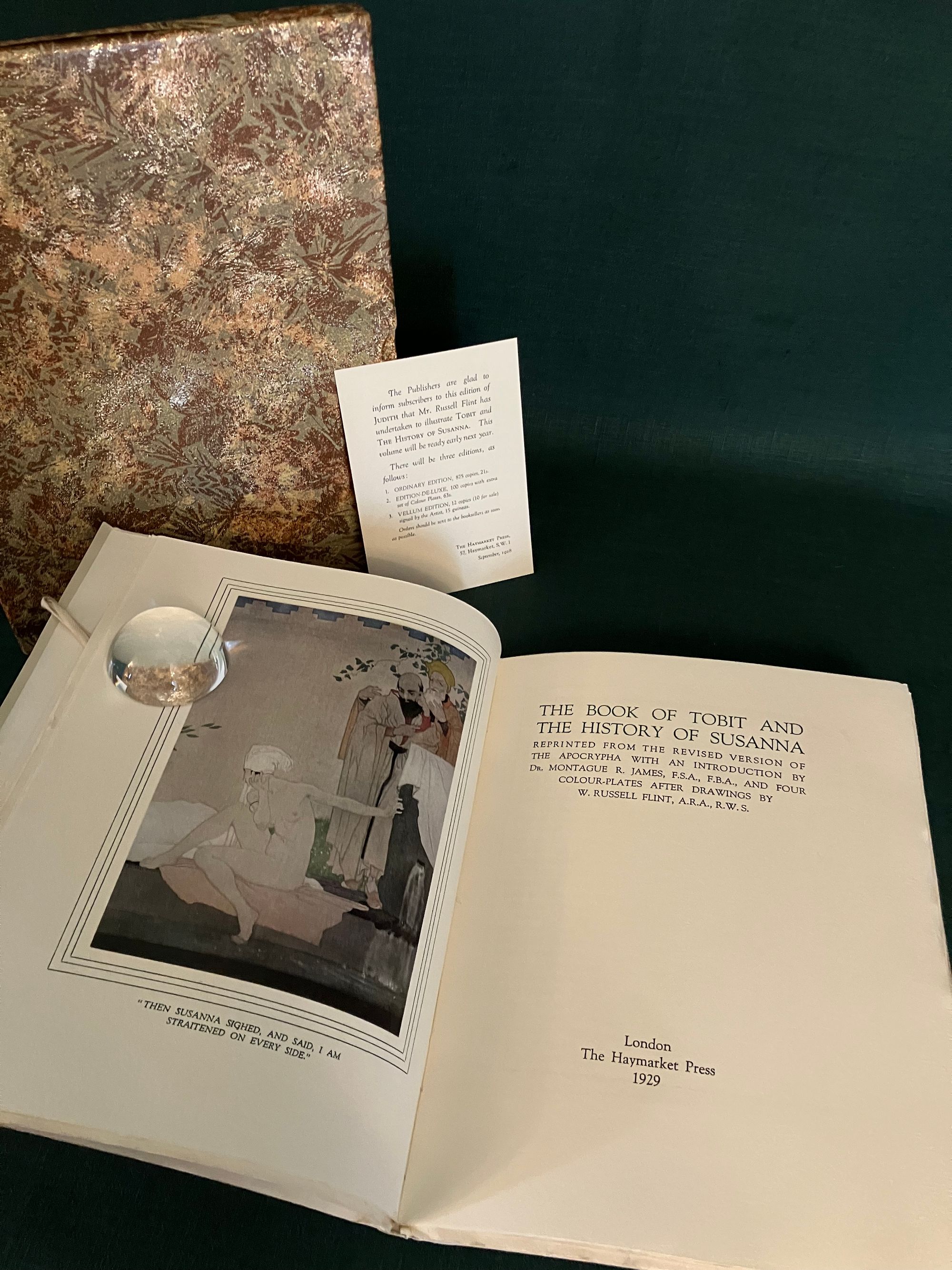
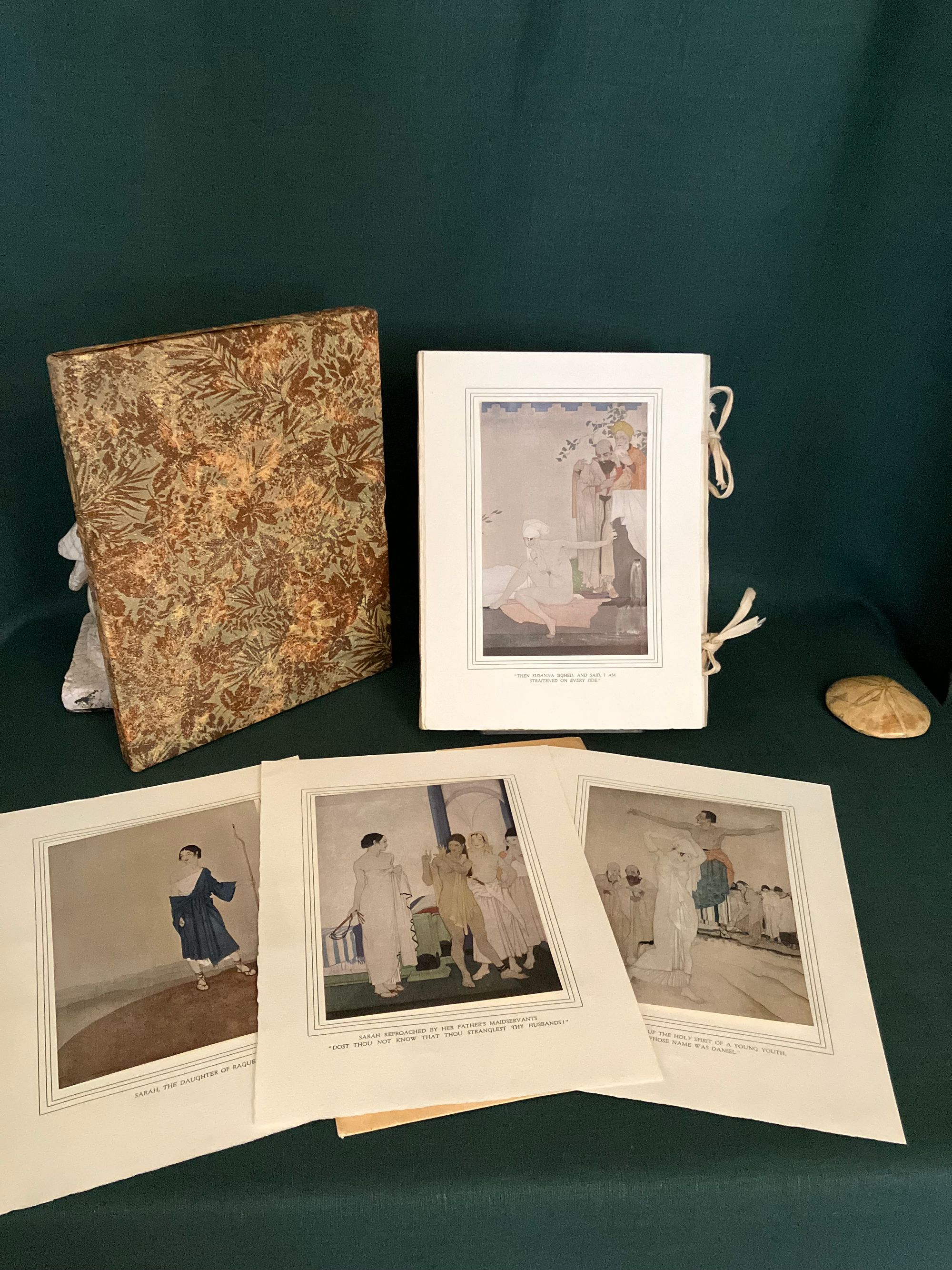
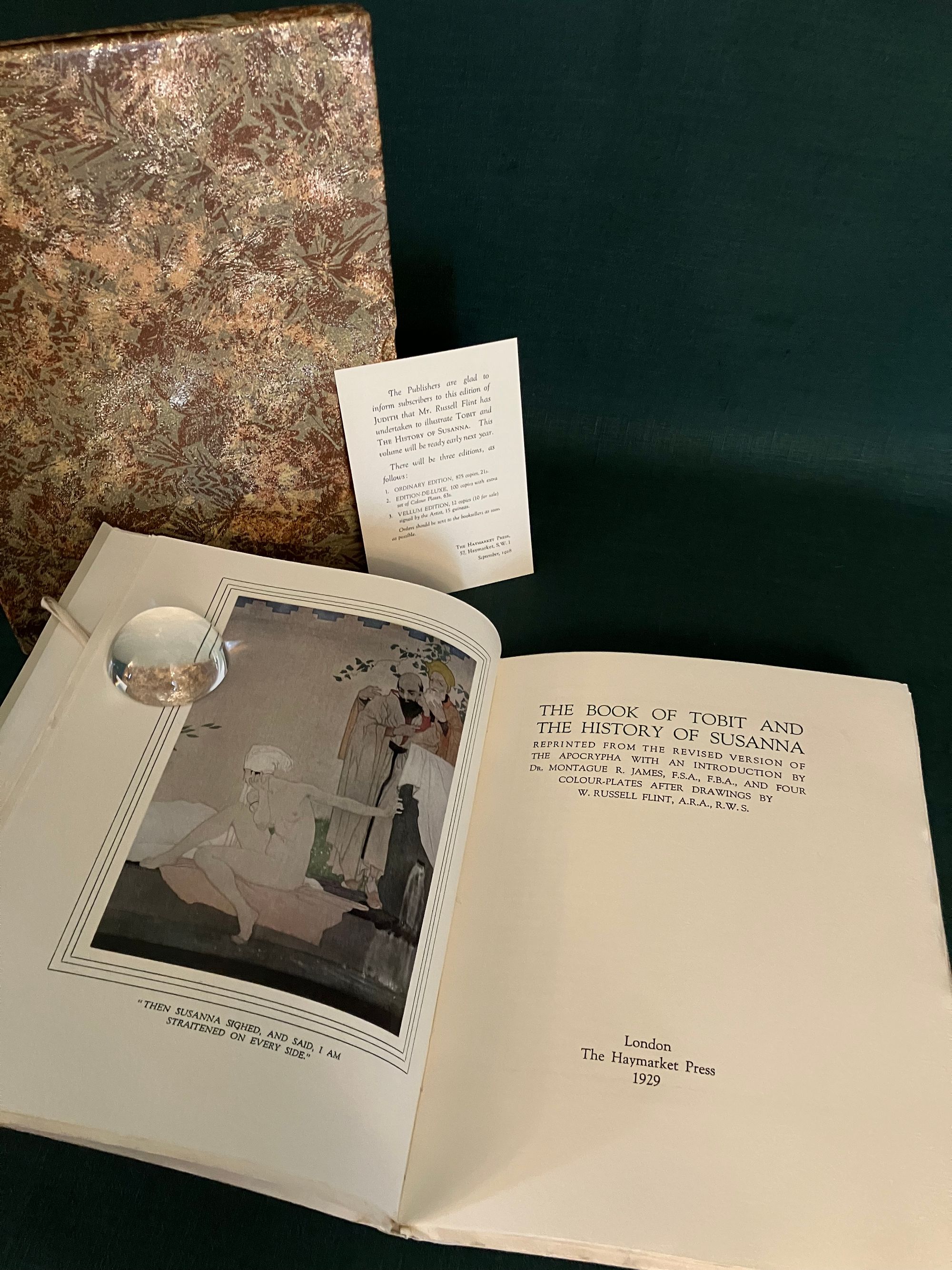
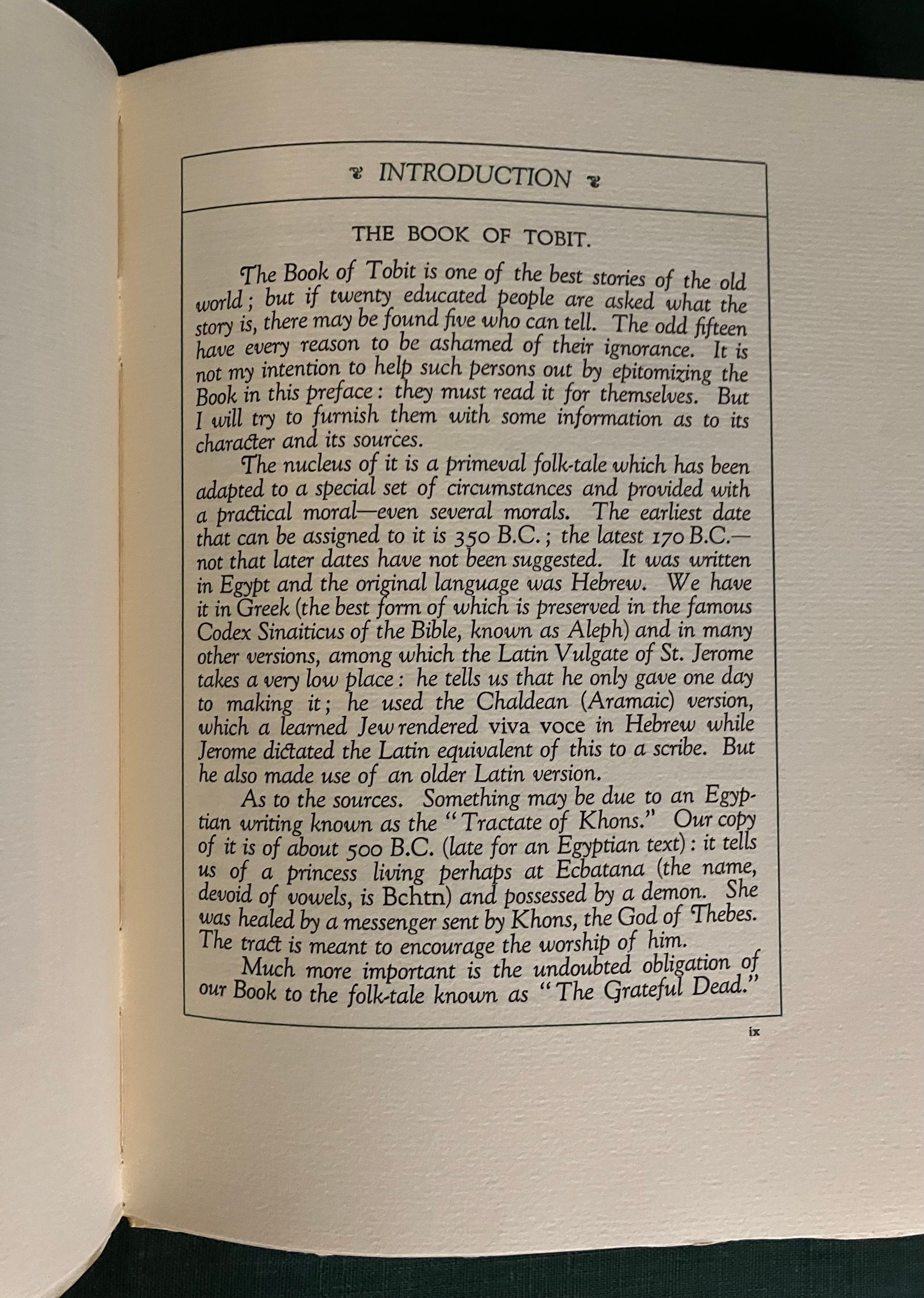
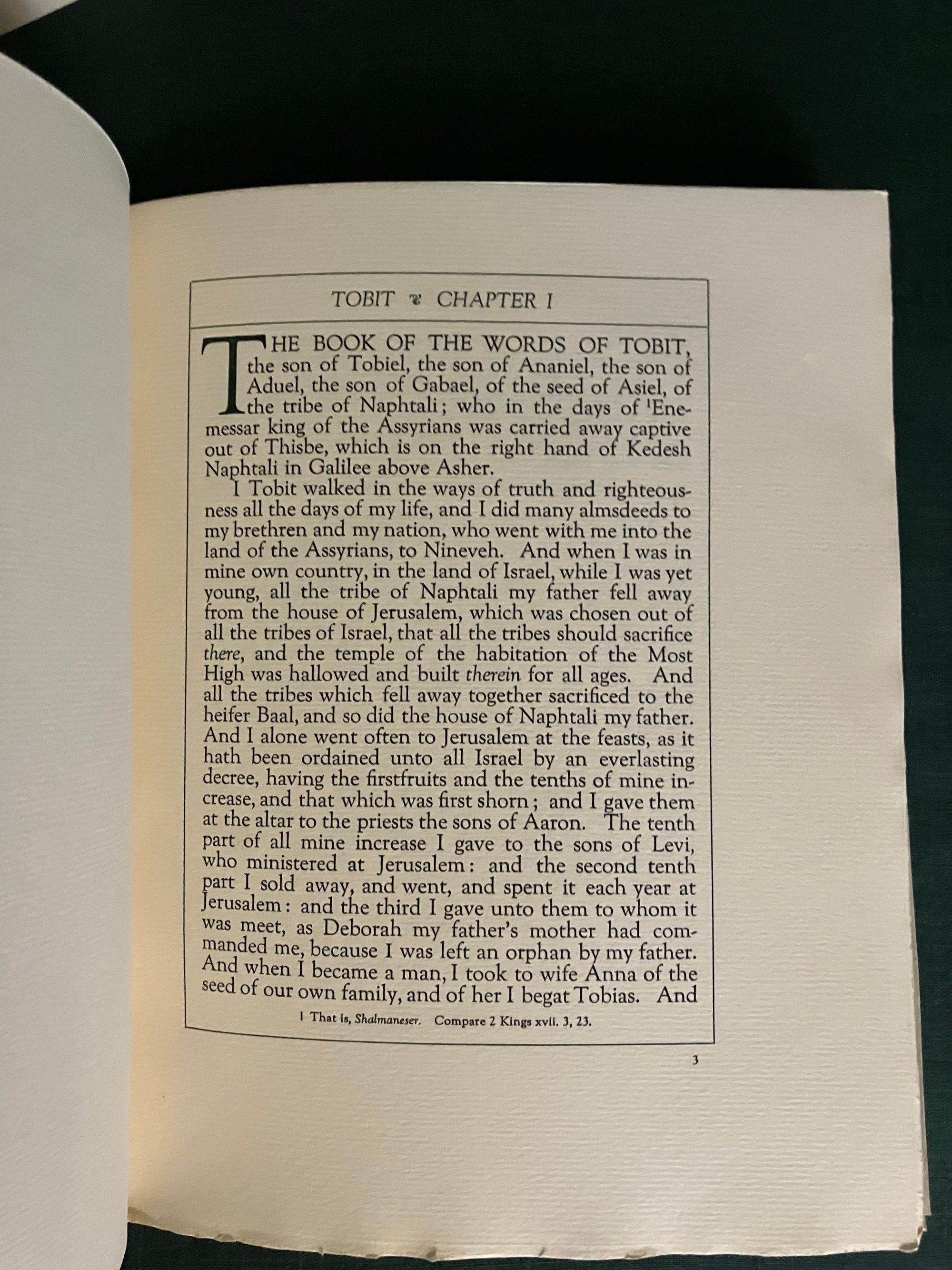
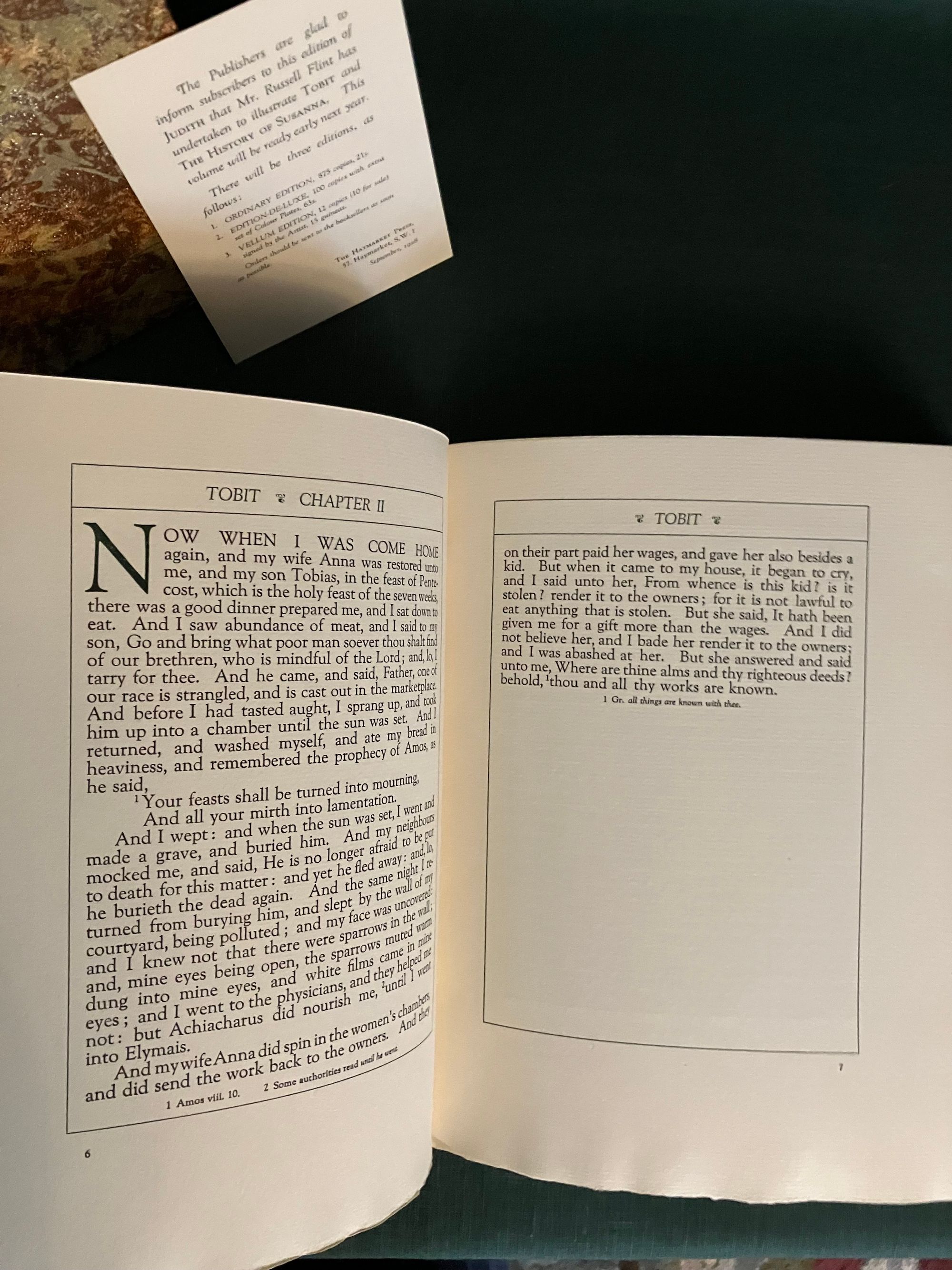
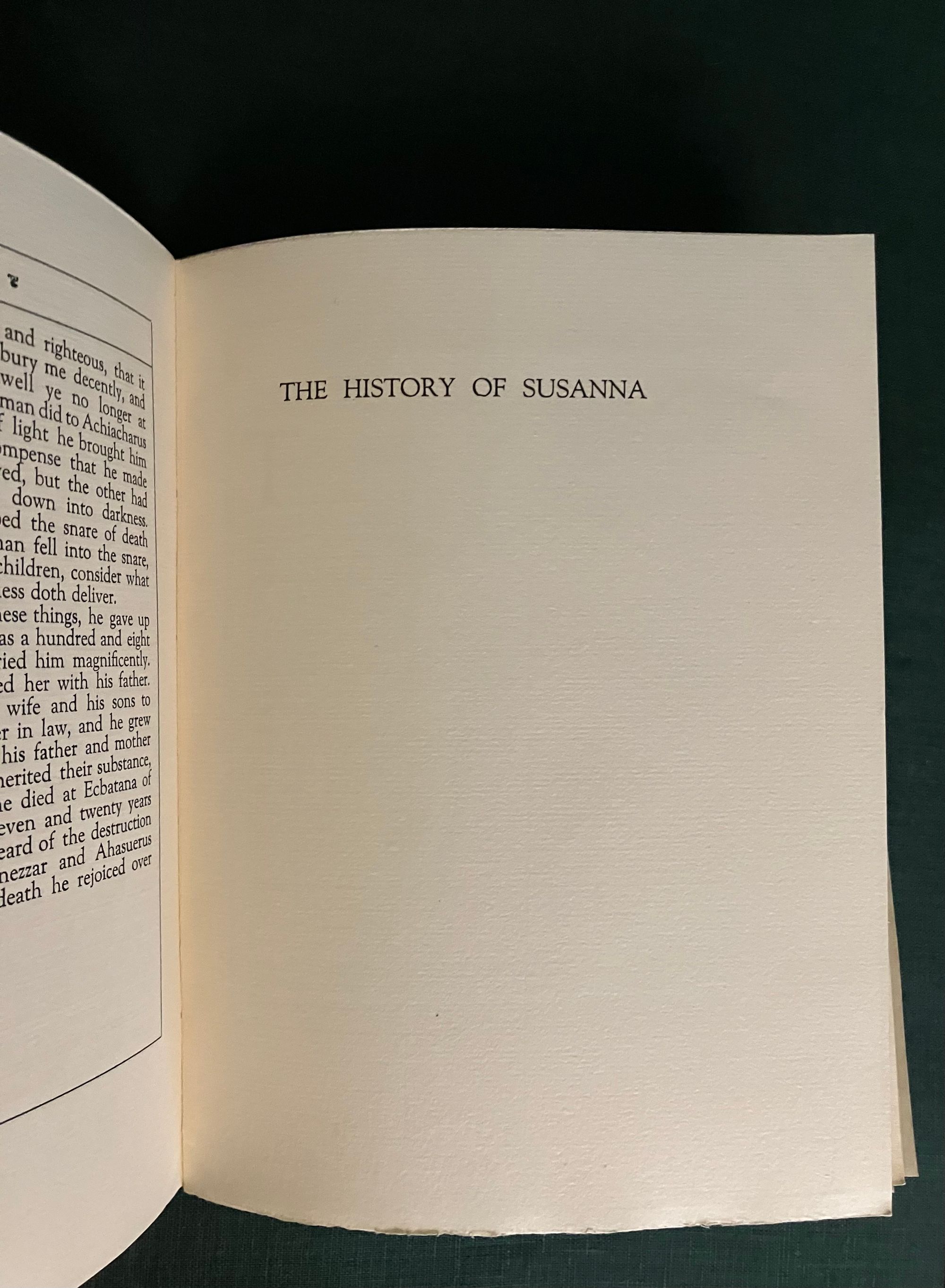
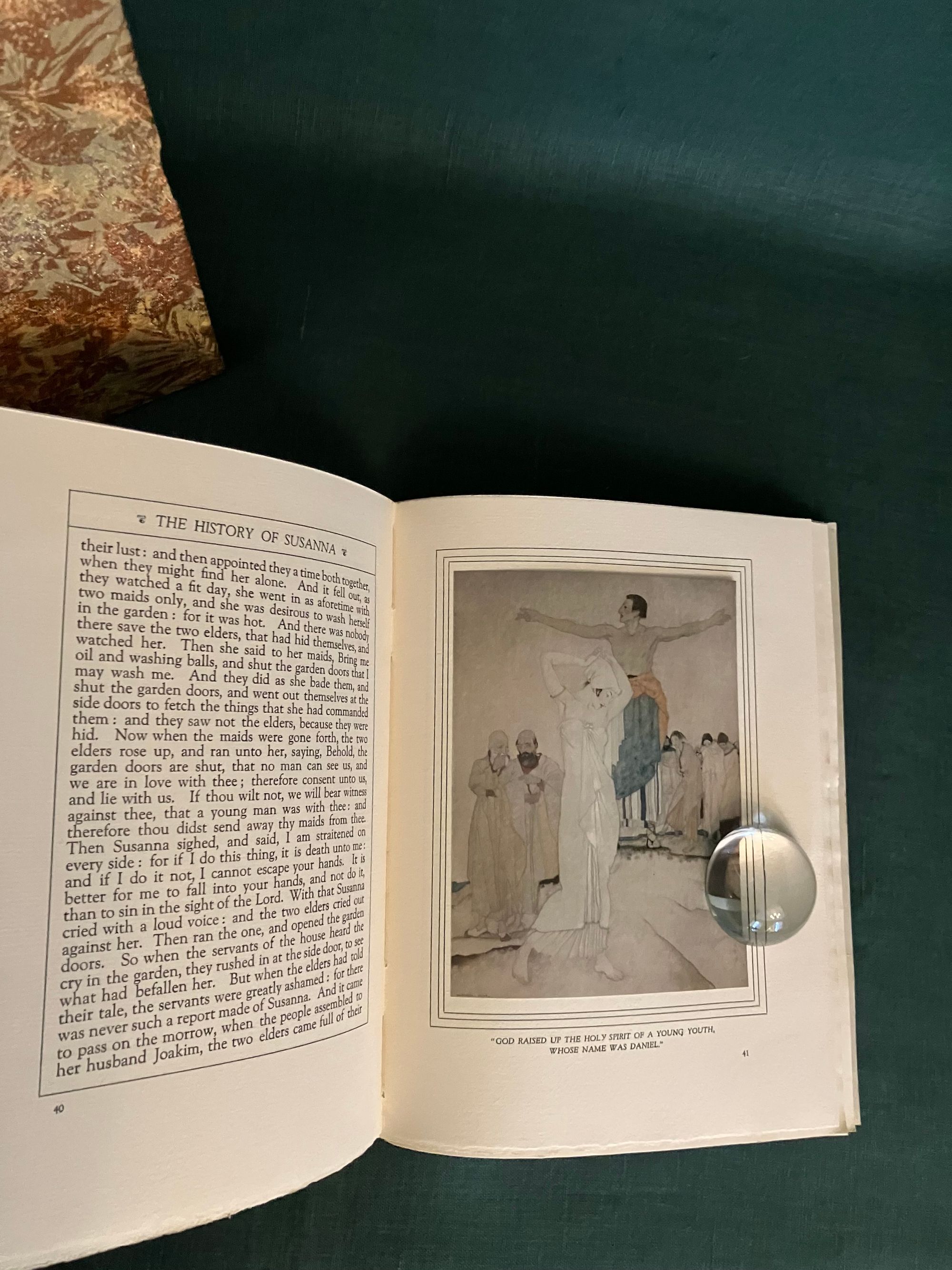
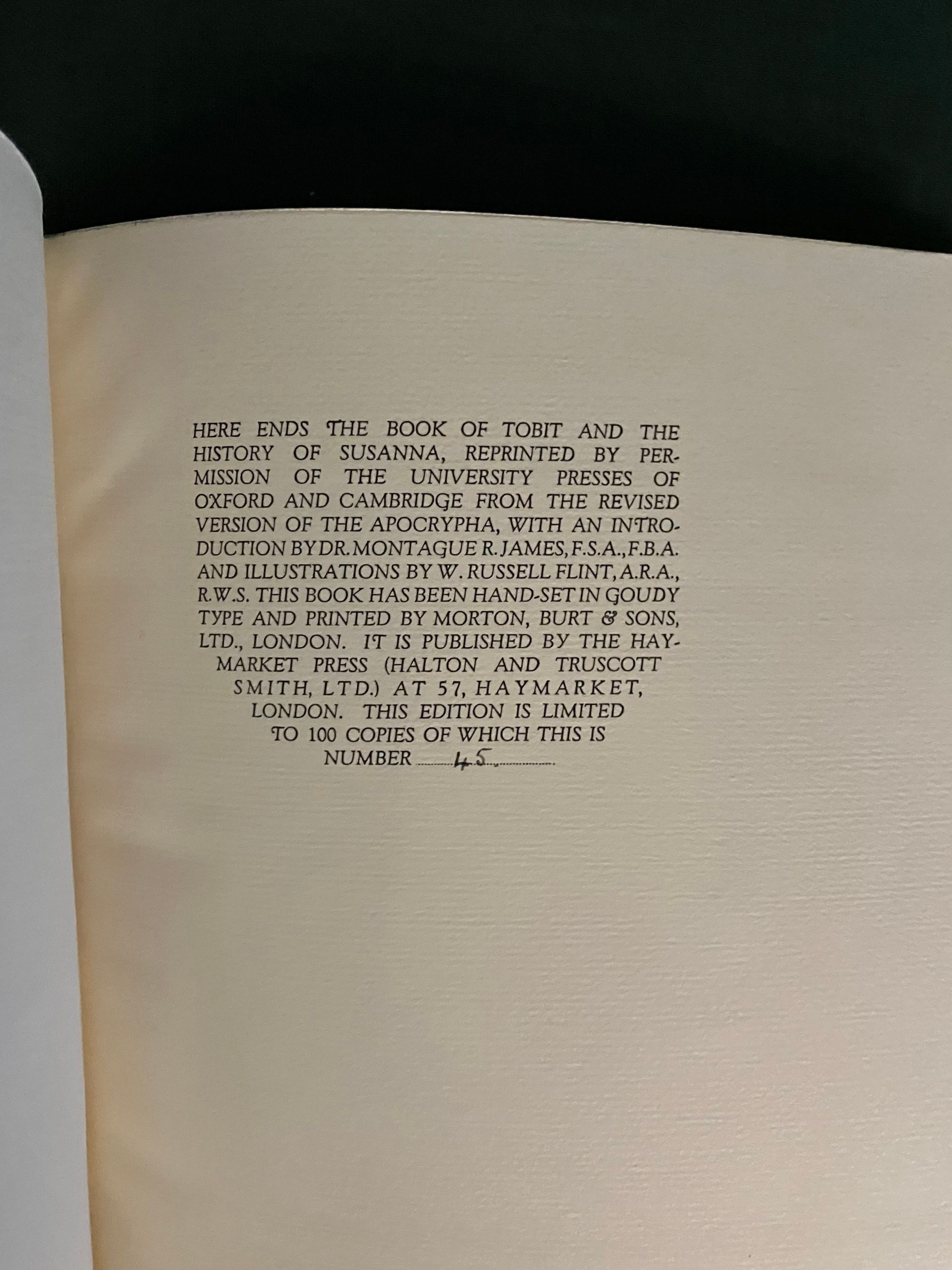
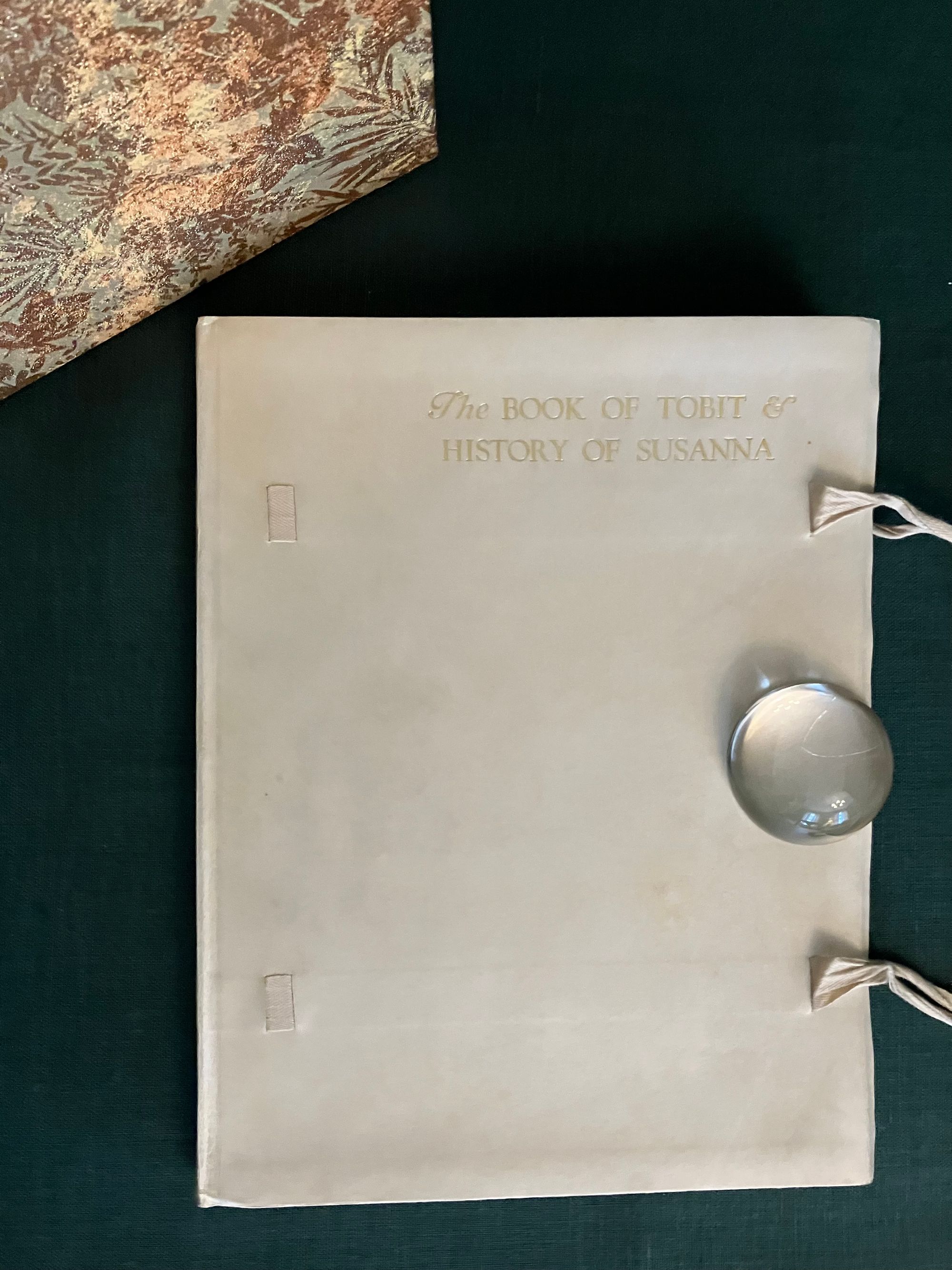
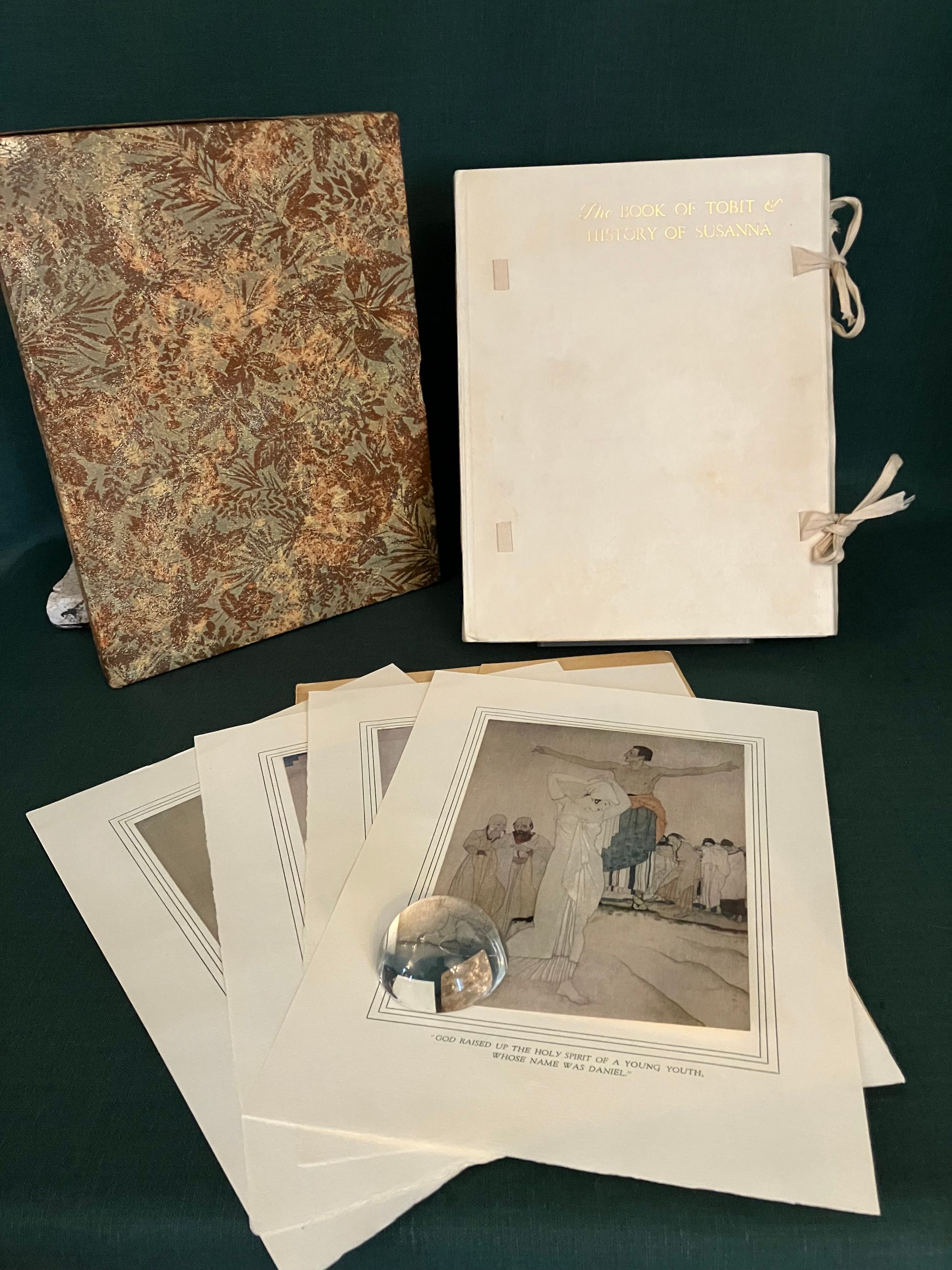
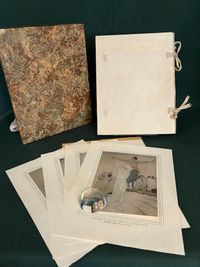
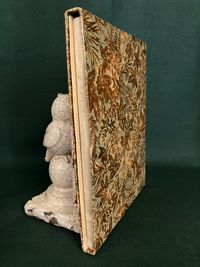
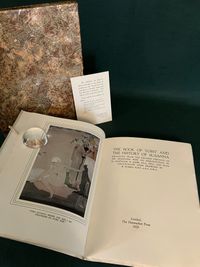
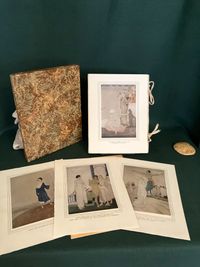
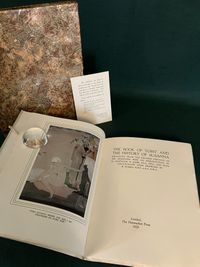
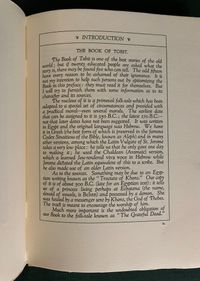
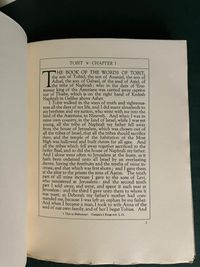
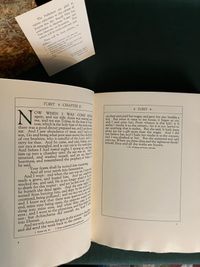
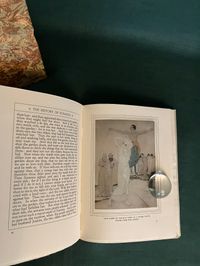
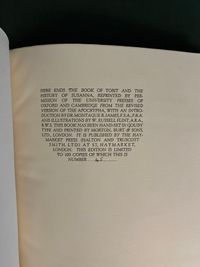
First Edition. Hard cover, 4to, bound vellum parchment over card, yapp edge, titles to front and spine in gilt, four intact natural woven silk ties, printed in black upon laid paper in Goudy typeface, within ruled borders, xvi, 47,[5]pp. Four full page chromolithographed plates of original watercolors by the Edinburgh, Scotland born Artist William Russell Flint (1880-1969) tipped in. Frontispiece entitled "Then Susanna Sighed, and said I am Straightened on Every Side." Also, an envelope with an extra suite of the plates, perhaps suitable for framing, is laid in. Original advertising card at the front identifies this as the Edition De Luxe, originally sold for 63s. Colophon: "Reprinted from the Revised Version of the Apocrypha," No. 45 of 100 copies for sale of this iteration. Original slipcase is restored with decorative foil paper-covering, the whole now protected with a mylar and velcro chemise.*CONDITION: Near Fine. The vellum parchment cover is lightly toned in places, as seen. One lightly bumped rear corner. Some pages are unopened. Previous bookseller notations in pencil to ffep. The plates are clean, and the extra set of plates are in similar, excellent condition. Envelope (containing extra plates) has one small closed tear. Slipcase is Fine. Cover is prone to a bit of warping, as is normal for this material. Overall, this is a really lovely book and definitely gift-worthy. **Scottish Illustrator, painter, engraver and designer Sir WILLIAM RUSSELL FLINT studied in Edinburgh at Stuart 's Melville College and later at the Heatherley School of Fine Art in London. His work as a commercial illustrator included pieces in the Illustrated London News, posters, and a number of books, including a famous version of Malory's Le Morte D'Arthur (1910). He became President of the Royal Society of Watercolorists in later life, and was knighted in 1947. **Here, the illustrations are composed of two scenes from the first story, "THE BOOK OF TOBIT" including the "Sarah Reproached by her Father's Maidservants: Dost Thou Know that Thou Stranglest Thy Husbands?" and "Sarah, the Daughter of Raguel." Aside from the frontispiece mentioned above, the fourth illustration is found within the separately half-title paged "History of Susanna," entitled " "God Raised up the Holy Spirit of a Young Youth Whose Name was Daniel." Tobit, partially unsighted by bird guano, loses sight completely when attended by a physician. He sends his son Tobias to recover monies owed at Nineveh (upper Mesopotamia). Tobias is helped by the Angel Raphael, in disguise, who aids him by instruction on a potion which promises to drive out demons, as well as cure blindness. Tobias's lady friend Sarah is possessed by the demon Asmodius, who destroys her potential suitors. Back in Nineveh, Tobit regains his sight. **THE HISTORY OF SUSANNA came from the biblical Book of Daniel, was also judged by various canonical gatekeepers as apocryphal. This did not stop the story from having longstanding cultural influence. In it, the young woman Susanna, is spied upon by two elders while at her bath, taken within the expected privacy of a locked, walled garden at her home. When she refuses their demands, they endeavor to shame her, accusing her of adultery with a fictitious young man. Daniel unravels the truth after her arrest and trial. The story was widely known within different religious and cultural traditions (Greek, Jewish, Catholic, and Eastern and Oriental Orthodox for instance,) and was represented through the centuries in the arts. The Susanna story is also recounted in the original One Thousand and One Nights of Arabic folklore. **Compiler M.R. JAMES (1862-1936) who introduces this volume, is perhaps better known as an author of ghost stories. He was, however, a scholar, Professor, and finally Provost at King's College, Cambridge, deploying a double first in classics and archeology, in the study of architecture, history, and becoming a leader in the field of palaeography. He published at least one work in on the "Apocrypha of the New Testament" reviewed in the Times Literary Supplement, 1 May, 1924: J. Cox, (1969). See our related M.R.James titles, nos. 9640 AND 8200.) J. Sutherland (1989) p. 326. DNB. (AMJ)
Ref: ILLUS 9726
$800.00