 |
 |
 |
 |
 |
 |
 |
 |
 |
 |
 |
 |
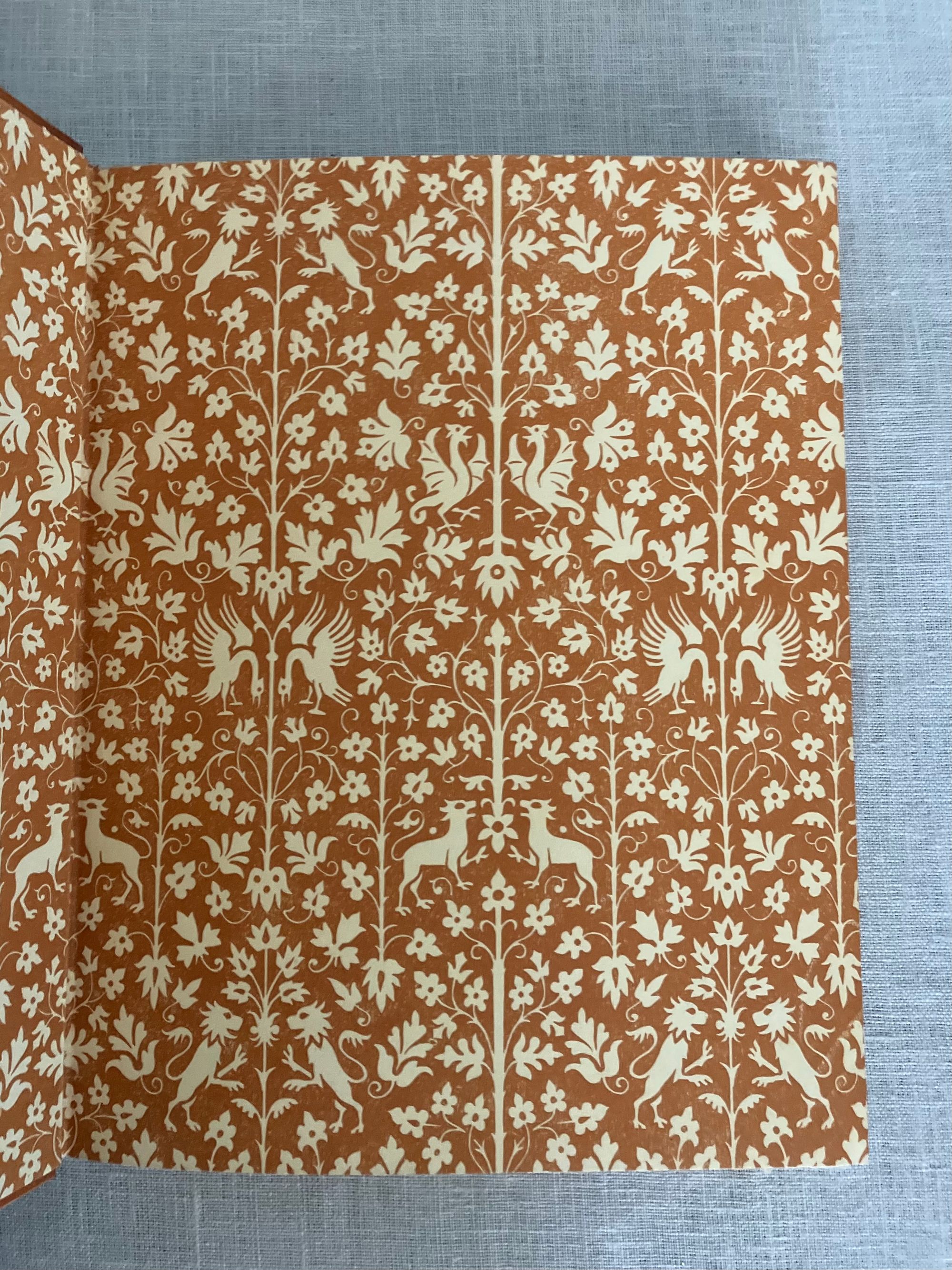
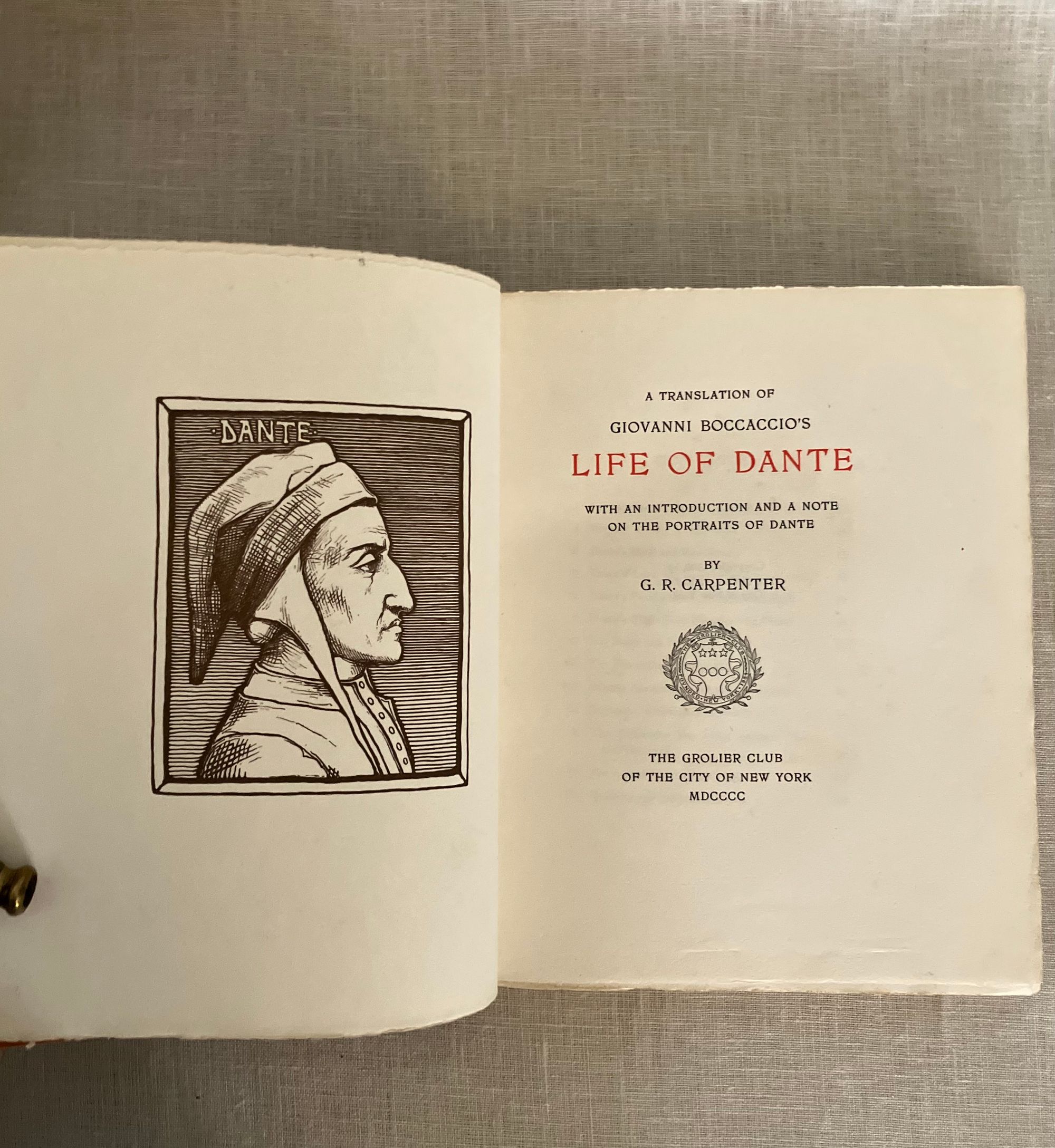
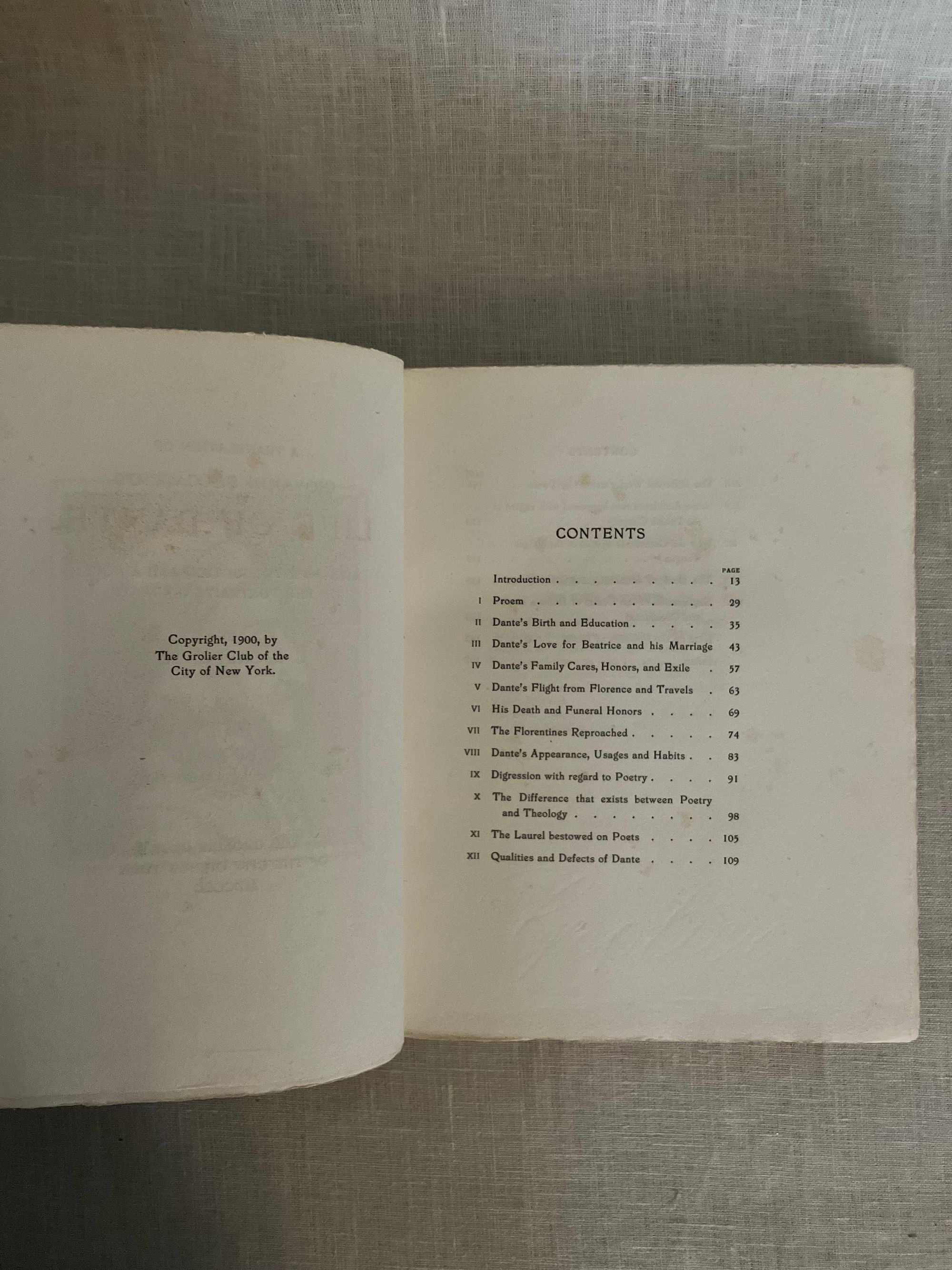
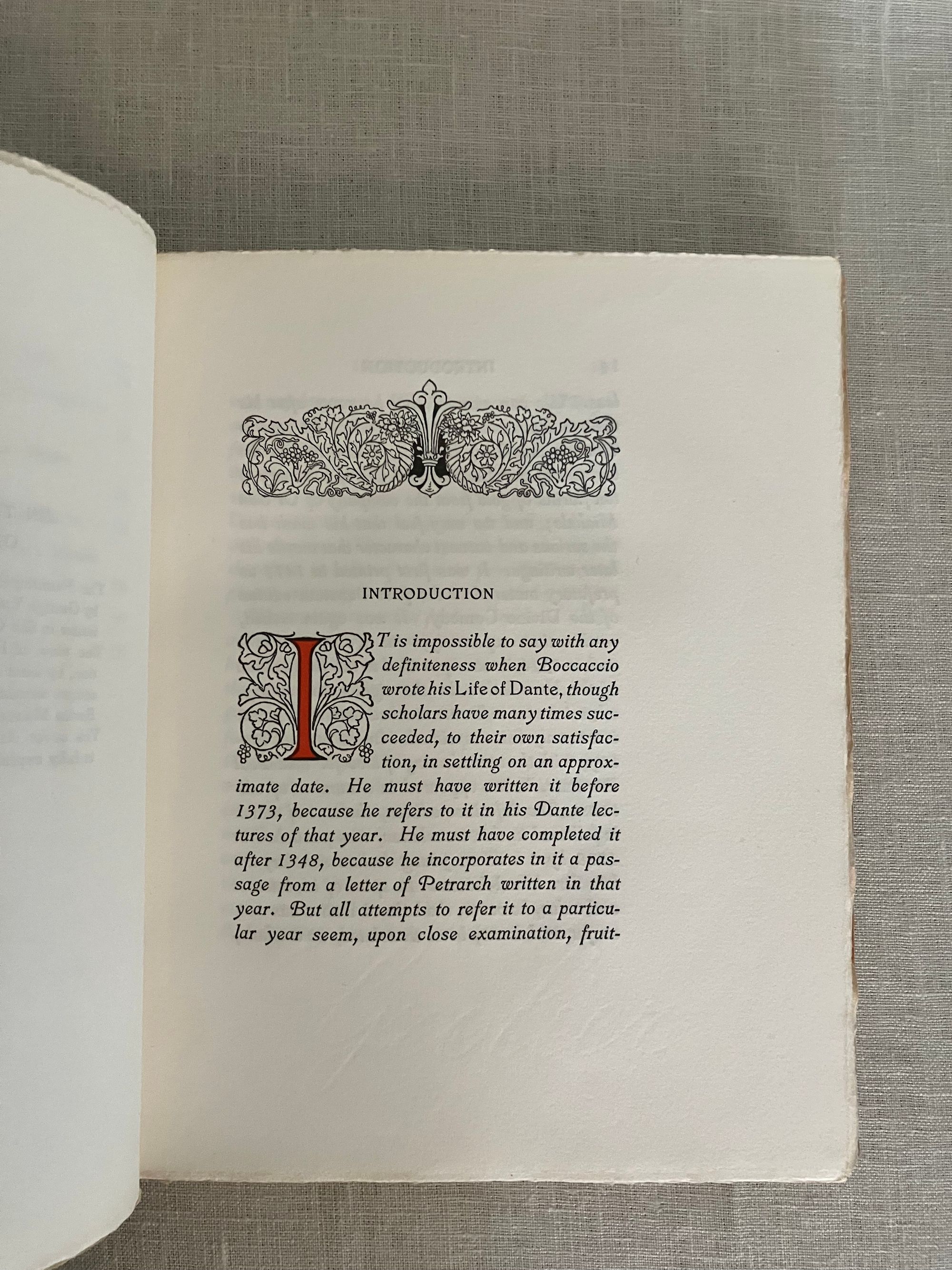
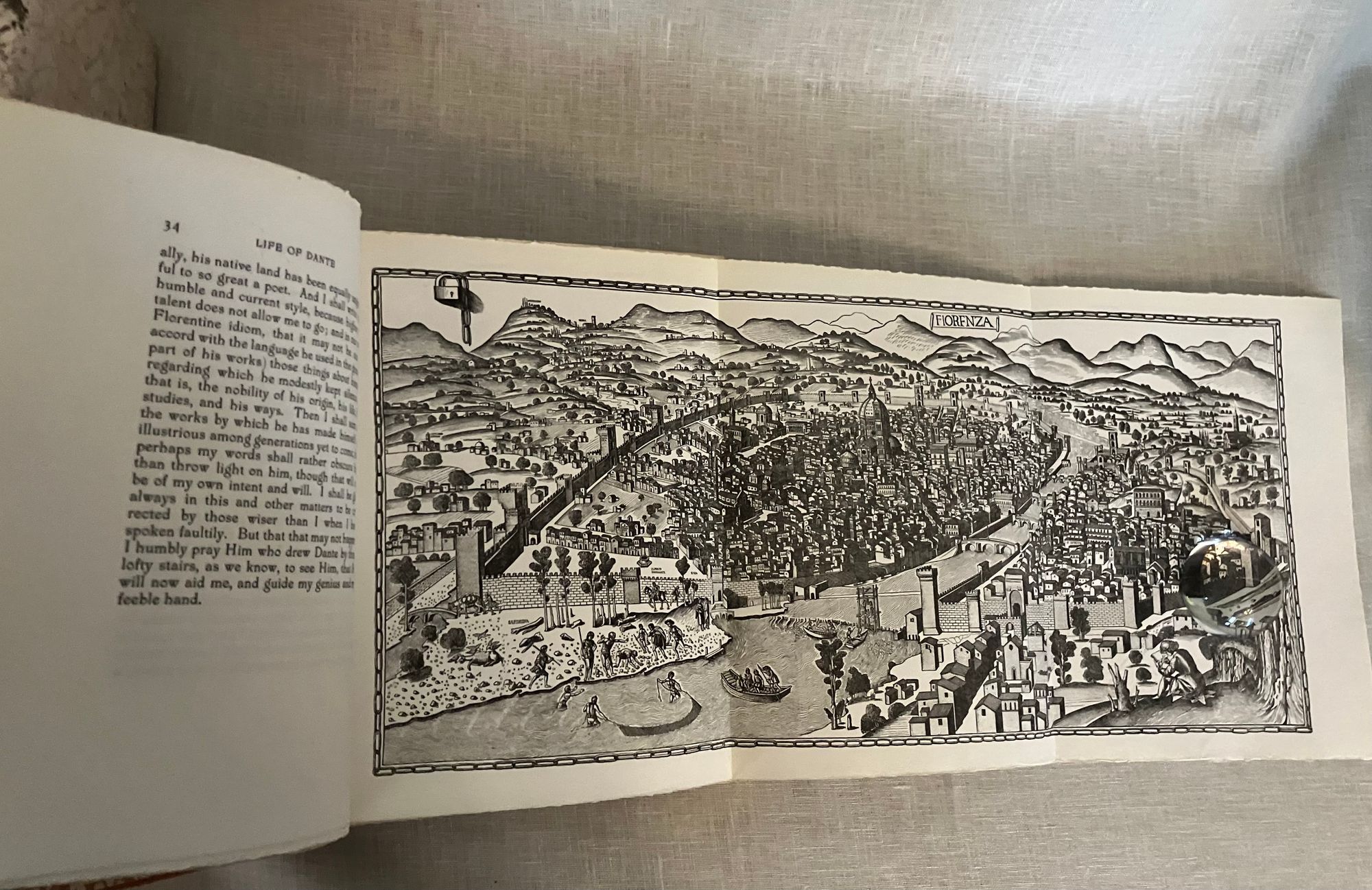
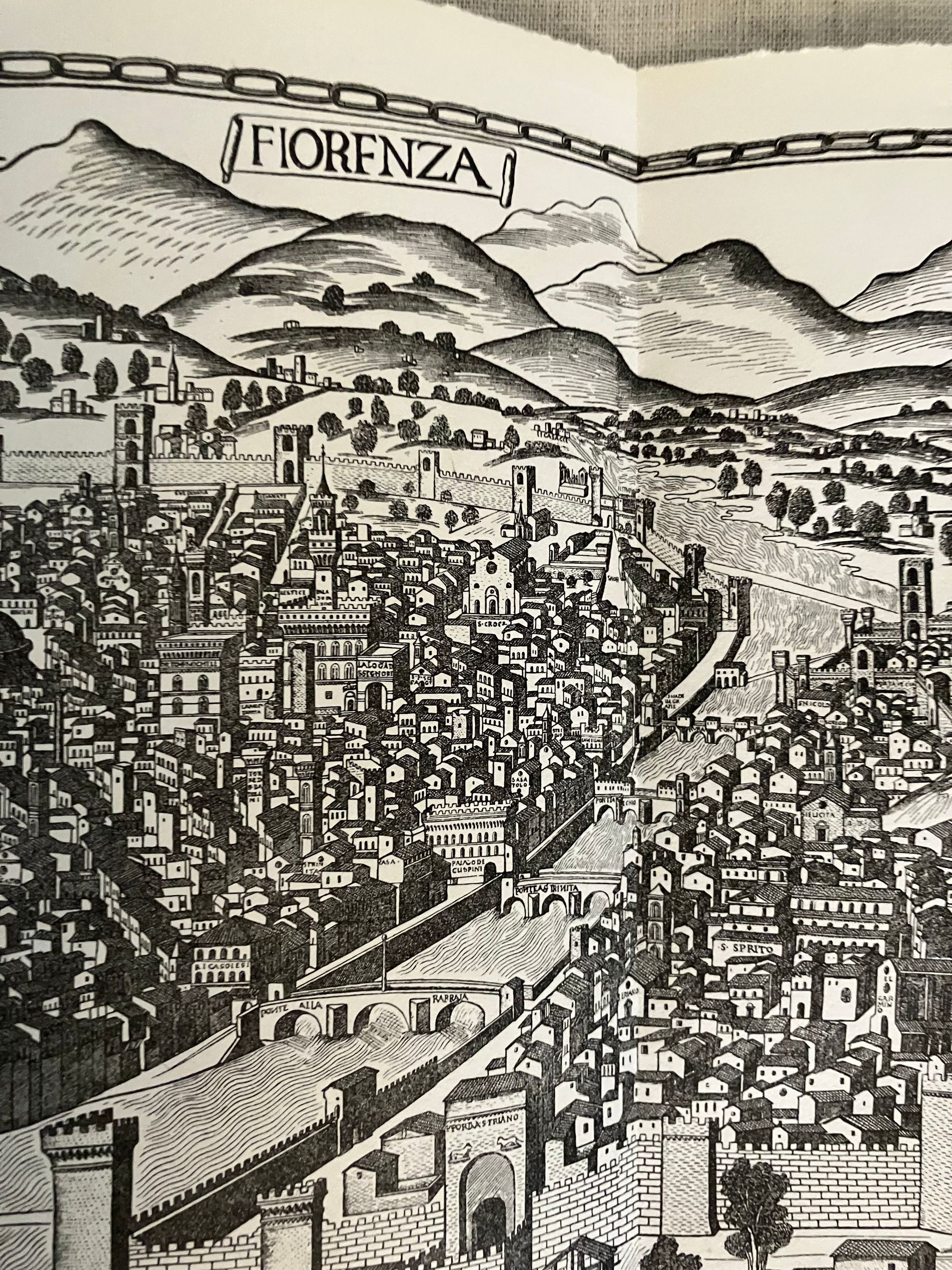
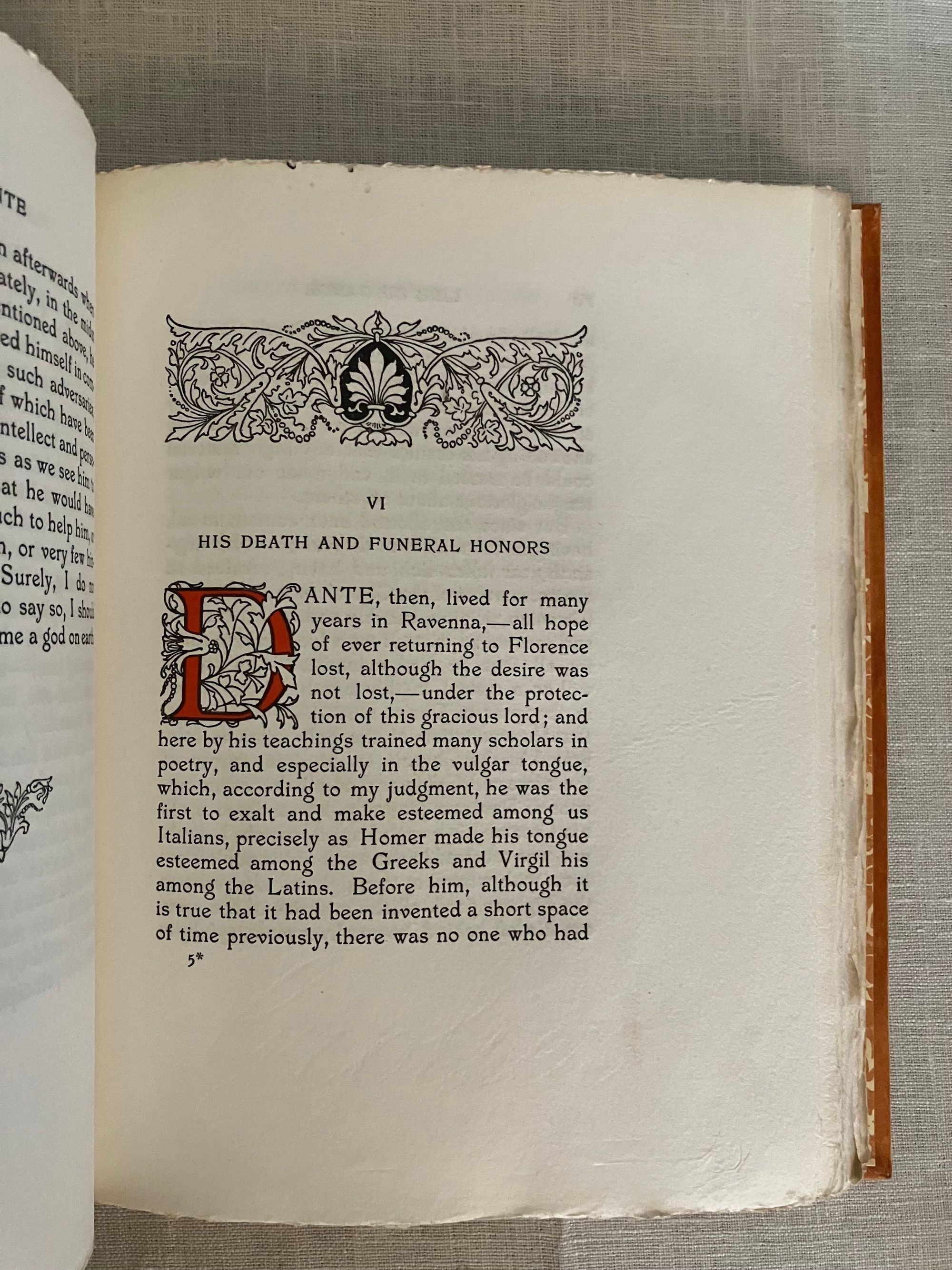
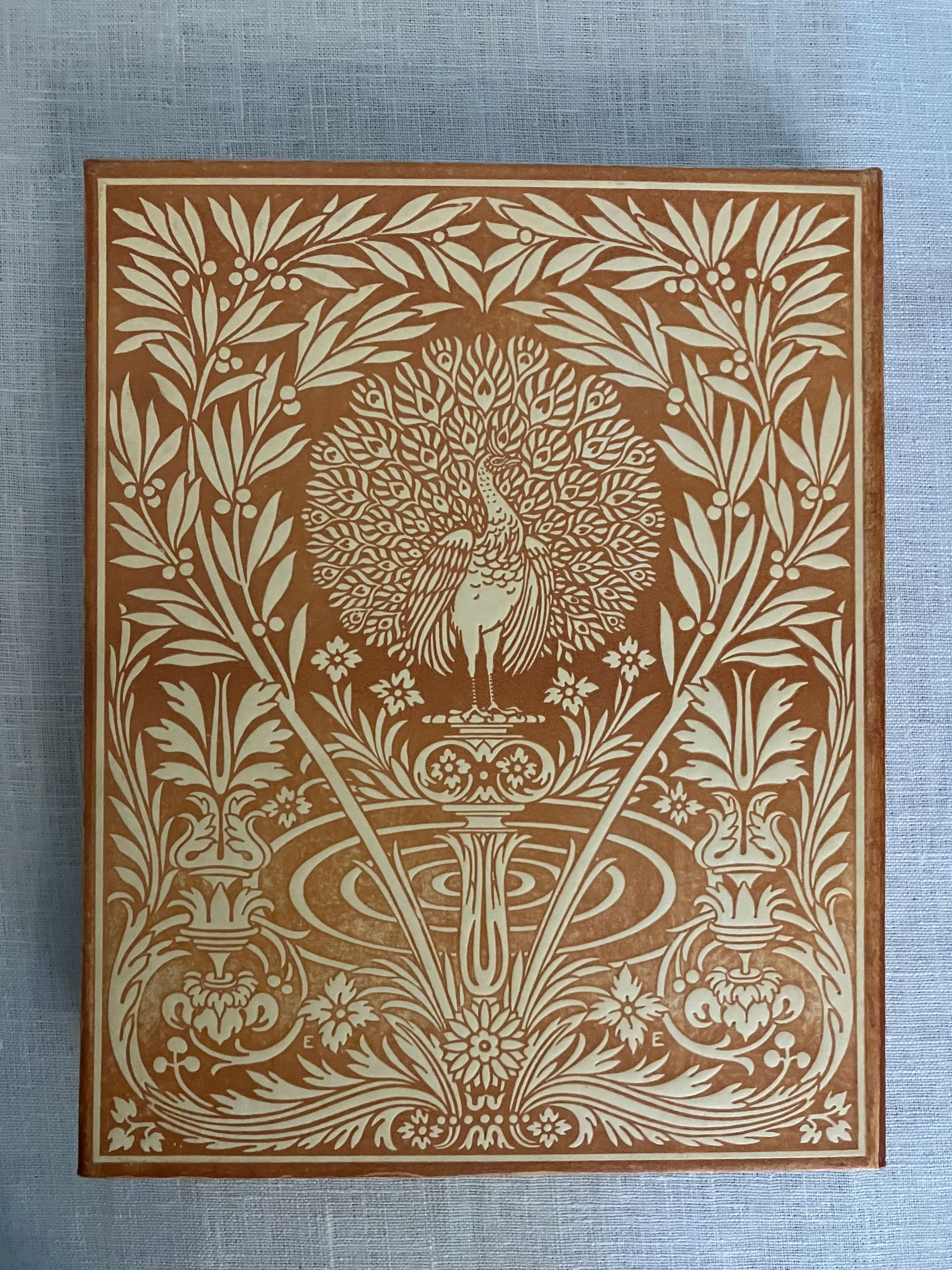


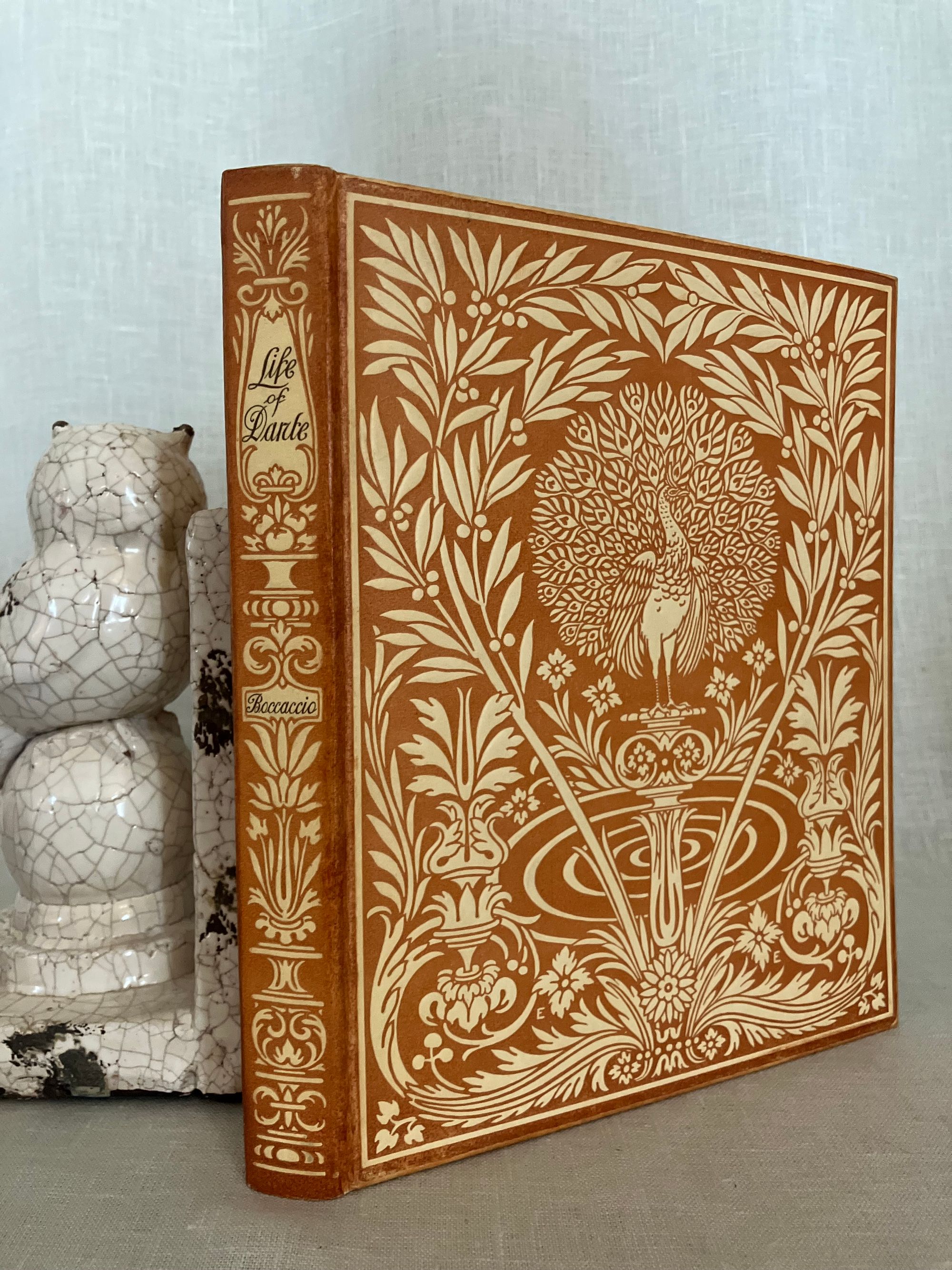
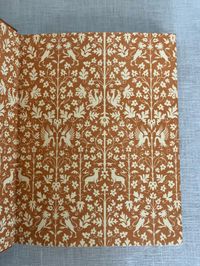
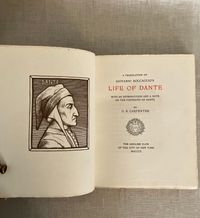
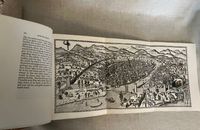
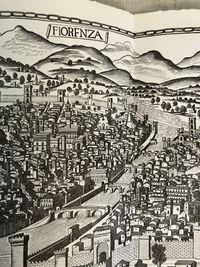
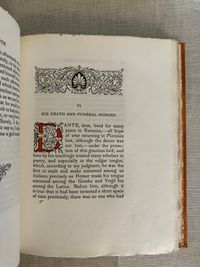
Hard cover, small 4to, bound in decorative orange embossed upon vellum covered boards, and featuring an art nouveau style peacock decoration central to both boards, surrounded by arching berry-bearing laurel branches, flowers and neoclassical rosettes and other architectural flourishes. The spine with similar decoration and titles in black ink. Cover is signed in the design "EE" for Edward B. Edwards. Printed by the DeVinne Press on Italian rag paper, watermarked "Grolier," with the fore- and lower edges untrimmed. Decorative printed endpapers. Features decorative chapter headers and footer vignettes of Italianate design, with, variously, lions, fruiting and flowering fleur-de-lis, Green Man, harpies, urns and similar amid twining flowering vines (such as seen on painted cabinets in the Vatican.) Decorated carved capitals are printed with orange and black. This was the first book printed in the Renner typeface designed by pressman, Grolier Club co-founder, and notable American printing historian THEODORE DE VINNE (1828-1914), and based on a the work of 15th century Venetian printer Franz Renner. (First edition, in a stated limited run of 300 copies (although not numbered.) Text in English. Dante frontis. portrait drawn by George Varian from a miniature in the Codex Riccardianus, 1040. The large foldout illustrated and titled map of Florence is reproduced from a woodcut at the Berlin Museum dated prior to 1490. [2], (1-9), 10, (11-13), 14-186, (187), [3]pp. CONDITION: Near Fine. Lacking original chemise and slipcase, but provided with a mylar velcro chemise to keep clean. Some partial fading to lower rear board; see last photo. Hinges and joints in order, with no wear seen, and no shelf wear. Binding square. A bit of very pale foxing to prelims only (half title and first page table of contents). **About the cover: Graphic artist and Cover Designer EDWARD B. EDWARDS (1873-1948) was a student of Howard Pyle, and trained abroad in Paris, Munich and Rome. He designed a few titles for the Grolier Club publications and did other New York commissions, as well as work on covers for Harpers, Outlook and Century magazines. He was a founder and director of the American Institute of Graphic Arts (Schoonover Studios dotcom) The design here is a graphic interpretation of the vision Dante's mother has prior to the poet's birth, the allegorical meaning of which is discussed by Boccaccio within the first and last chapters. She sees her child eating laurel berries and drinking from a stream running nearby. He falls, and becomes a peacock...all design elements seen in the cover. From this, the tradition of the laurel crown for poets and emperors is derived, via the Greek mythological story of Phoebus and Daphne.** Translator GEORGE RICE CARPENTER (1863-1909) was a Massachusetts-born educator, critic and scholar who taught at Harvard, MIT and Columbia Universities around the turn of the twentieth century, and wrote a number of biographies of American writers, as well as textbooks. In his Introduction, the translator claims that GIOVANNI BOCCACCIO, ( 1313-1375) medieval Italian author famous for his plague-era set of stories forming "The Decameron," virtually invented biography with the current title. His "Life of Dante" (or "Trattatello in laude di Dante," is estimated to have been written between 1348 and 1373, with the author having access to near contemporaries of his subject. Carpenter bases this first complete translation ("in any language") from the texts of Dr. Marcri-Leone (1888) and Mr. P.H. Wicksteed (1898). **His subject, DANTE ALIGHIERI (1265-1321), aside from his most famous poetical works "The Divine Comedy" and "La Vita Nuova," both importantly composed in the vernacular Florentine idiom (rather than Latin) was well-known for two things. Boccaccio burnishes his reputation for Dante's great childhood love of Beatrice Portinari, met while both were still children. It is a romance not to be long lived, and the Poet is married off in consolation to a replacement bride (never actually named), from whom he is separated by political exile for most of the marriage. Boccaccio outlines some of the historical background of the two sword-wielding political factions in the leadership of the medieval Florentine republic, the Guelphs vs. the Ghibellines, and the resultant exile of Dante Alighieri for being on the wrong side of history. But he also shows that Dante was able to travel, and study extensively, paradoxically creating his greatest works while on the run and as the esteemed guest of his protective and admiring friends in places such as Bologna, Urbino, Paris and Ravenna. The story of the publication of his works is told with the finding of the final cantos of "The Divine Comedy" in a moldy hole in the wall of a friend's house by his sons, months after the poet's death, being a fitting closure of the tale. The tragic love story of Dante and Beatrice would become its own theme depicted by others such as the Pre-Raphaelite painters Dante Gabriel Rossetti and Henry Holiday in the Victorian era. "Catalogue of the Work of the DeVinne Press," (New York, Grolier Club, 1929) No. 115, p. 56. (AMJ)
Ref: FINE 9715
$550.00