 |
 |
 |
 |
 |
 |
 |
 |
 |
 |
 |
 |
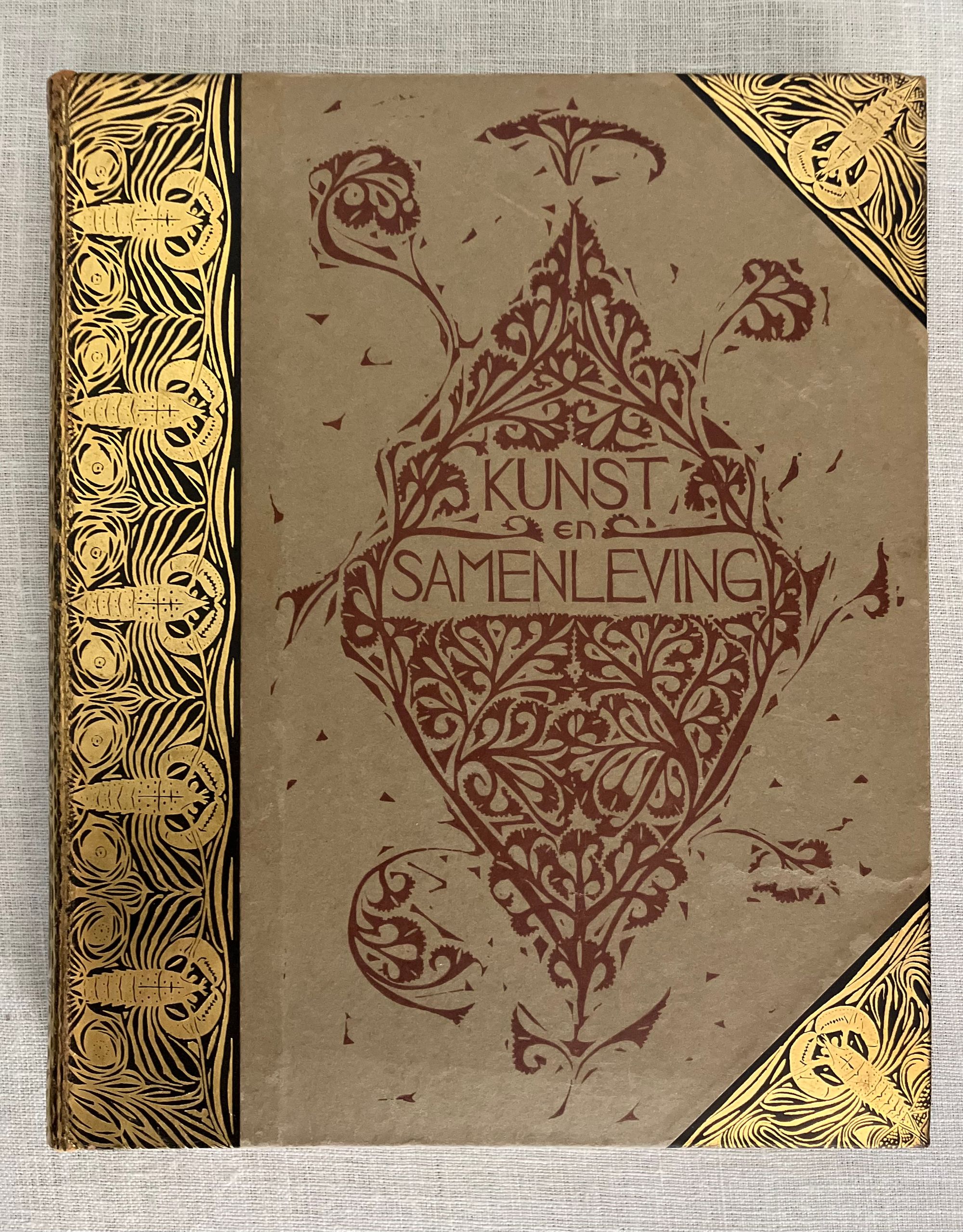
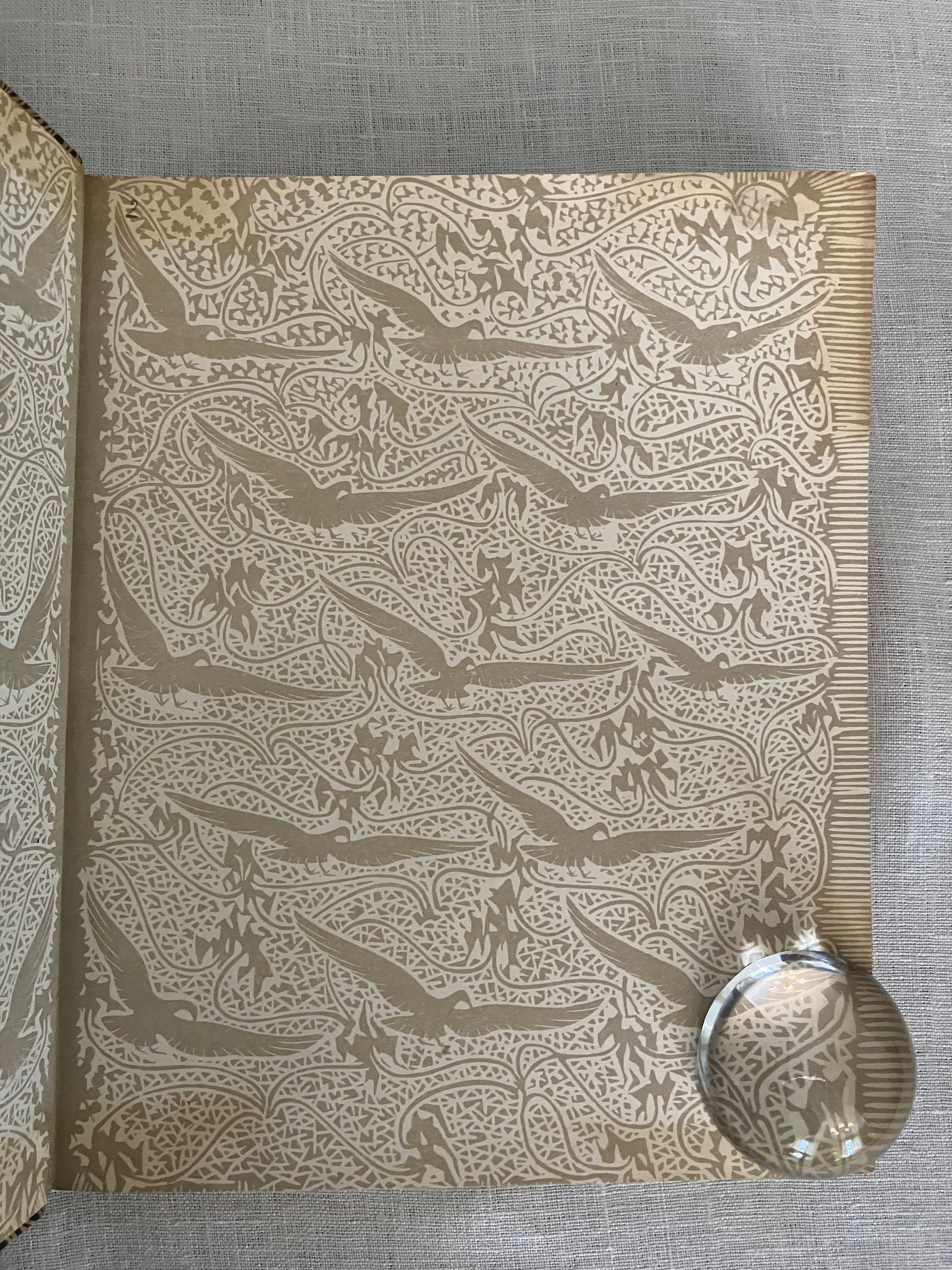
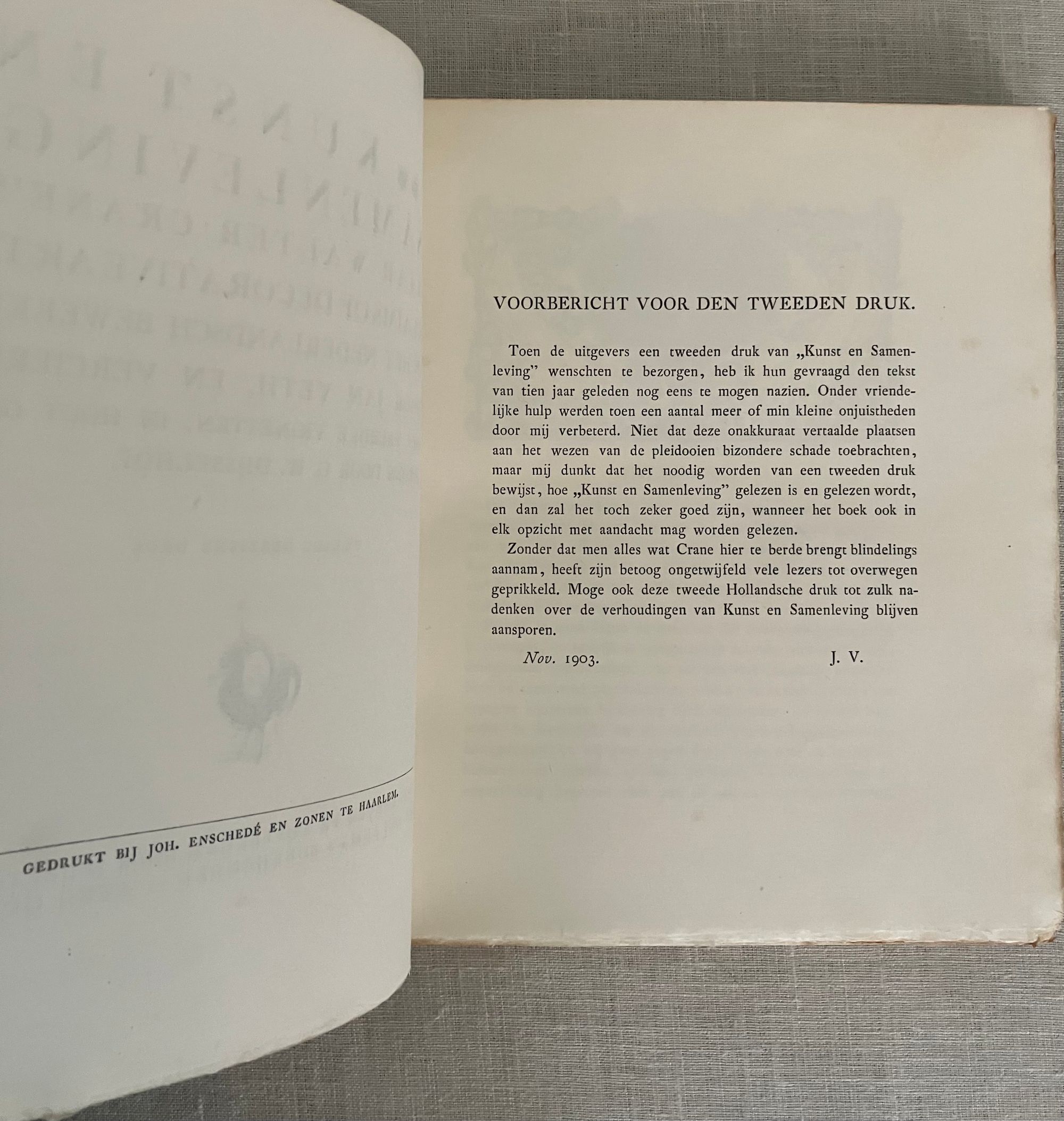
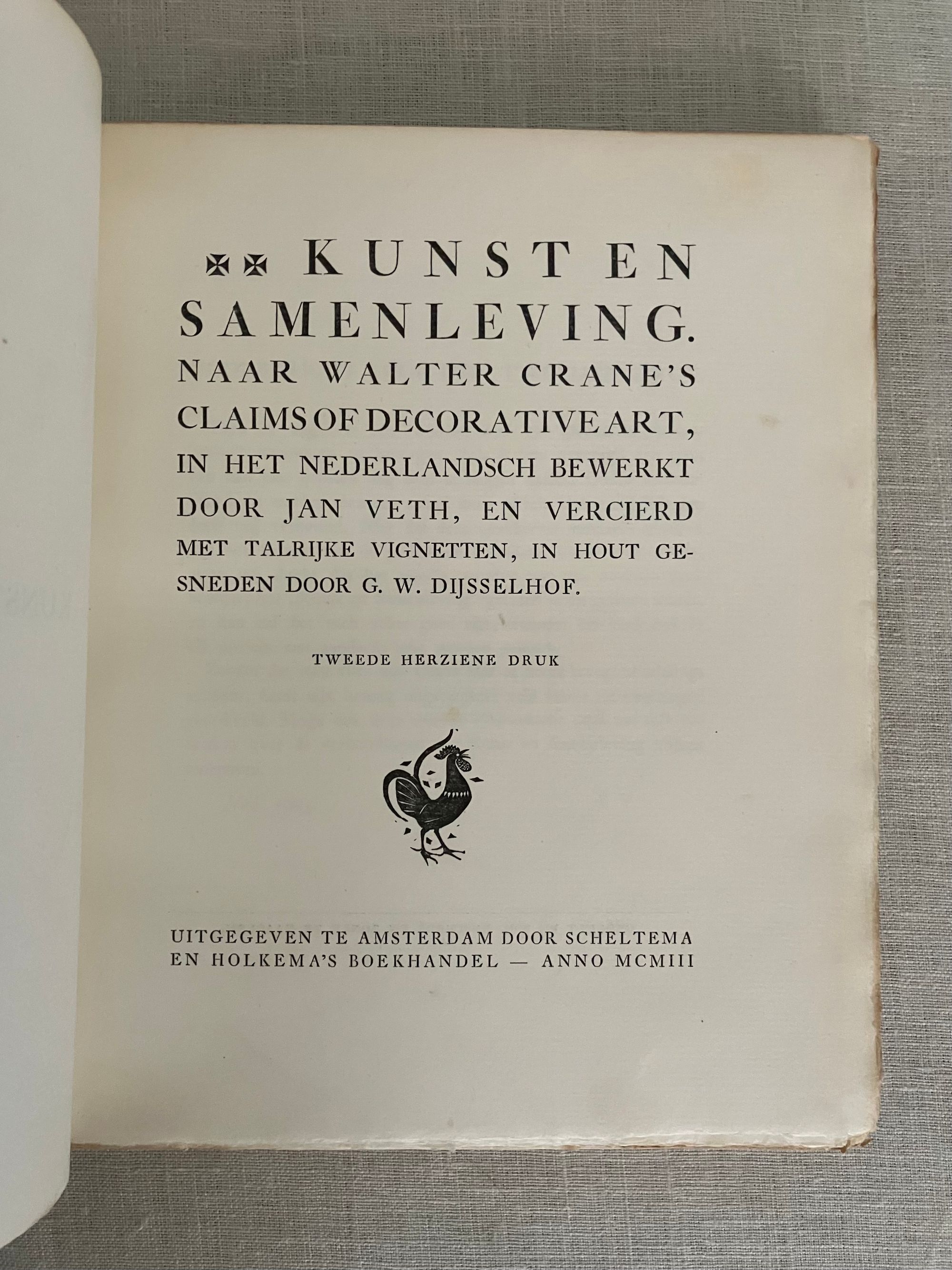
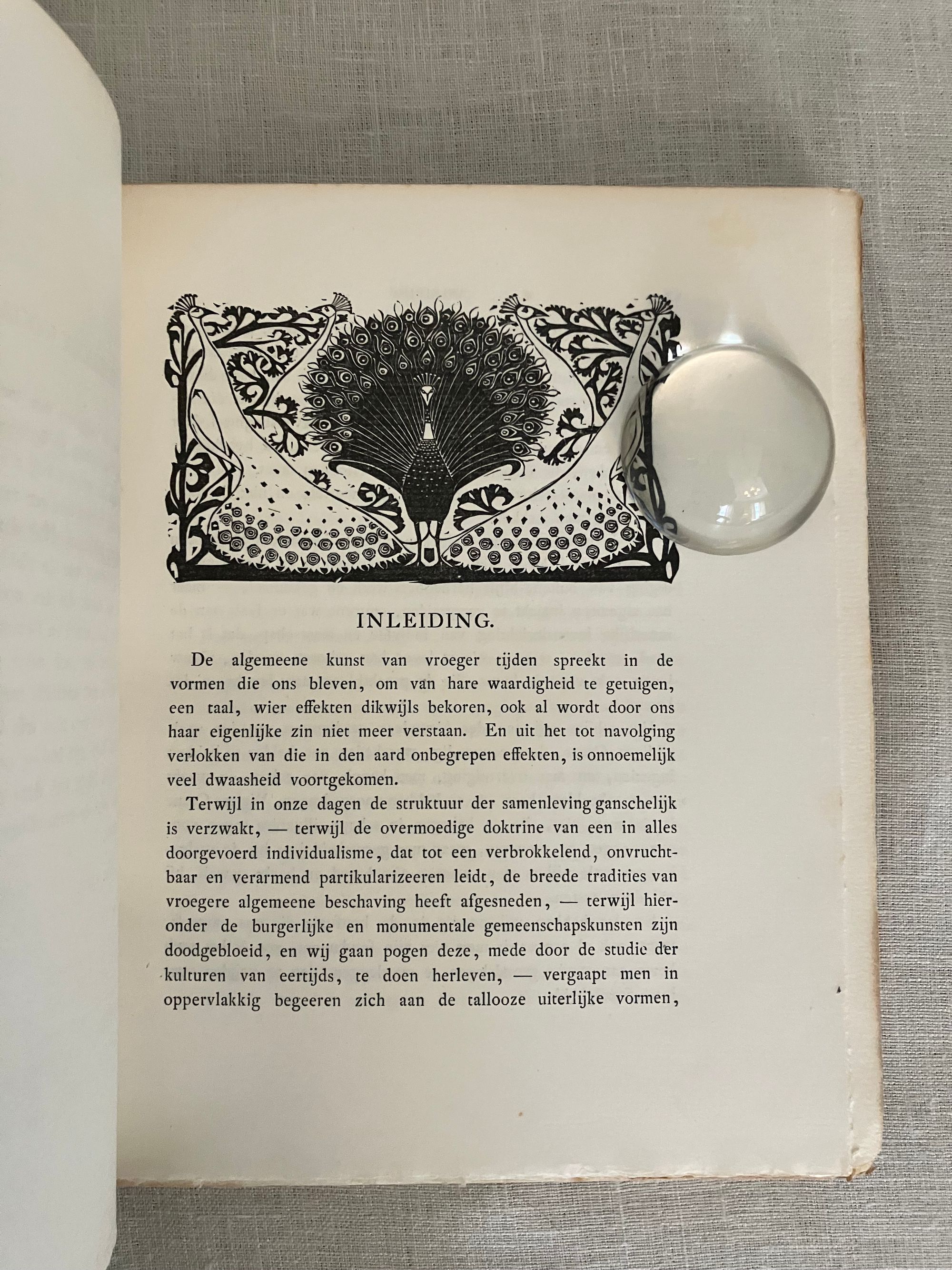
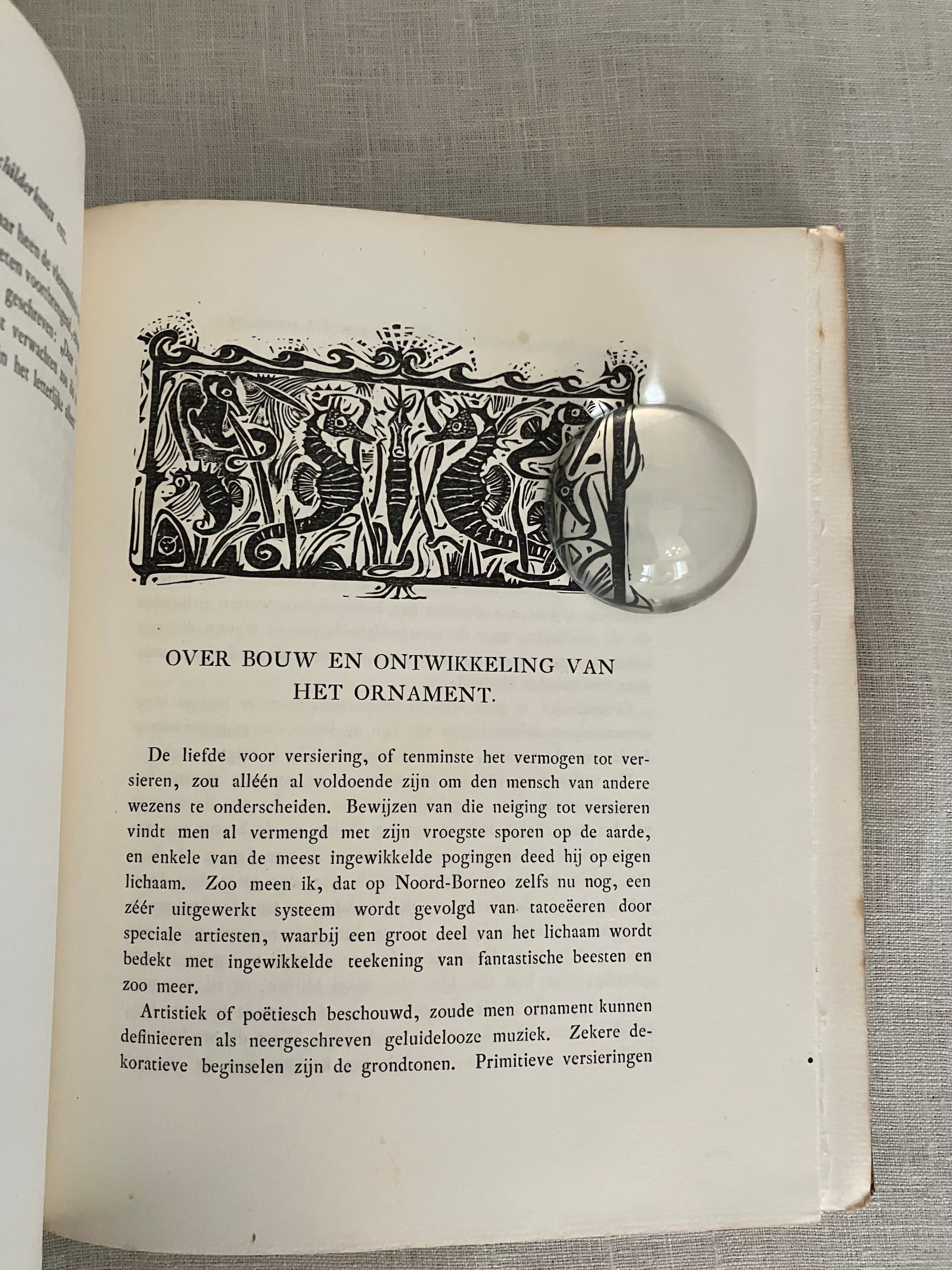
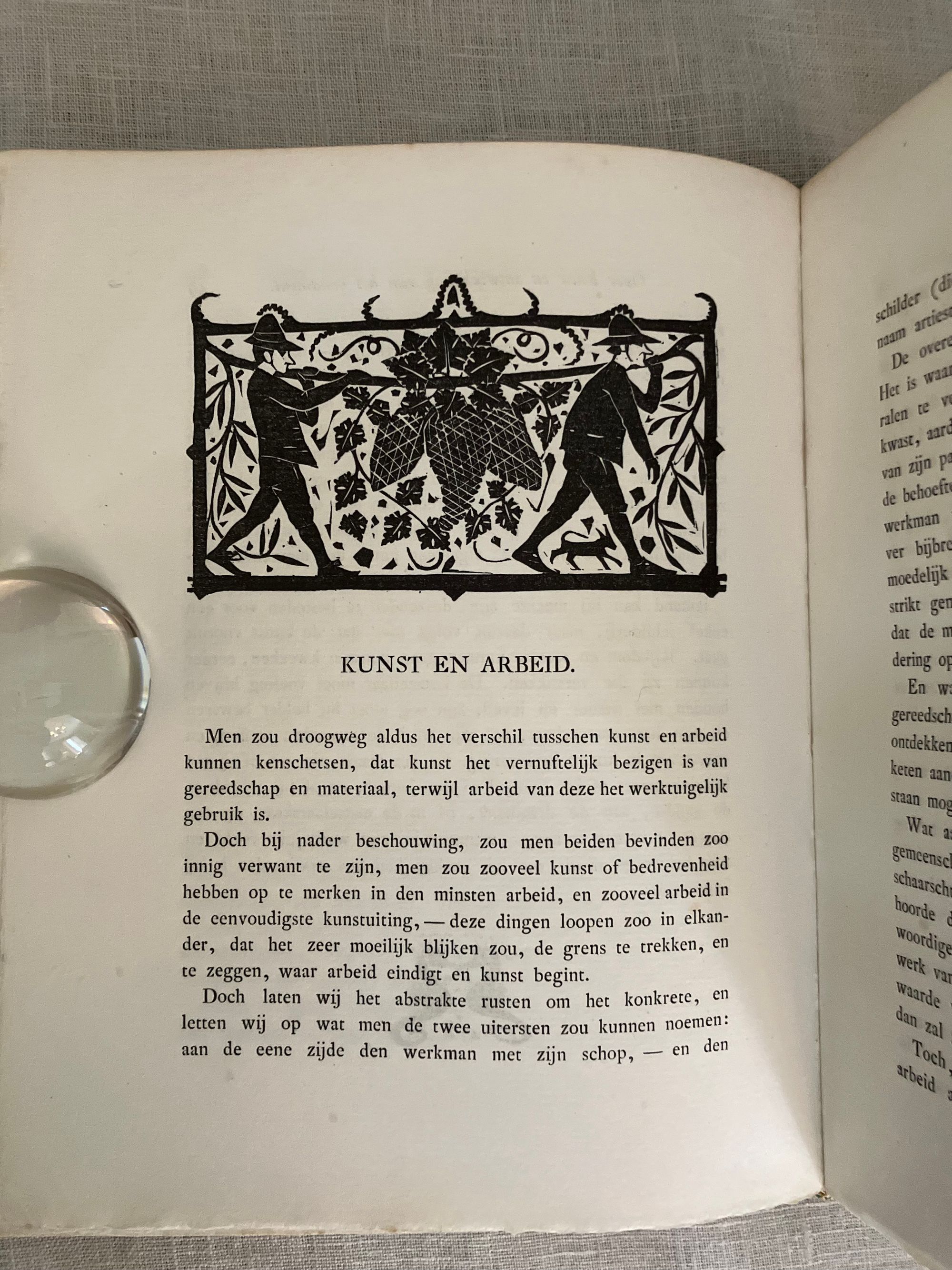
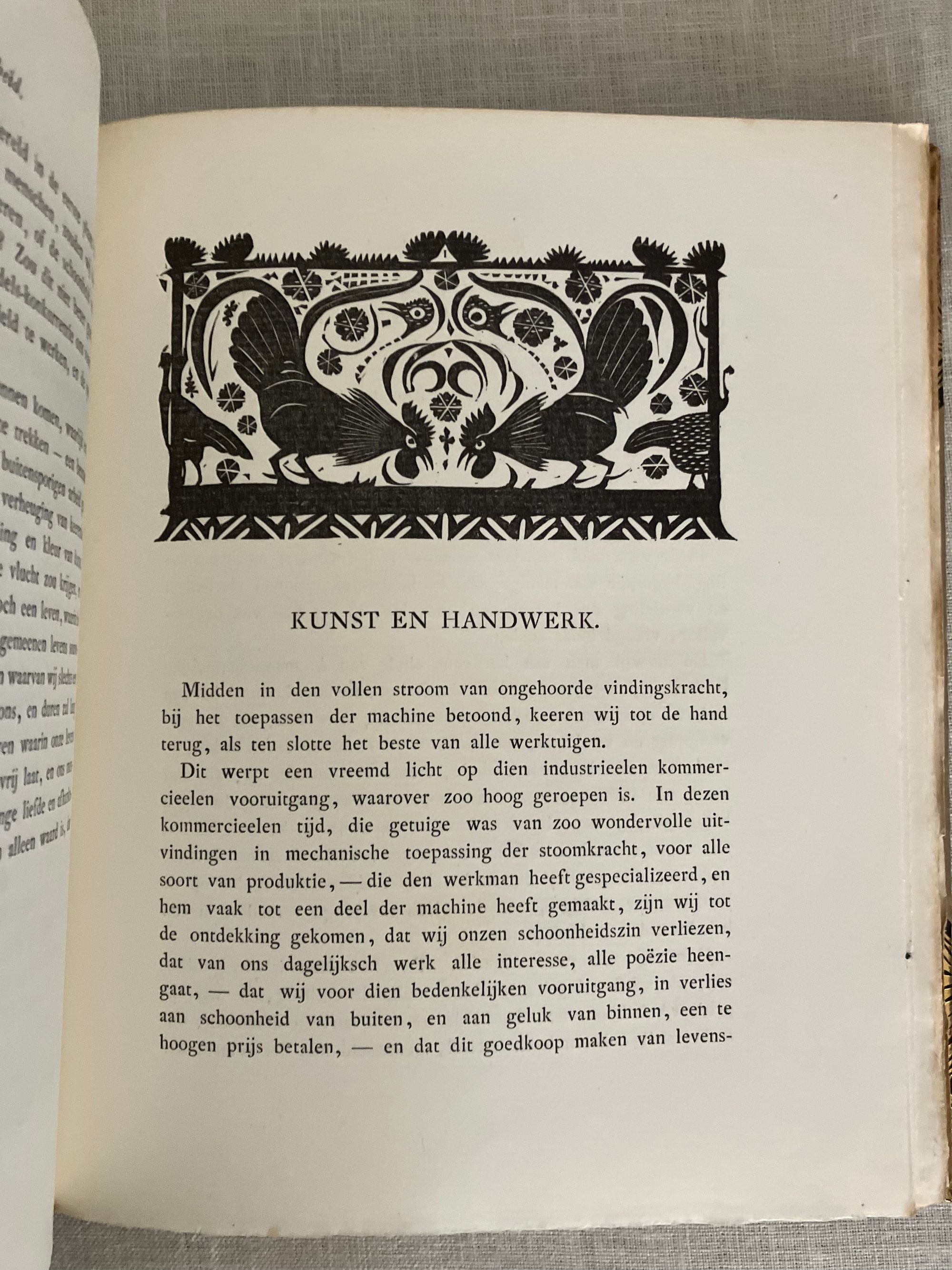
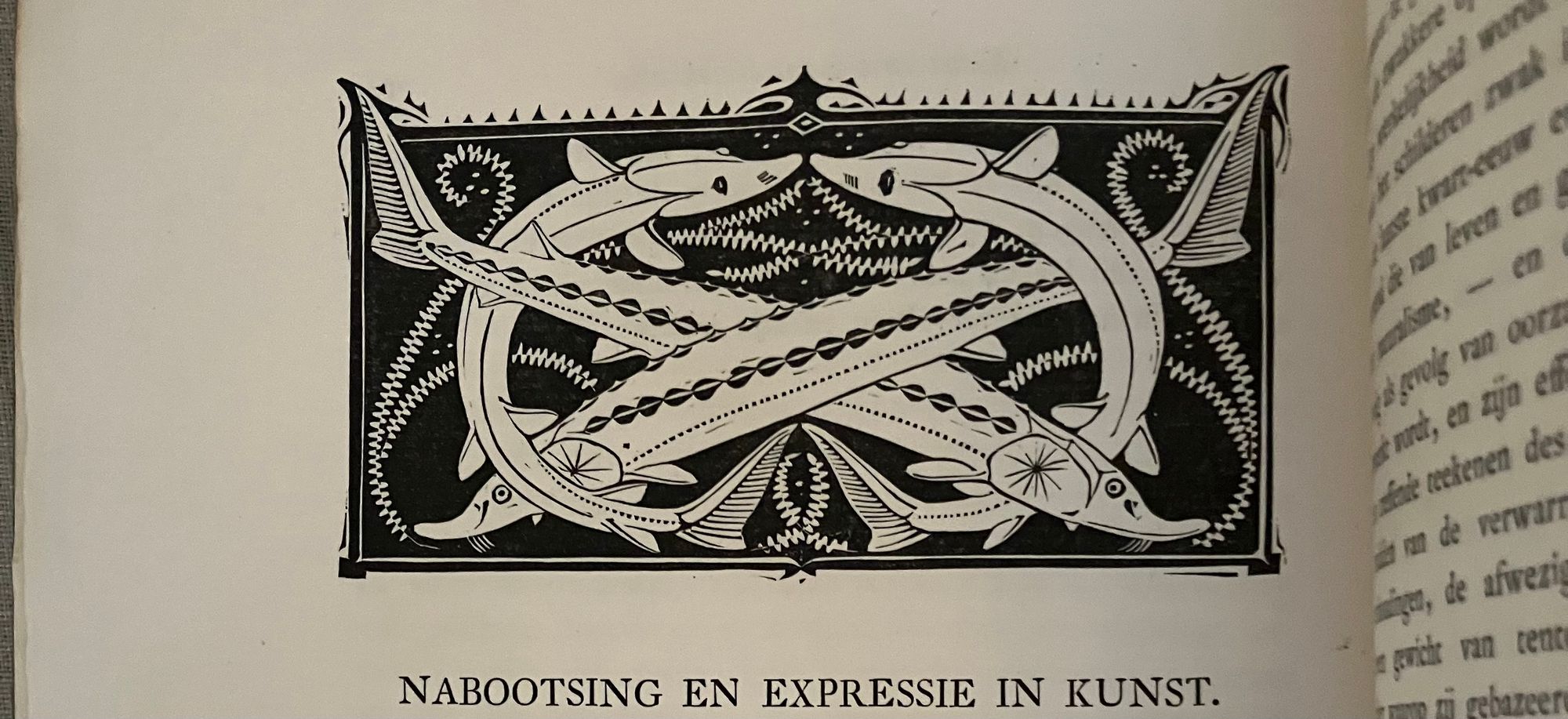
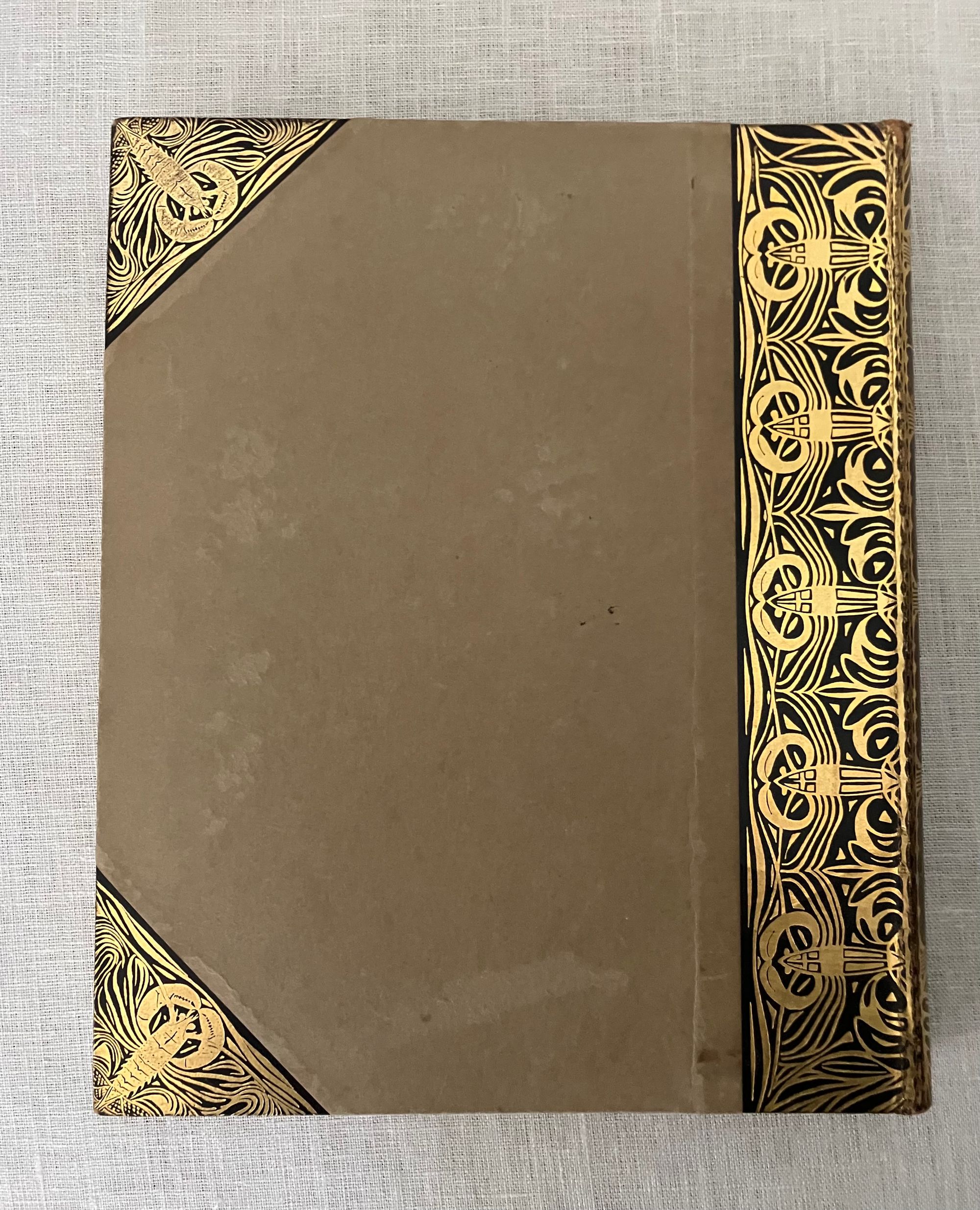

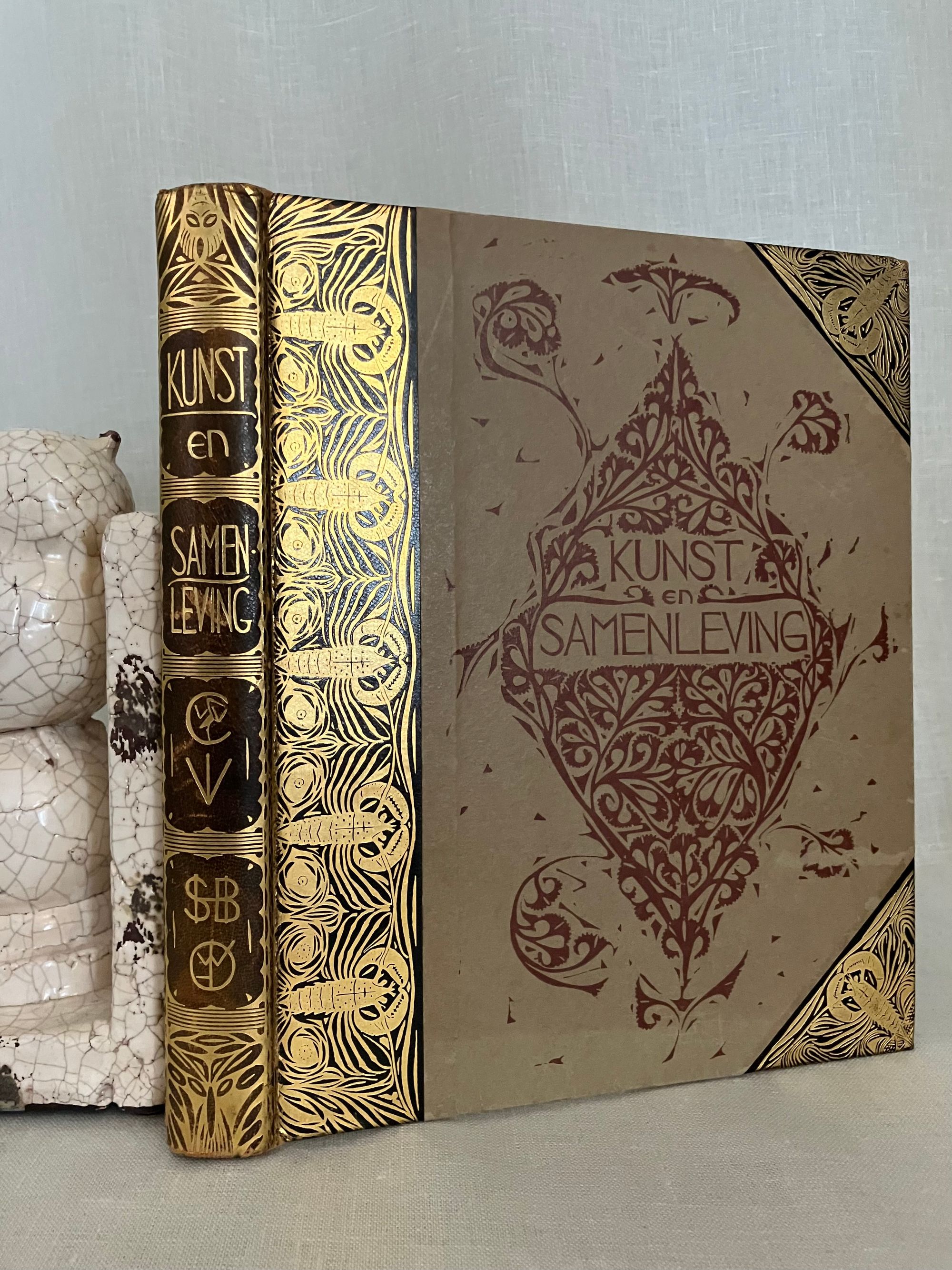
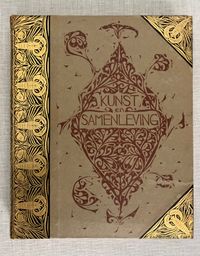
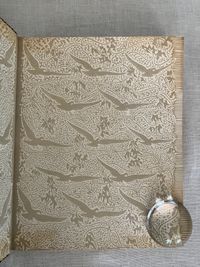
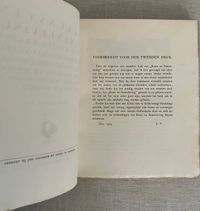
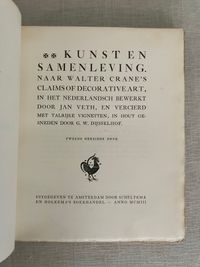
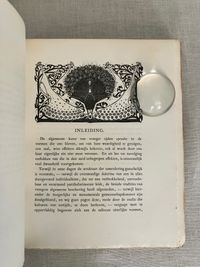
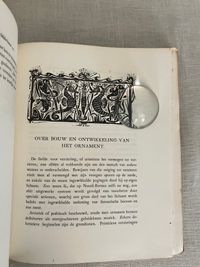
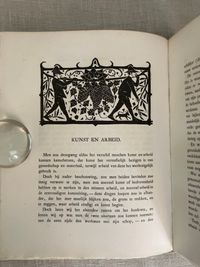
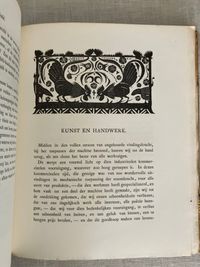
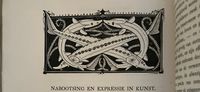
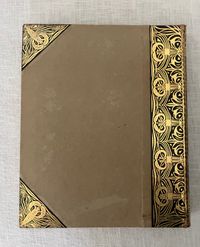
Hard cover, 8vo, in three-quarter leather binding over buff colored boards decoratively blocked in gilt with stunning Nieuwe Kunst Dutch art nouveau style pictorial bands along the joints and at the large triangular corner pieces of lobsters and perhaps abstracted oysters?, the legs of the shellfish intertwined with some sort of sea wrack. This gilt design carries neatly across the spine, where five sets of horizontal lines appear through small gaps in imitation of the cords which would sew a hard cover book together. The spine design continues across the hinges with the title and various runic-like colophons within gaps in the design. These refer to (from the top): the original English author Walter Crane; translator JV; publisher SHB, and artist GWD. The rear hinge area features the lobster motifs in a more simplified form. The title vignette to the front board is printed in red, and forms part of a diamond shaped carved woodblock Javanese batik design, which is said to also inform the triangular and other geometric aspects of the design (See Purvis, p. 128 on Javanese design influence; also Elliot, p. 86.) Dijsselhoff also designed distinctive the batik-like endpapers printed in gold. This well-made book has been recognized for using only the best of materials, including "real" gold for the gilt and printed on heavy rag paper. **CONDITION: Very Good or better. Lacking original decorated dust jacket. A few scuffs to the paper covered boards. Light wear at outer joints. A few scuffs to the spine. Slight offset browning to corners of endpapers. The gold remains bright. **"A "masterpiece of Nieuwe Kunst book design and Dijsselhof's most significant contribution to the movement." (Purvis, p. 127)**Dutch ARTIST and book cover designer GERITT WILLEM DIJSSELHOFF 's 1886-1924) contribution to this work is particularly noteworthy with its unusual lobster and seaweed themed bands of gilt illustration on the binding, his woodblock illustrated endpapers and thirty-five wood carved block printed headers and footers in the art nouveau style, many of which feature animals, fish and birds. Dijsselhoff was an accomplished painter, who produced naturalistic color studies of fish (and lobsters) observed from visits to the Natura Artis Magistra, the famous zoological gardens and aquarium in central Amsterdam, of which he was a member. The first edition was published in 1893. TRANSLATOR Jan Veth (1864-1925) was Professor Extraordinary in the History of Art and Aesthetics (1906) associated with the Rijksakademie voor Beeldende Kunsten in Amsterdam, in addition to being a talented portraitist, art critic and designer of at least one book. This particularly innovative book design has been extolled by such art historical luminaries as Nikolaus Pevsner, Ernst Braches and Alston W. Purvis as exemplary of the Dutch expression of "Nieuwe Kunst;" or the art nouveau in Holland as applied to architecture, paintings, crafts, posters, vases, furniture, ornament and book design from roughly 1892- 1906. (See Purvis, p. 127-28.) Walter Crane's essays in the Claims of Decorative Art, part of the larger work, "Art and Society" first published in London in 1892, were influential with his Dutch counterparts, with principles for good design, and the argument that moral good in society came from the social democracy promoted by support of the craftsperson. Conversely, that mass industrialization had destroyed the traditional links of fellowship which had in the past bound craftsmen and artists together. **REFS: I.M. Elliot," Batik Fabled Cloth of Java," (New York: Clarkson N. Potter and Crown Publishing, 1984--our number 7953). Braches, Ernst, Dutch Art Nouveau... ( Amsterdam: De Buitenkant, 2009) pp. 28-32. A.W. Purvis, "Feast of Dutch Diversity: Nieuwe Kunst Book Design" from The Journal of Decorative and Propaganda Arts 2002, Vol. 24 Designm Culture, Identity: The Wolfsonian Collection (2002)pp. 118-139. Scarce to market. (AMJ)
Ref: BAAC 9709
$850.00