 |
 |
 |
 |
 |
 |
 |
 |
 |
 |
 |
 |
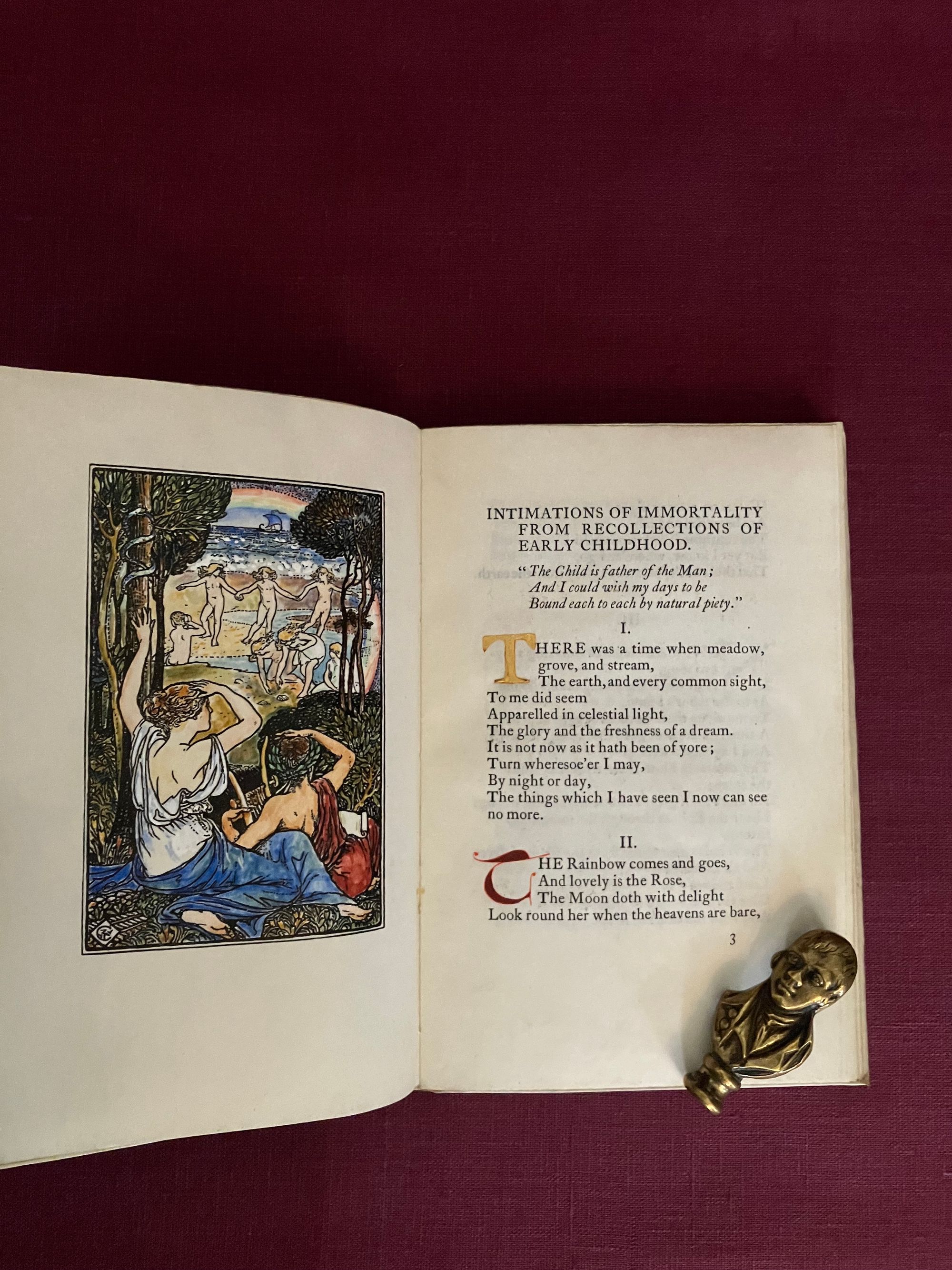
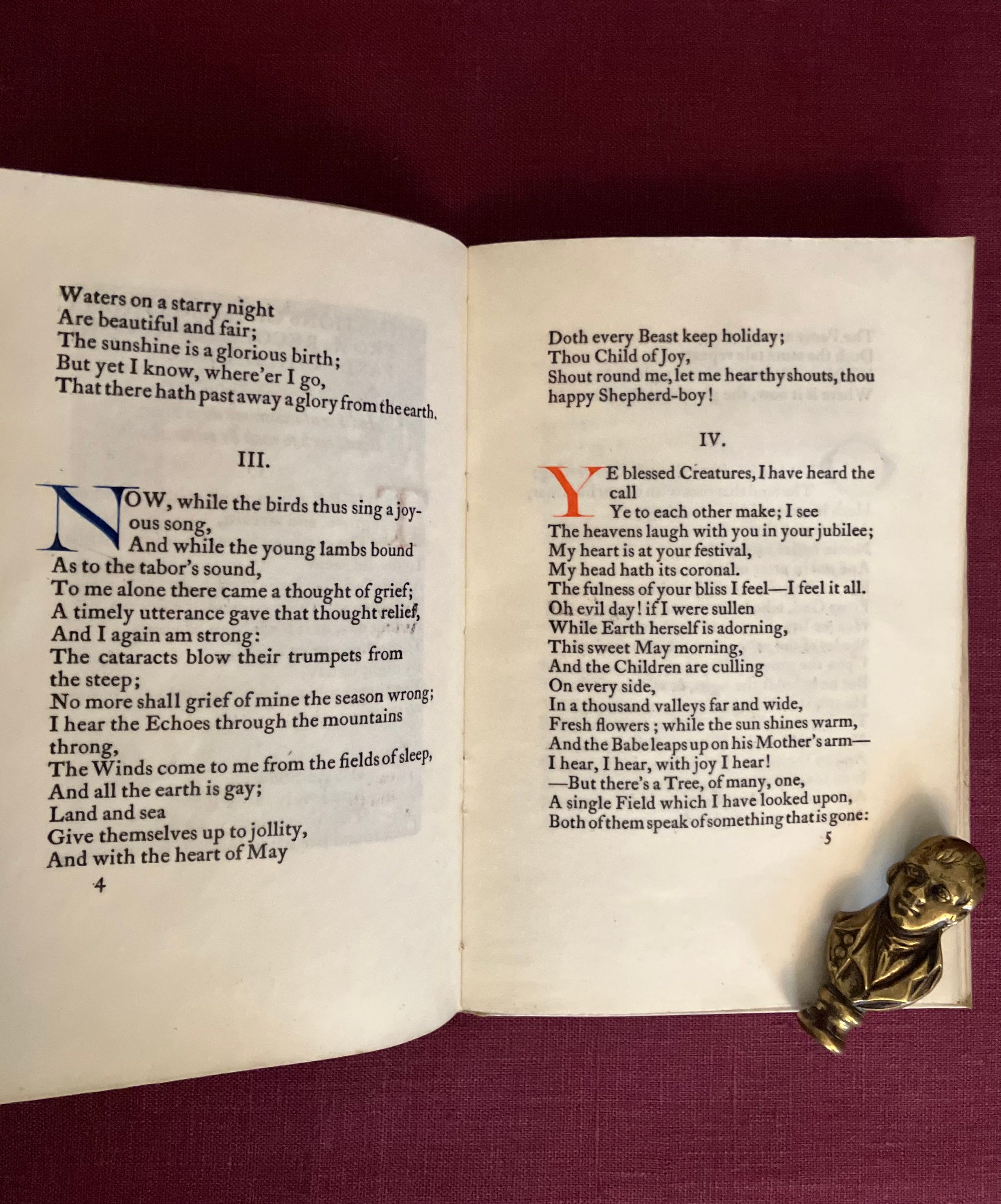
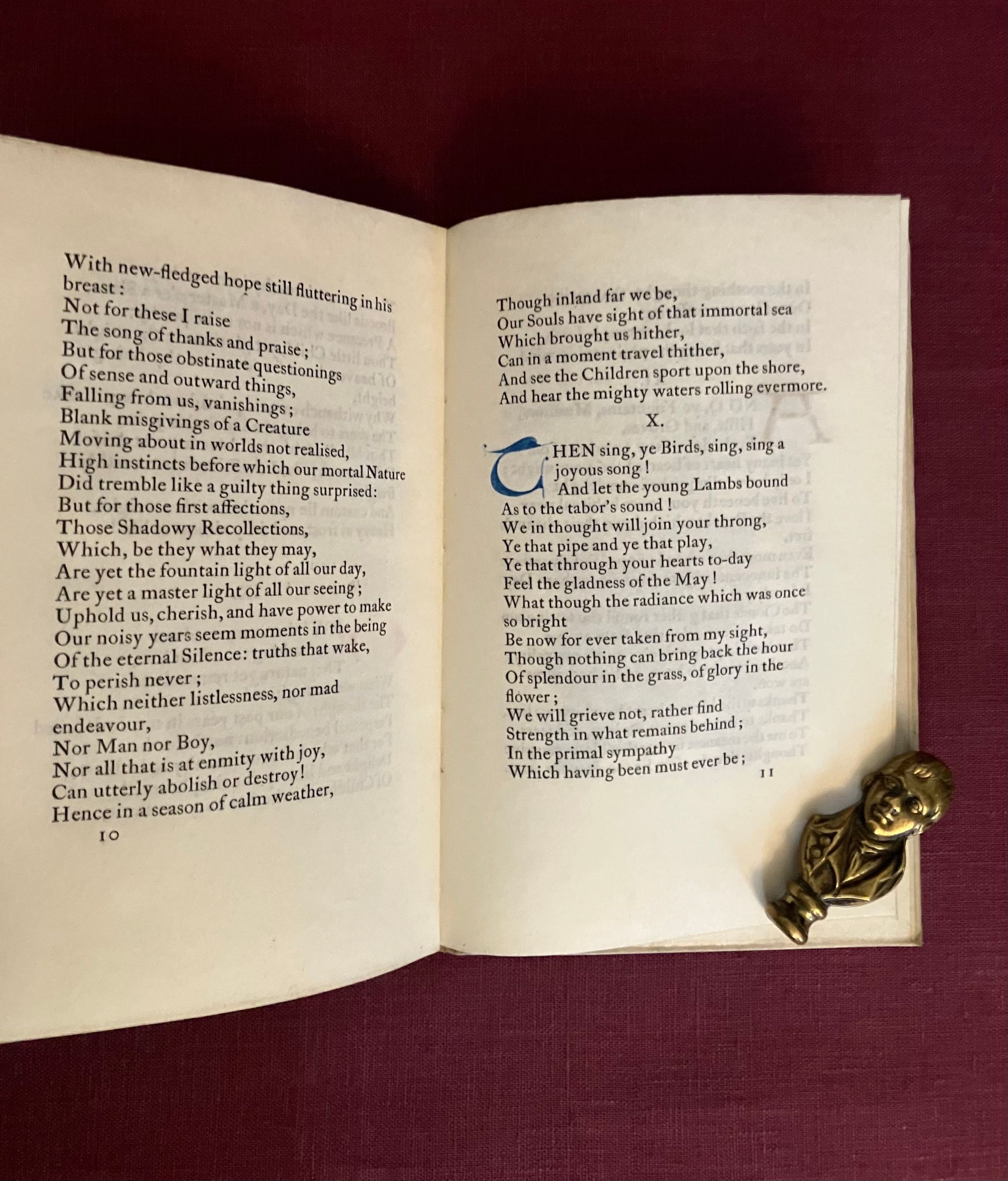
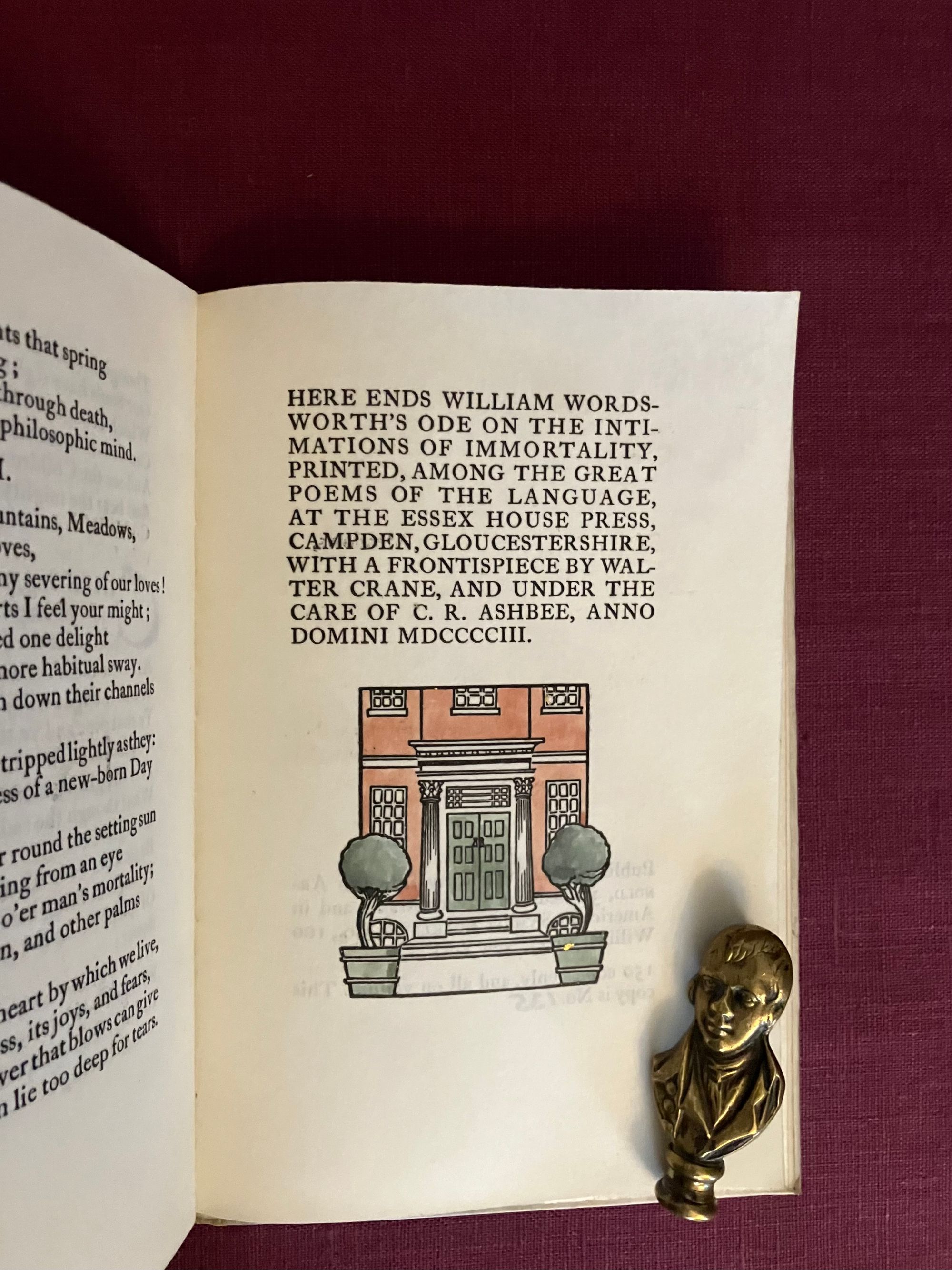
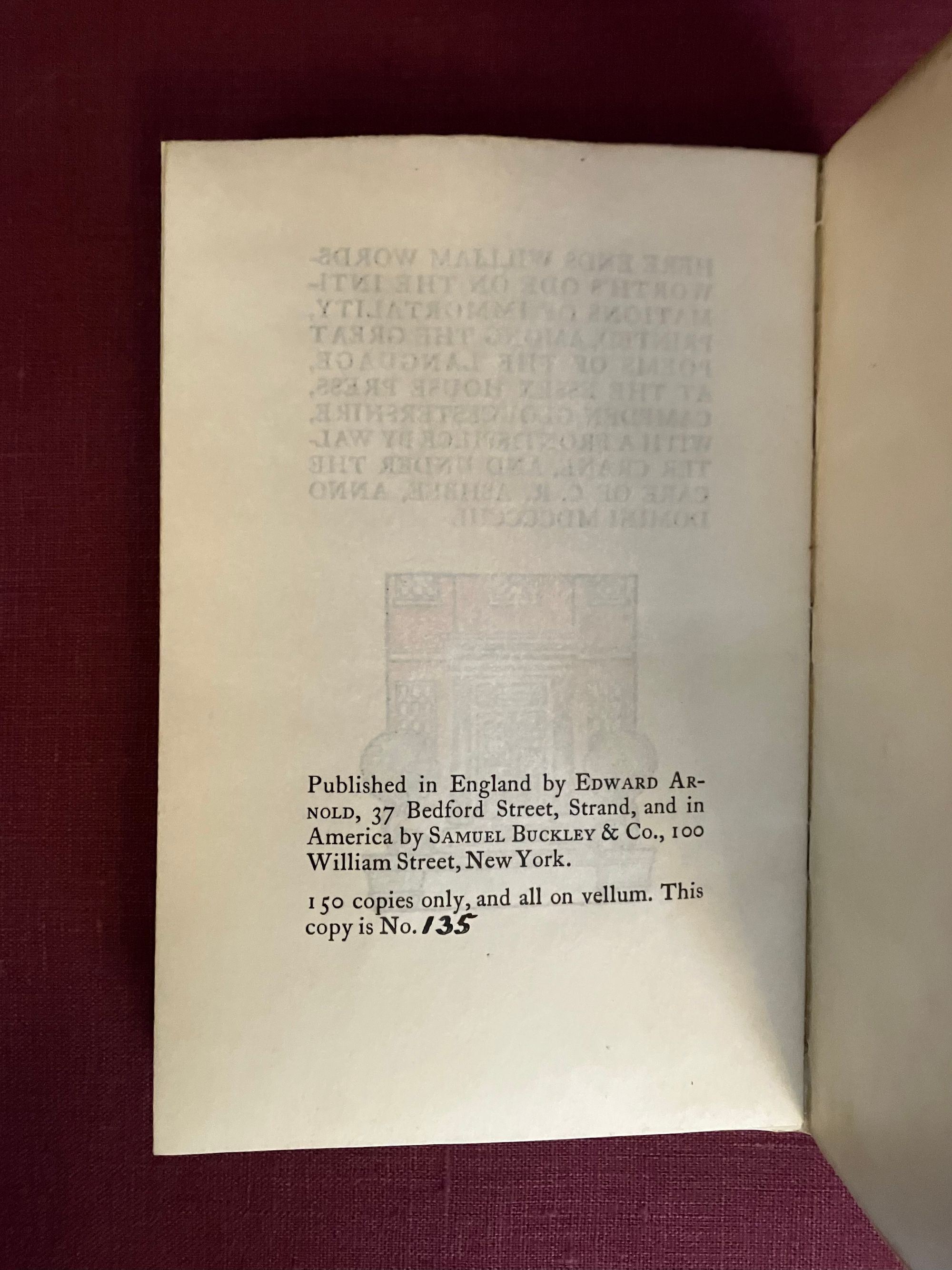
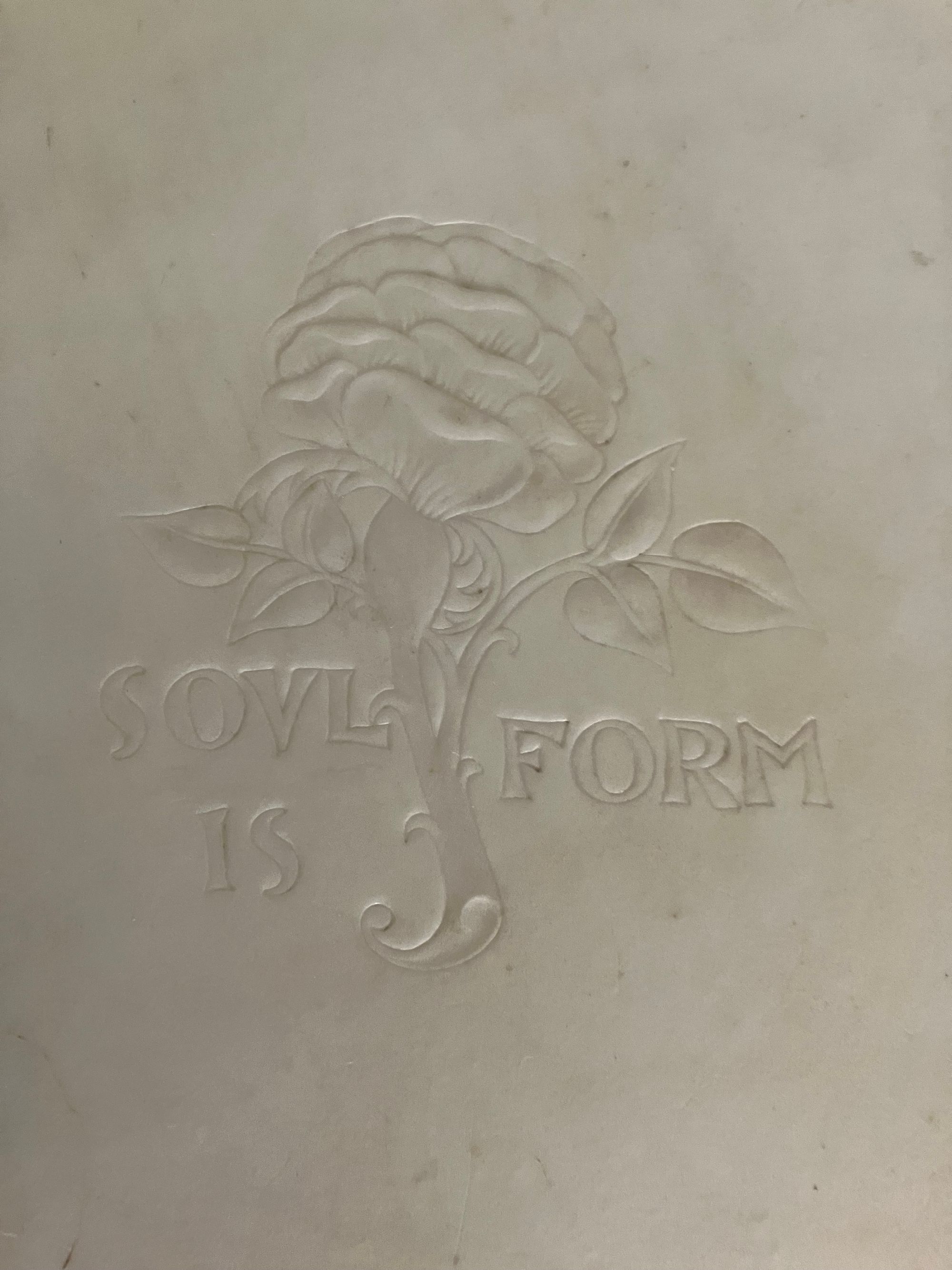
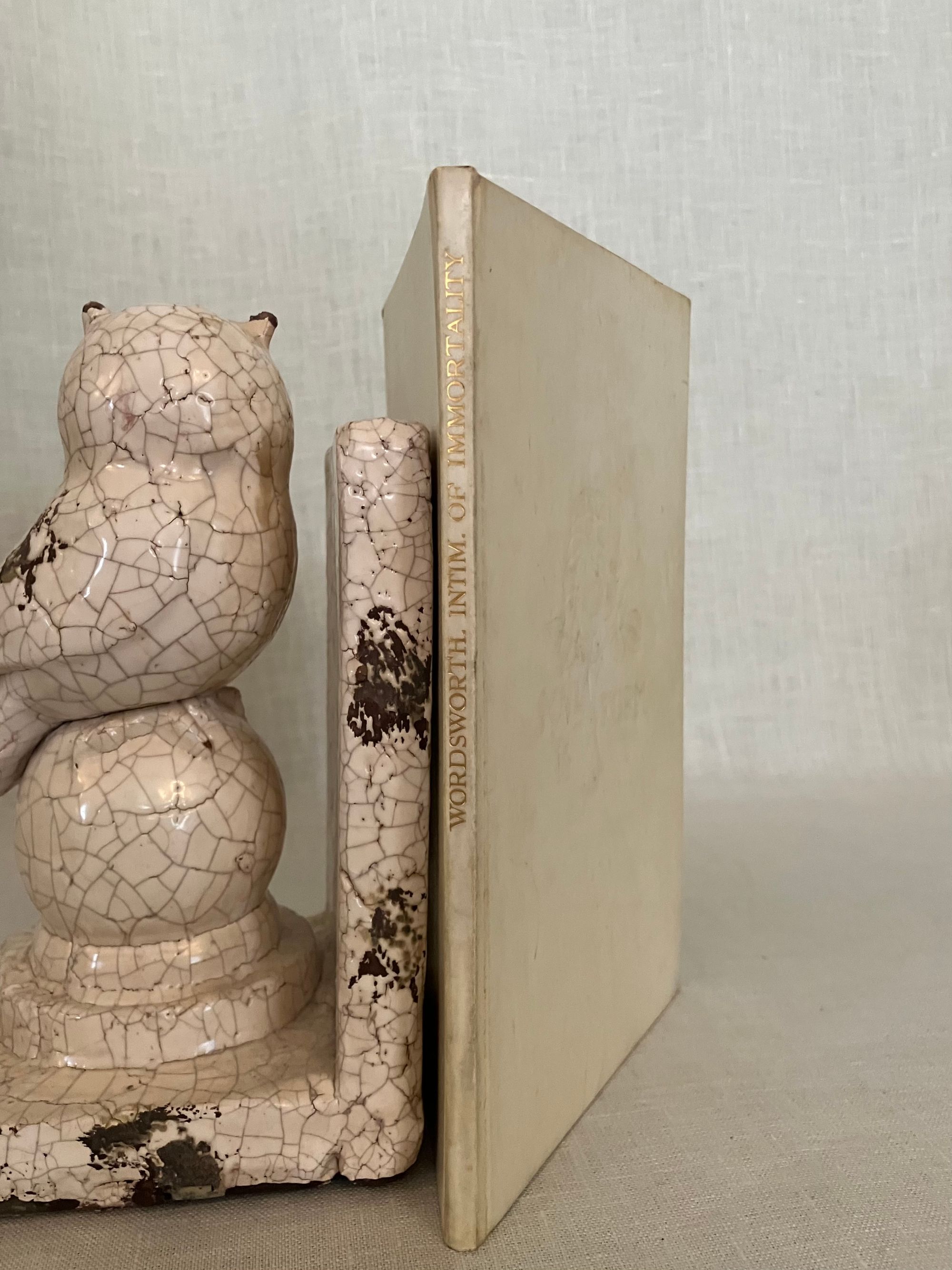


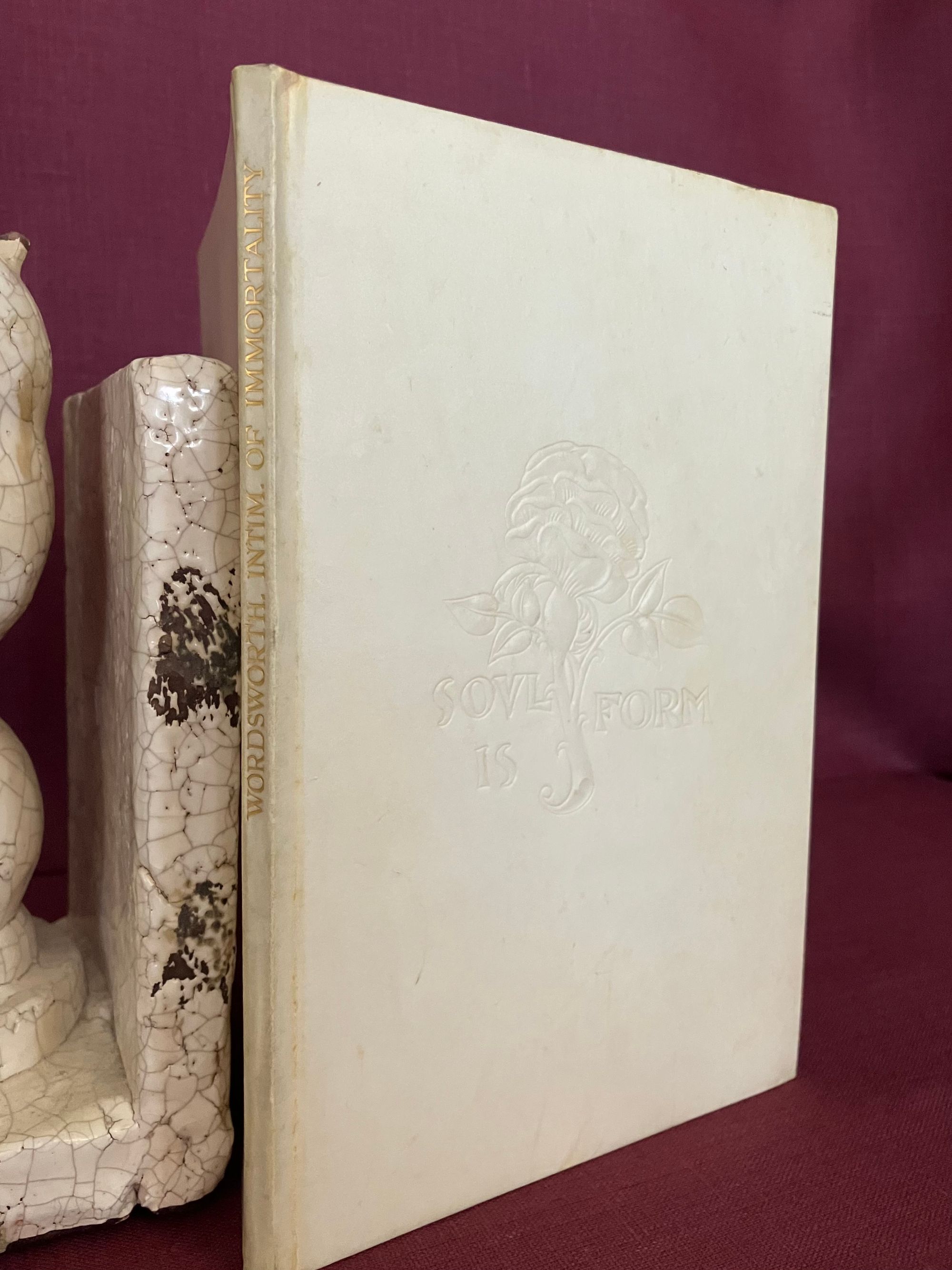
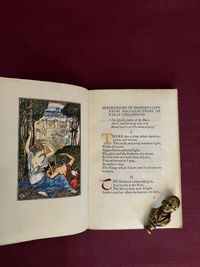
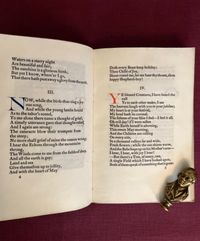
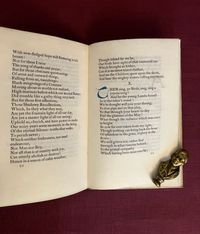
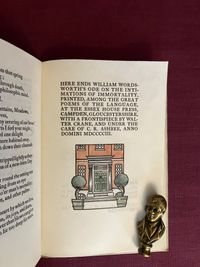
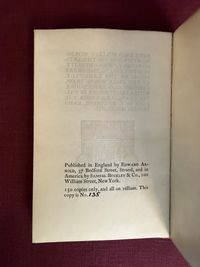
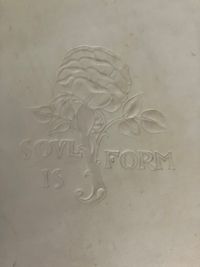
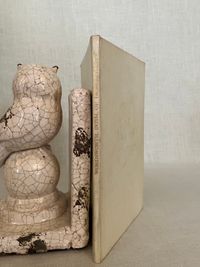
Hard cover, crown 8vo, finely bound in in full vellum, with vignette decoration of an Arts & Crafts style rose in blind to the front board, with a motto from Aristotle, "Soul is Form." Titles in gilt are tooled to the spine. Printed on vellum, this was a limited edition of 150 copies, numbered 135 on the limitation statement of the last leaf. 12 [14pp.] Within is the single poem of the title, as this series of 14 small books produced between 1900 and 1905 was designed. The frontispiece illustration is by the celebrated book illustrator, ceramicist and the founder of the British Arts & Crafts Exhibition Society, WALTER CRANE, with his signature monogram at lower left of the illustration. Gilding and hand-coloring of the frontispiece and initials, are attributed by Will Ransom to MISS ANASTATIA, or "STATIA" POWER, and consist of three hand painted gold initial capitals, one red, four blue, and three orange. The printer's colophon at rear features a drawing presumed to be of Woolstapler's Hall, the headquarters of the C.R. Ashbee's Guild of Handicraft in Sheep Street, Chipping Campden in the English Cotswolds from about 1902. The building entrance, flanked by topiary in pots (also hand-colored) matches a photograph seen in A. Crawford, p.109) Colophon text reads: " Here ends William Wordsworth's Ode on the Intimations of Immortality, Printed, Among the Great Poems of the Language, at the Essex House Press, Campden, Gloucestershire, with a Frontispiece by Walter Crane, and Under the Care of C.R. Ashbee, Anno Domini MDCCCCIII." **CONDITION: Near Fine. A few light marks and a bit of soiling to exterior boards, as seen in photos. Front end papers only are lightly foxed, but the rest of text pages, and rear endpapers, are pristine. Nice, clean hand stitched detail. Some of the hand-painted initial capitals slightly show through the translucency of the vellum, as would be expected.**CONTENTS: WILLIAM WORDSWORTH's great poem of the Romantic era needs, perhaps, no introduction. Beginning with the lines "Our birth is but an sleep and a forgetting," the Ode was written in two parts, with the initial stanzas about the innocent joys and connection with nature seen in childhood enabled by a pre-existing "memory of the divine." This part was completed in 1804. After consultation with S. T. Coleridge, additional stanzas were added addressing the adult memory of the divine which enables us to have empathy for others. The first book version was published in 1807 as part of Wordsworth's "Poems in Two Volumes" of that year. (A later revision of the poem came in 1815.) **The Colorist, Miss ANASTATIA, or "STATIA" POWER is documented as joining the Chipping Campden location's Guild of Handicraft in 1902, where she ESTABLISHED THE GUILD's BOOK BINDERY (Crawford, p. 113) The binding does not bear a signature on the rear turn in, however, so we are not claiming it to have been personally bound by her. Power had been part of an early wave of women (circa 1898) included in vocational training by a master of the book binding craft, Douglas Cockerell, (himself once the pupil of Thomas Cobden-Sanderson.) This tutorial heritage is important, according to critic M. Tidcombe, because the basic bookbinding techniques she learned were "according to Arts & Crafts principles which demanded not only high quality materials but the soundest of techniques." (p. 129) The dedication to sound technique was not said to have been the case at her next employer, Frank Karslake, whose enterprises, the Guild of Women Binders, and the Hampstead Bindery, eventually went bankrupt by 1903. It was there, however, where where Miss Power, under the tutelage of Martha Karslake, may have been taught the skills of painting on vellum and the illumination of vellum seen, as seen in this present work. (Tidcombe, p. 126). Much of the legacy of Anastasia Power is seen through her (signed) artistic bookbinding designs, which were lovely, elaborately gilt affairs usually featuring Tudor roses and other foliate stamps, sometimes with contrasting colored onlaid morocco circles within ruled geometric borders, several of which we have sold in the past. The overall effect of THIS lovely volume, however, is of a medieval manuscript, which aside from the printed text, would have been produced with many of the similar materials with vibrantly hued hand-colored decoration. The reference to the medieval was not by chance, as many artists and designers and "Romantic Socialists" of the British Arts and Crafts period looked upon this time as one in which the dignity of labor by hand was to be revalued. REFS: W. Ransom, "Private Presses," Essex House Press list No. 34, p. 267 (1929) lists "Miss Power" as colorist. A. Crawford, "C.R. Ashbee, Architect, Designer & Romantic Socialist " (Yale University Press, New Haven and London, 1985). M. Tidcome, Women Bookbinders in Britain 1880-1920, (Oak Knoll, British Library, 1996). (AMJ)
Ref: FINE 9667
$2250.00