 |
 |
 |
 |
 |
 |
 |
 |
 |
 |
 |
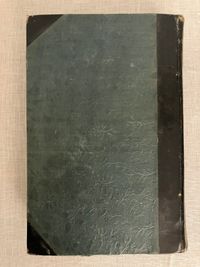 |
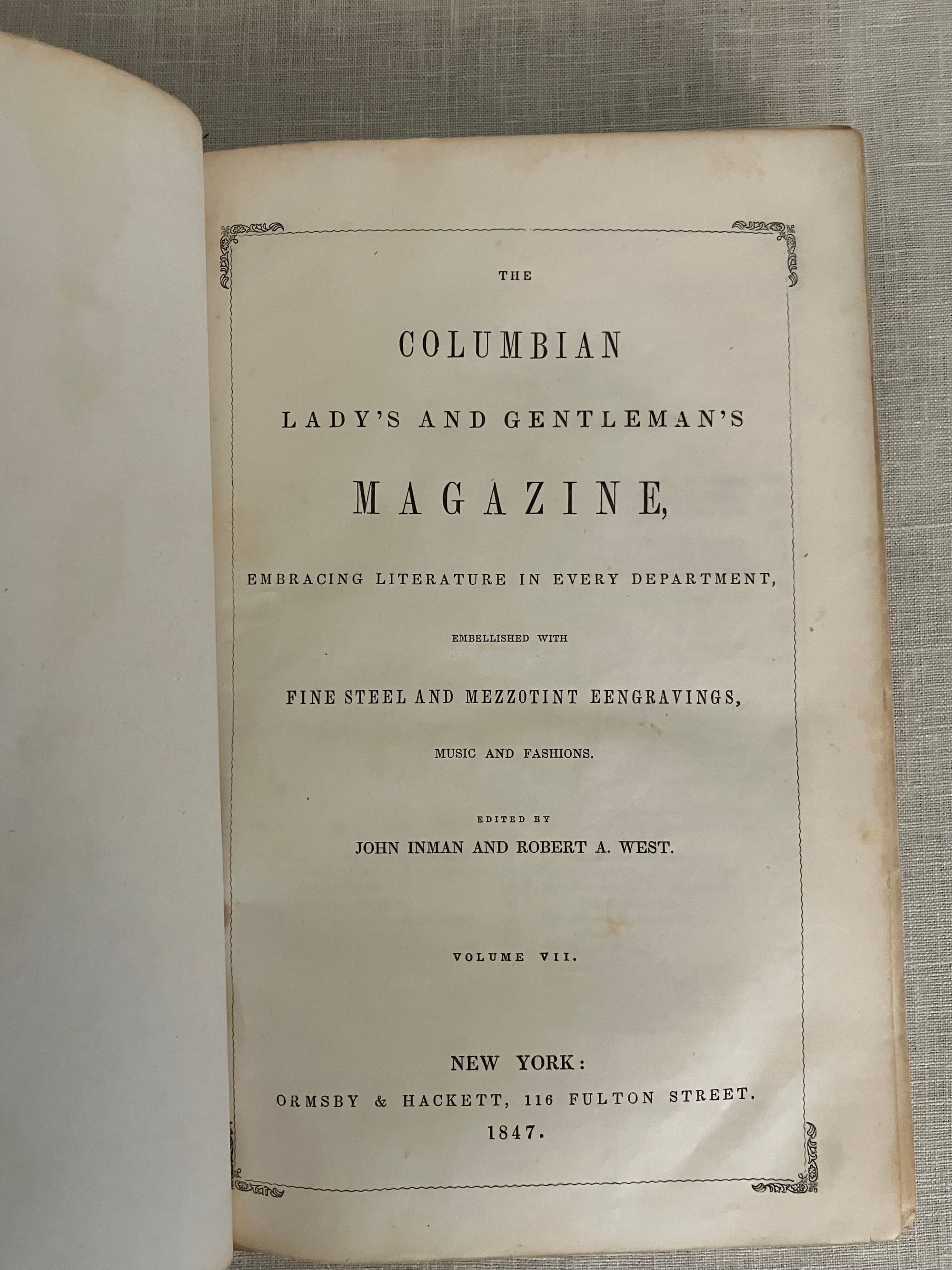
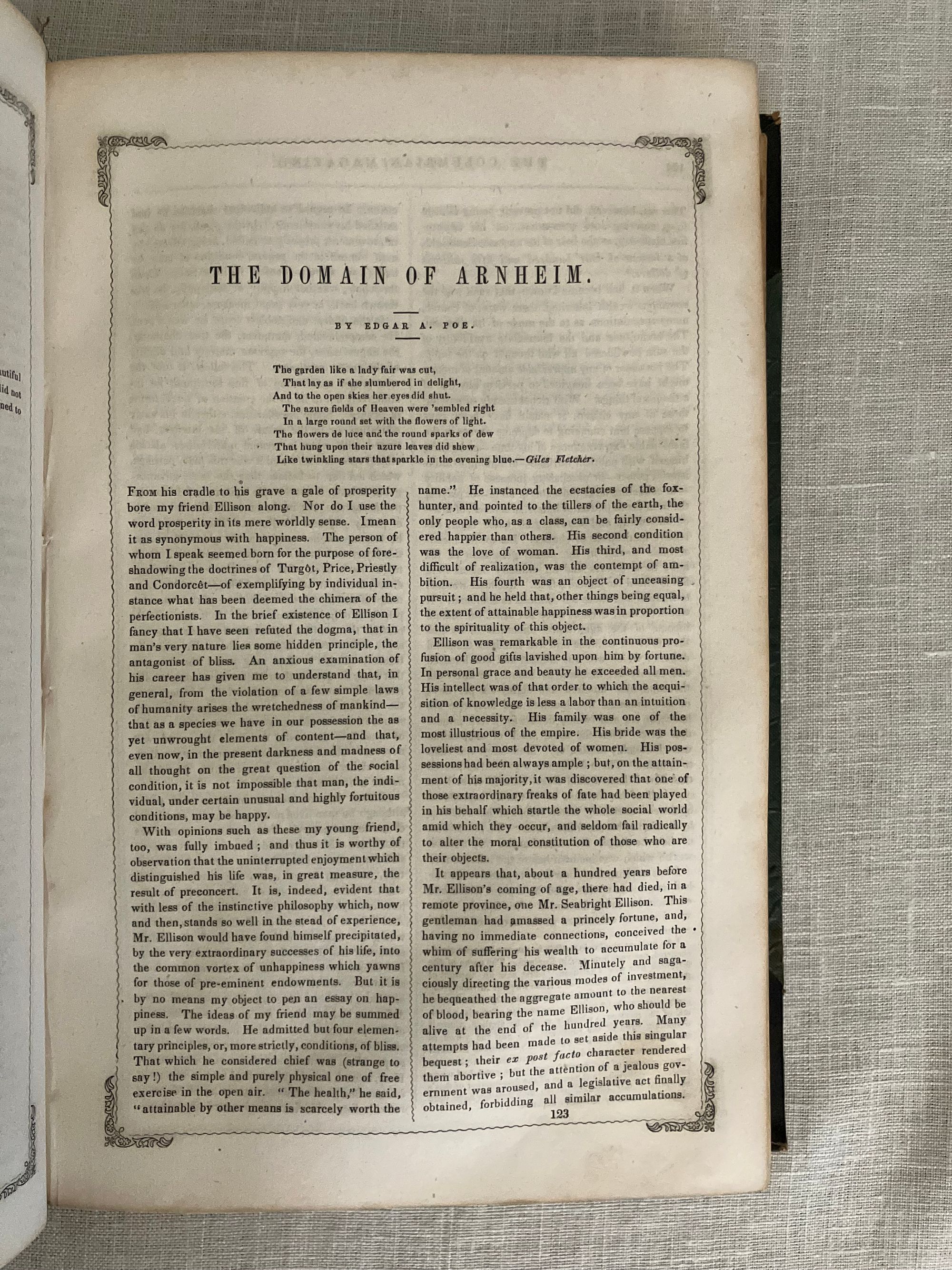
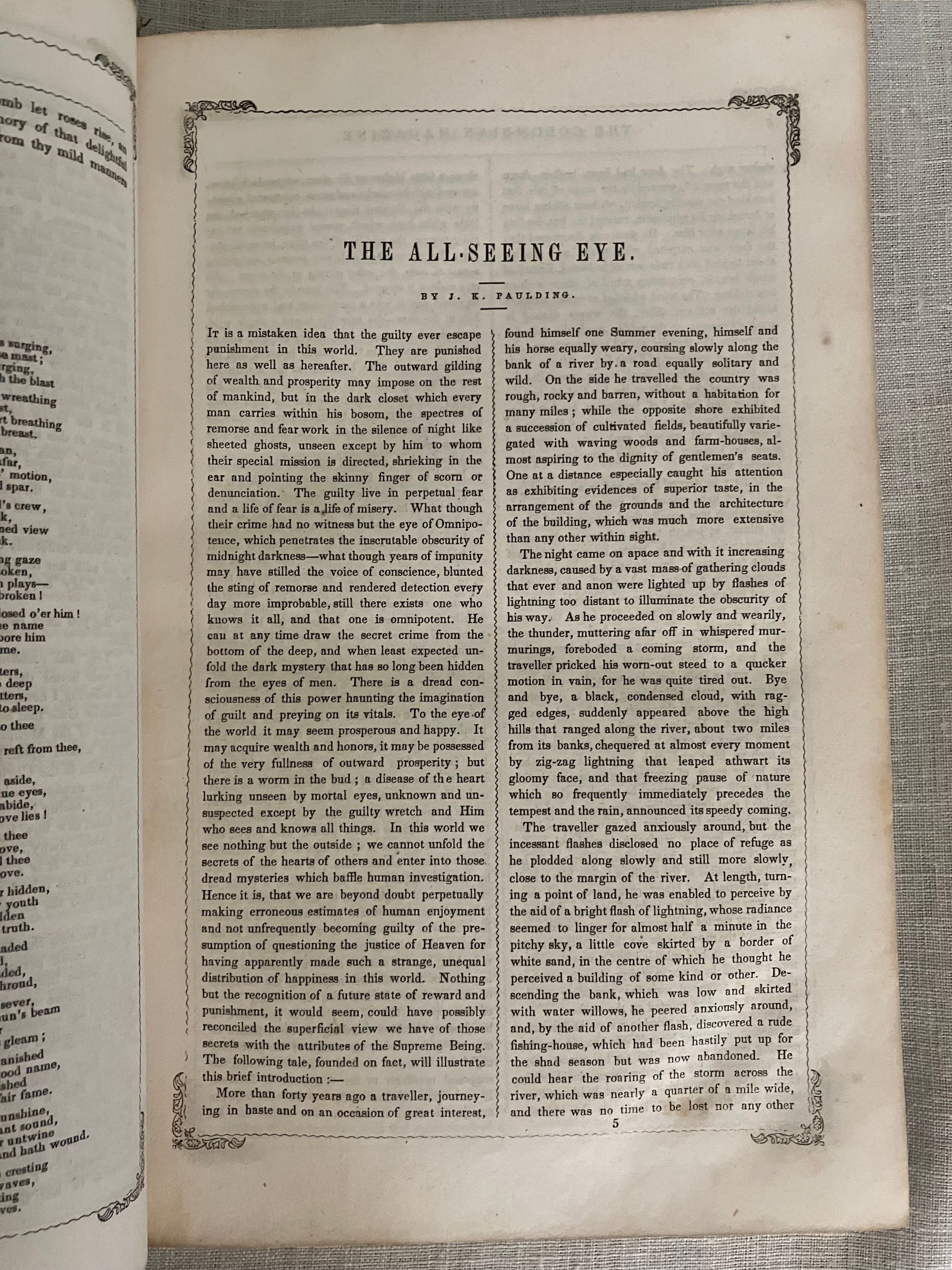
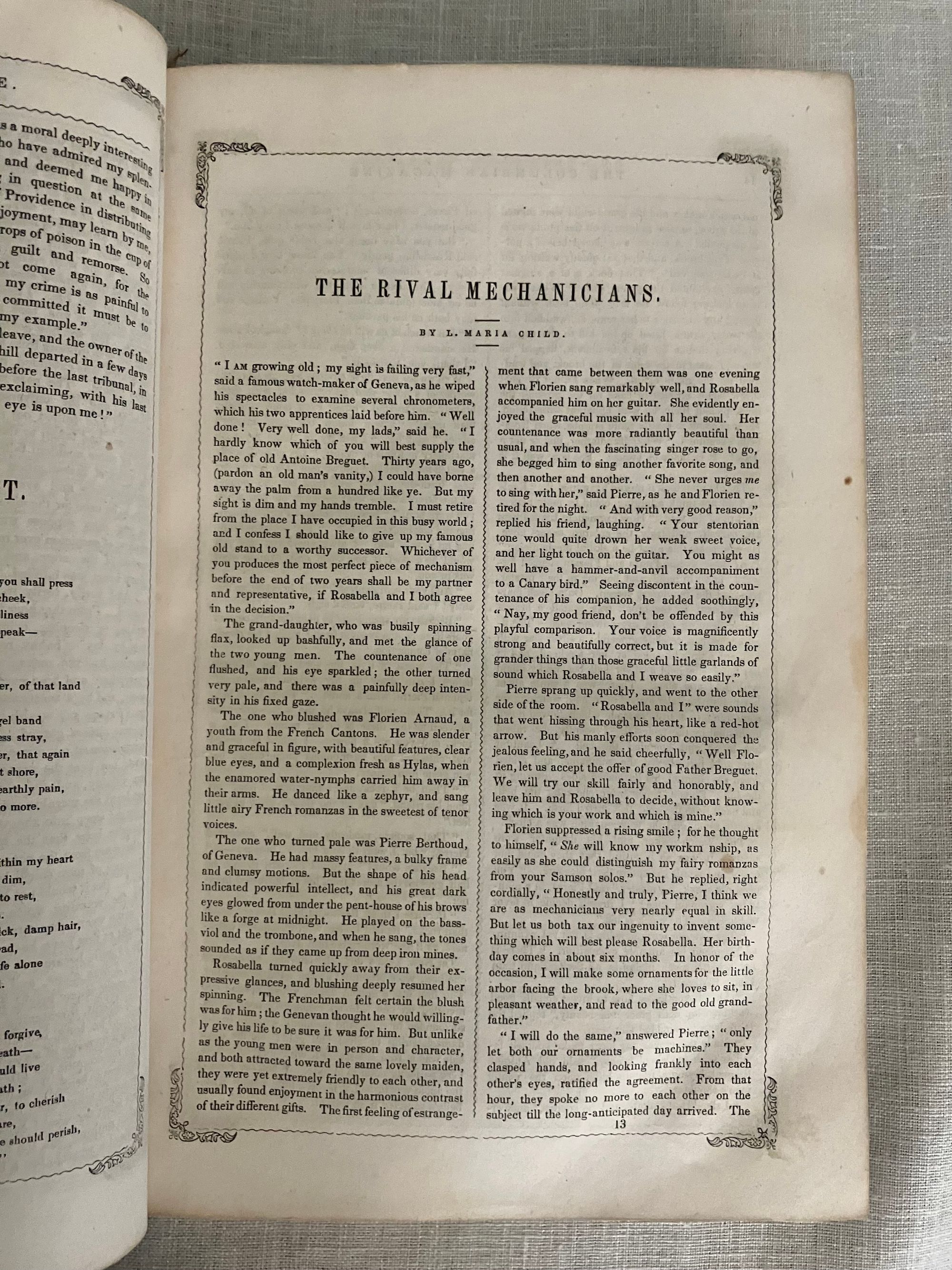
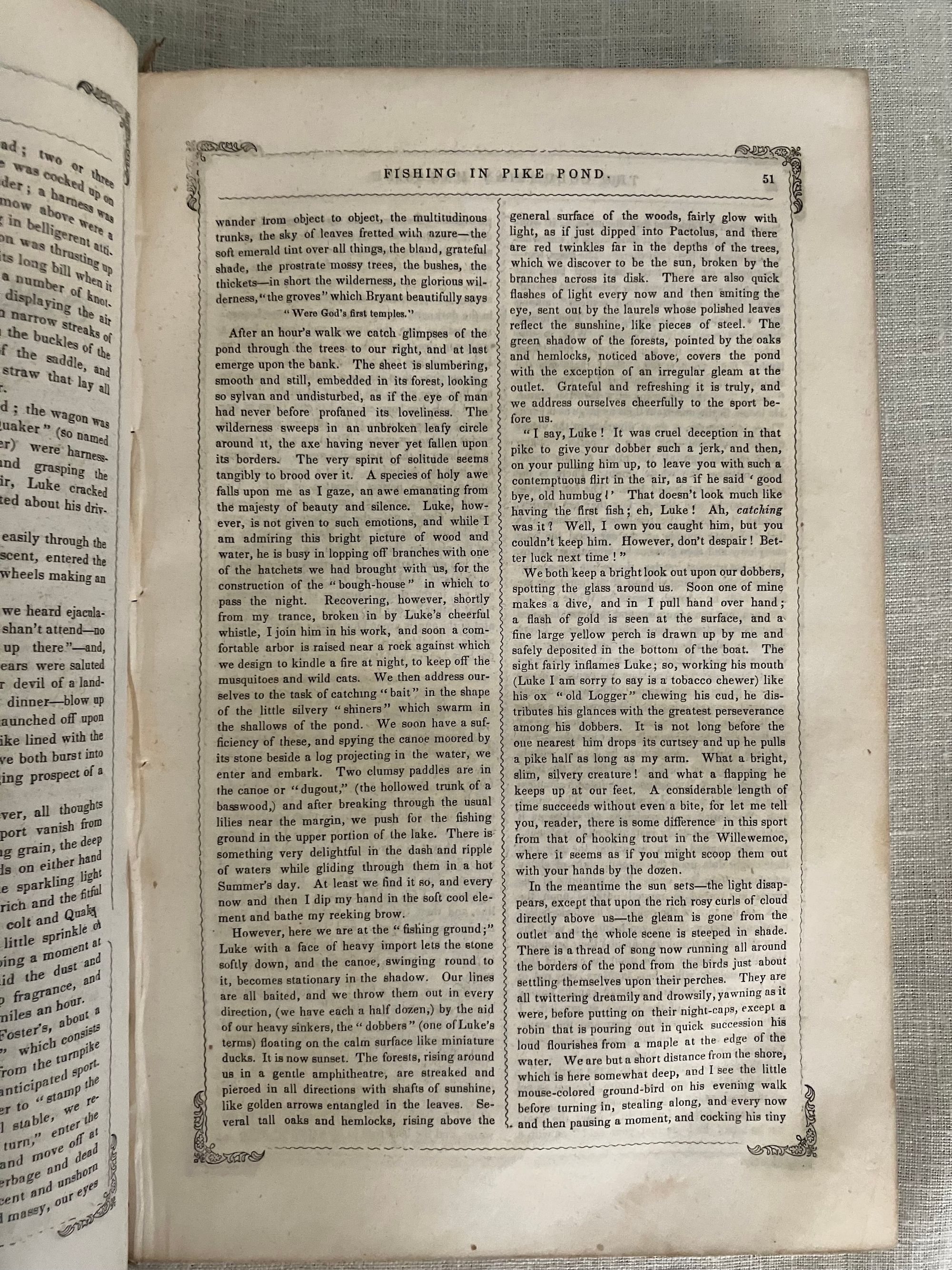
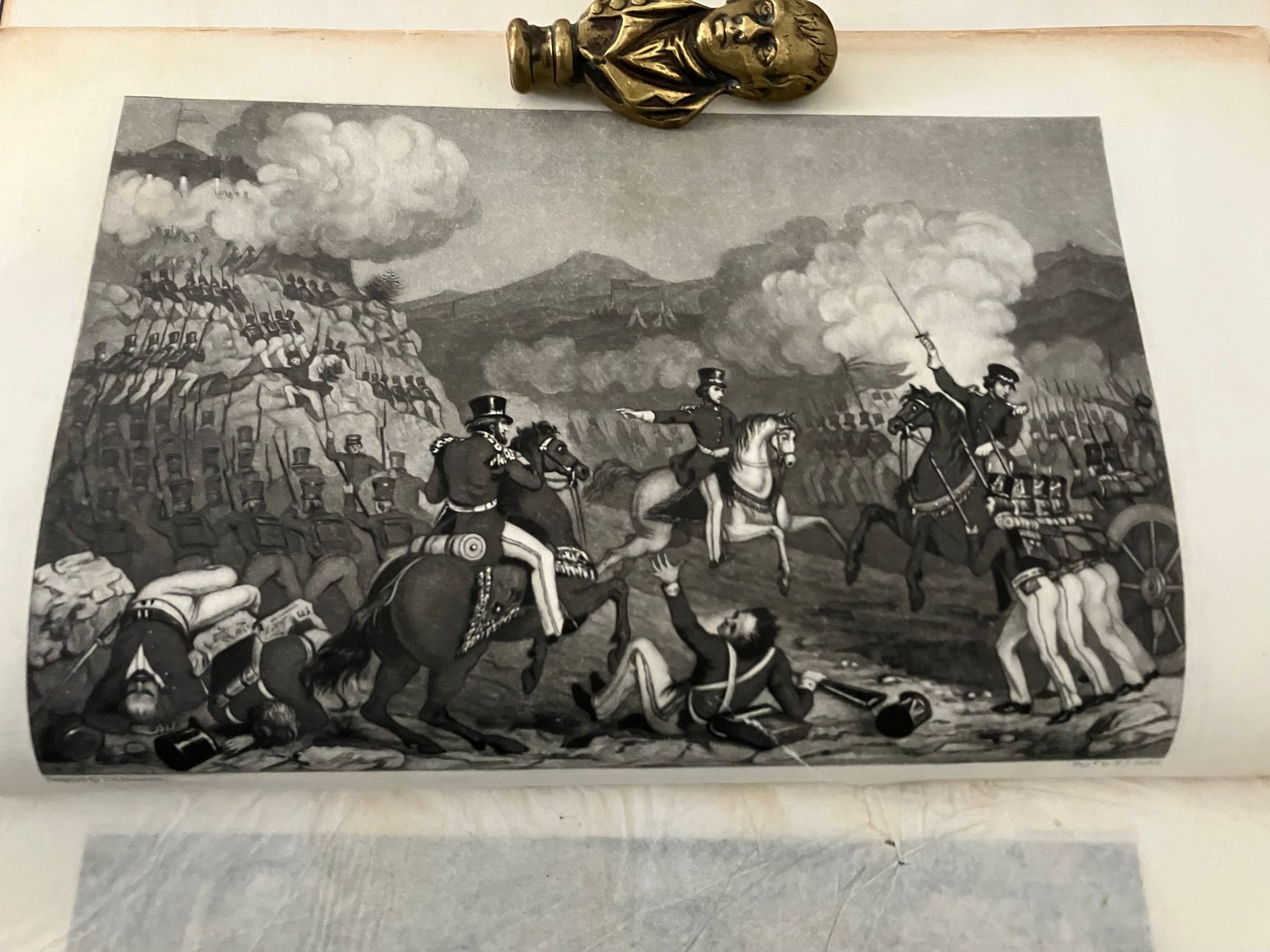
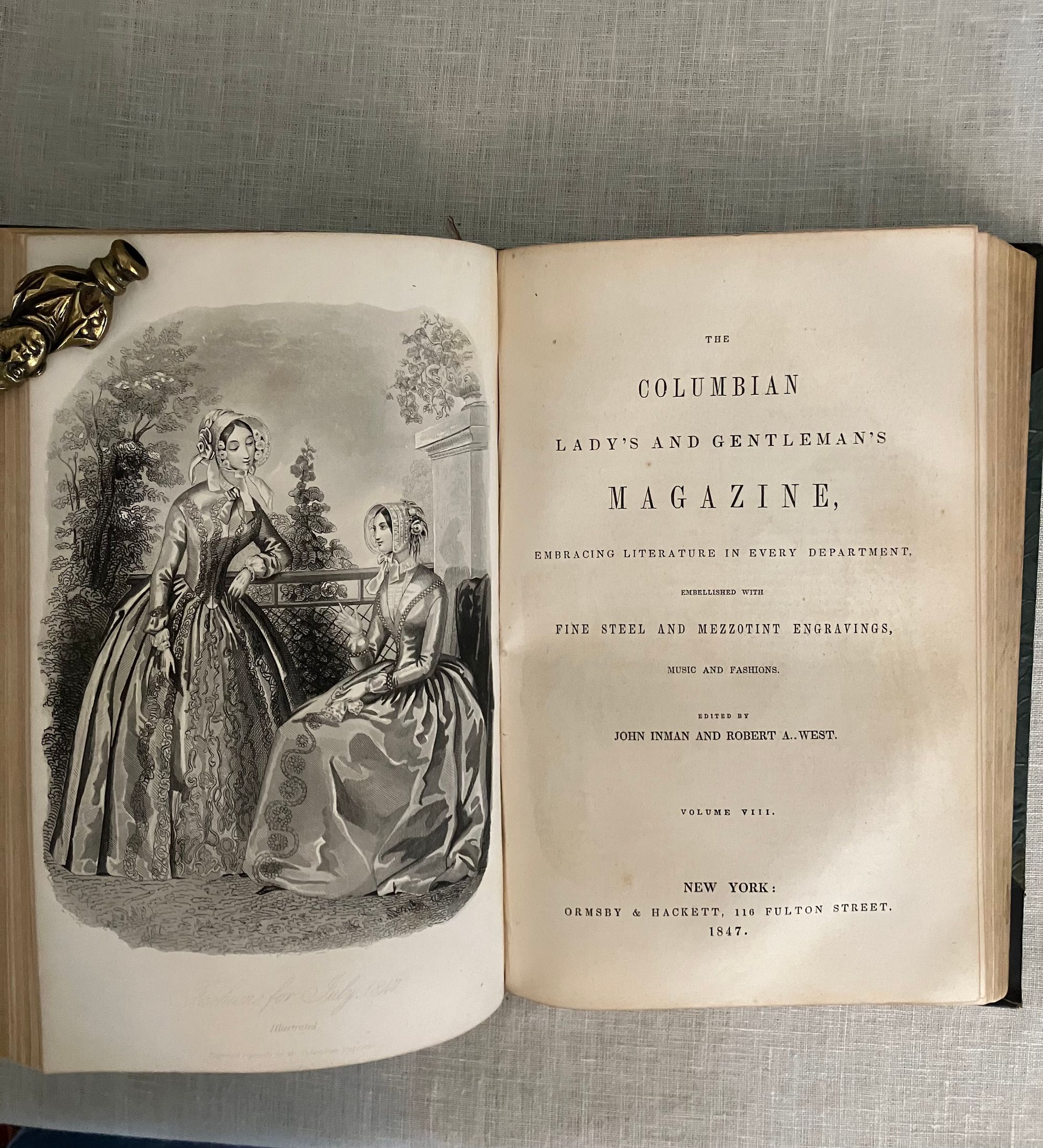
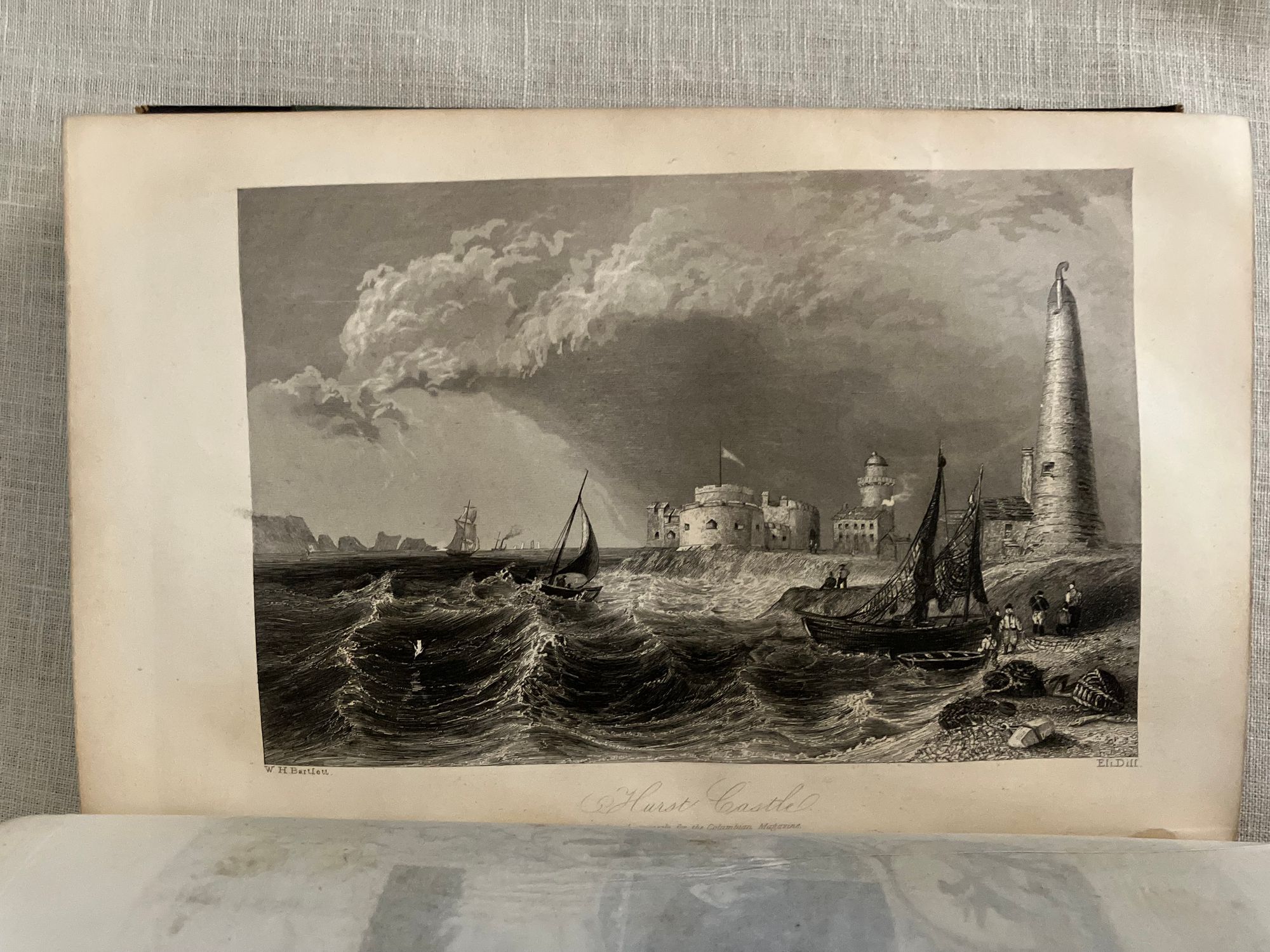
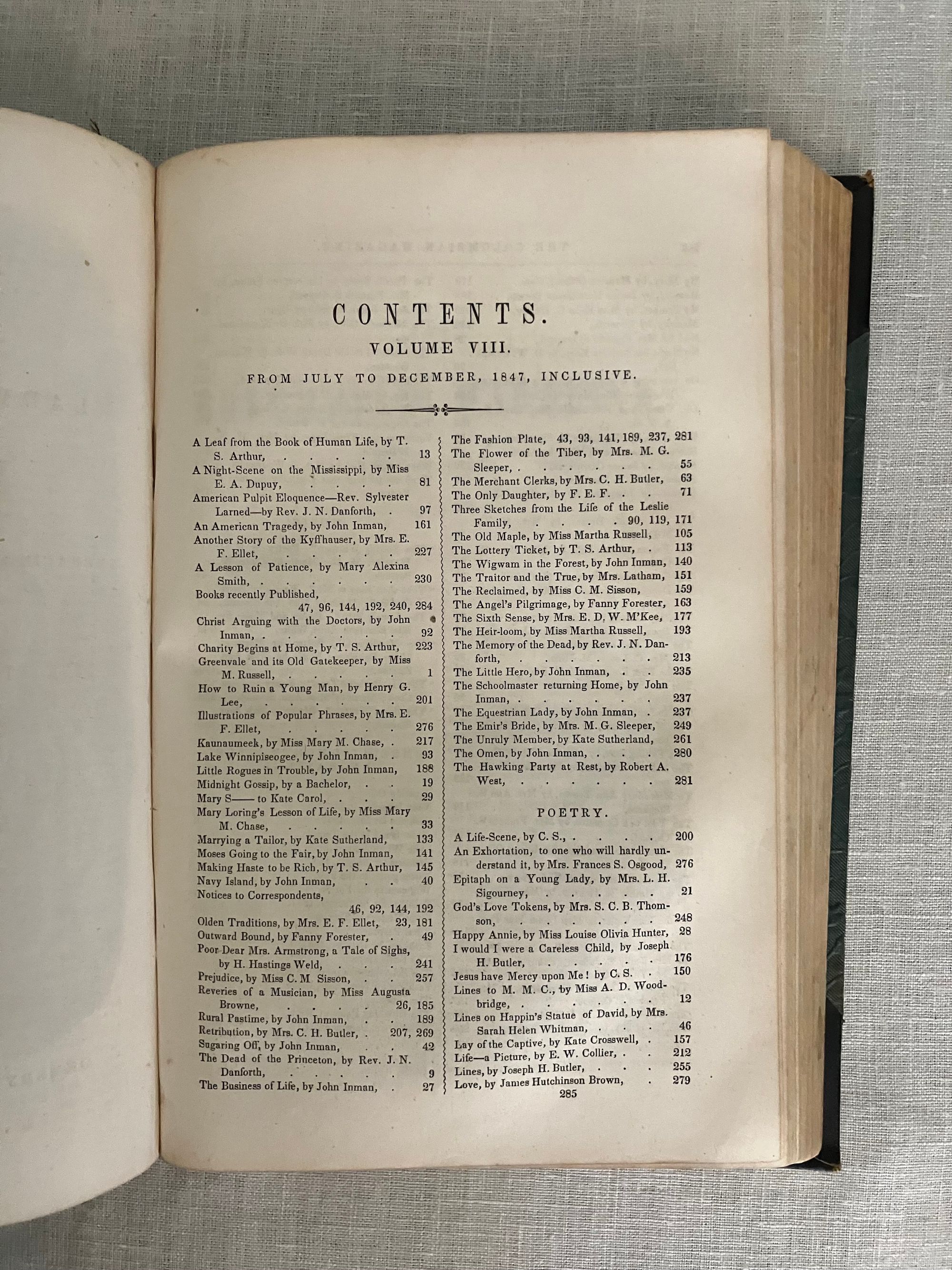
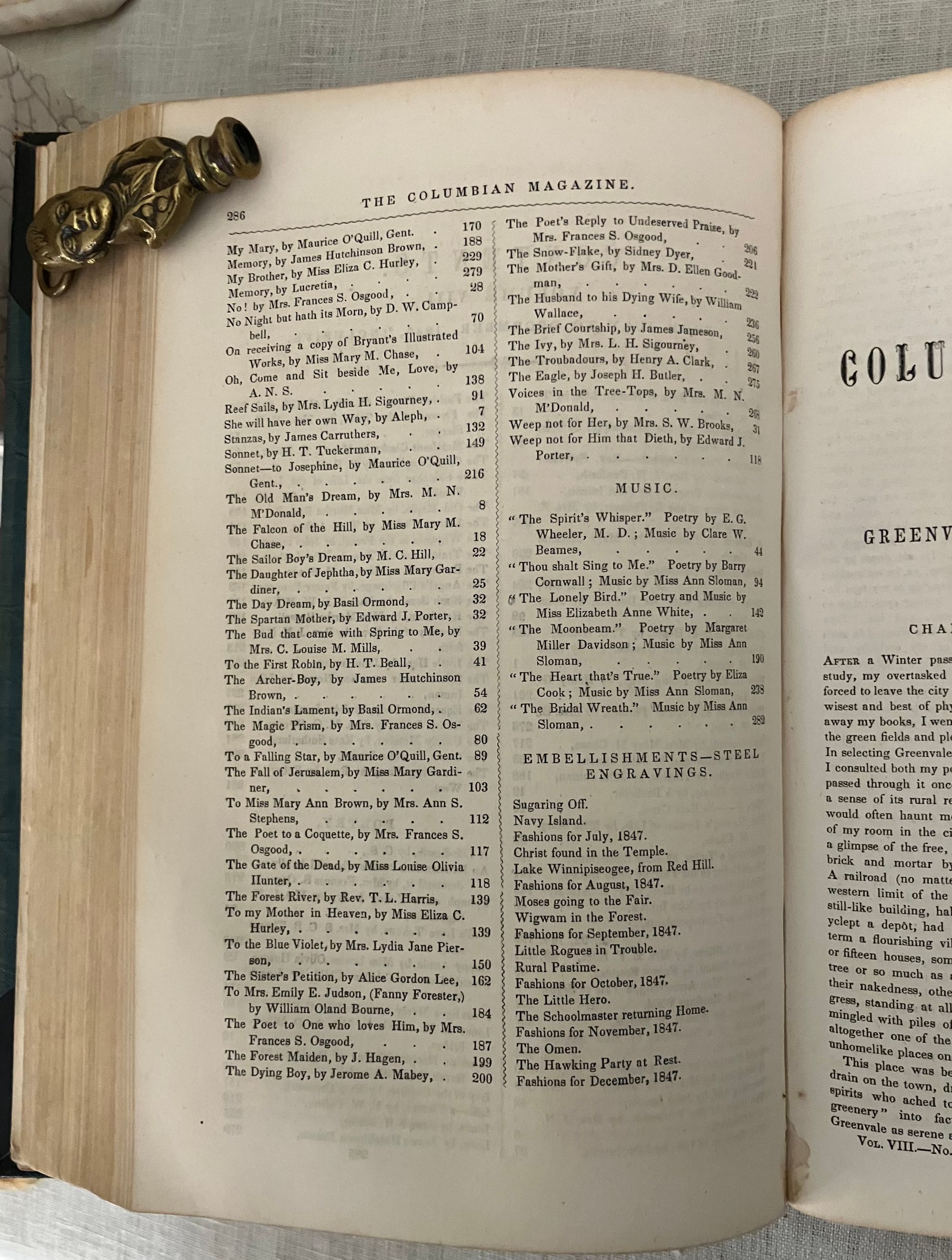
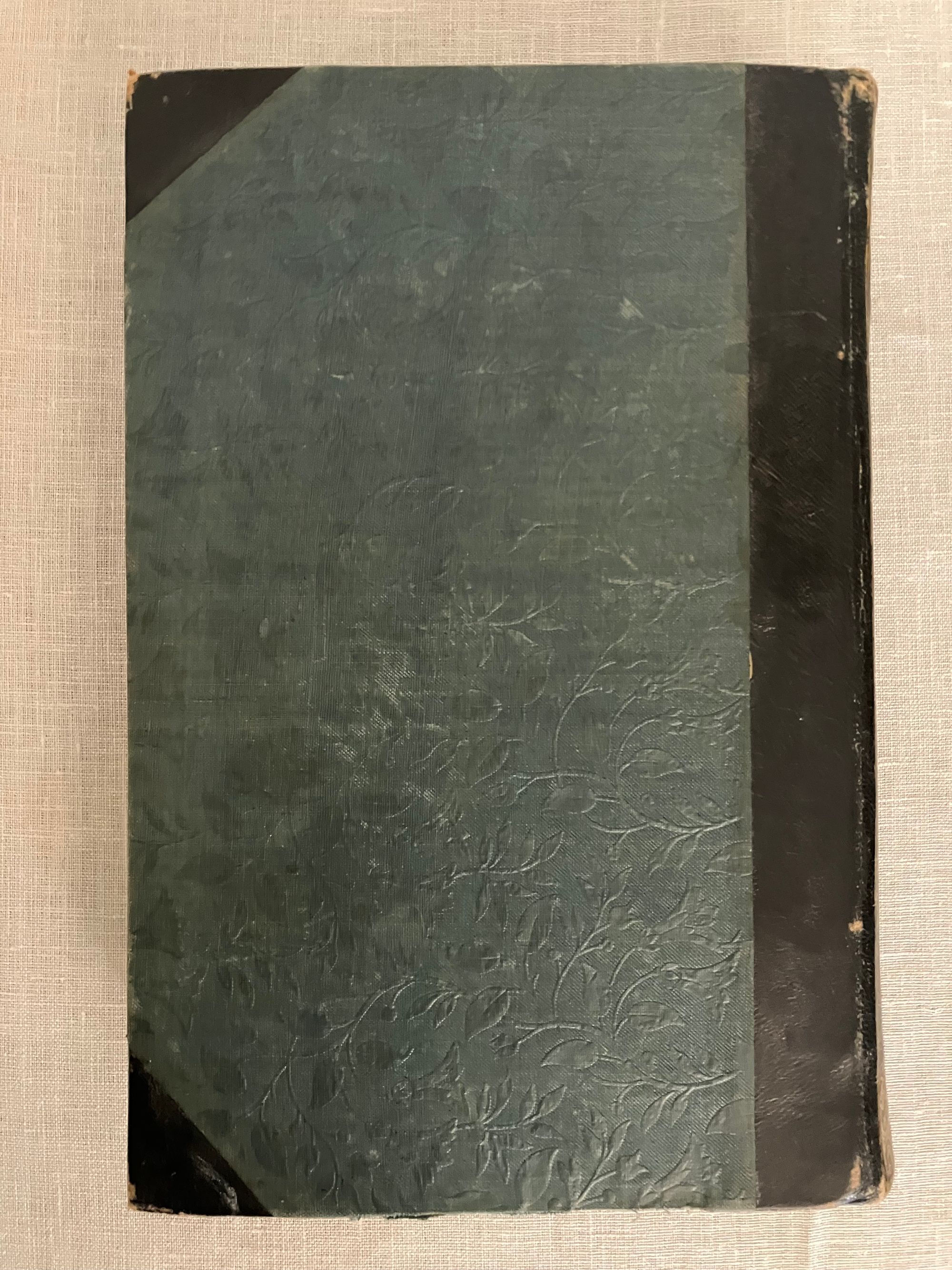
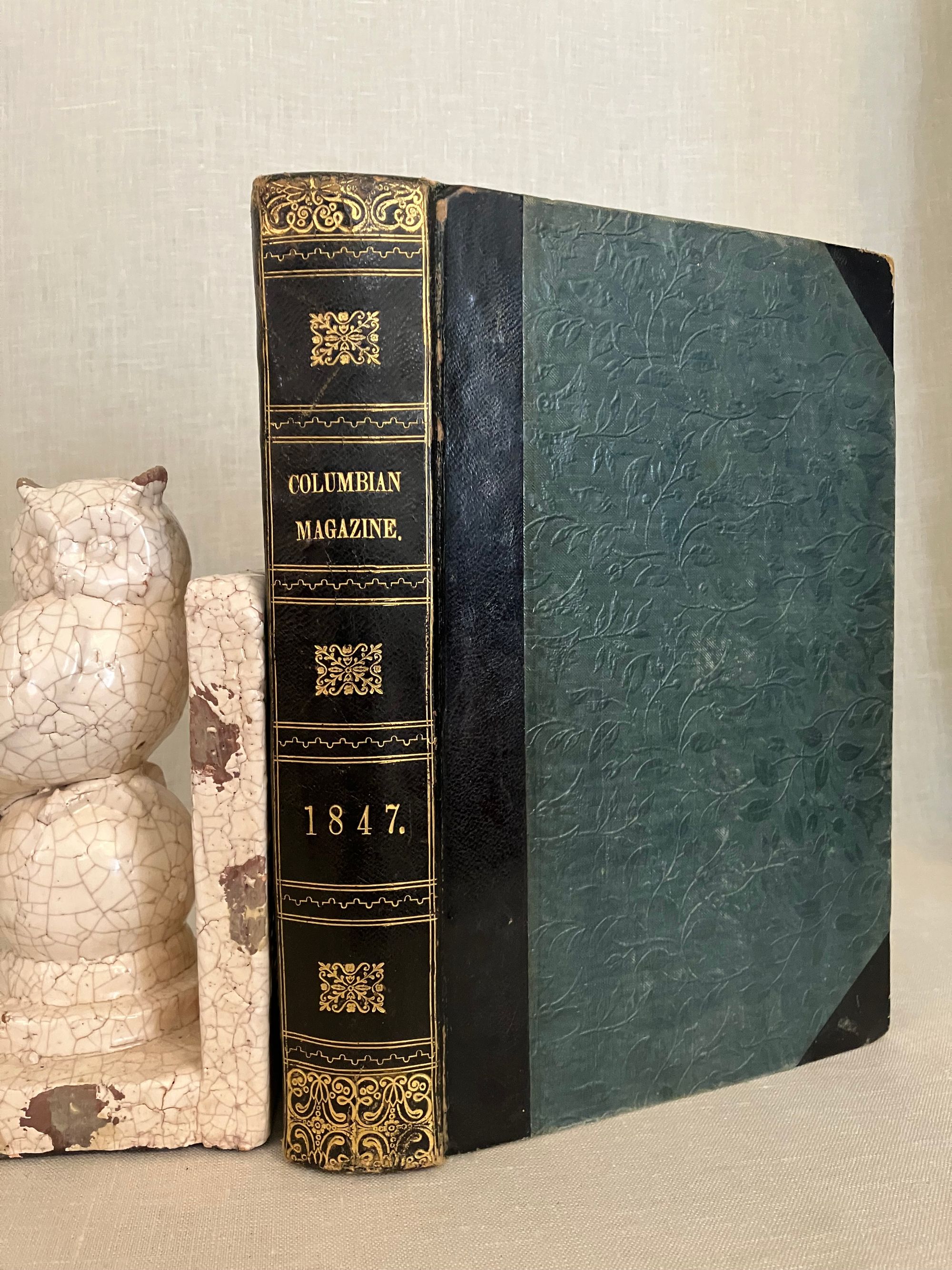
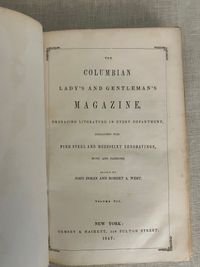
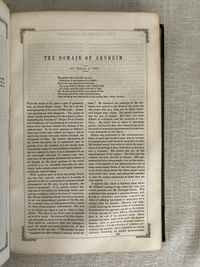
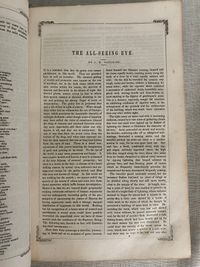
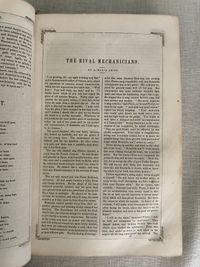
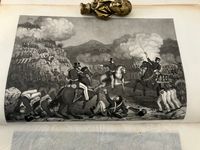
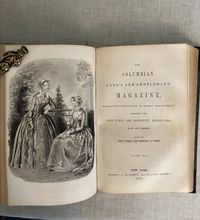
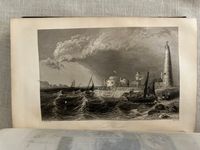
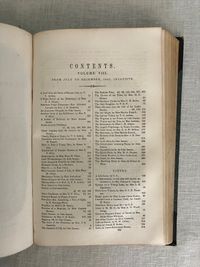
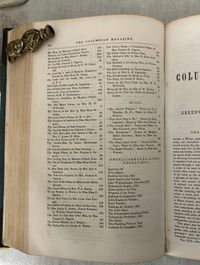
Hard cover bound volume, 4to., in three-quarter black calf over green cloth, die stamped with twining foliage and flowers. The spine has extensive gilt decorative banding at head and foot, double ruled faux banding and titles to second, and date 1847 to the fourth compartment. Marbled end papers, and faint remains of marbling are seen to edges of text block. Original four-color cover bound in. Vol. VII contains Jan.- June, 1847, bound with Vol. VIII July-Dec. 1847. Each volume numbered separately. Illustrations include scenes from the Mexican-American War, (then current,) with commentary by the editors on "The Storming of Palace Hill,(sic)," which the editor reports mis-named from Independence Hill near Monterey, California. In total, there are 3 colored fashion plates, 4 mezzotints and 10 black and white line engravings in Vol. VII. Vol. VIII has 9 black and white line engravings (none colored) and 6 mezzotints. **CONDITION: Very Good. Binding is sound and attractive. Some light scuffs to spine, mild edge wear to head and tail of spine, tips, front joint and corners. Minor rubbing to cloth on boards. Wear is superficial, with hinges in order, endpapers bright. Inside: light, or sometimes moderate, toning with occasional spots of soiling, or a few small tears, but generally clean, square and sound.**Featured in the March, 1847 Issue, p. 123, is the FIRST APPEARANCE of EDGAR ALLAN POE's short story, as revised and re-titled, "THE DOMAIN OF ARNHEIM". A previous version had appeared in 1842 under the title "The Landscape Garden" in "The Ladies Companion." Unusual for Poe, the story is not a gothic, doom-laden tale, but rather a prose poem which is a vision of an artist's Shangri-La built amongst a towering, mountainous, riverine landscape. Biographer Una Pope-Hennessy suggests the singular monolithic author's aerie described in the story was based on Poe's familiarity with the English gothic author William Beckford's (cf. 1786 novel, "Vathek.") whose doomed estate of Fonthill Abbey in Wiltshire collapsed under its own weight in a fit of its builder's drug-fueled architectural vanity. ***L. MARIA CHILD contributes three short stories, including what is arguably the best of the tales in this issue, "The Rival Mechanicians," about a rivalry between two apprentices for the heart of a Swiss watchmaker's daughter in a plot which involves the building of increasingly complex watches, barometers, automatons and a human-like "android," (certainly an early use of that word.) The author may have been influenced by her New York acquaintances of the Knickerbocker school (W. Irving, Paulding, et al) in this unusually spooky tale. Her biographer J. G. Whittier selects letters from her correspondence of the period showing a rather reclusive, solitary exile to the New York area at this time, in flight from real danger and condemnation felt from some Bostonians and southerners for her outspoken contributions to the abolitionist press. [Child published frequently on these topics through the New York offices of the American Anti-Slavery Society, located at 143 Nassau Street in 1842; the "Columbian Magazine" was published but a door away at 140 Nassau Street, until 1846. (See BAL 3141)].**Other notable additions to this annual include short stories, songs and poetry by mid-nineteenth century women authors , Francis S. Osgood, Miss Catharine M. Sedgwick, Mrs. E. F. Ellett, Miss Fanny Forrester and others. Some contributions from the men include ALFRED BILLINGS STREET's (1811-1881) "A Day or Two's Fishing in Pike's Pond." The work of this Poughkeepsie, New York native has been described as prose poetry, and his work has been compared favorably to that of the Transcendentalists, Emerson, Bryant and Longfellow. JAMES KIRKE PAULDING (1778-1860), once Secretary of the United States Navy, and a leading contributor to the Knickerbocker New York literary scene of the 1820's and 30's, contributes a terrific gothic tale, "The All-Seeing Eye" in the Jan. 1847 issue, p. 5-12. A traveller, observing from a riverbank, happens to witness a murder during a violent storm. He meets the perpetrator by chance some twenty years later, who is keen to confess his sin. The psychic toll taken upon the rich, worldly-successful murderer is very much reminiscent of Poe's 1843 tale, "The Tell-Tale Heart". ** REFS : On Poe: Poe Soc.: Text 04-c, for "Arnheim." U. Pope-Hennessy, "Edgar Allen Poe, a Critical Biography," (New York: Haskell House Ltd, 1971), pp. 170-171. BAL 16149 mentions the 1842 version of The Landscape Garden, published in the Ladies Companion, version; but not this re-titled story, "Arnheim." On Paulding: BAL 15743 lists "The All-Seeing Eye" as "otherwise un-located" from a version found in the 1852 "Ladies Illustrated Keepsake" ; this 1847 publication may therefore be its first appearance. On Lydia Maria Child, see J.G. Whittier," Letters of Lydia Maria Child with a Biographical Introduction by John G. Whittier and an Appendix by Wendell Phillips, (Boston: Houghton Mifflin Company, Riverside Press, 1882), BAL 3220. (2.5 lbs.)
Ref: POEMUS 9430
$225.00