 |
 |
 |
 |
 |
 |
 |
 |
 |
 |
 |
 |
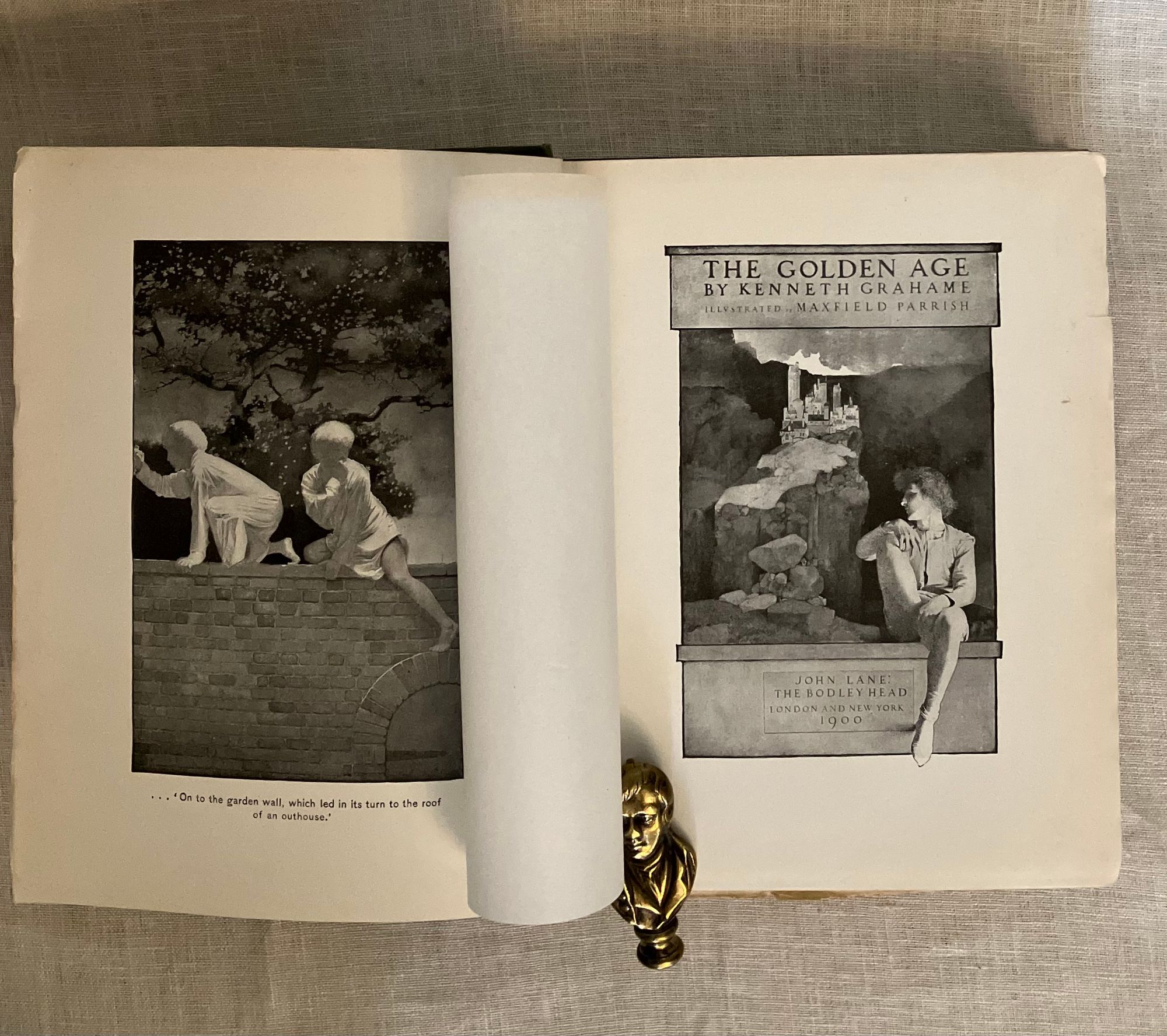
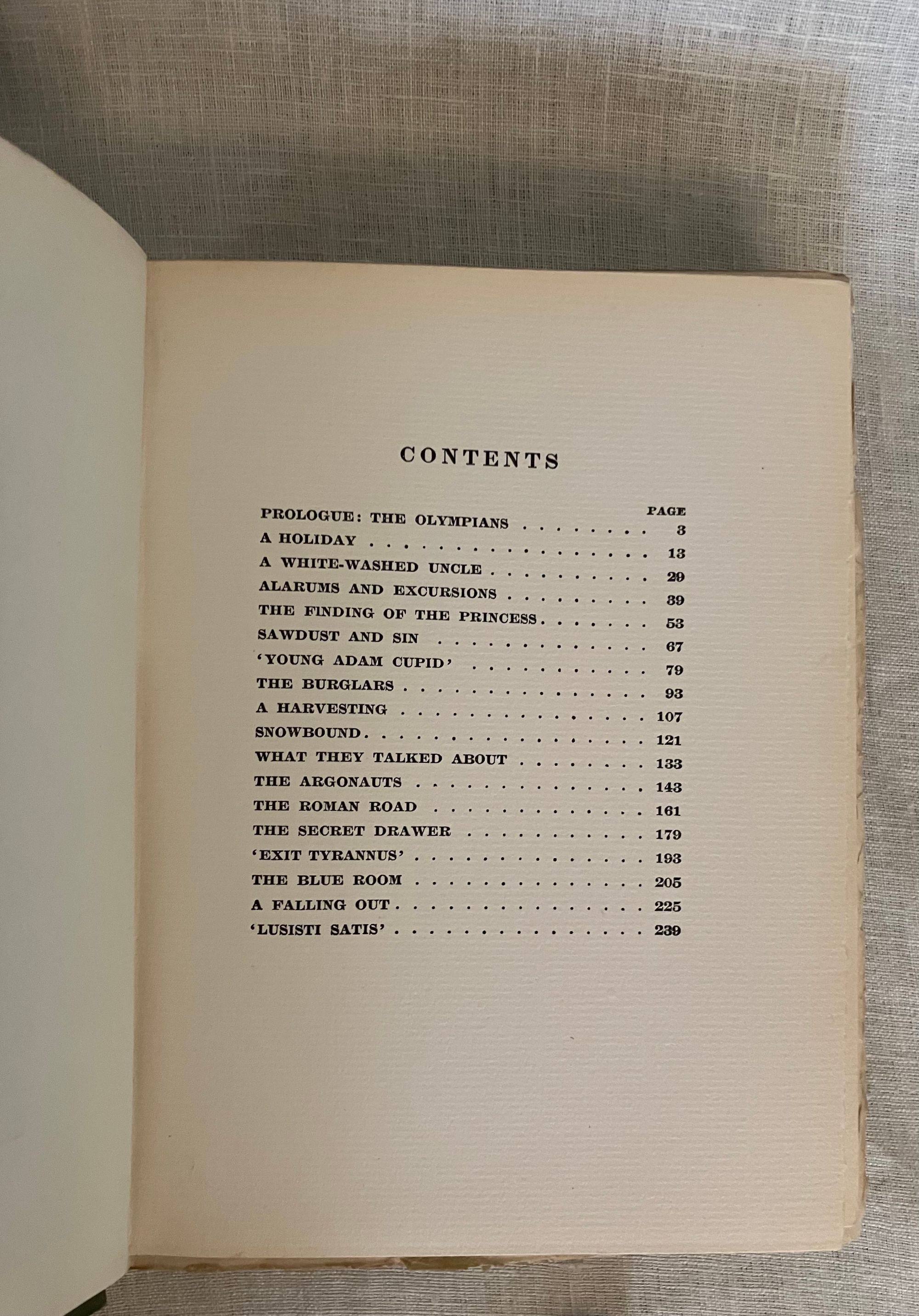
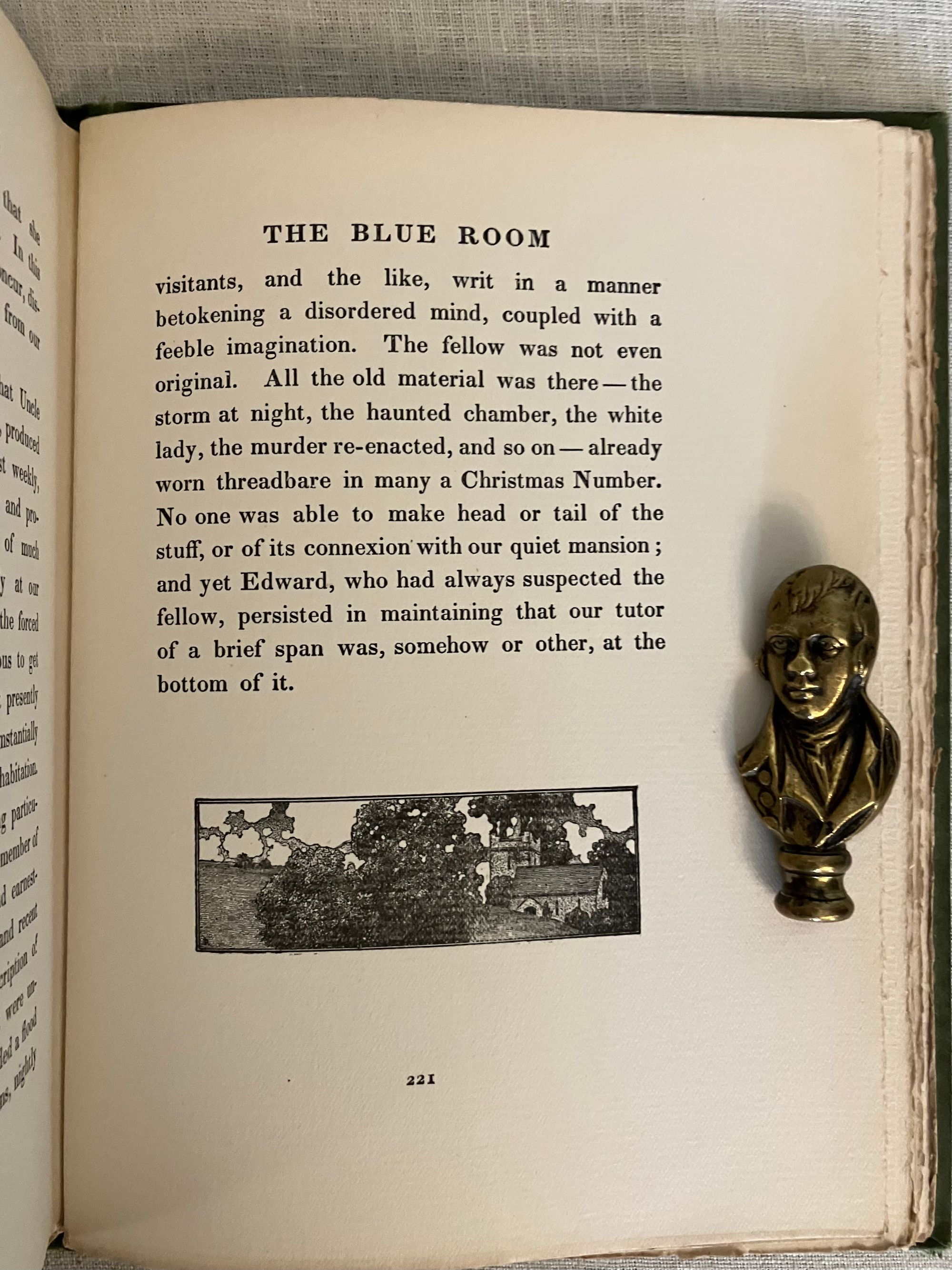
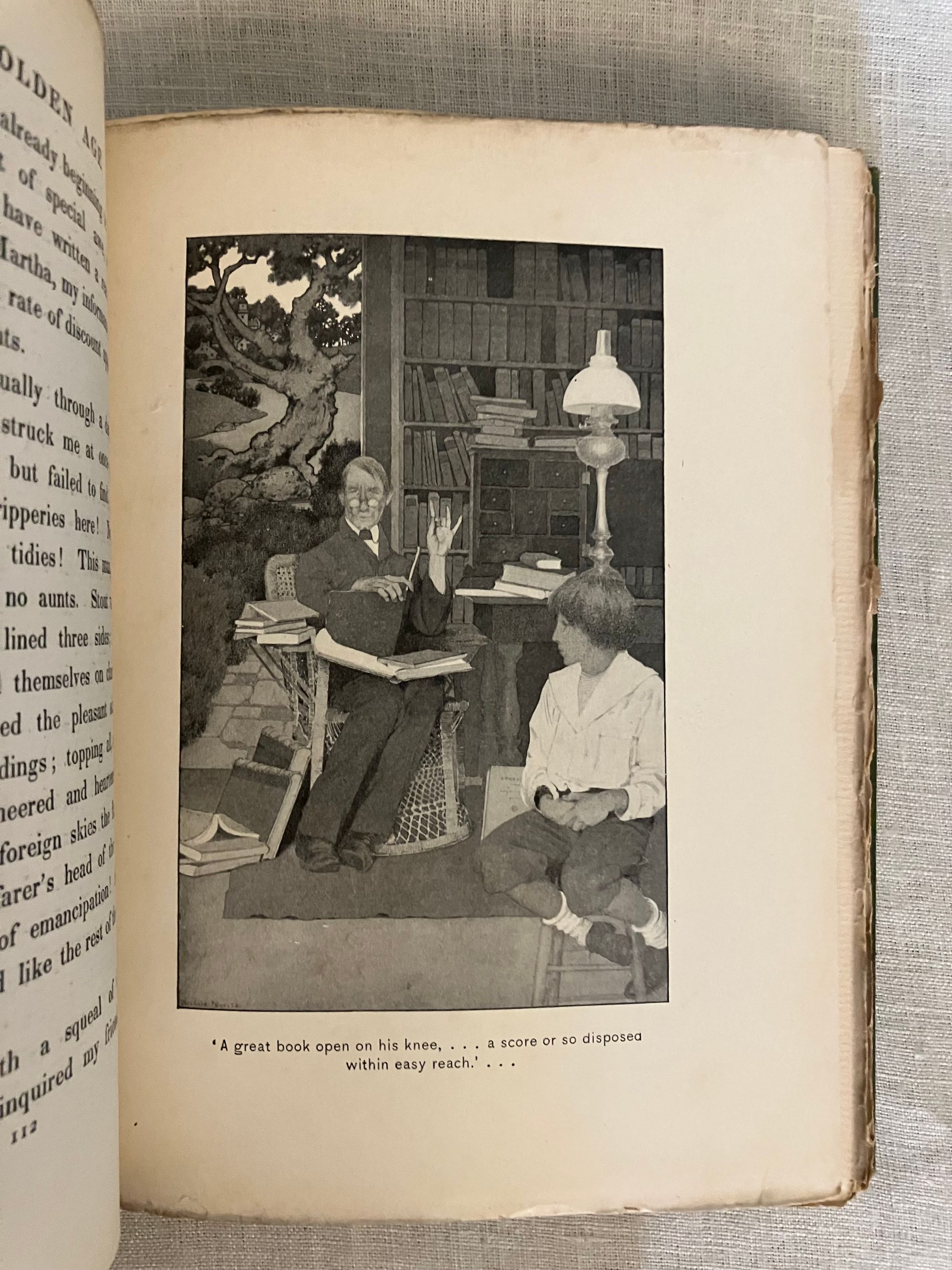
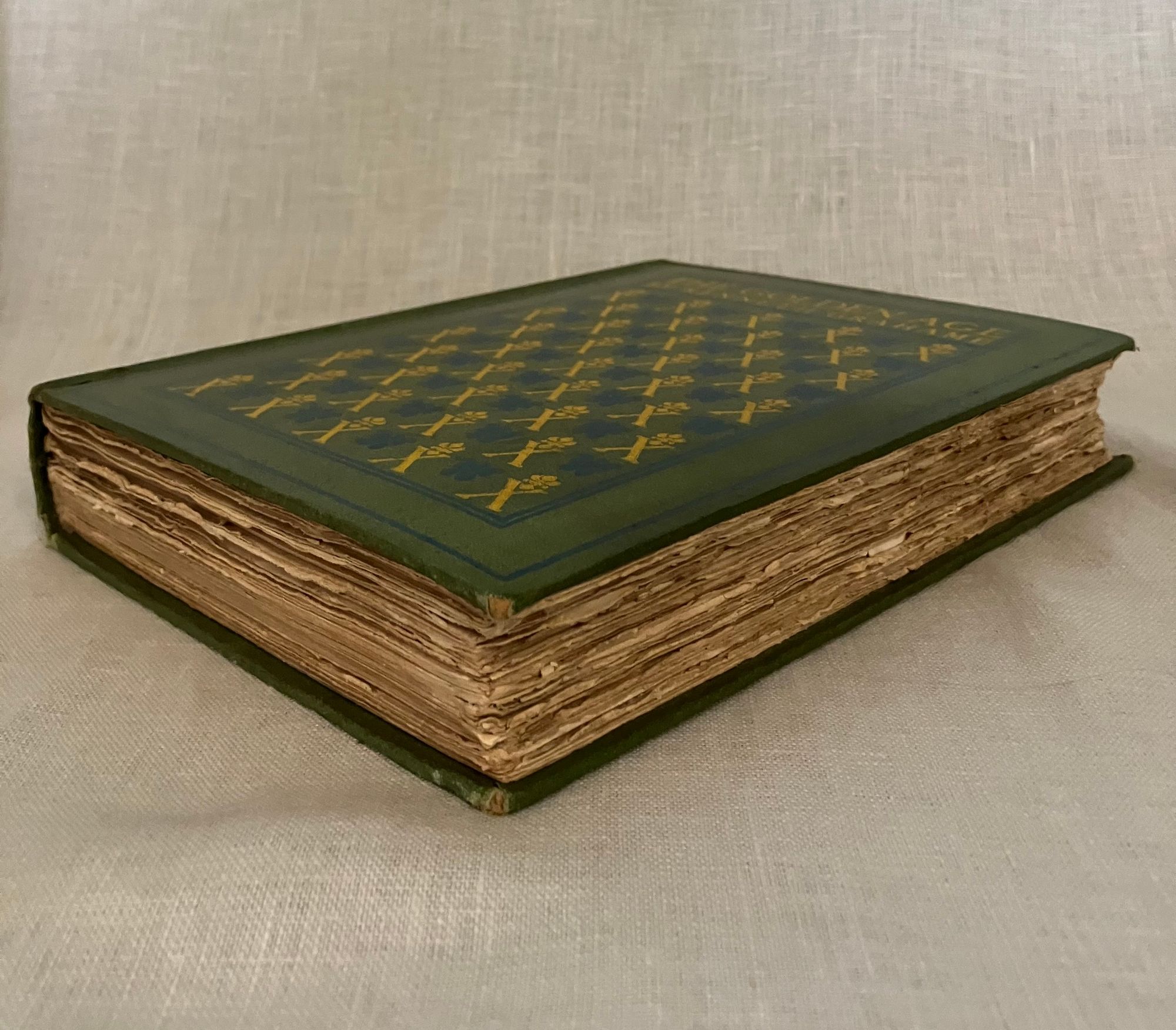
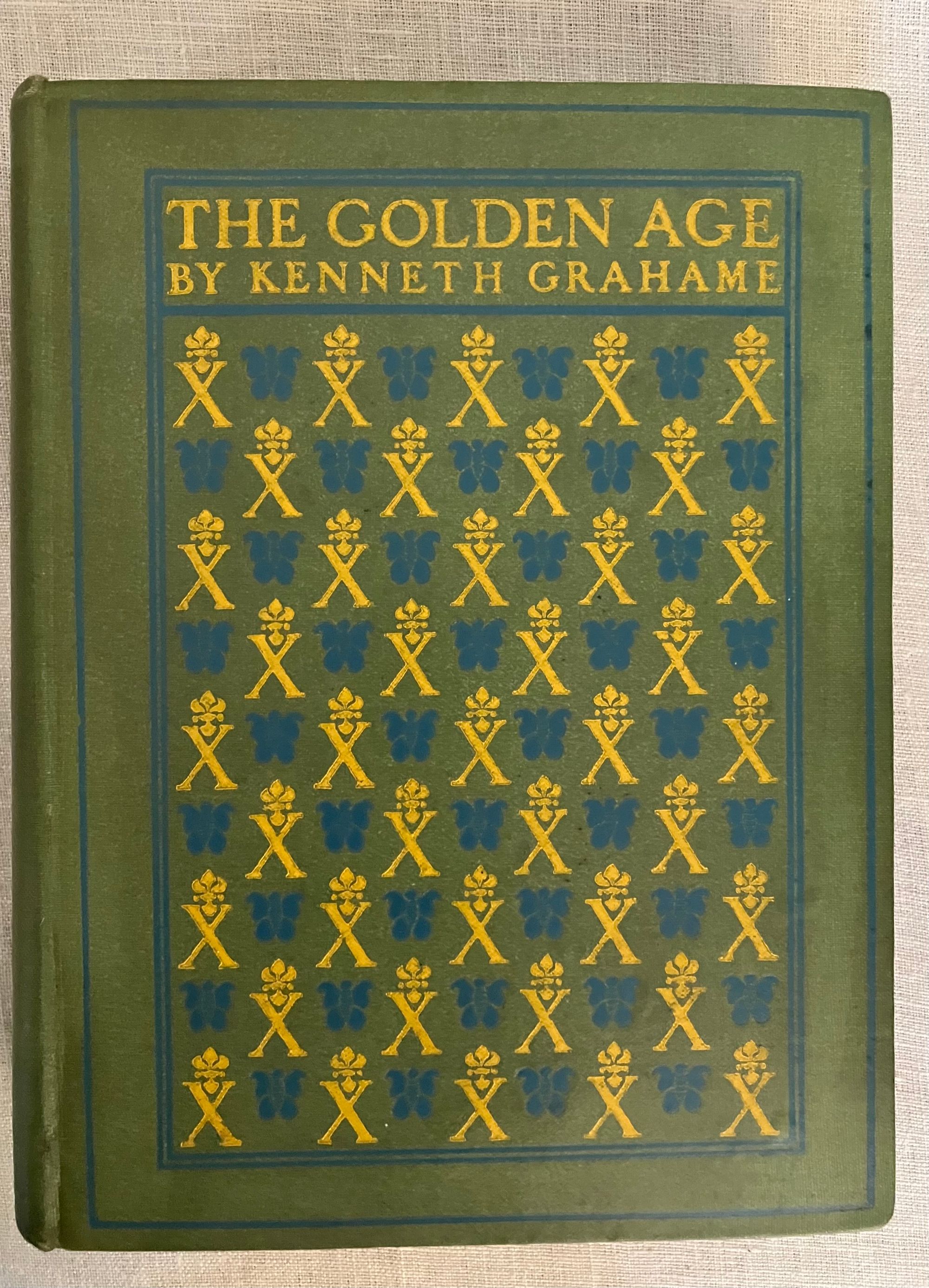


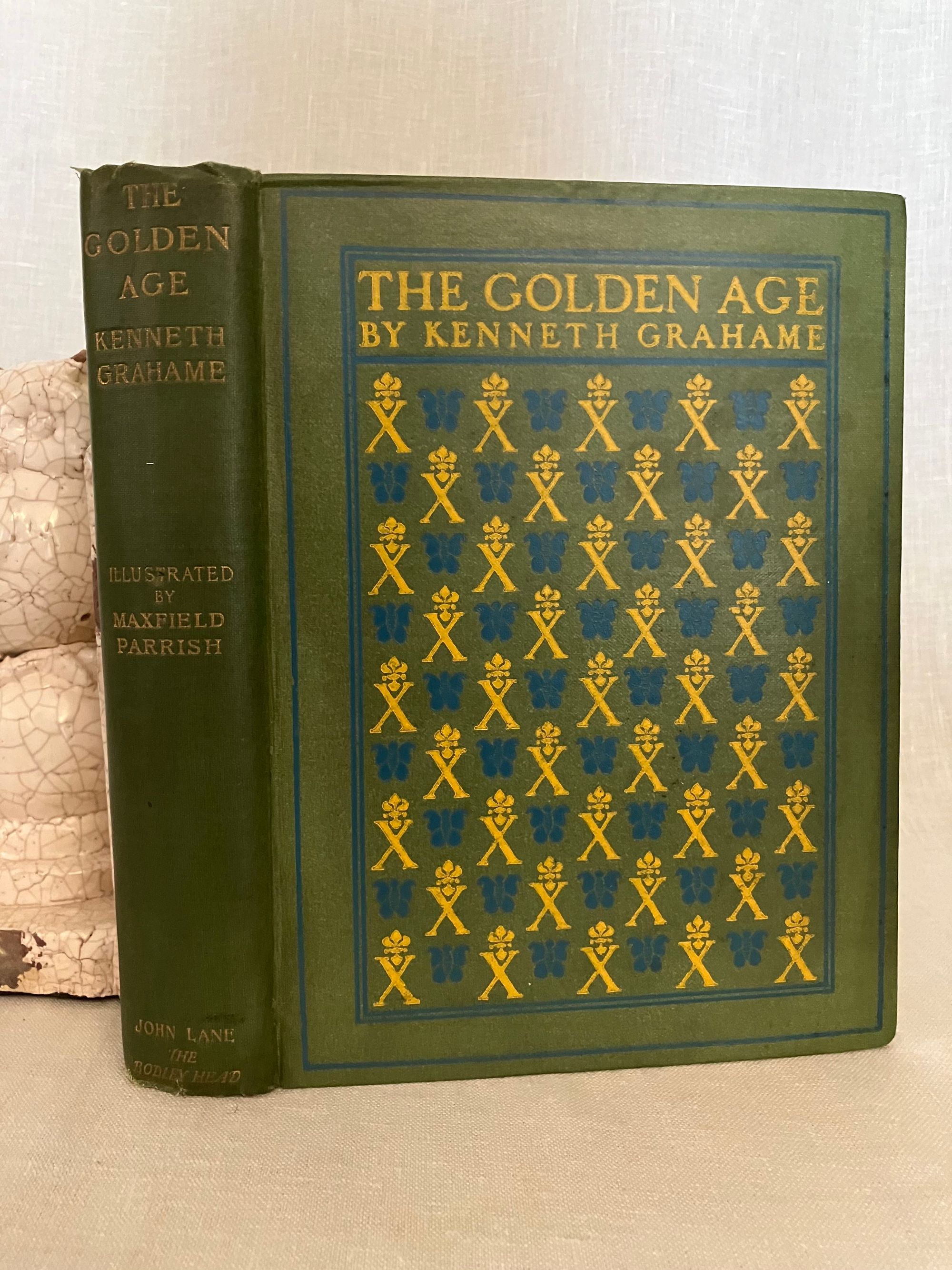
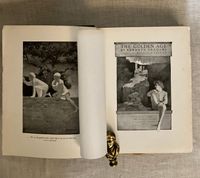
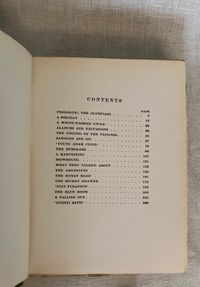
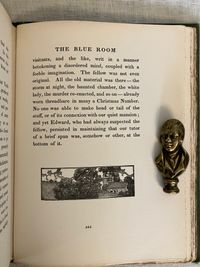
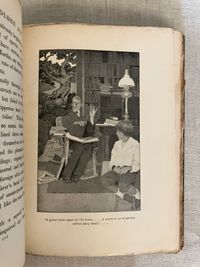
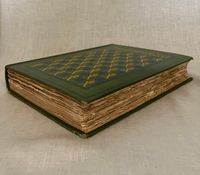
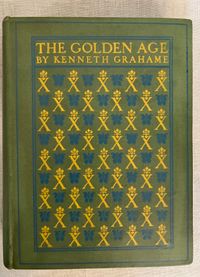
First Illustrated Edition Thus. (?printing?) Hard cover, 8vo in green cloth-covered boards, the front of which has title and author name in yellow within a blue ruled border, within which is a pattern of blue and yellow x-shapes with foliage atop and butterfly shape pattern. Titles blocked in yellow to the spine Top edge gilt, others untrimmed. Printed on laid paper, with plates on glazed stock, plates are unpaginated. All black and white photogravure reproductions of the original Maxfield Parrish art as called for, including the frontispiece, the facing tissue-guarded illustrated title page, and an additional 16 full page plates on glazed paper. Additional footer decorations to each chapter. COLLATION: [1], [6, plus art], [1]-252pp. plus 2 pp. publisher's advertising titled "Books by Kenneth Grahame" [1]. **CONDITION: Very Good Minus. A few small areas of soiling to boards, and one pinhole sized puncture to center of spine, which also shows a shadow of a midline crack that cannot be found internally. Rear hinge cracked, front hinge less so. Area of browning to laid endpapers. Internally very clean, bright with the odd spot of intermittent foxing. **The world of children's play and way of thinking about the world forms the action of this work, with its vignettes narrated each by the children of a relatively well to do Edwardian household. The Preface declares adults to be variably remote, slightly terrifying gods who must be feared and obeyed, or more kindly and empathetic. Punishments and correction are expected. From the Press notices in this issue: "Mr. A.C. Swineburne in the Daily Chronicle Says:--'The art of writing adequately and acceptively about children is the rarest and most precious of all arts..."The Golden Age" is one of the few books which are well-nigh too praiseworthy for praise." (from catalogue) **This was the second novel by Edinburgh-born AUTHOR Kenneth Grahame (1859-1932), perhaps best known for his later work, "The Wind in the Willows" of 1908. There are a number of semi- autobiographical parallels to Grahame's life that inform his approach. Orphaned at a young age after his mother's bout of scarlet fever, Grahame and his surviving siblings went to live in England with a grandmother, his father succumbing to drink and depression thereafter. Grahame's uncles bear resemblance to some of the characters in the story. Never in robust health, the Author was seemingly a sensitive soul. Not bound for university, he nonetheless became a well-qualified "gentleman clerk" at the Bank of England where he worked for thirty years and became a top executive. He retired after being shot three times by a bank intruder and devoted himself thereafter solely to his writing. **Philadelphia-born ARTIST Maxfield Parrish (1870-1966) had his original oils with their characteristic tonal glazes, adapted for several editions of this immediately popular children's title, coming out first in black and white photogravures, a technology invented in the 1880's which was able to finely delineate tones from paintings in great detail. **REFS: On Grahame: J. Sutherland, "The Stanford Guide to Victorian Fiction" (Stanford Univ. Press, 1989). Remains a very useable, nice copy.
Ref: ILLUS 9284
$60.00