 |
 |
 |
 |
 |
 |
 |
 |
 |
 |
 |
 |
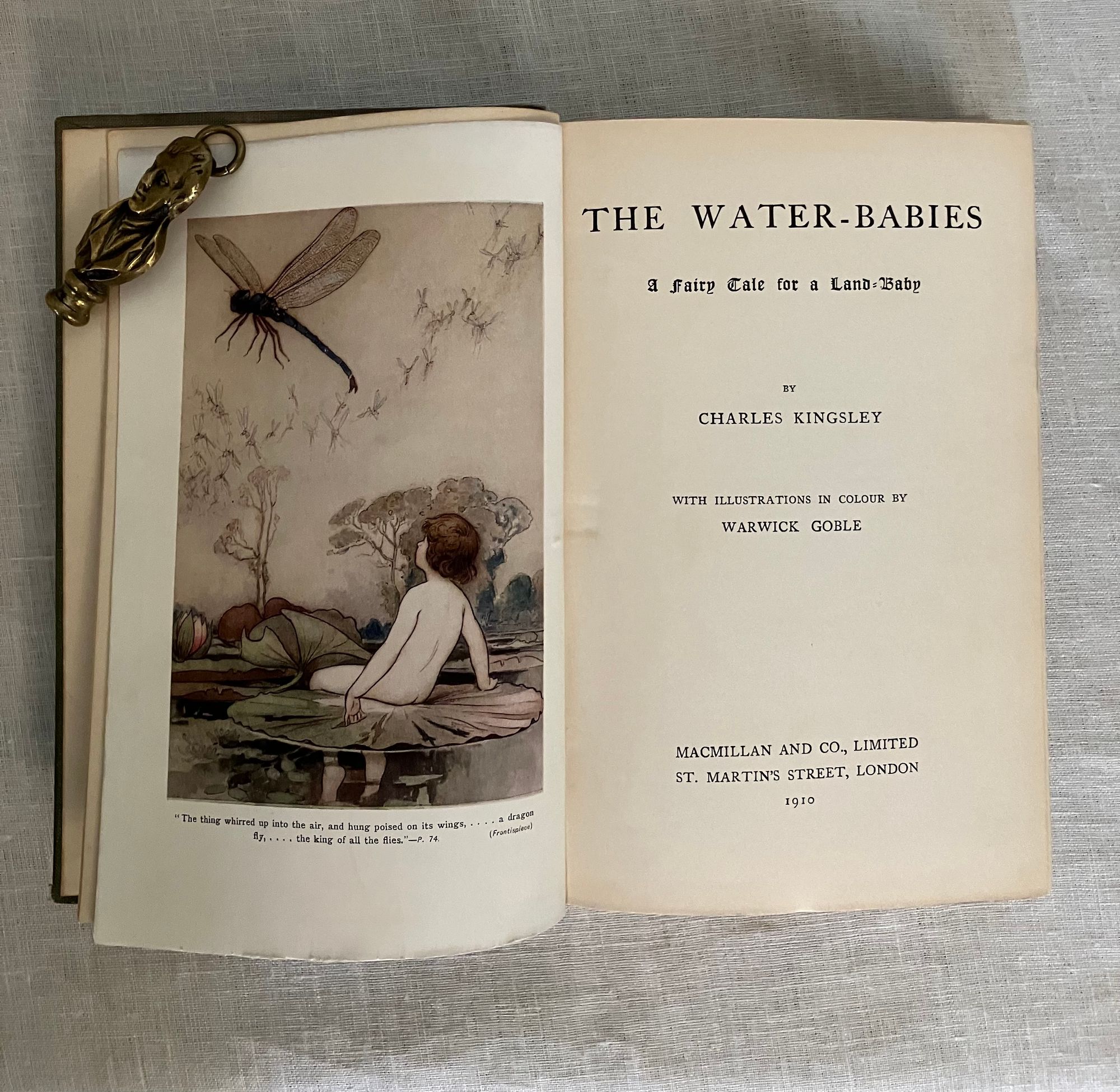
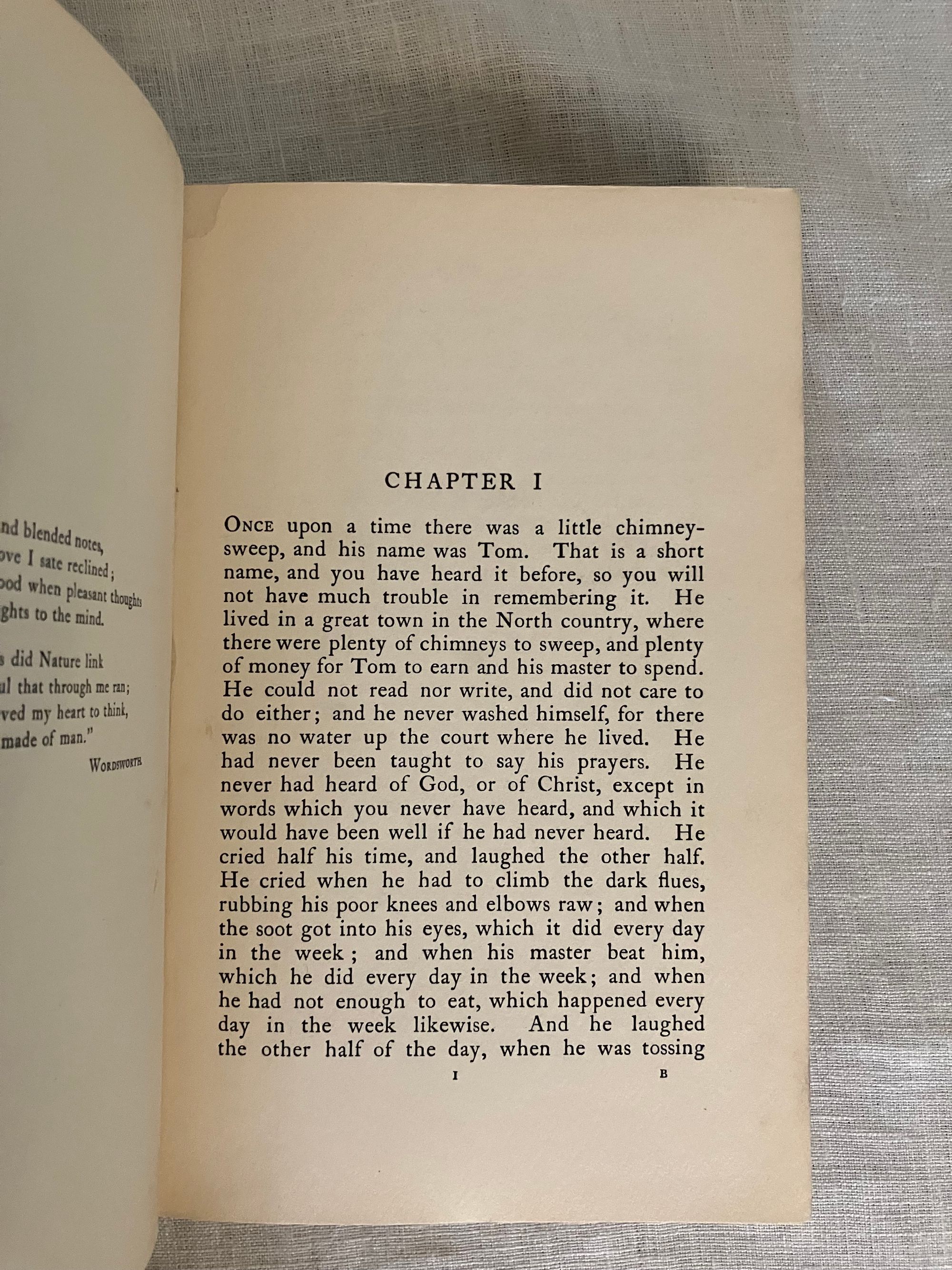
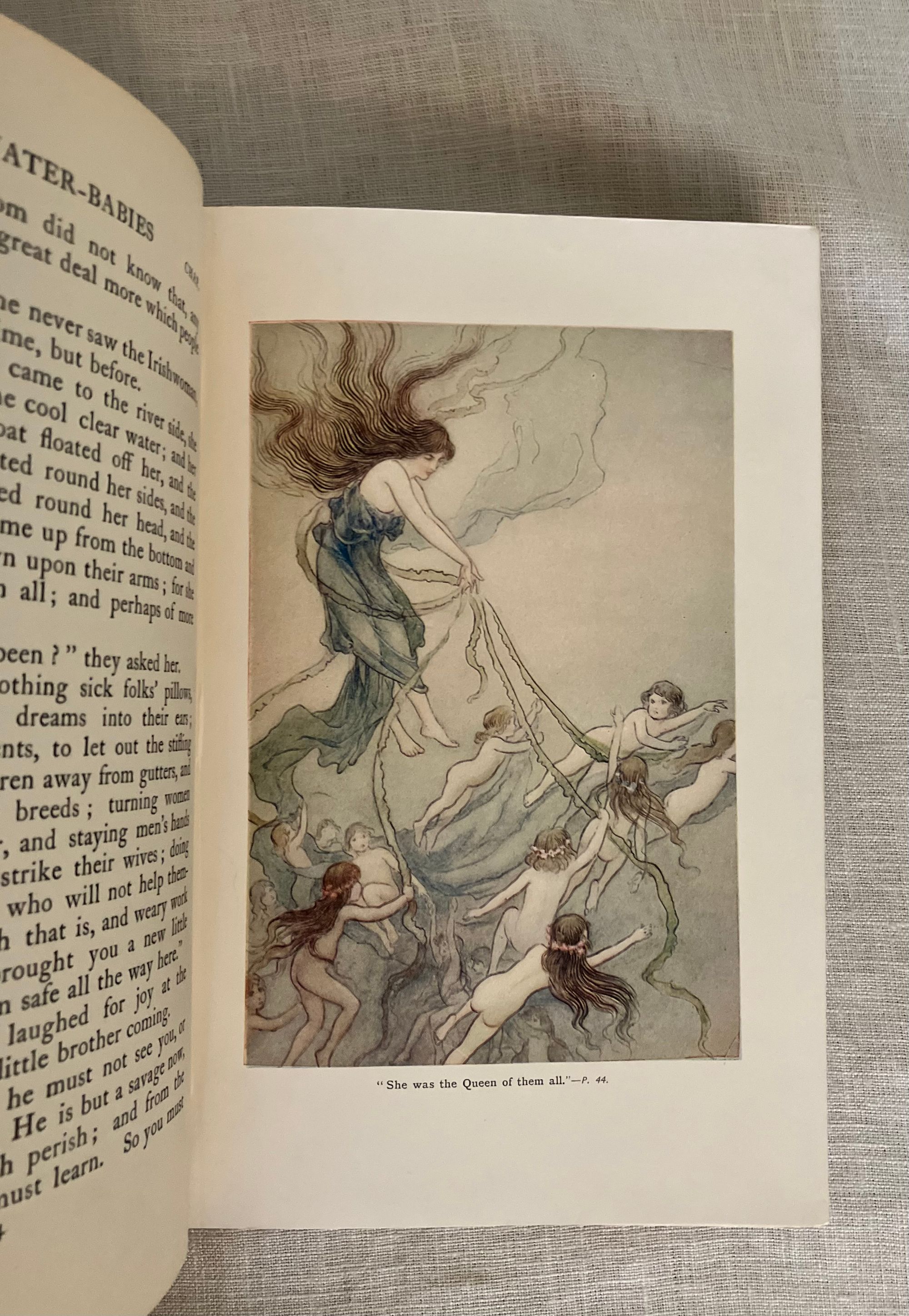
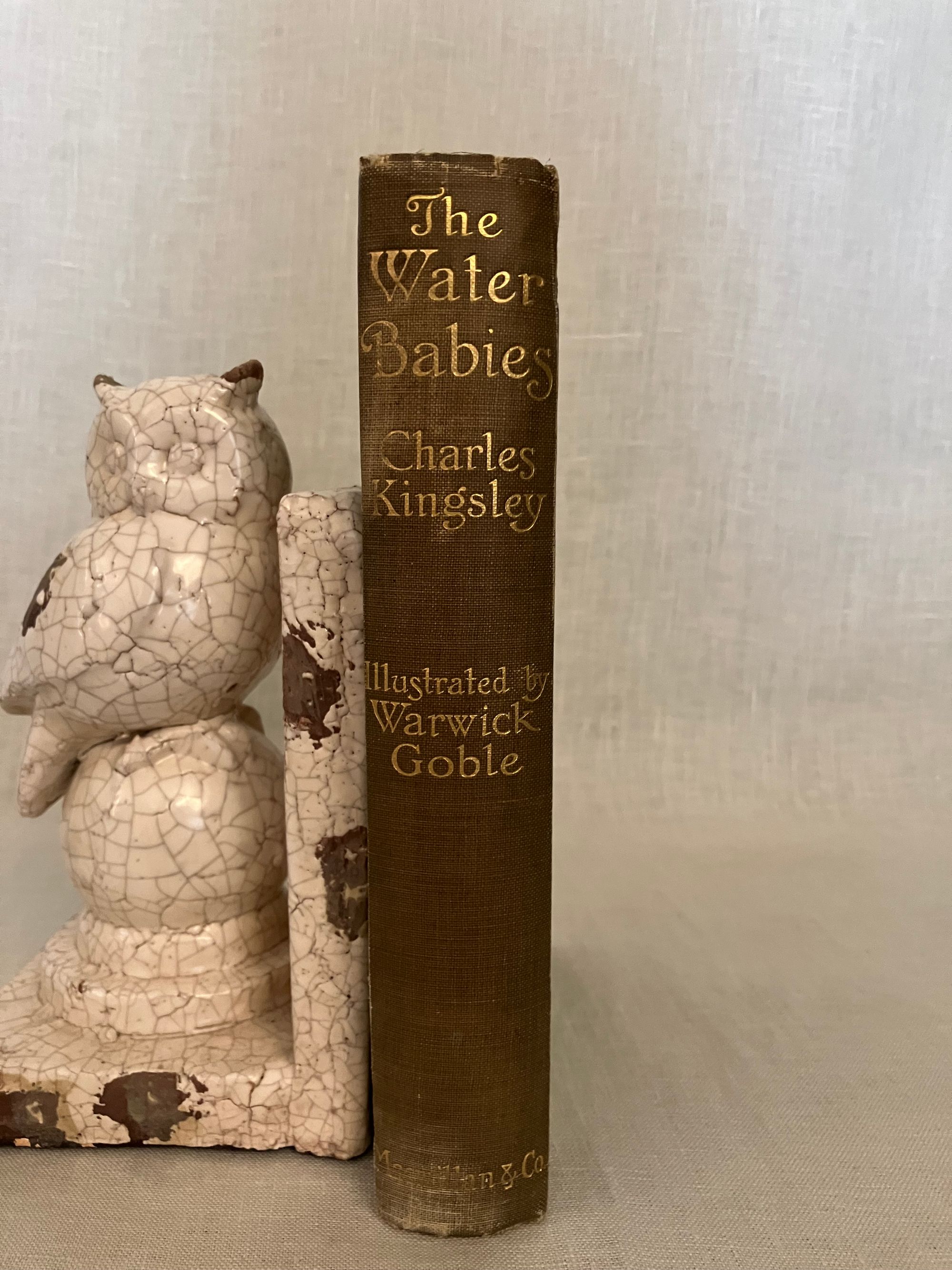
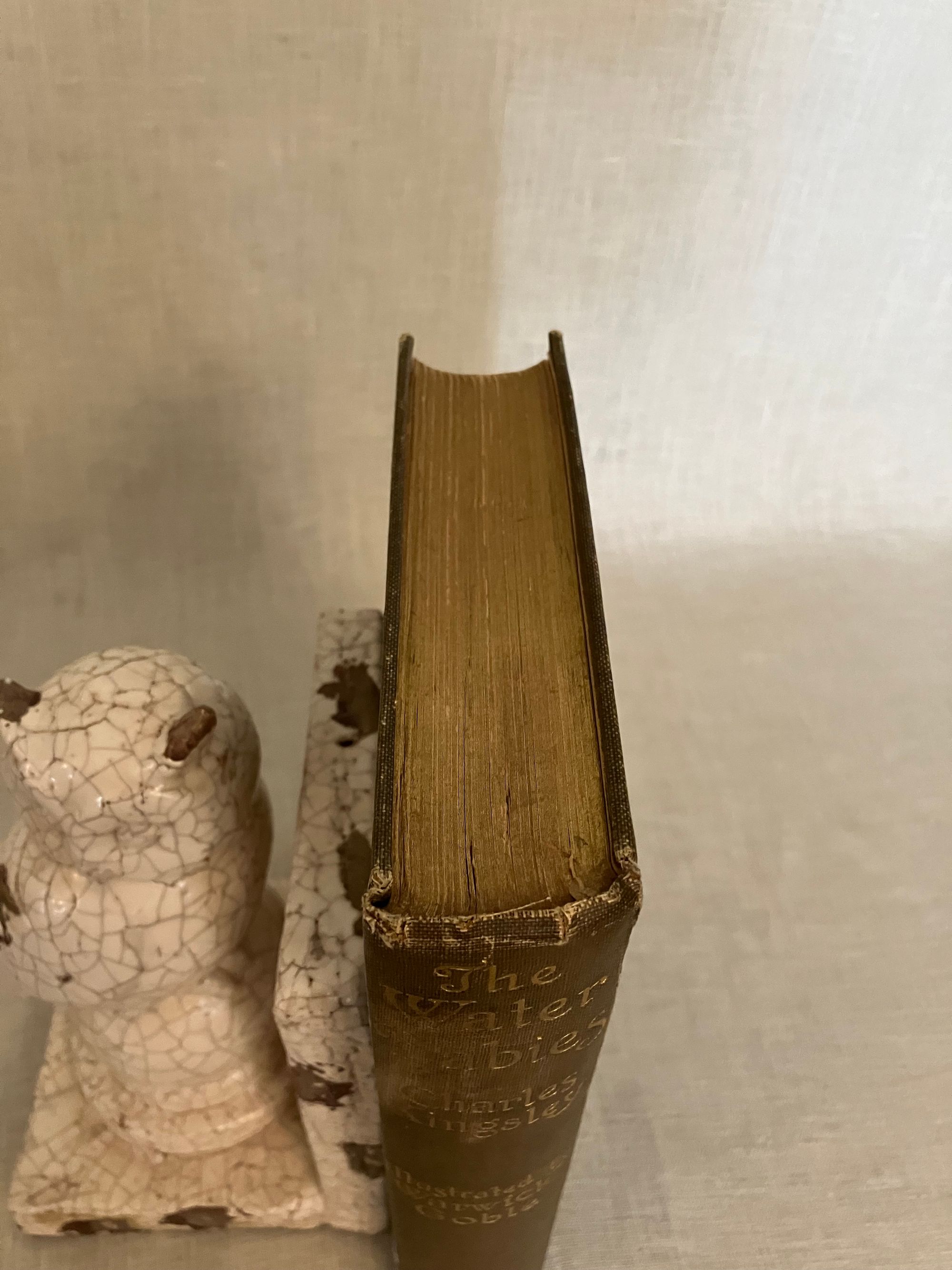
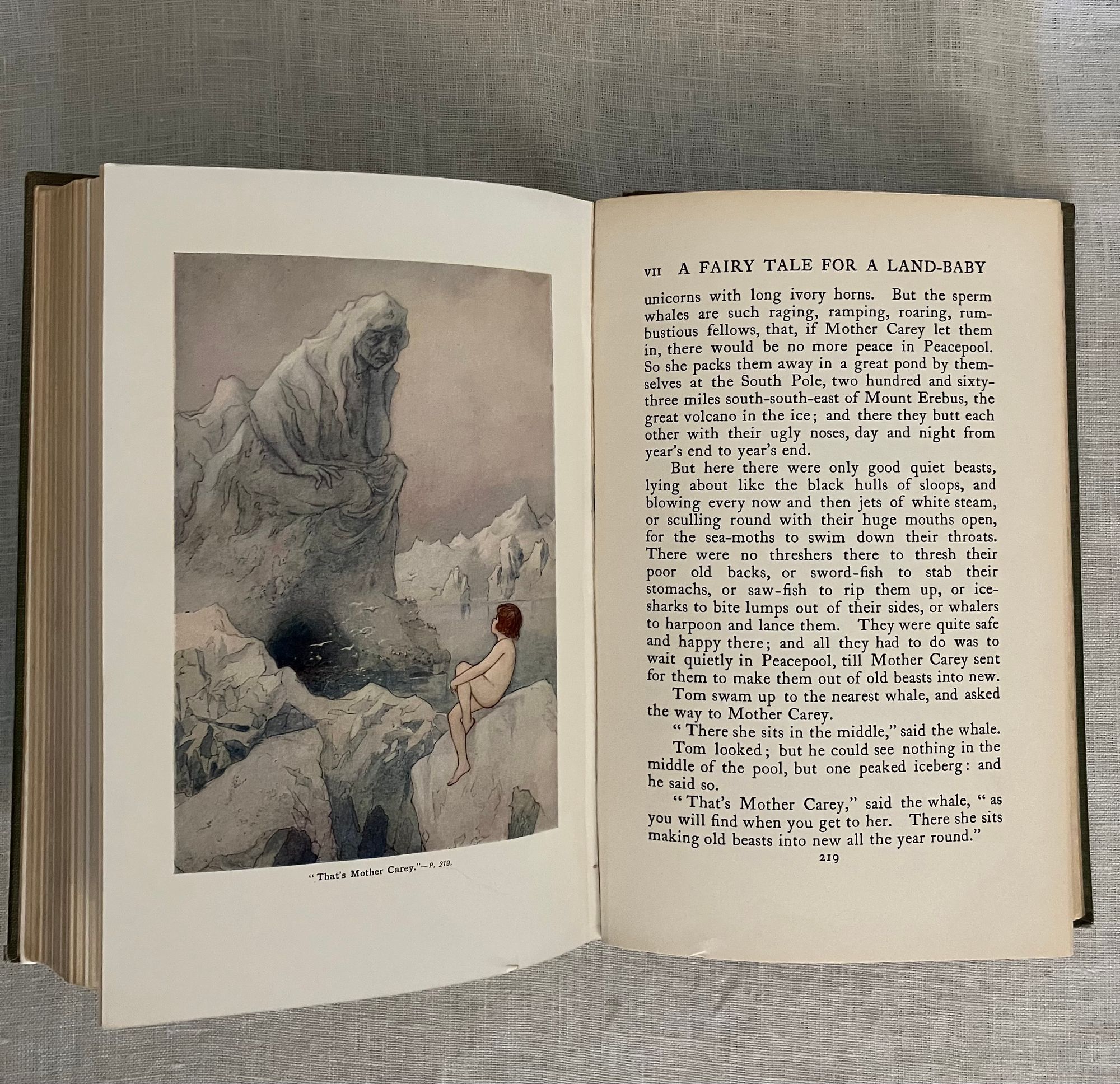


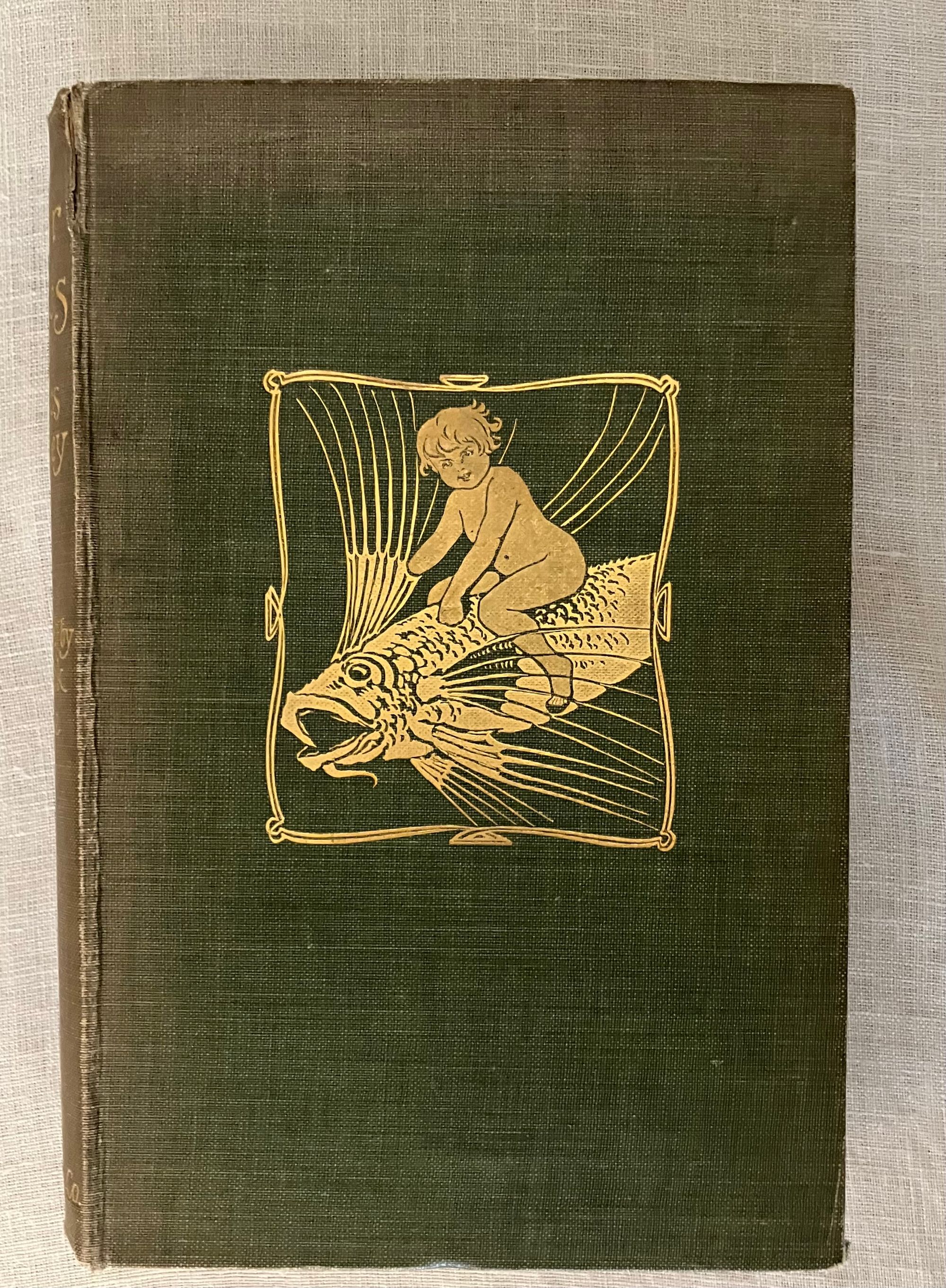
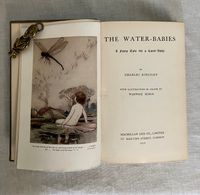
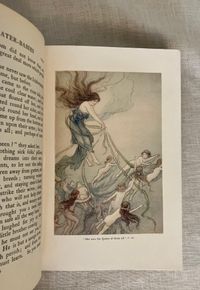
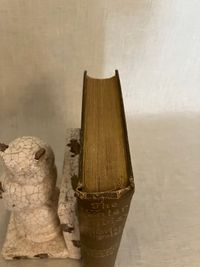
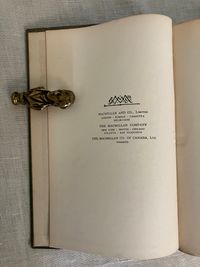
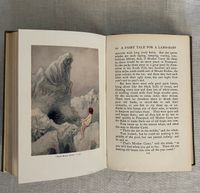
Uniform Edition; First Thus; [a prior edition with the W. Goble artwork was released in 1909 by MacMillan with 32 plates tipped in, however, this is the 1910 version, with 16 full page plates chromolithographed directly onto glazed paper, and copyrighted for international distribution. Does not contain the "L'Envoi" quotation.]Identified by publisher's catalogue: "3 sh. 6 d. each." Hard cover, Demy 8vo, in green cloth with an art deco motif of a baby riding a fish blocked in two shades of gold within an art deco type frame to the top board, the titles to the spine in gold. Top edge gilt, others trimmed. 273 pp. plus [6pp.] undated publisher's catalogue, with headline "By Rudyard Kipling." **CONDITION: Very Good. The cloth at the front joint has been reglued at head (one inch). Some sunning has caused oxidation seen to the top of both boards and to the spine. Fraying at head of spine, where rubbing has also dulled some of the lettering. Shelf wear to tips and bottom edge. Light, consistent browning to cream endpapers. A few areas of staining within, mostly at catalogue page margins. ** The ink and watercolor illustrations by London BOOK ILLUSTRATOR Warwick Goble (1862-1943) are the highlight of this wonderful edition. His artwork is in a similar vein to that of his better-known contemporary Arthur Rackham, even in a similar palette, however Goble's figures are more rounded and naturalistic. Goble had a successful career as an illustrator of the then-new market for twentieth century illustrated gift books. MacMillan cleverly marketed the work by bringing out a number of editions with different illustrators to appeal to collectors.**British AUTHOR Charles Kingsley (1819-1875), multi-talented novelist, social reformer and broad church Anglican priest, mined his boyhood interests in geology and Darwinian scientific thought in the natural history details of this work. He also was influential in the Christian Socialist Movement, taught modern history at Cambridge, and became chaplain to Queen Victoria, among other accomplishments.** THE STORY, interlaced with quotations from Wordsworth and Coleridge, and first serialized in MacMillan's Magazine in the early 1860's,i s much more than a pleasant children's book. It is an engaging fable told in a humorous yet lyrical, style about an eight-year old chimney-sweep, Tom. In brief, the lad is chased out of Squire Harthover's grand house having landed in the wrong room during his carboniferous excavations of the chimney pots. He runs away, across the poetically described Northern English landscape, followed by a mysterious red-petticoated "Irishwoman" who, it turns out, is the Fairy Queen who leads him to a protected dell. There, Tom is literally cleansed, in a baptism-like fashion, of his past troubles, and reborn into a new enchanted existence in which, as described by Sutherland, he goes on to become "a great scientist," (and wins the girl whom he scares coming out of the chimney in the first episode). As a fable, Tom's old life reflects a litany of the social and spiritual ills of the day; he is overworked and beaten by his boss, Mr. Grimes, who is himself often imprisoned for thievery and poaching. The inequality of the justice system is alluded to; there is brief reference to the Luddite's Frame-Breaking riots of the late 18th, early 19th century, for instance,in which the destruction of mechanized looms around Yorkshire led to several laws adopted to hang or transport the protestors. Implicit are calls for better labor laws, the protection of child laborers of all kinds, including their use in collieries, the unfair exclusion of the poor from education or means of advancement in society, and other themes of social justice which the author felt were in need of address. A balancing counterpoint to this are themes of the healing and regenerative powers of nature and the landscape; it is, like the best of books, layered with ideas which invite re-reading as an adult and, frankly, are still very germane today. It has also been said the fable was written in support of Charles Darwinn's Theory of Evolution. REFS; L. Stephen, DNB, "Charles Kingsley" (1885-1900, Vol. 31). J. Sutherland (1989) "The Water-Babies" p. 661.
Ref: ILLUS 9280
$265.00