 |
 |
 |
 |
 |
 |
 |
 |
 |
 |
 |
 |
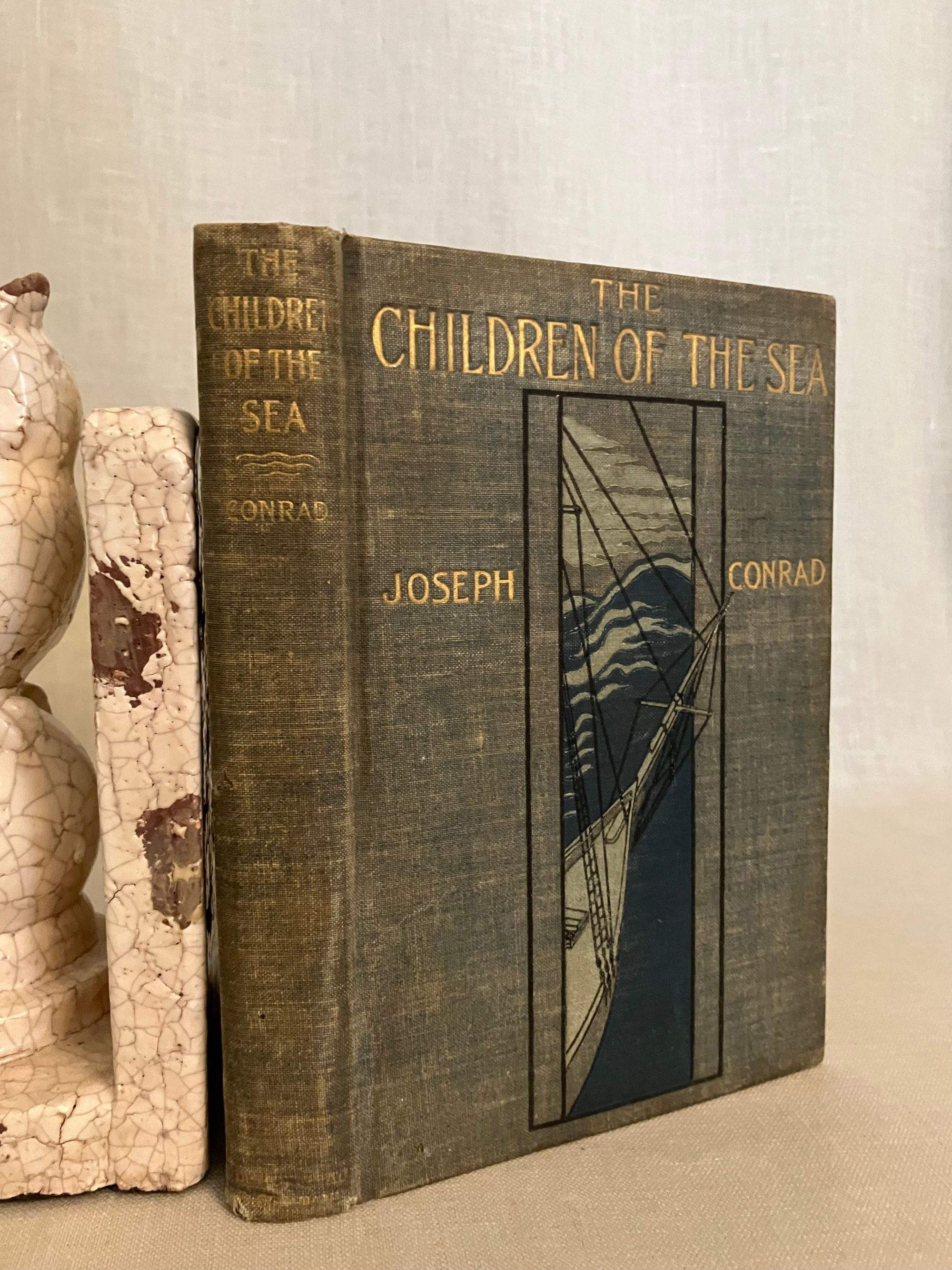
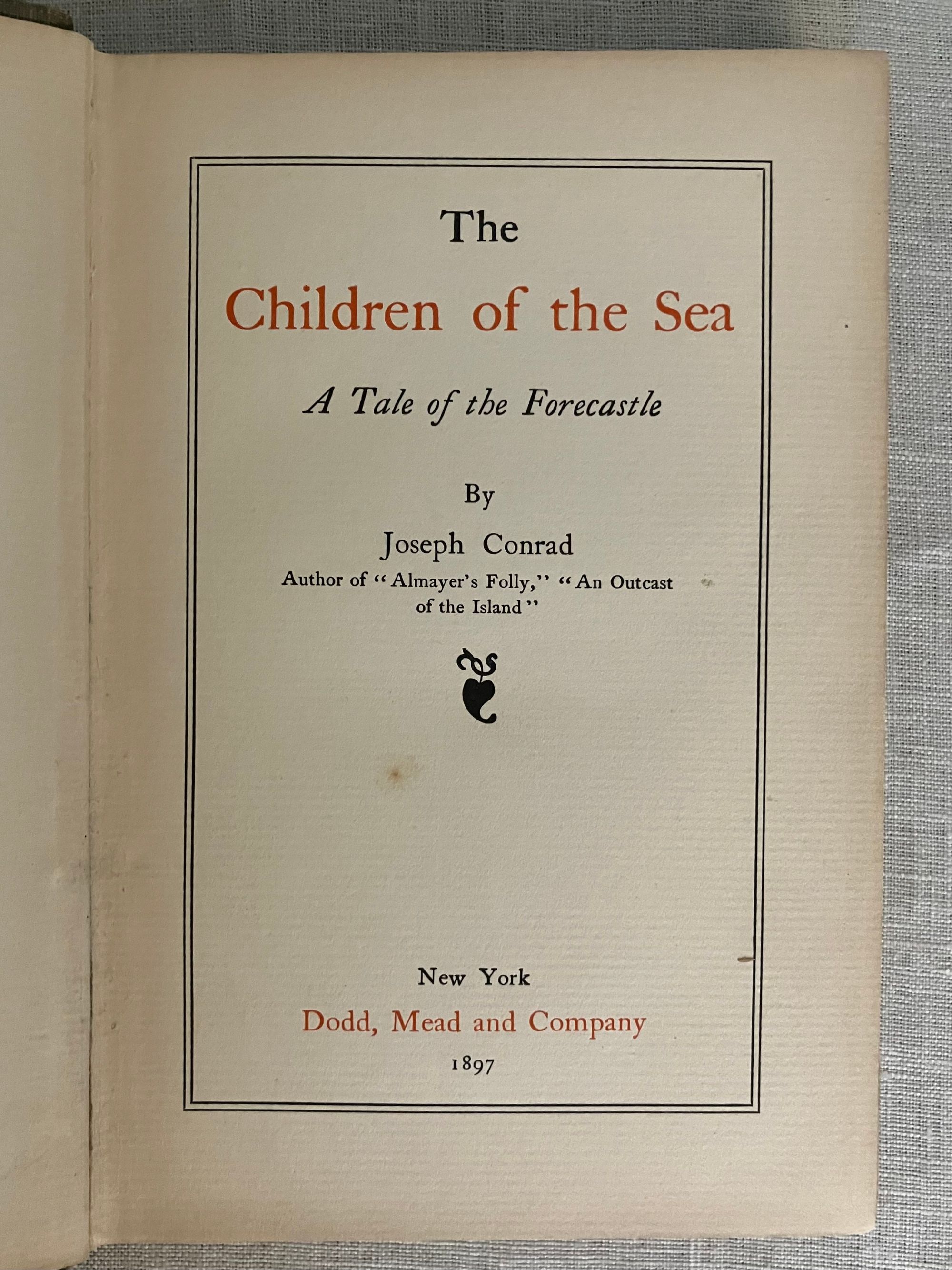
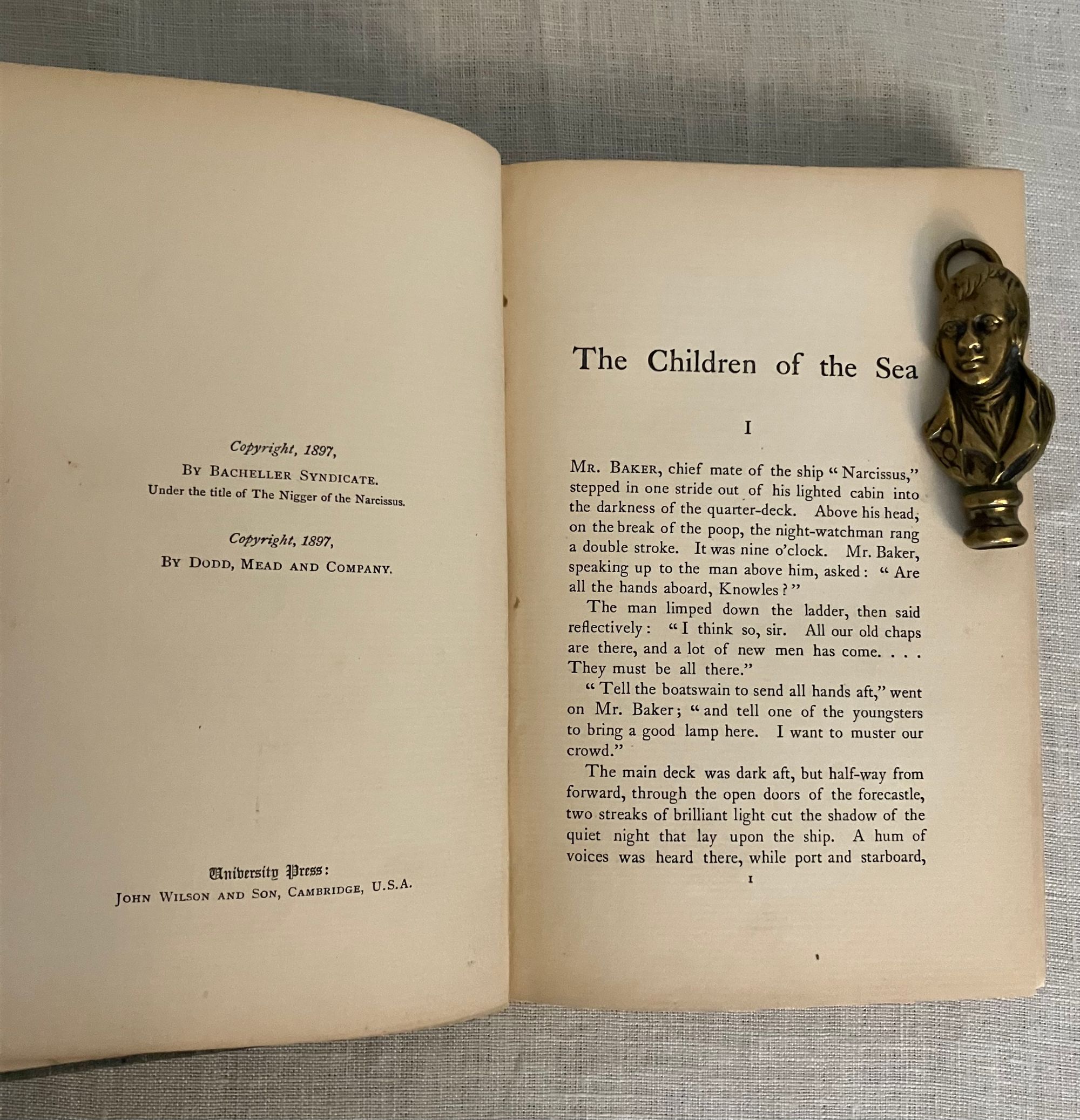
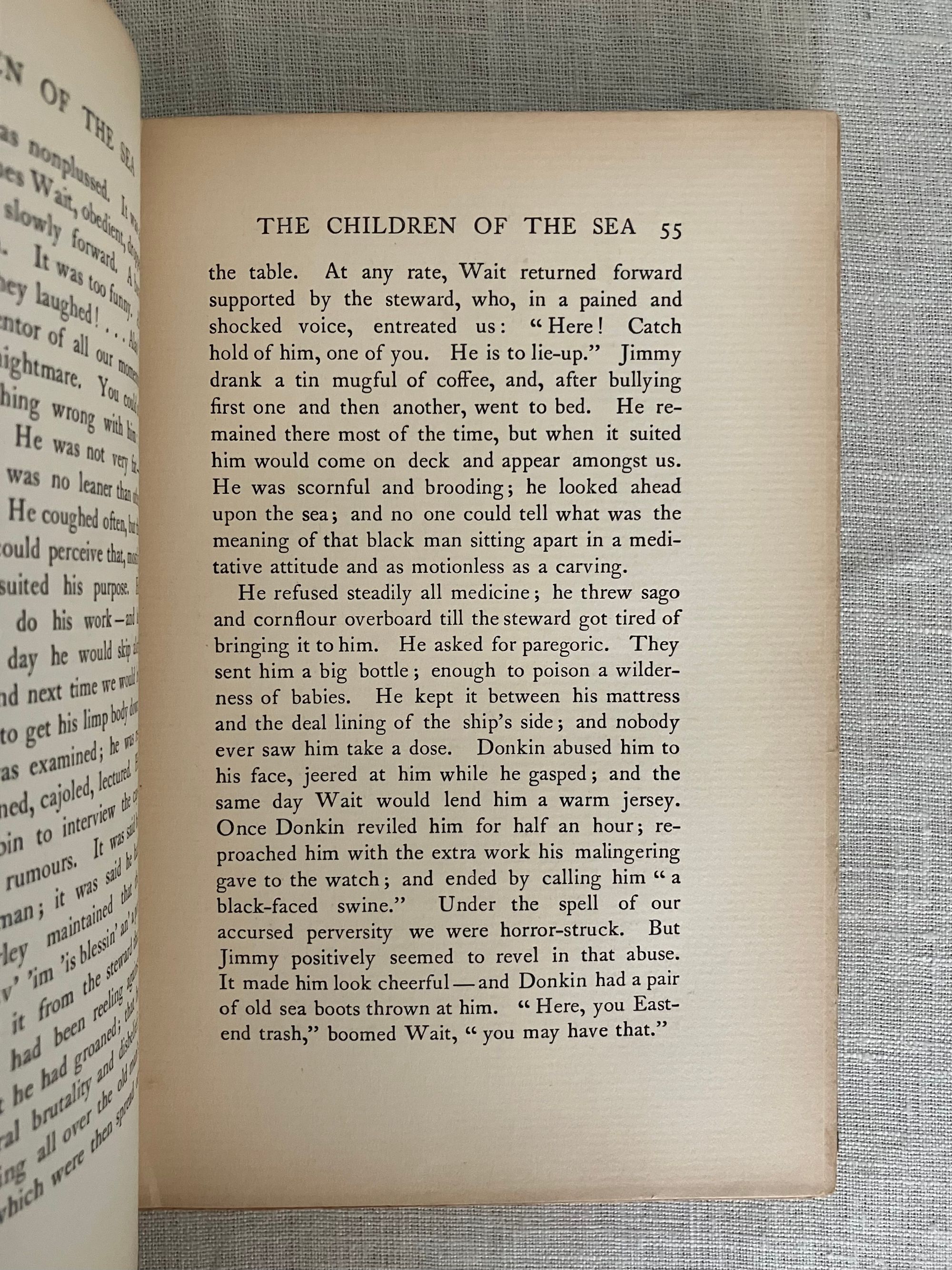
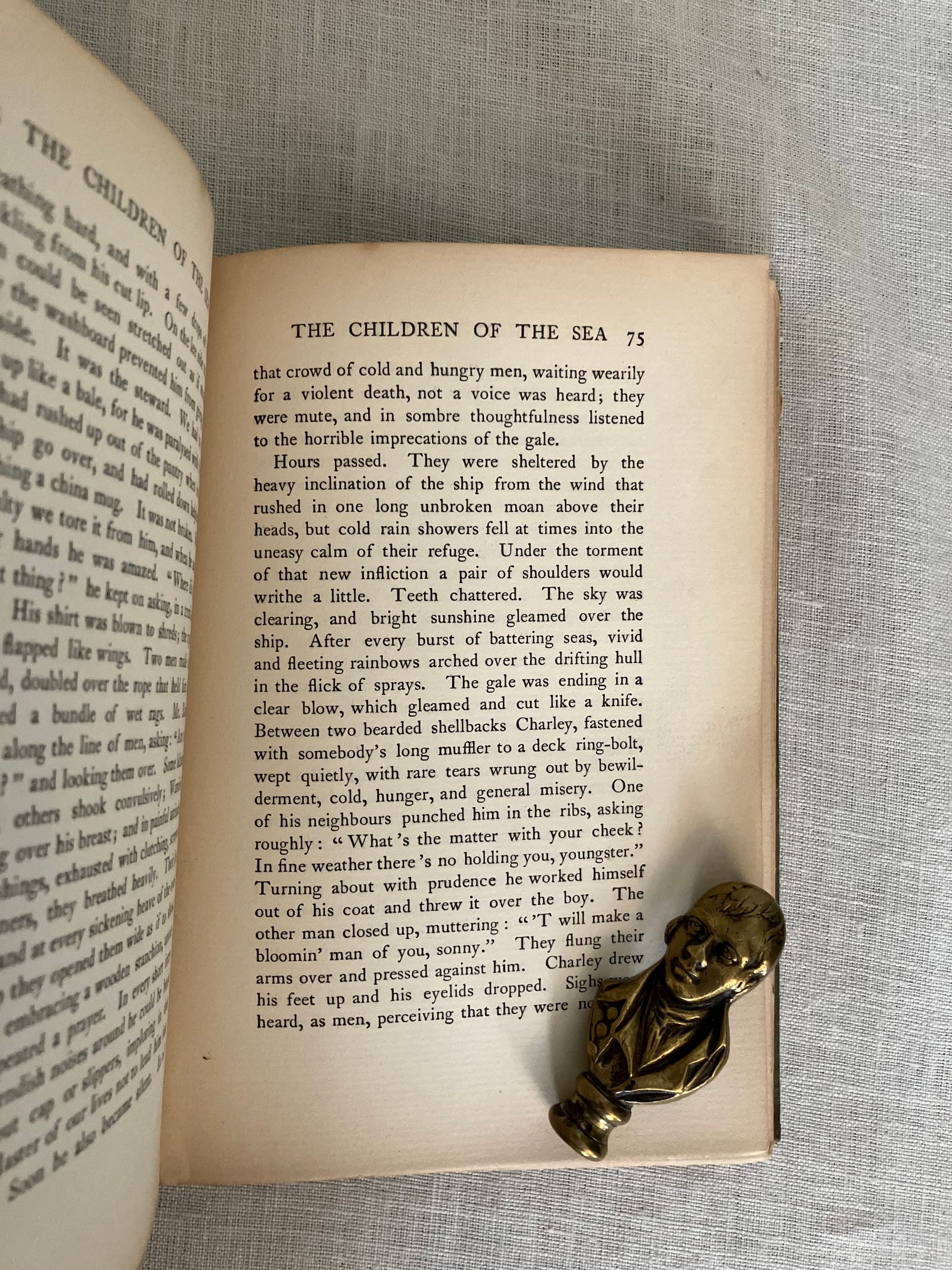
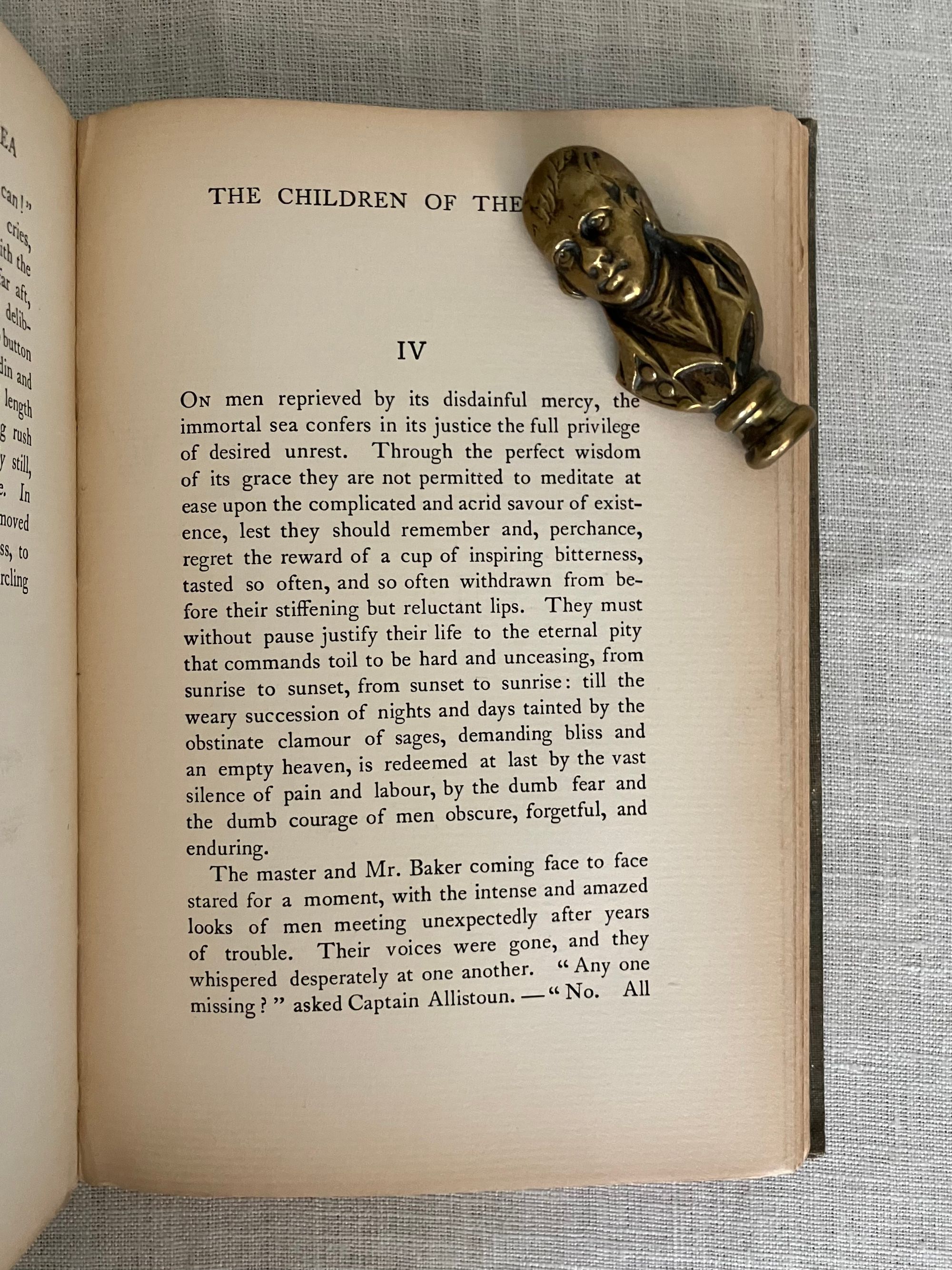



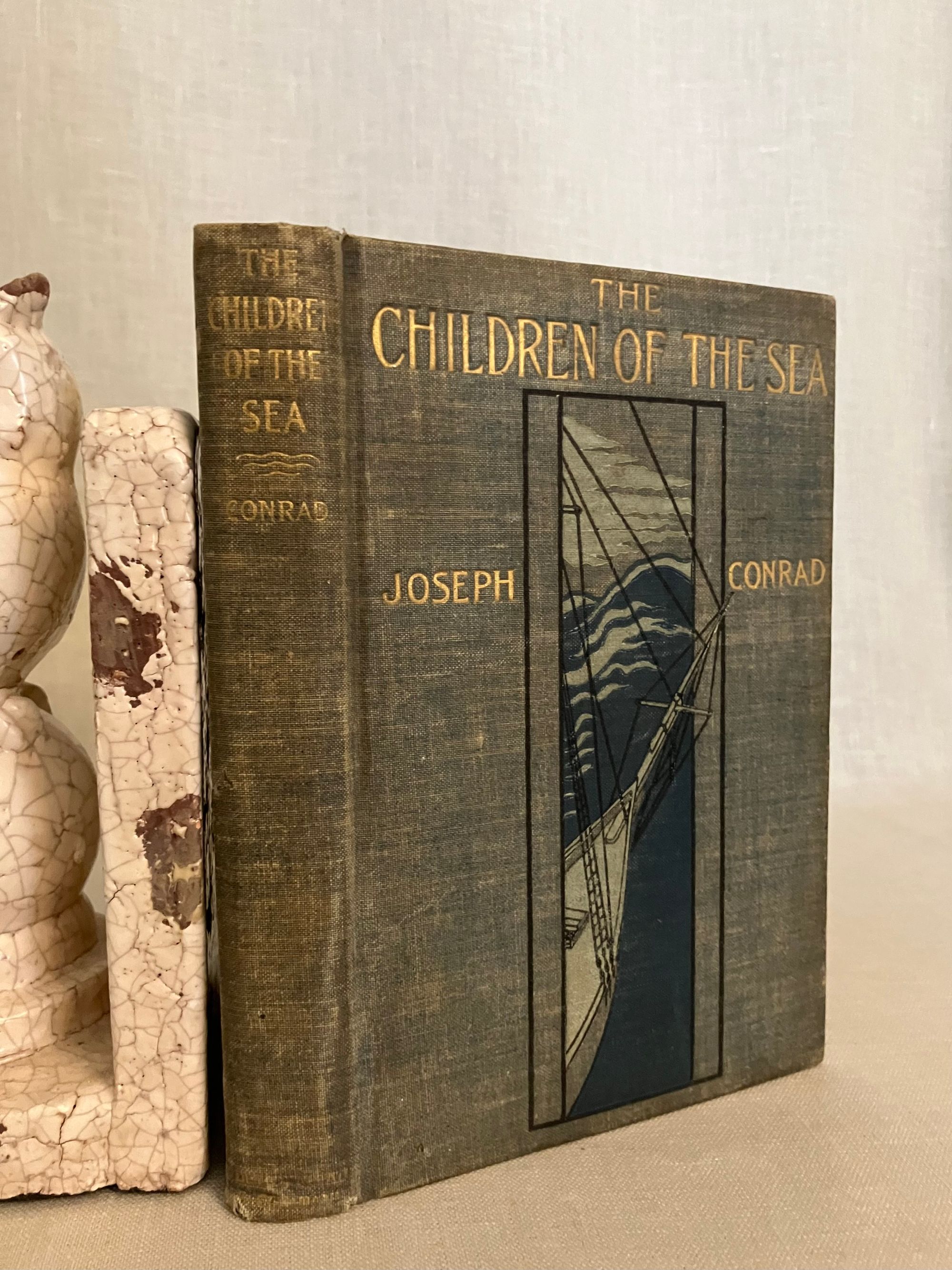

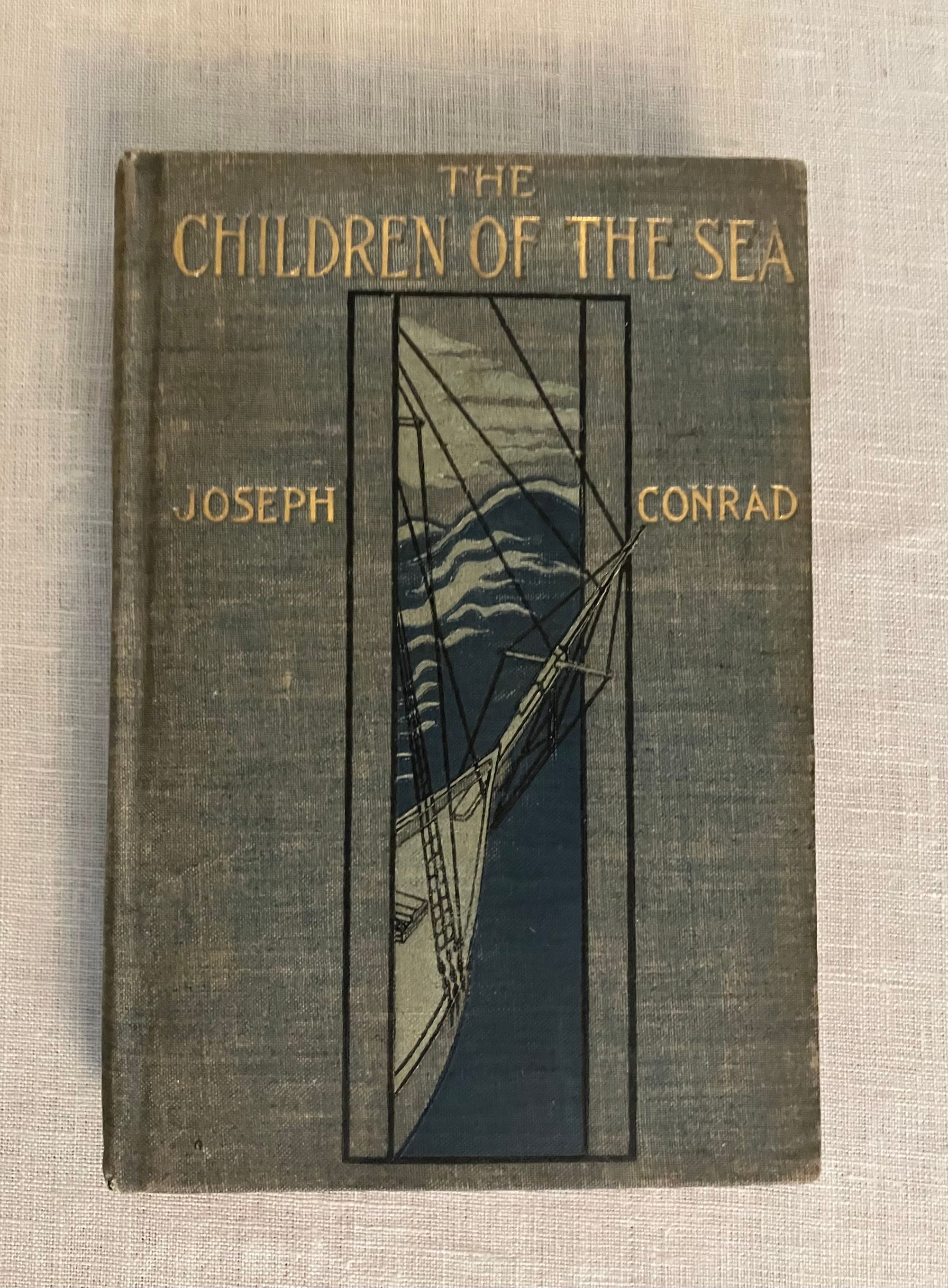
First American edition, first impression, first issue. [This American first edition came out Nov. 30, 1897, while the British version, under the variant title, came to market Dec. 2, 1897.] Hard cover, 12mo, in blue-gray linen-grain decorated cloth, the titles blocked in gilt to the front and spine, with the image to the front featuring the bow of a schooner upon rough seas in gray, black and teal blue. Text block trimmed and stained brown at head, other edges untrimmed. Title page in orange and black, within a double-ruled frame, dated 1897. Copyright page with 1897 Bachellor Syndicate "under the title of The N****r of Narcissus," and 1897 Dodd Mead and Company copyright statements. Printed University Press, John Wilson and Sons, Cambridge, Mass. **CONDITION: Very Good Minus. No dust jacket. Front hinge broken, with paper join repair. Light shelf wear bottom edge, and at joints at foot of spine. Pages lightly tanned, with odd spot of foxing to prelims as seen in photos. Some light soiling near board edges, and at top of rear joint. In mylar protector.**COLLATION: [4], 1- 217, [3]pp. A NOTE ABOUT THE TITLE and LANGUAGE: The English first edition was published under the title "The N****r of Narcissus." The racial slur in the title was replaced in the U.S. edition because the publisher thought that a novel about a black man "would not sell." The casual use of this term by the multinational crew of the merchant sailing ship making its way from Bombay to London is, however, used throughout the beginning of the novel, at least, in reference to the main character, a West Indian man named James Wait, the only man of color on the cruise. As with so many of Conrad's works, based on his real experience in the merchant navy beginning in the 1870's, his language is reflective of contemporary usage and attitudes. There is plenty of disapprobation to go around when the author describes other of the crew's backgrounds. Indeed, the author paints James Wait in a dignified light, his battle with tuberculosis ultimately a uniting factor of the shipboard morale. The book has more to say about the innate loyalty of the crew to each other, with its so many carefully described characters, and to the ship they serve, than anything pernicious. It is a story which deserves to be read. Keating [9] refers to this edition, p. 38. Supino: A3.1.0, with all points including the use of "Island" on the title page and the running head and page number missing on page 58.
Ref: CONRD 9190
$650.00