 |
 |
 |
 |
 |
 |
 |
 |
 |
 |
 |
 |
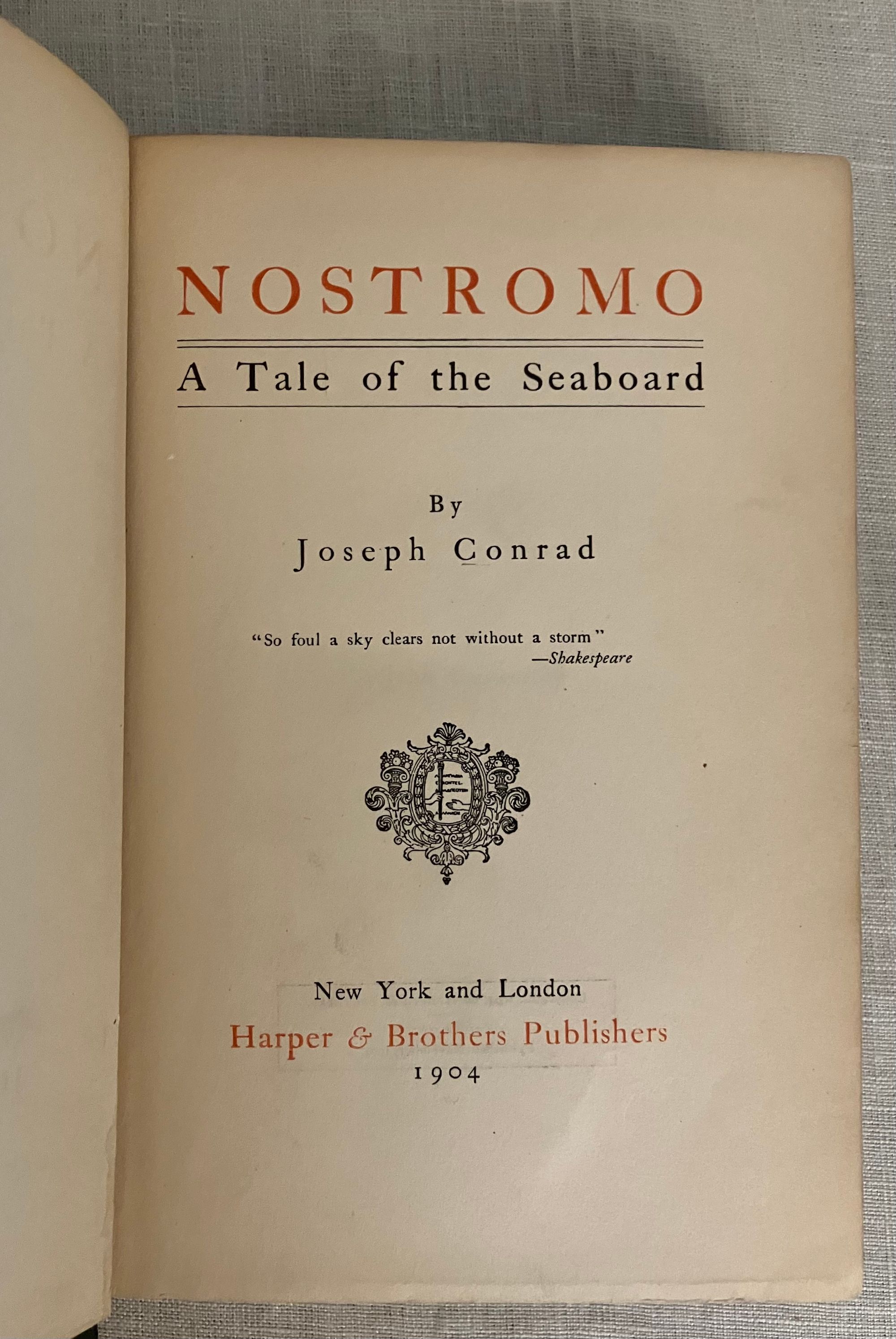
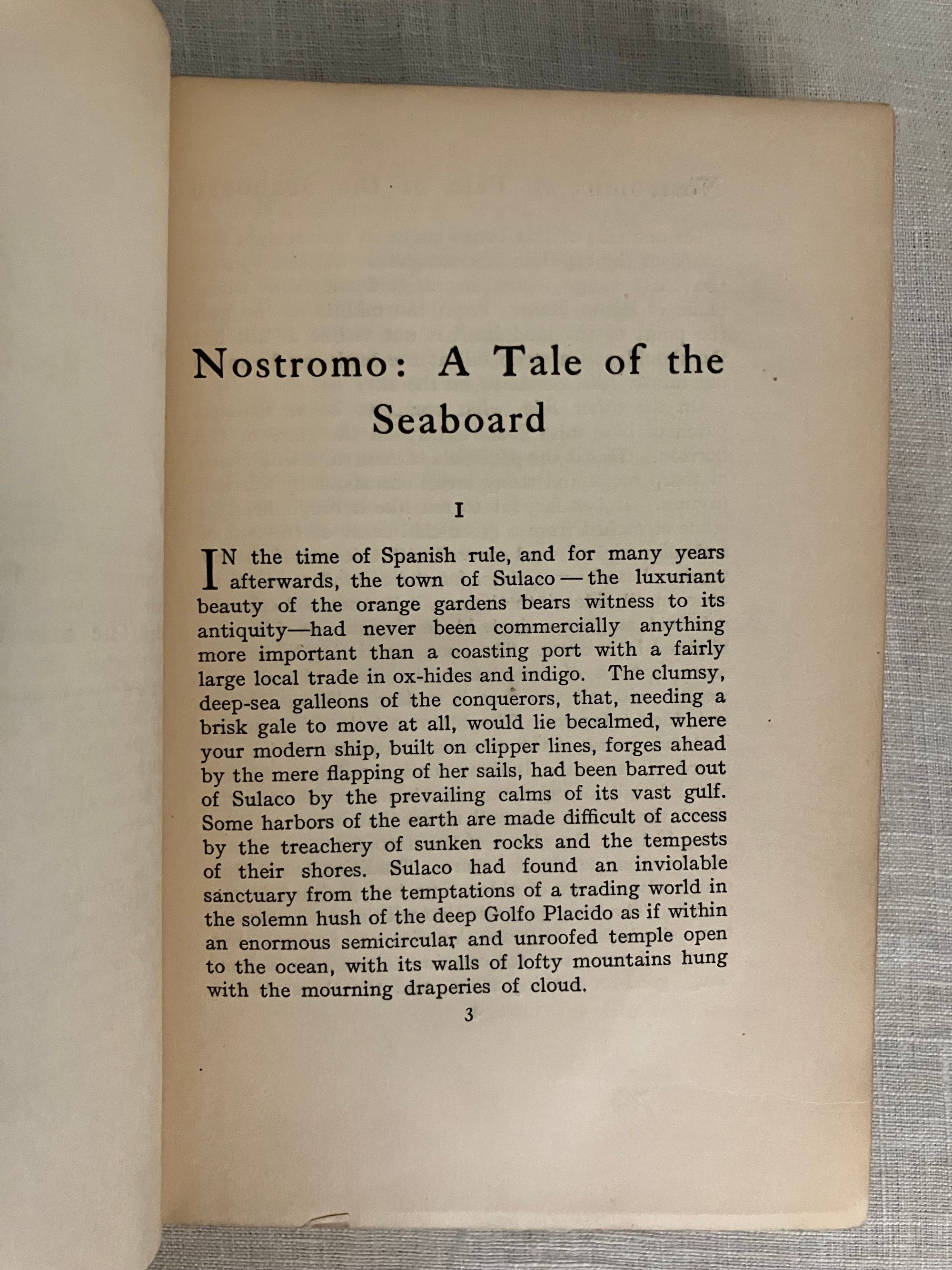
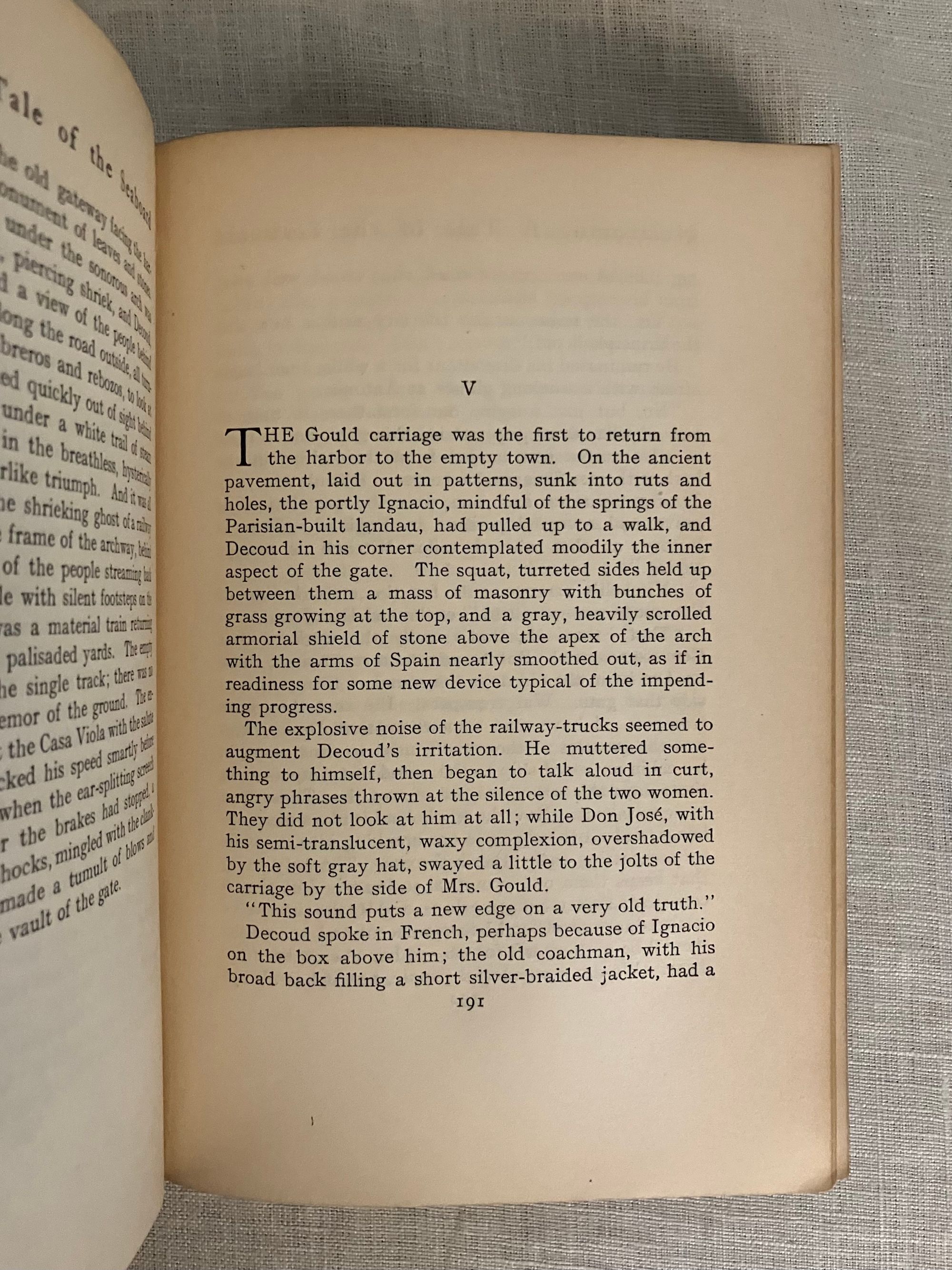
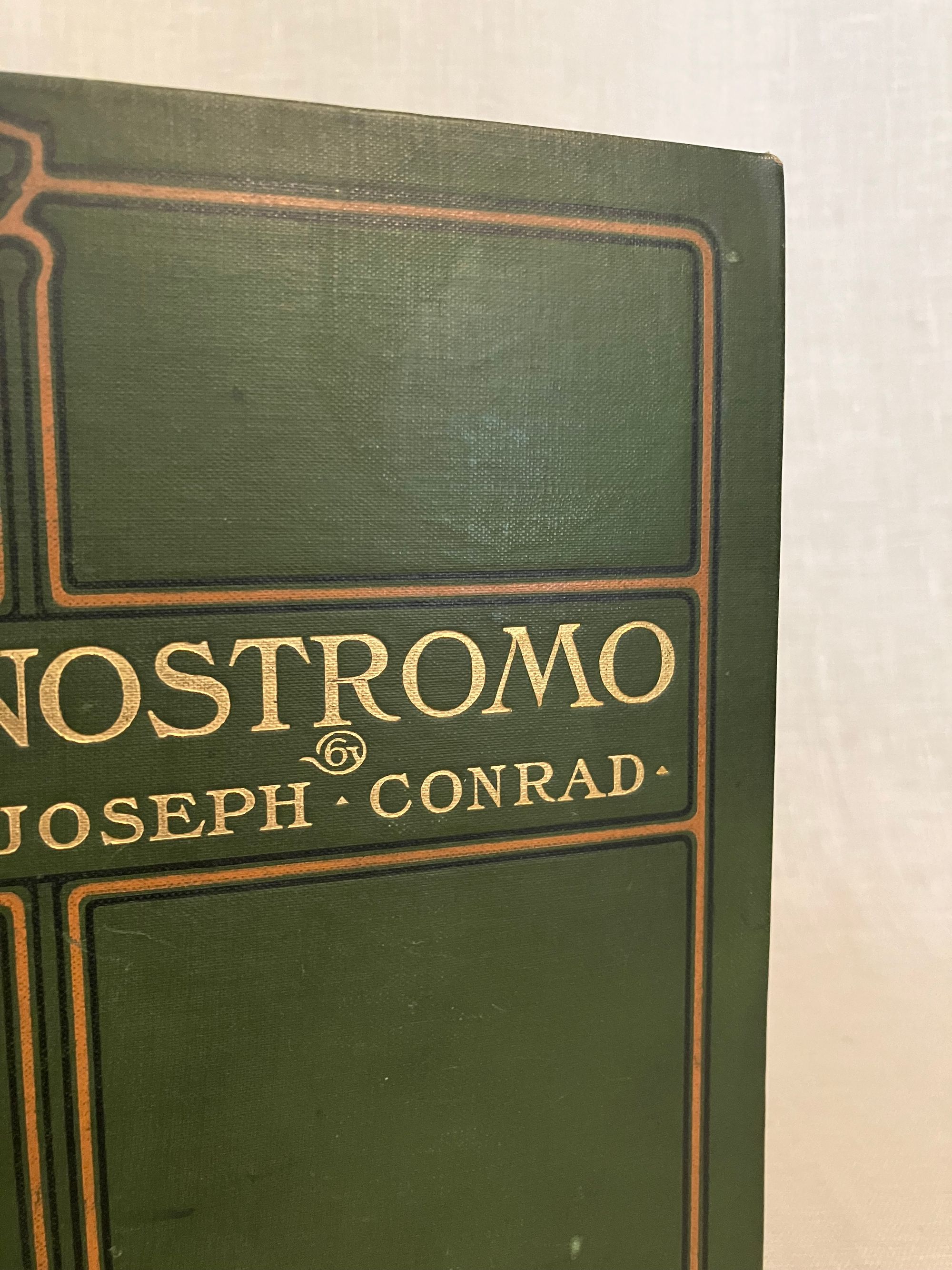
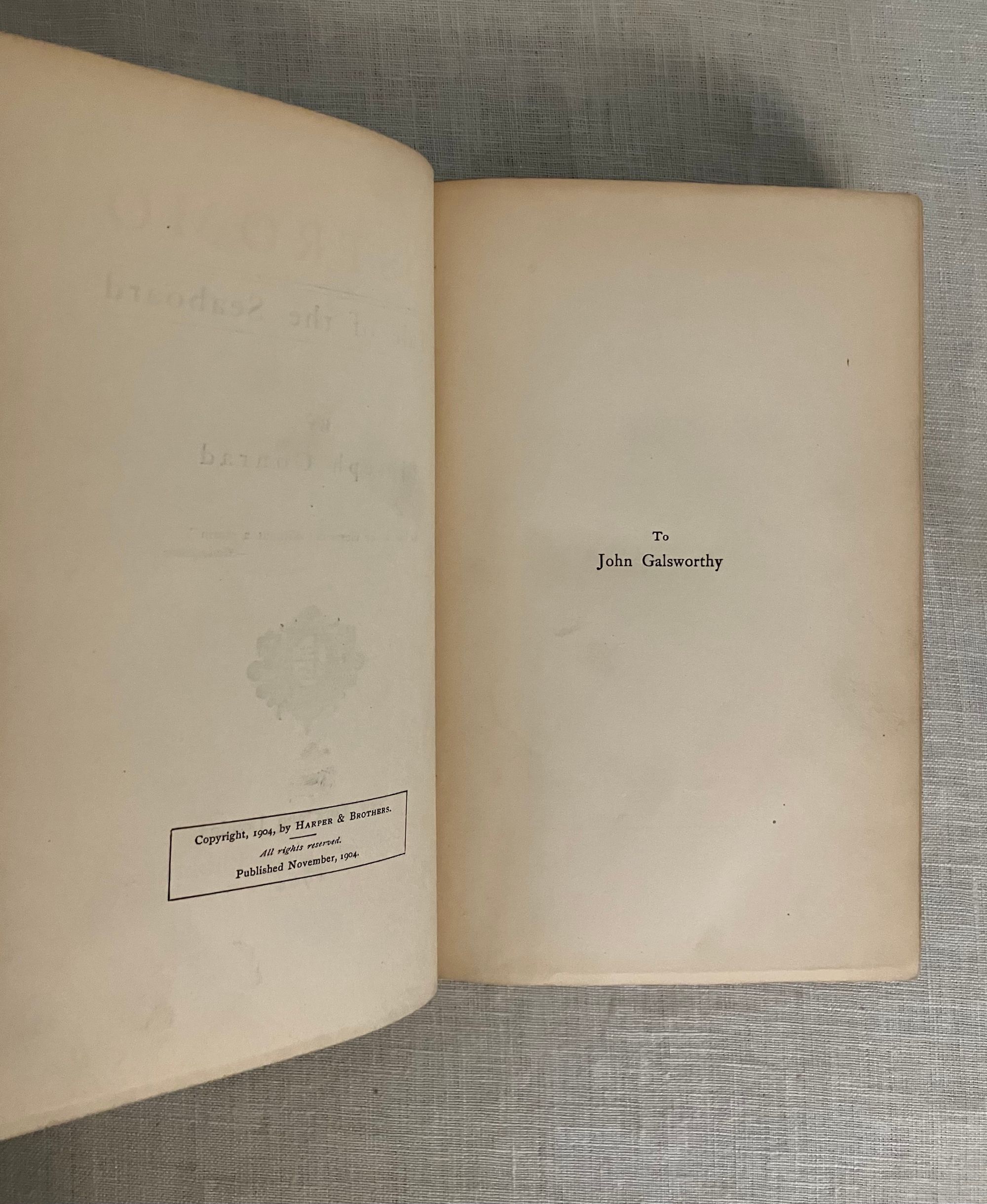
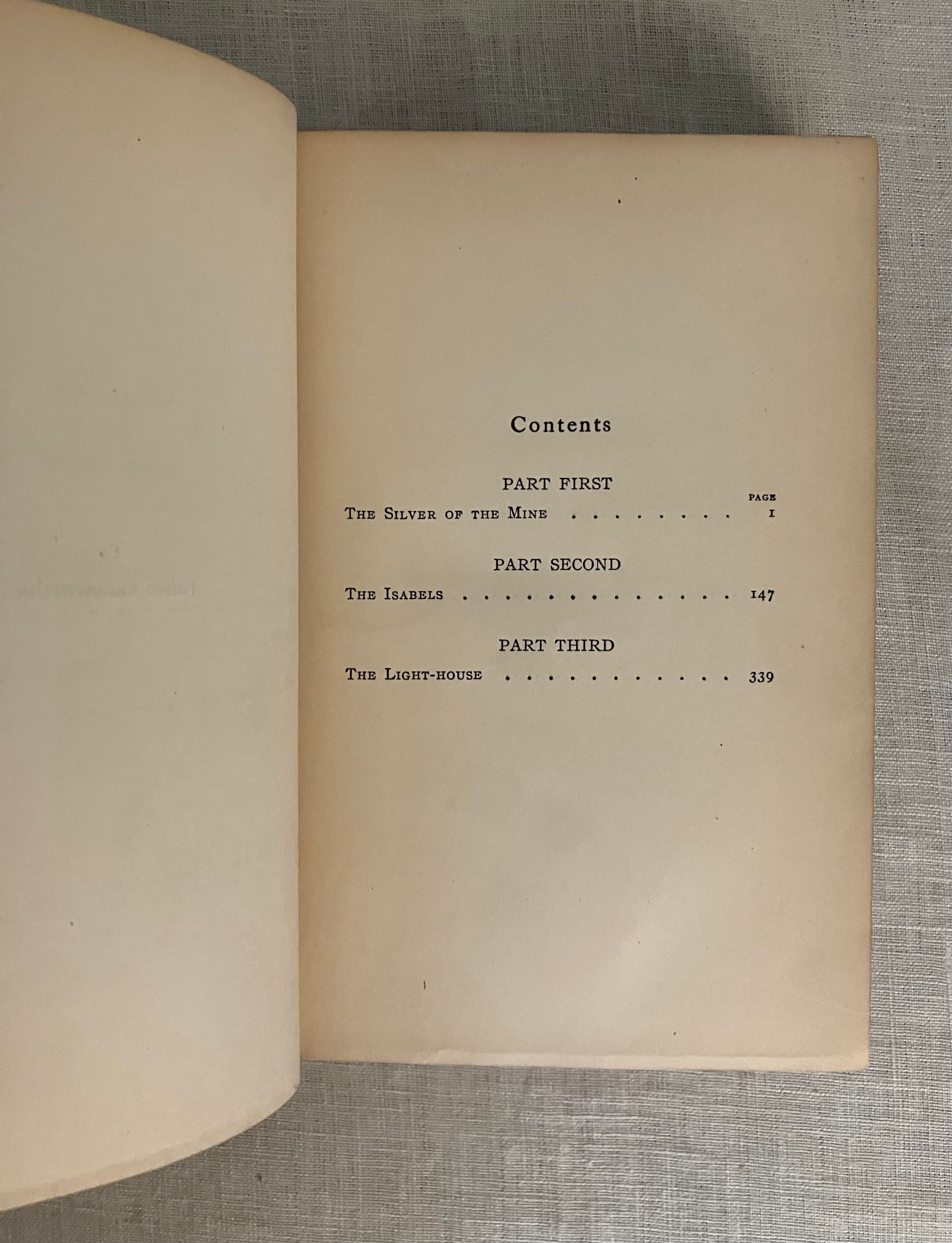
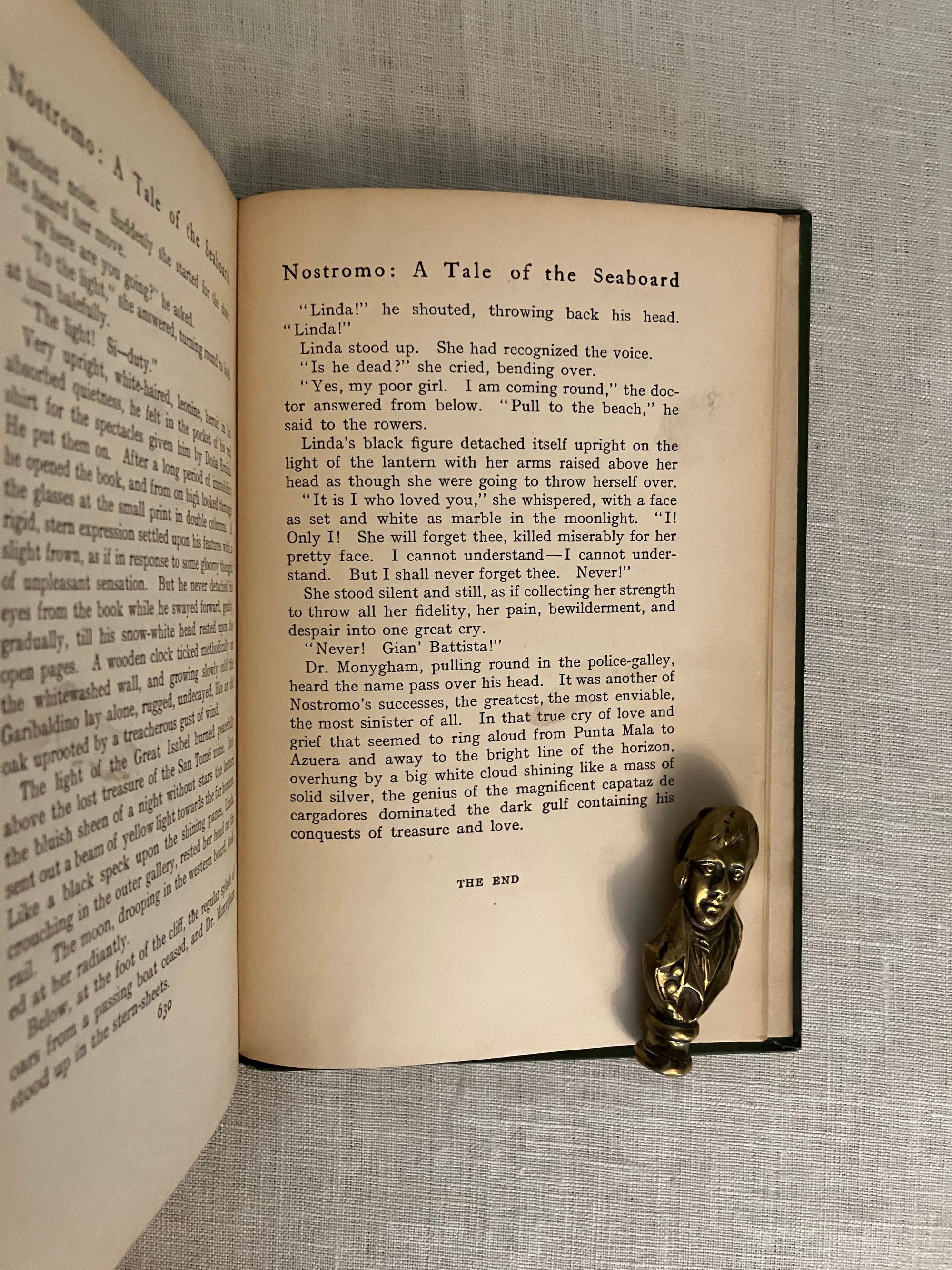
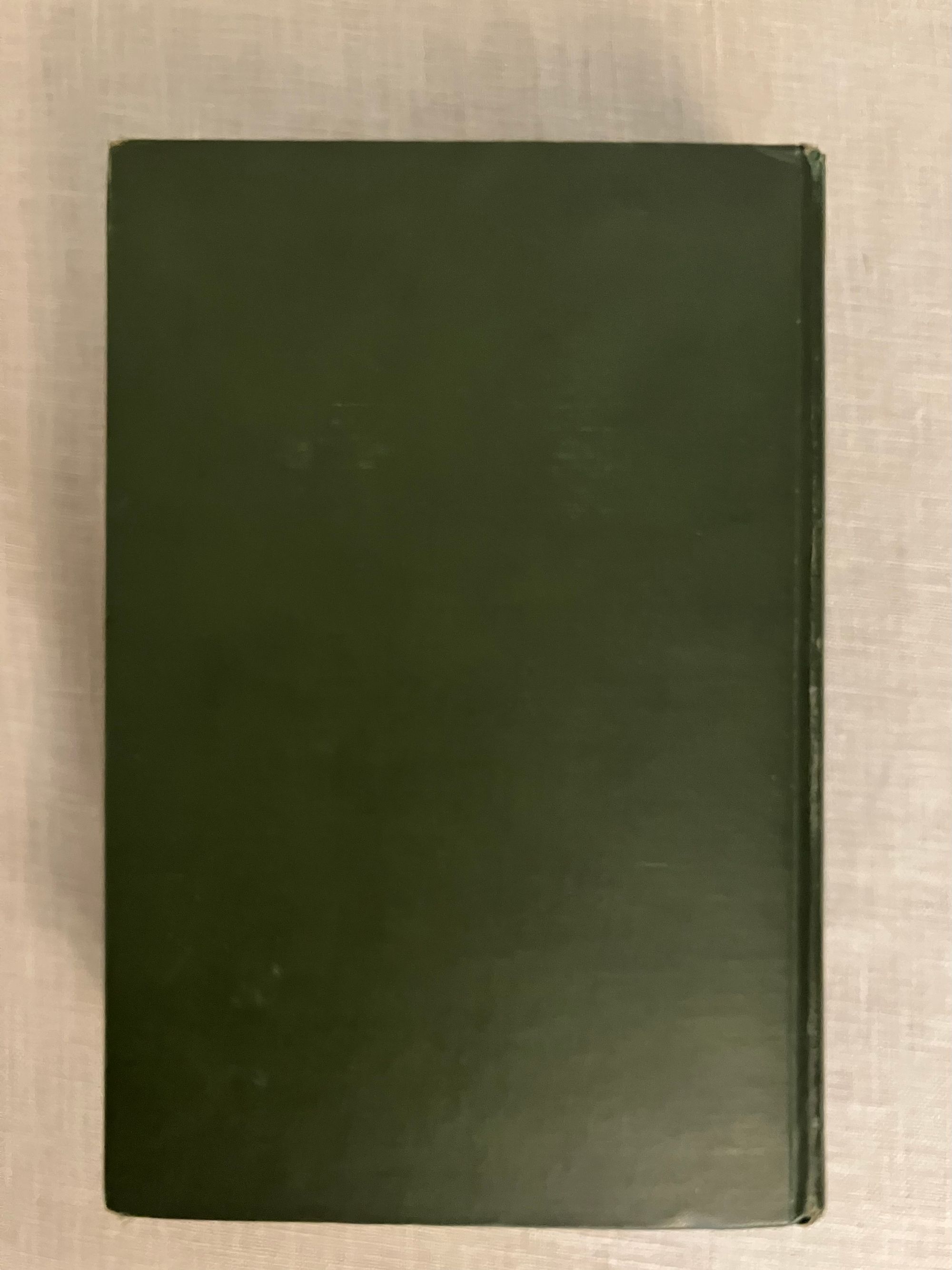
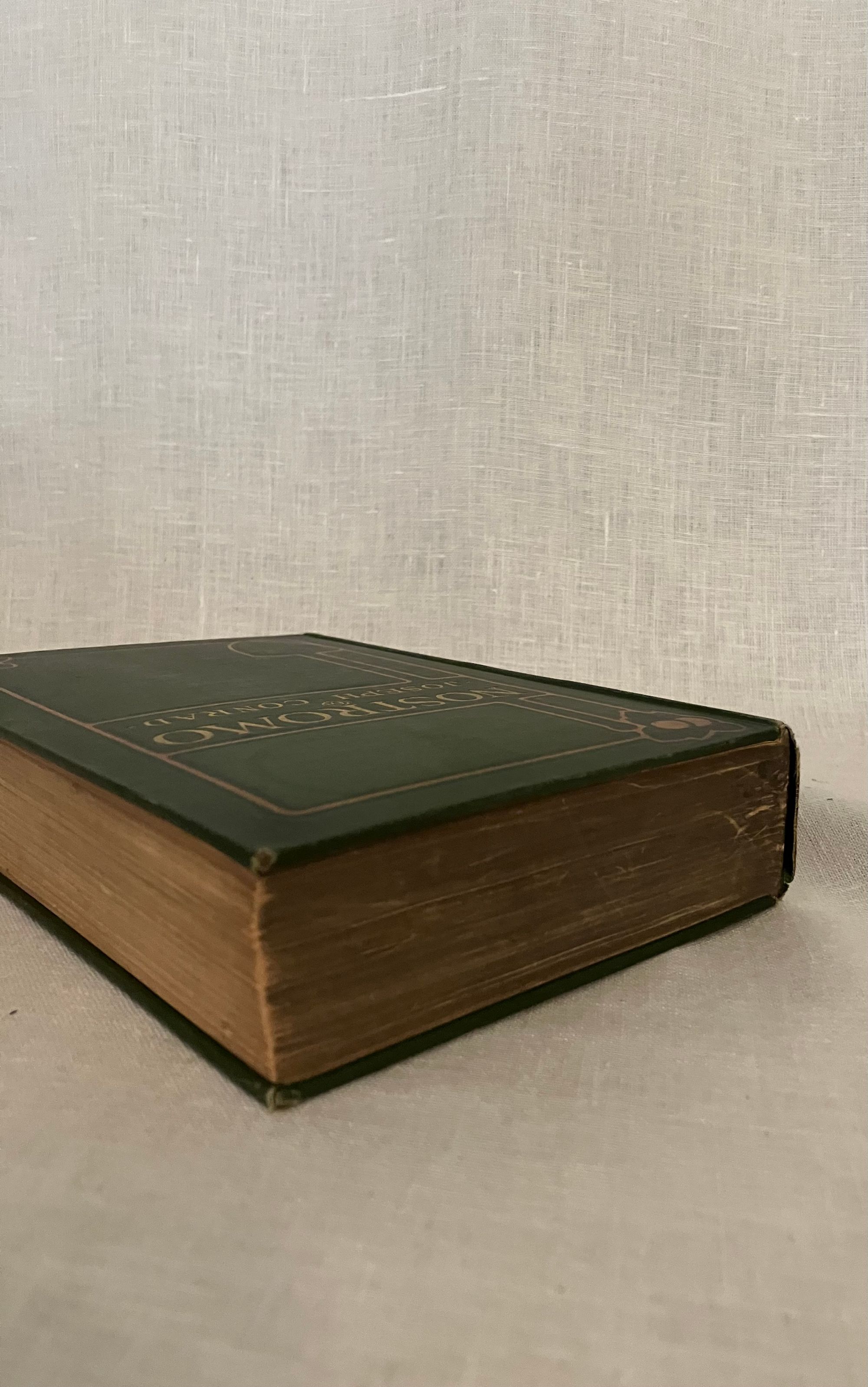
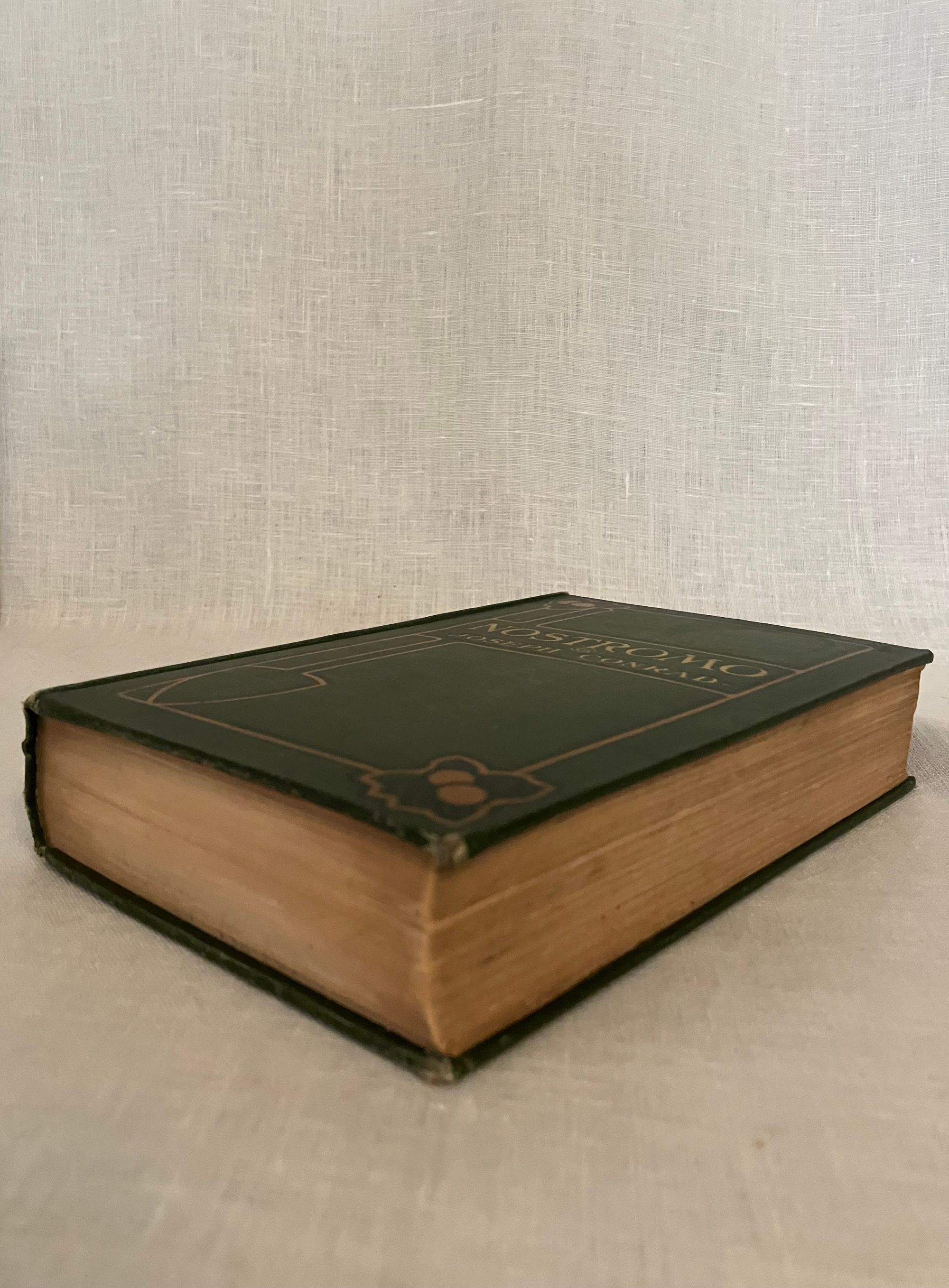

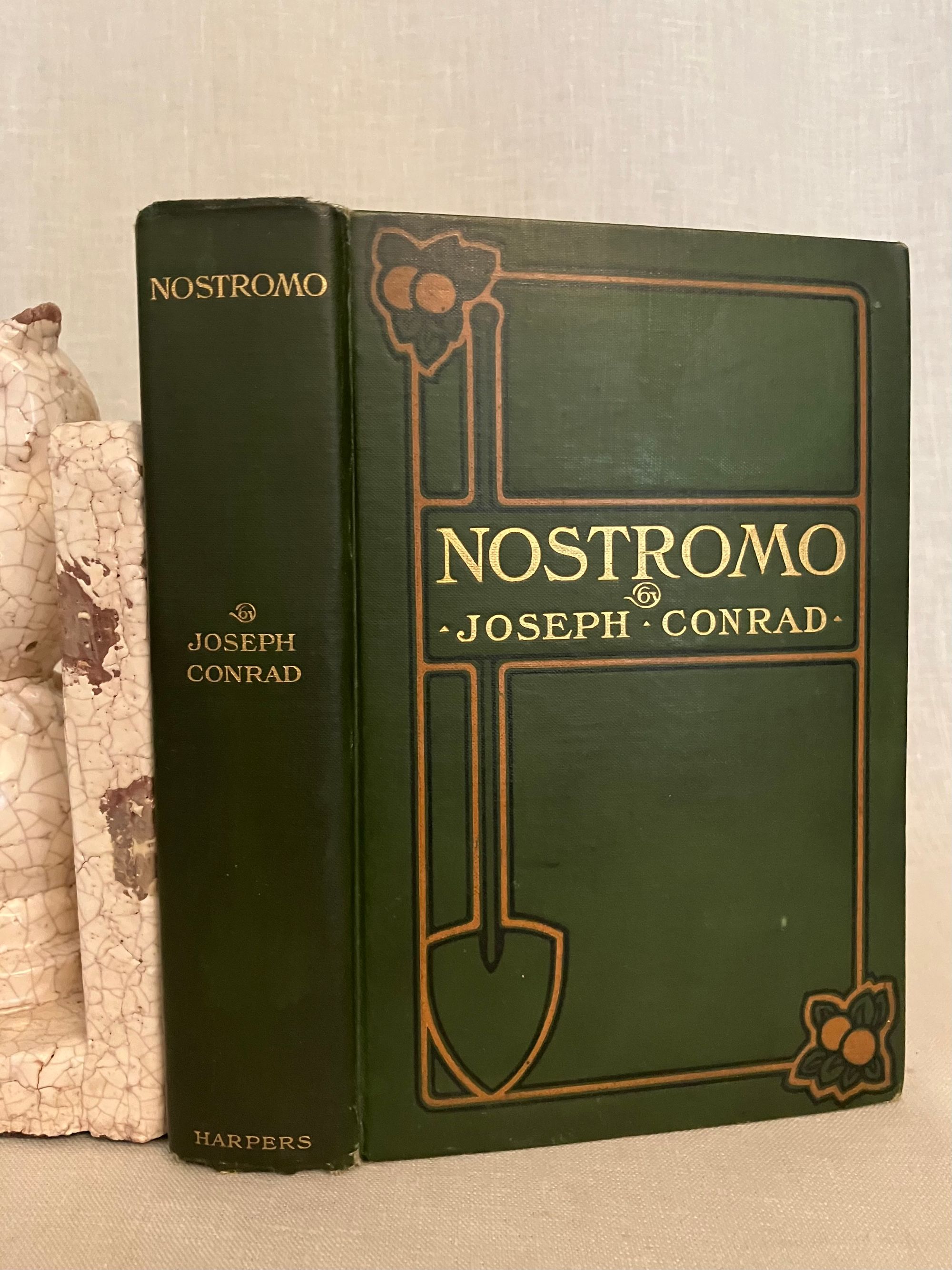
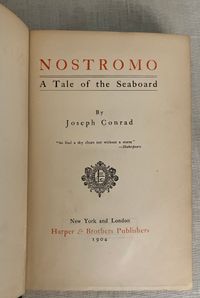
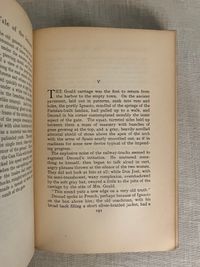
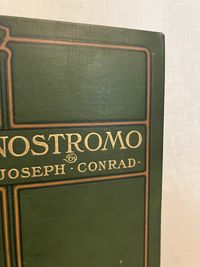
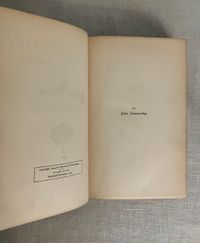
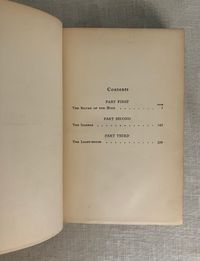
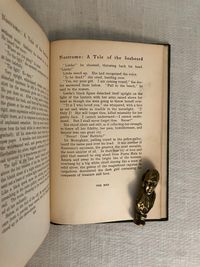
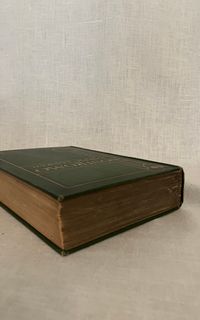
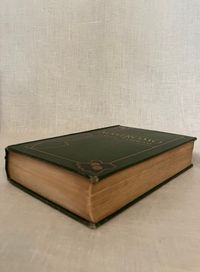
First American Edition, first printing of the author's sixth novel. Hard cover in green decorated cloth, the front board blocked in an orange and black art deco style frame incorporating images of a shovel and fruiting bunches of oranges with their foliage to the upper left and bottom right, the title to front center blocked in gold:" NOSTROMO/by [swash b]/[triangle] JOSEPH CONRAD [Triangle]." Titles to the spine read:" NOSTROMO/ by[swash b]/JOSEPH CONRAD/HARPERS" blocked in gold. Top edge stained olive green, with the other text block edges uncolored and trimmed. White wove endpapers. Rubricated title page. Has the first issue misspelling of Europe p. 201 as called for. Copyright page states printing date of Nov. 1904.**COLLATION: [6],630, [4]pp.**CONDITION: Very Good. Outside, a ghost of an old cup stain to front board, (really only seen in certain lights,) as well as a few other minor surface blemishes to the front board. Rear board is generally clean, and the spine is slightly darkened. Minimal rubbling to the top few inches of the front joint, and at head and foot of spine at the joint. A few marks to the stained top of text block, and some very faded pencil marks bottom edge of text block. Minor shelf wear and rubbing at tips. Inside, moderate tanning to endpapers and text pages, very occasional light soiling. Hinges are in order. No foxing noted. No writing or ownership marks within. **Conrad's 1904 novel, considered by many as "his undisputed masterpiece," was set amidst turbulent revolutionary times in the fictional South American port city of Sulaco, Costaguana (a fictional amalgam of several South American countries) and among others, includes themes of "growing American economic influence, imperialism and colonialism," as characterized by critic John Stapes (p. 139). In a plot rich in the slow revelation of character motivation, Conrad tells the story of a how Nostromo is entrusted with keeping a cache of silver safe from the hands of rebels. Following an encounter at sea, the treasure is thought to be lost, which provides Nostromo the opportunity of hiding it on a nearby island. The secret, however, consumes and corrupts him - his tragic end is to be mistaken for a trespasser when retrieving more of the silver under cover of night, and to be shot dead by the island's lighthouse keeper. Conrad would later credit (in the Preface for this novel's J.M. Dent edition) the basis of the Nostromo character on the character of Dominic from "The Mirror of the Sea." "Many of Nostromo's speeches I have heard first in Dominic's voice." "...the story of the stolen silver came from a yarn told to the author in the middle [18] 'seventies and found by him in print thirty years later." (Curle & Simmons, p. 193) Contemporary bibliographers have pinpointed three voyages made by the author around the Caribbean between December 1874 and February 1877, during which "Nostromo" was conceived. This included ports of call at Martinique, St. Thomas and Haiti, and cruising along coastal Venezuela and Columbia, although scholars dispute whether he actually landed in South America. (Curle & Simmons, N27, p. 194.) Refs: Cagle A10b.1. Keating [62] refers to edition. R. Curle & A. Simmons (edit.), "The History of Mr. Conrad's Books," as published originally in The Times Review of Books, 1923, and later studied in MS form by the editor, in "The Conradian," Autumn 2000, Vol. 25, No.2. pp.185-204. Supino A10.6.0 and Plate 11.
Ref: CONRD 9189
$575.00