 |
 |
 |
 |
 |
 |
 |
 |
 |
 |
 |
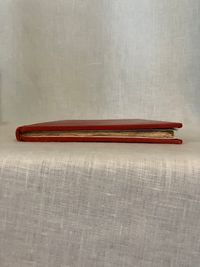 |
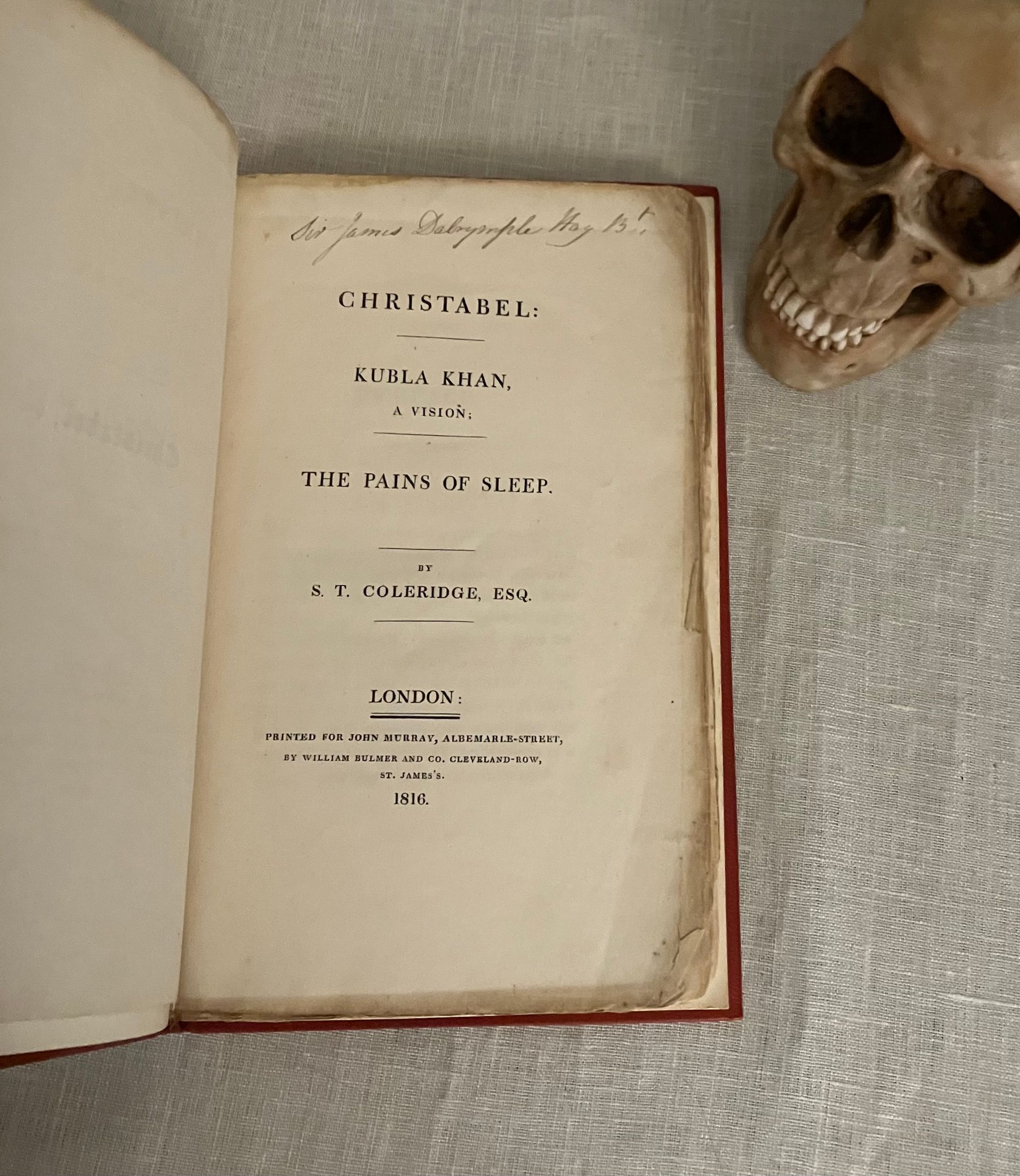
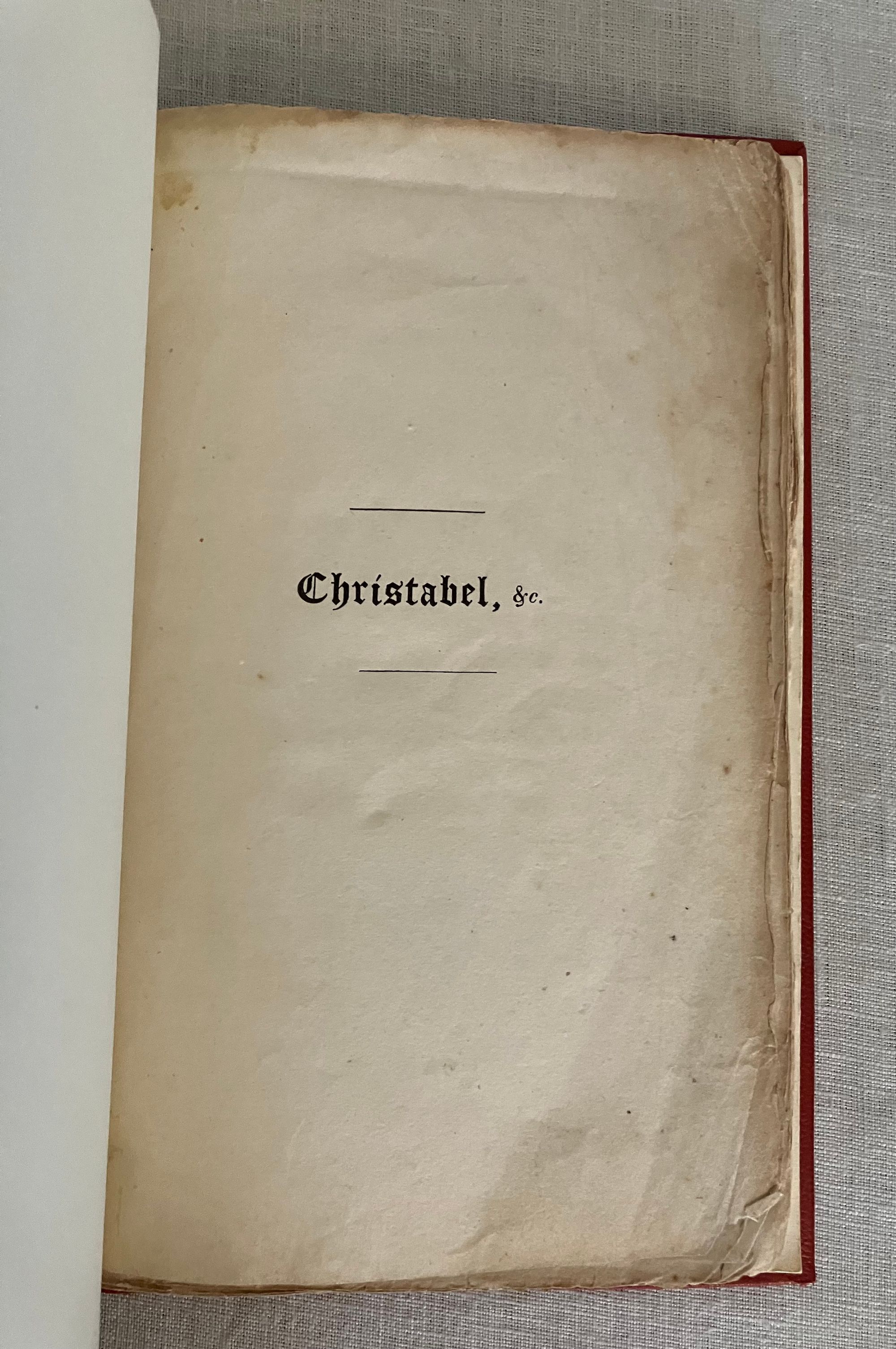
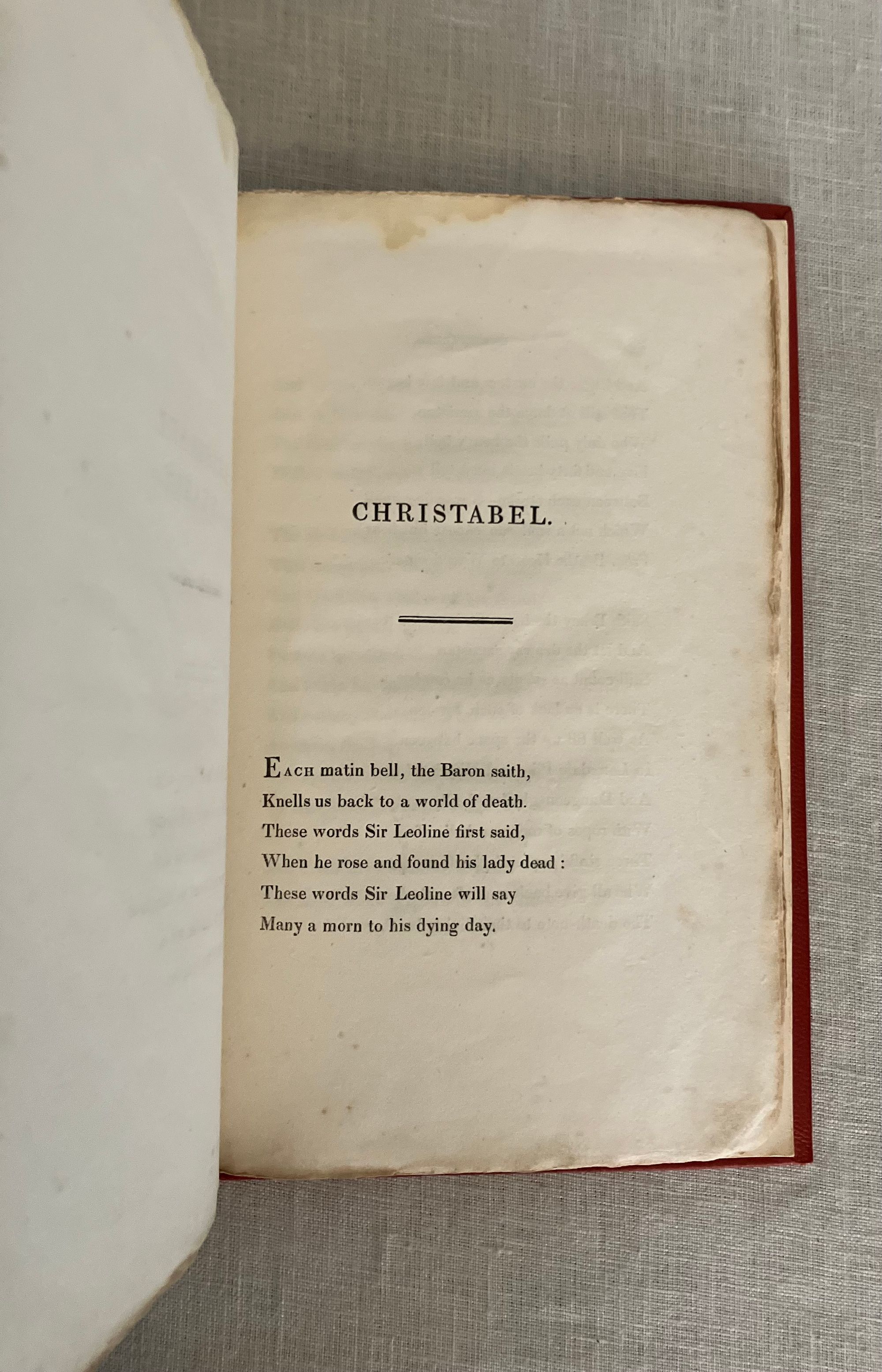
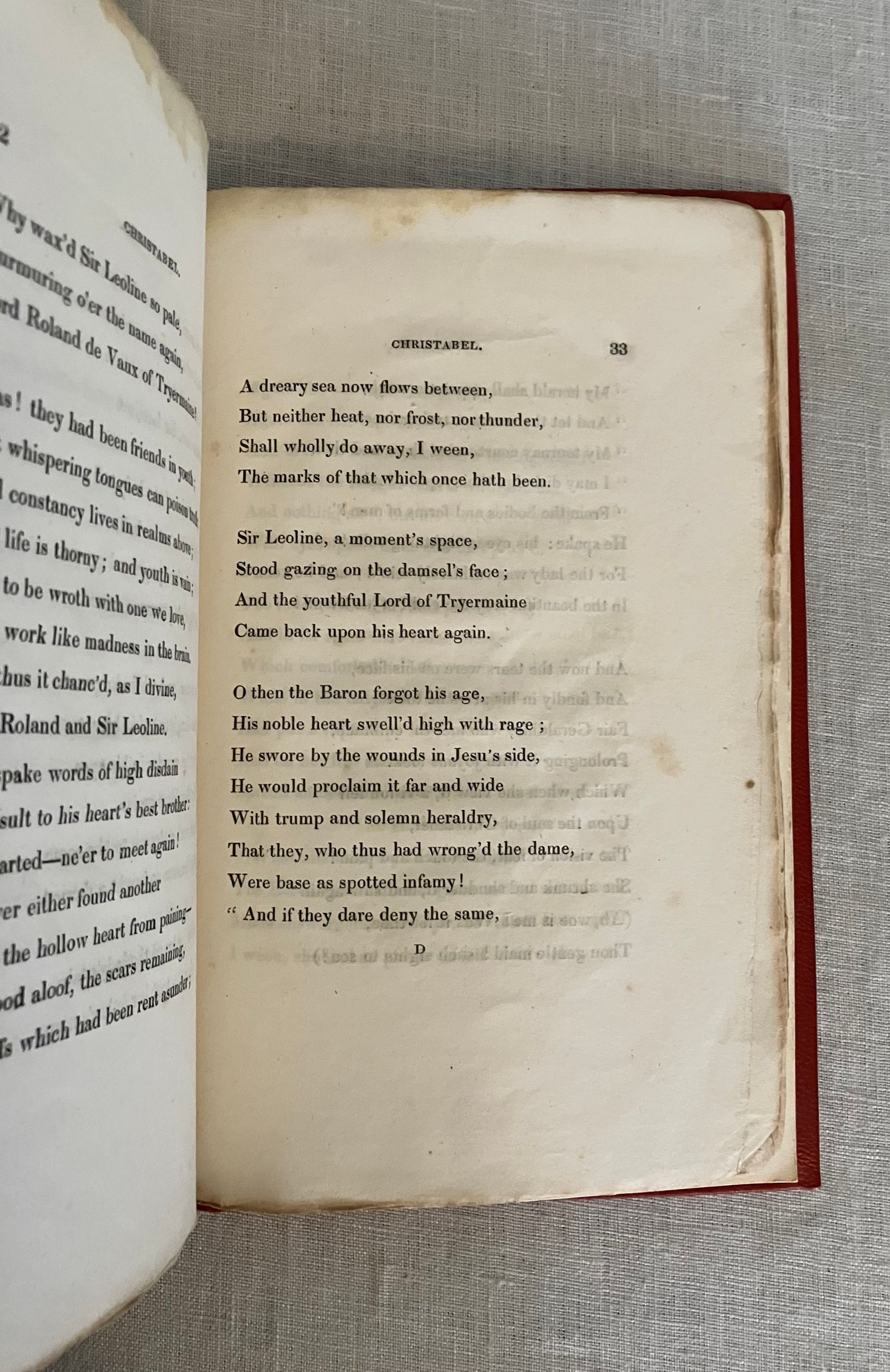
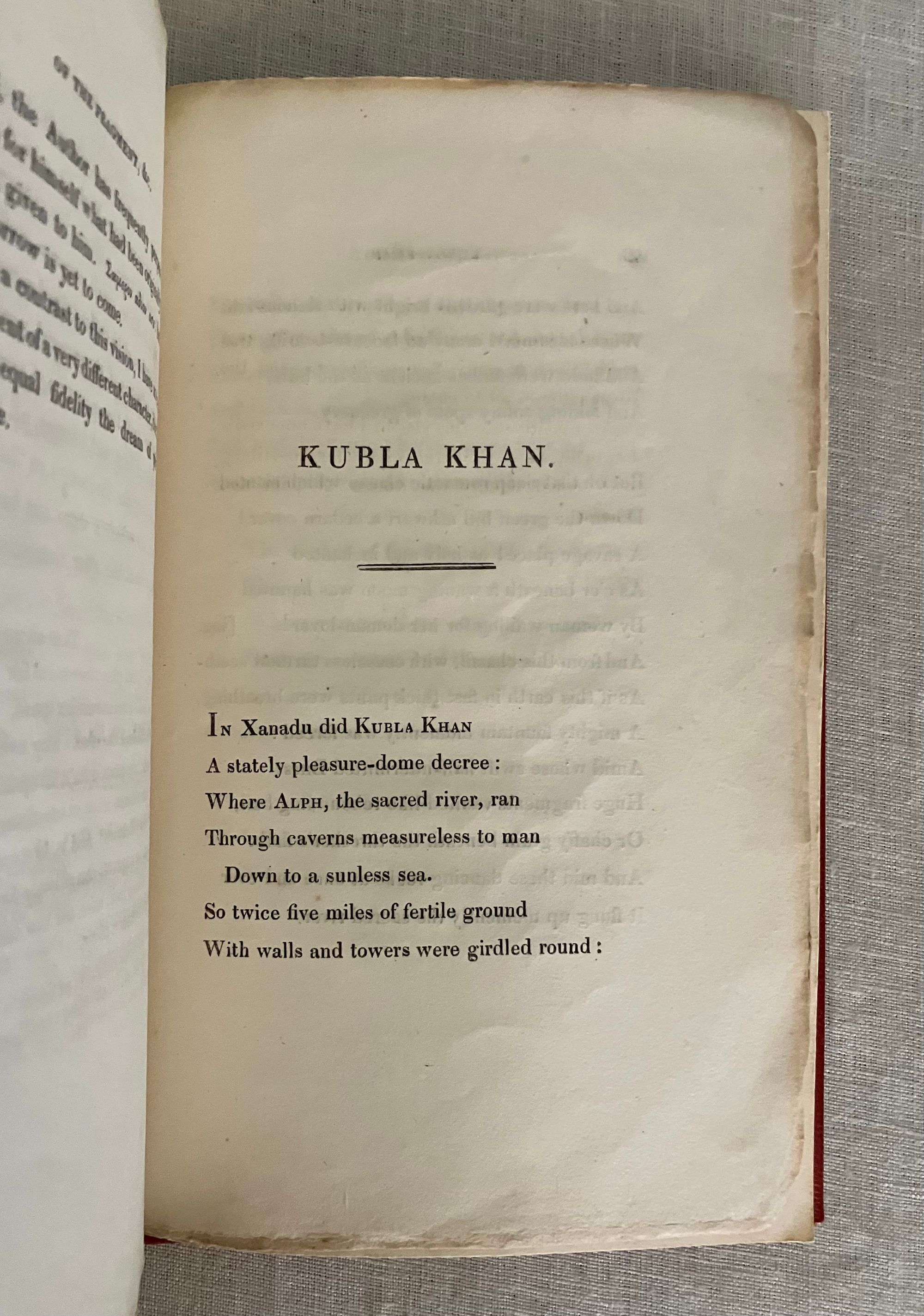
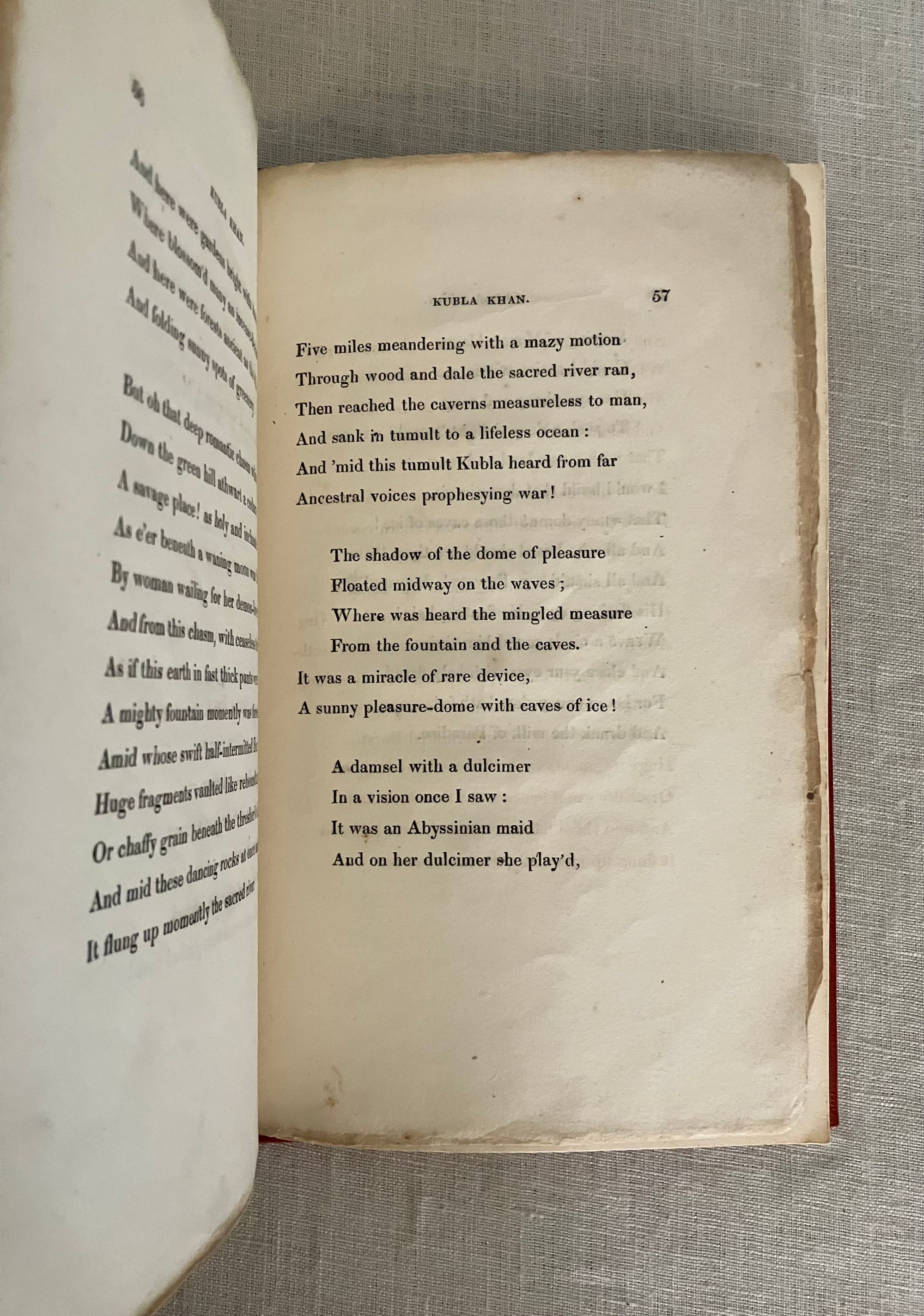
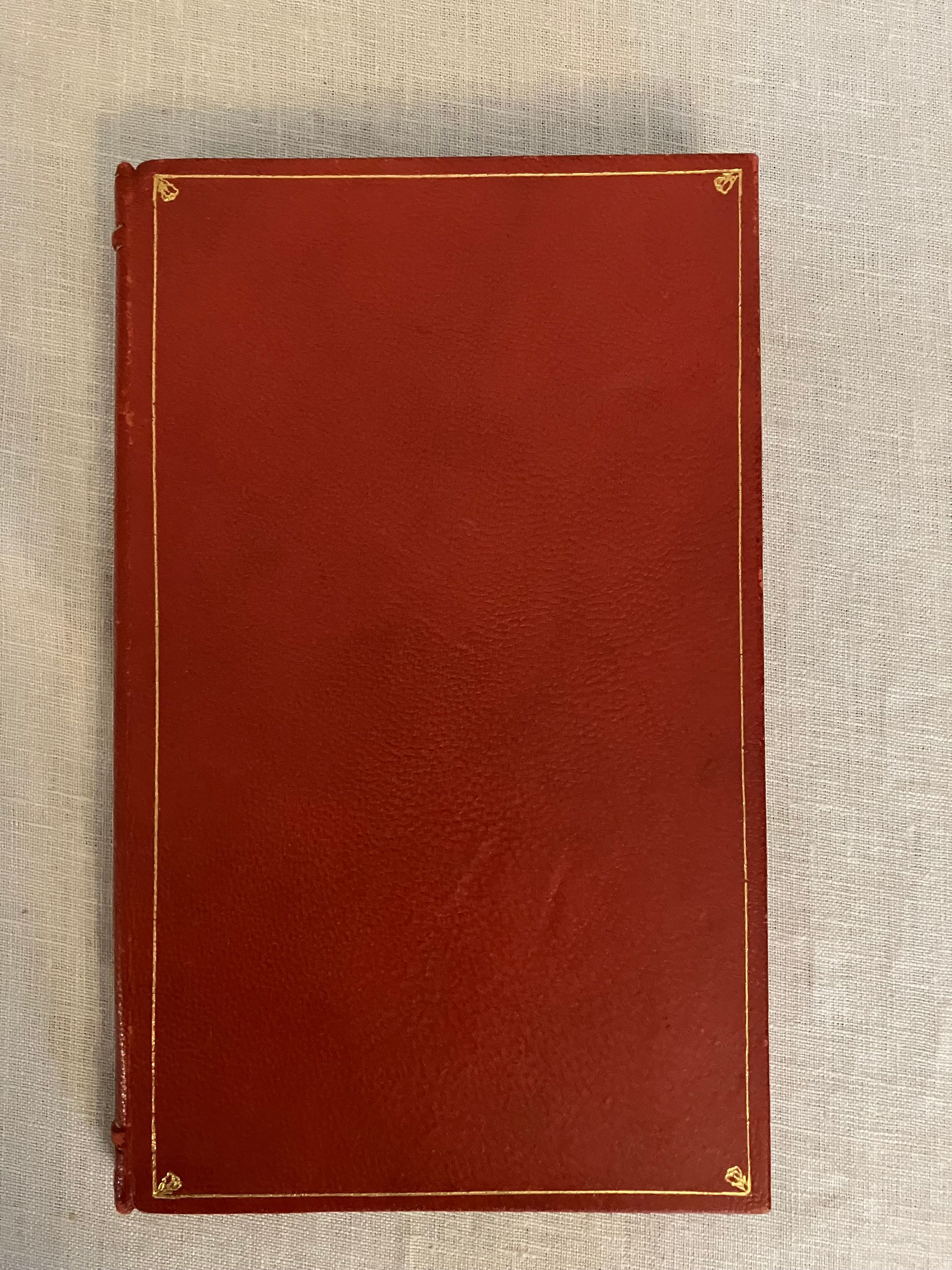
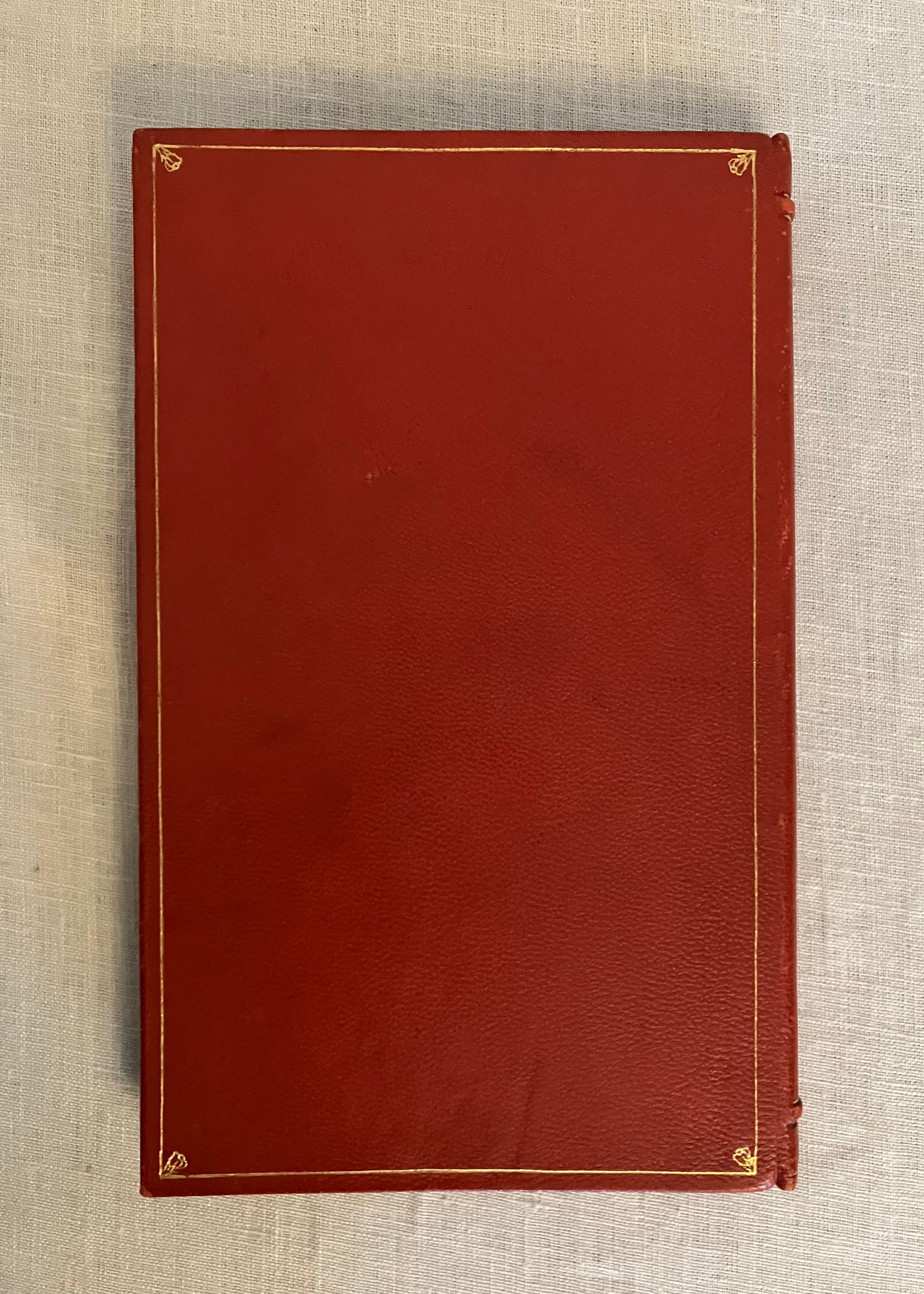
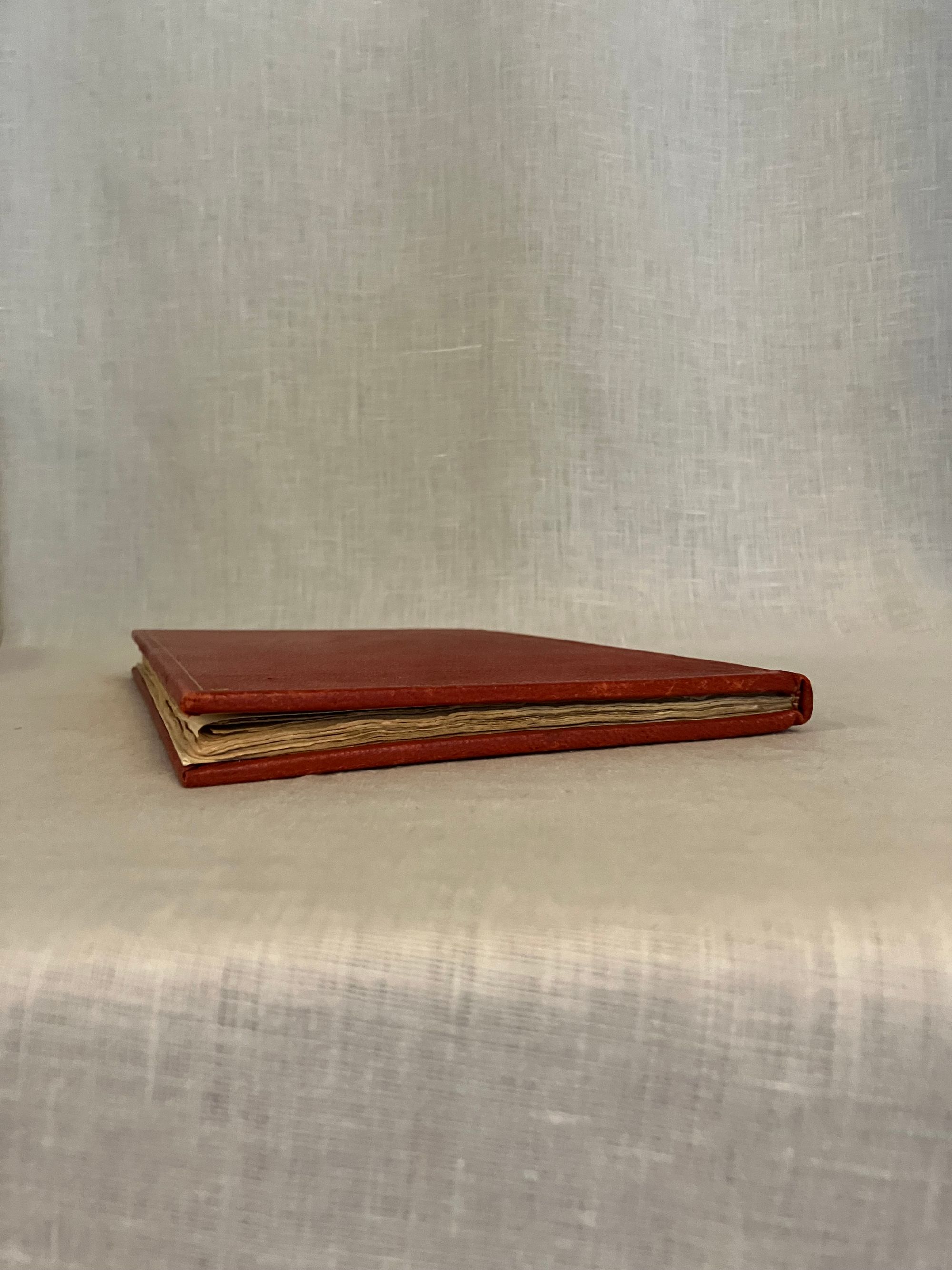
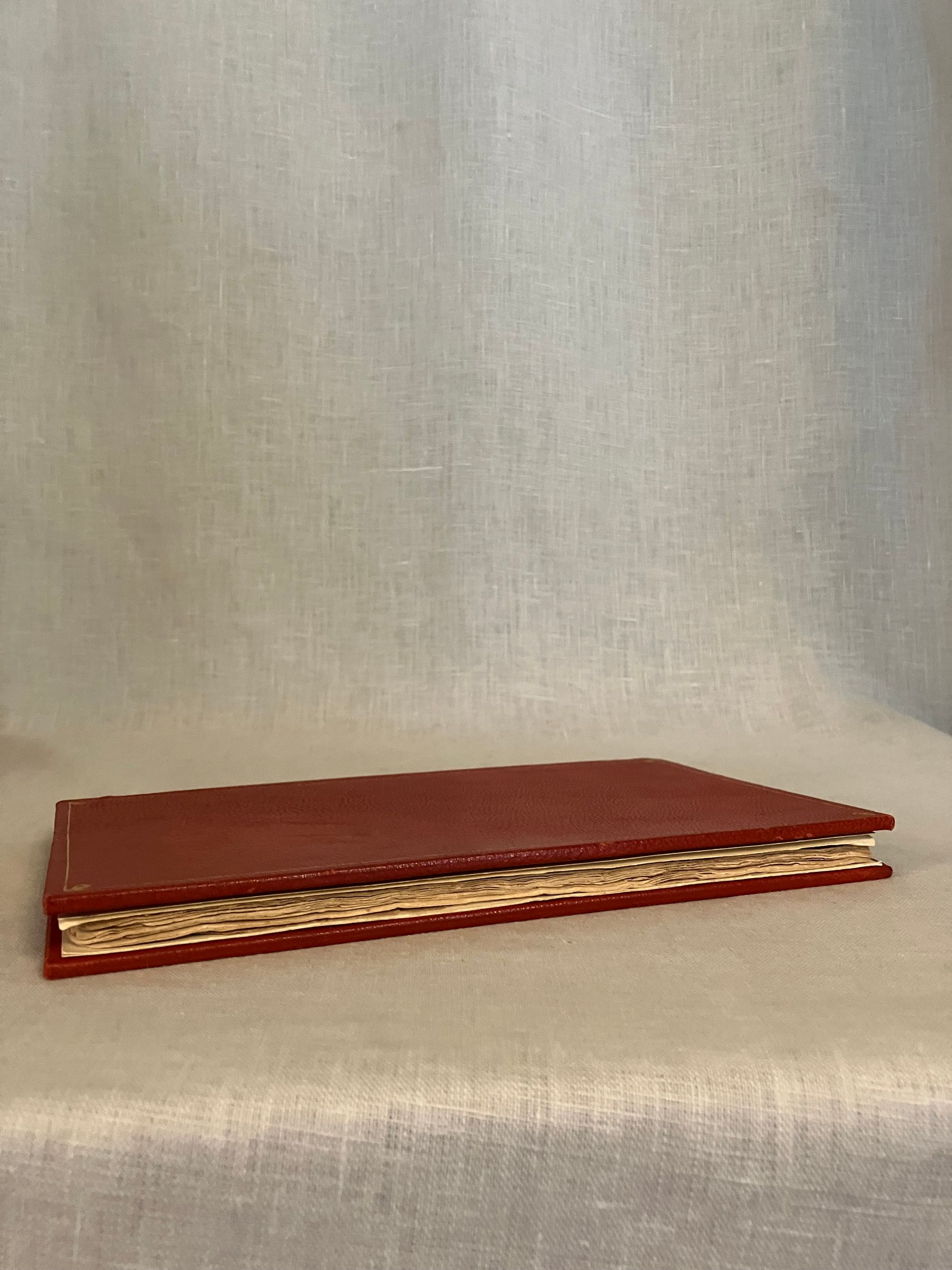
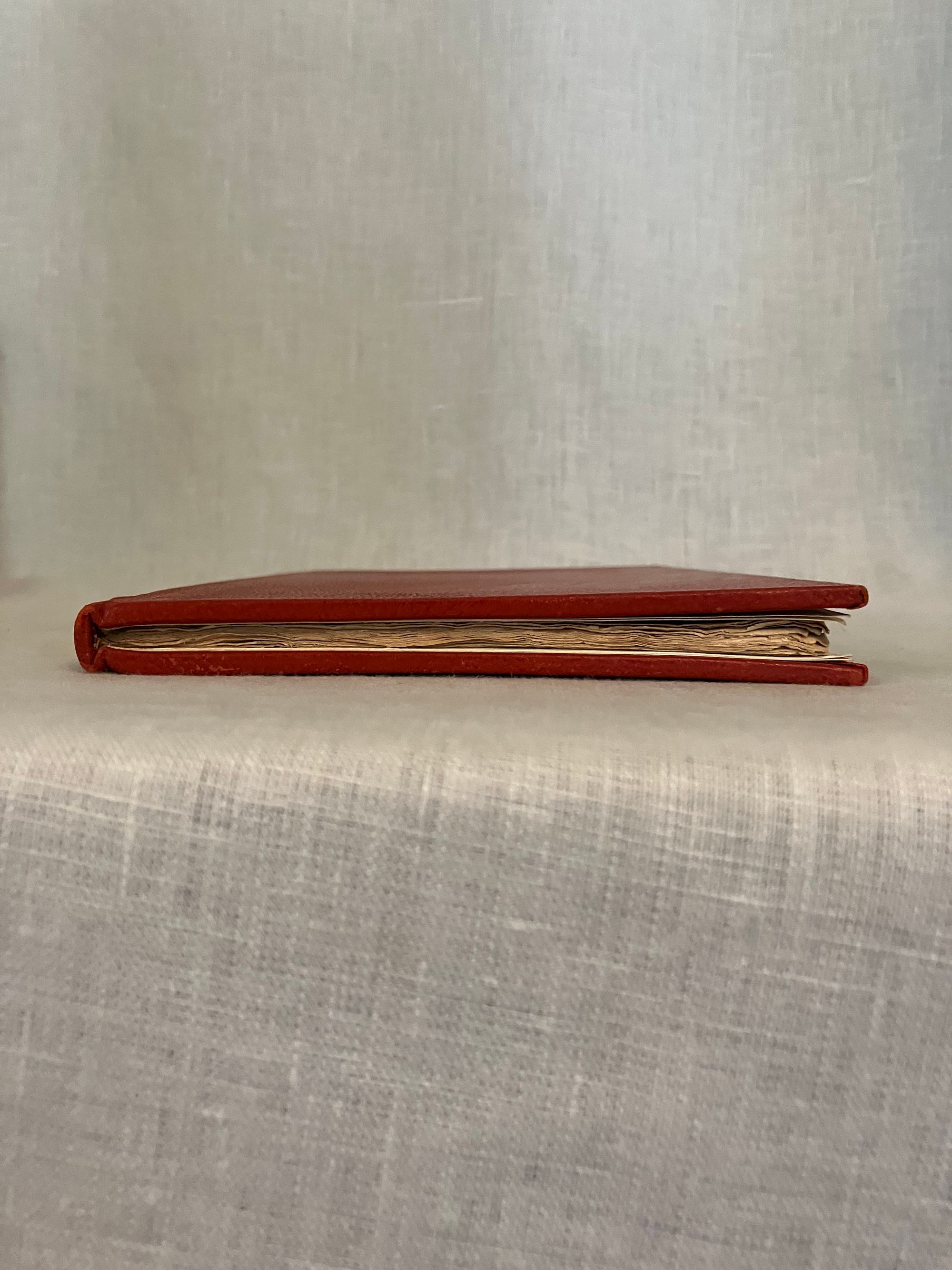
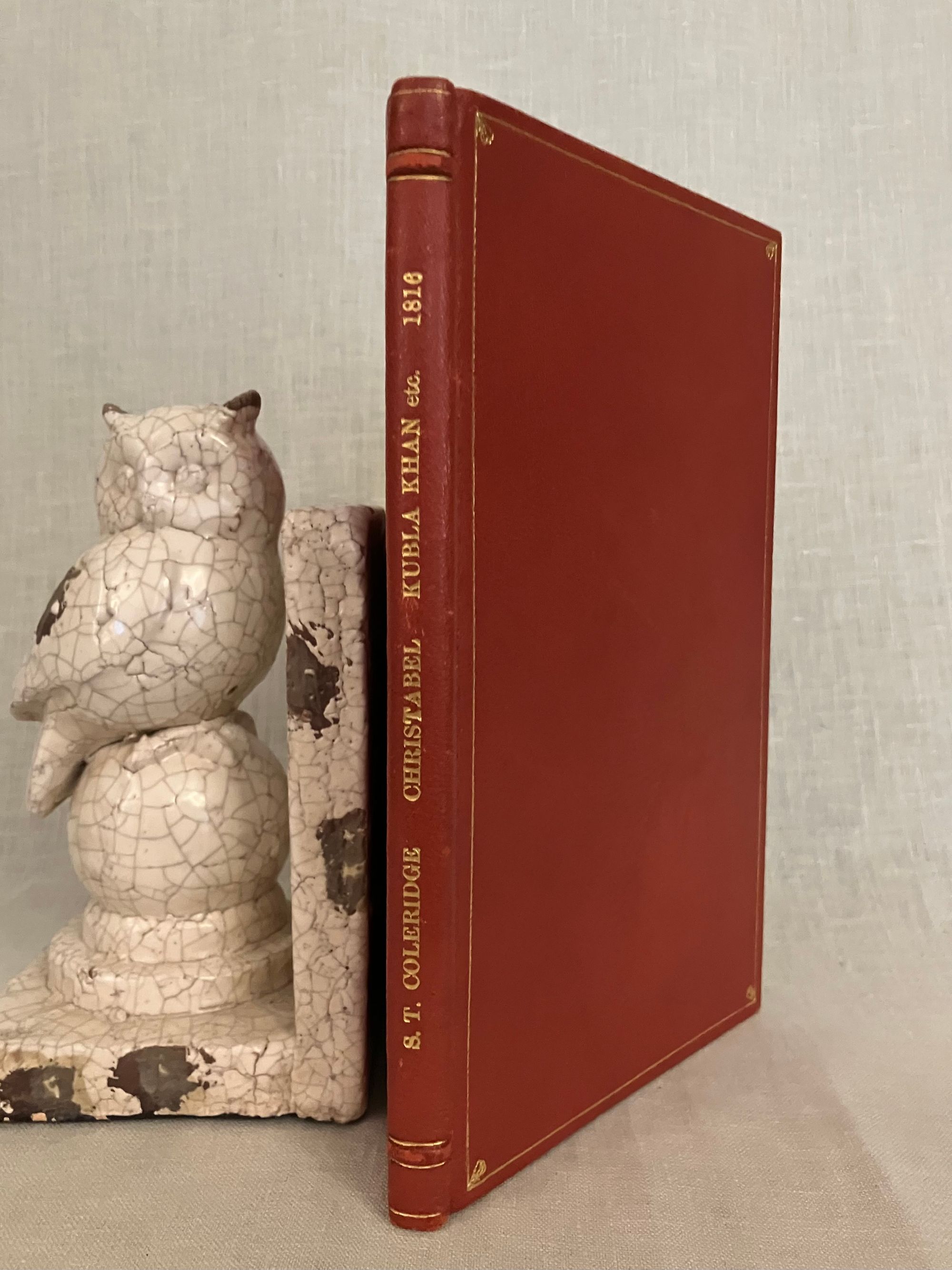
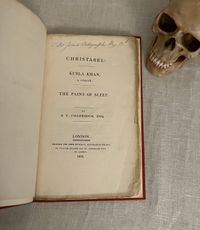
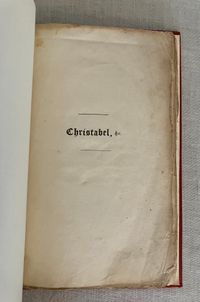
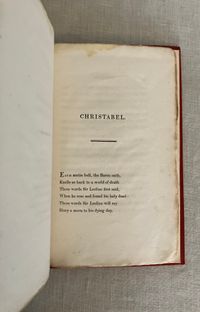
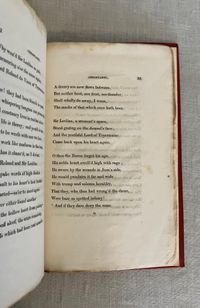
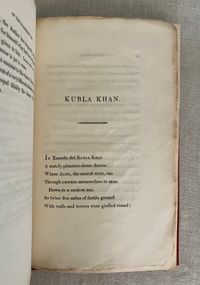
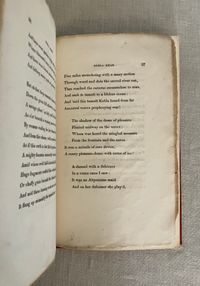
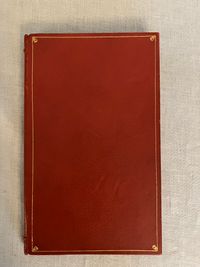
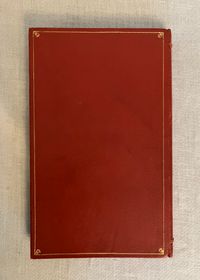
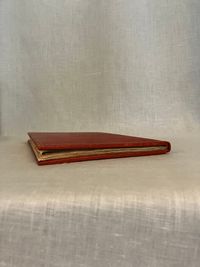
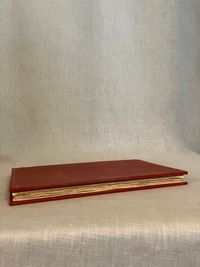
Hard cover, 8vo, (5 3/4 x 9 1/4 inches), in modern binding of red morocco, the boards ruled in gilt, small florets to corners, the spine with two raised bands, outlined in gilt, title tooled lengthways to spine. Text edges untrimmed. INCLUDES the 4-page publisher's advertisements at rear, dated Feb., 1816. Collation: vii, [1], 64, [4 ads] [2]. Signatures [A]4, B-E8, [F]3. Stated First Edition. First printing of the three poems. Provenance signature in old ink to head of title page: "Sir James Dalrymple Hay Bt." **CONDITION: Very Good Plus. Exterior boards lightly bowed. Top board lightly dented in two places. Inside, front pastedown with light pencil notes, light erasure. No sign of foxing to the modern prelims. The original text block is lightly age toned, less so to center of book. Light edge-browning and a bit of edge-fraying and other inconsequential (1/16th inch?) edge folds show to some pages. Light spots of foxing throughout. Old damp staining affects the top edge of pages in several different sections of the book, but this does not affect the text. Originally released in wraps, condition was prone to deteriorate with enthusiastic reading before being hard bound. Additional photos seen at our website.**Author SAMUEL TAYLOR COLERIDGE (1722-1834), premier English Romantic poet, was a close friend of Wordsworth, Byron, Shelley, and Mary Shelley. The group were famous for their post-prandial readings of Romantic stories and poems. One notable incident recalls Byron reading Coleridge's "Christabel" and frightening Shelley into a panic attack. Mary Shelly suffered a nightmare at one of those gatherings and subsequently wrote her 1818 masterpiece, "Frankenstein". ** The three poems in this book, all with the poet's preface remarks, represent some of the best, most anthologized work of STC. The title poem "Christabel" tells of a spirit-adjacent woman in white found in the woods by Christabel, the daughter of the ailing Lord Leonine. Her arrival in the castle brings about the revelation of a dark secret, which Christabel is enchanted to prevent from revealing. She nonetheless tries to warn her father to send the stranger away - but to no avail. **The unfinished "Kubla Khan" tells of the palace built in Xanadu by the Chinese warrior emperor Kublai Khan (1215 -1294) describing, in a dreamlike state, the walled gardens of the palace; a "savage place", "holy and enchanted." The poem is both an enchantment and a warning.**Finally, "The Pains of Sleep" is based on the poet's frequent real life nightmares, caused both by his extensive use of opium, and later by the effects of opium withdrawal. Coleridge's final wish is simply this: "To be Beloved is all I need, And whom I love, I love indeed."**The book features a really interesting LITERARY HISTORY ASSOCIATION. The original owner of the volume, Sir James Dalrymple-Hay, 2nd. Baronet (1788-1861) lived in the 16th-century tower house inherited by his father, the first baronet. (The Hay name was appended to this branch of the Dalrymple family in 1794 upon the death of the second baronet's father-in-law, Sir Thomas Hay of Park.) Park Place, or the Castle of Park, is located in Glenluce, outside the Royal Burgh of Wigtown, in modern Dumfries and Galloway, on the southwest coast of Scotland. Antiquarian Richard Pococke visited in 1760, describing it as "a castle most beautifully situated on a ridge which is at the foot of hill, having towards the river a steep hanging ground covered with wood, and a more gentle descent southwards to the meadows on the bay adorned with trees." (Kemp, p.13.) This lowland, mainly agricultural area was written about extensively by nearby author Sir Walter Scott in various of his famous nineteenth -century "Waverley" novels. Scott's "Introduction" to his 1819 work, "The Bride of Lammermoor," explains the real-life origin of the novel associated with a SCANDAL regarding the family of the first Earl of Stair, Sir John Dalrymple(1648-1707,) a forebear of our book's owner, styled James Dalrymple, 1st Viscount of Stair, Lord Glenluce and Stranraer, 1st Baronet (1619-1695). In the novel, a young woman, Lucy Ashton, is forced by her conniving mother to break off with her true love, The Master of Ravenswood, in order to marry a more wealthy man, Lord Rutherford. Wedding night violence saw the bride gripped with what the family claimed was necromancy-fuelled evil in the bridal chamber. The new husband saw an early tragic demise. This was apparently based on a real-life scandal involving members of the Dalrymple family, whom Scott knew of and was distantly related to through acquaintances of his wife. All this is explained in Scott's own words in his Introduction to the novel, published three years after the release of "Christabel" in 1816. Literary historian Coleman O. Parsons provides several interesting retellings of the facts as related in his 1934 article cited below. Sir John Dalrymple-Hay, 3rd Bart., sold the Castle of Park in 1875. It seems clear that the Castle of Park in Glenluce is the setting in which the real tragedy of the Dalrymple family occurred in the seventeenth century. Literary historians can debate the similarities between the Poem "Christabel " and this real-life tragedy; simply put, they both concern a baron in a castle near the Scottish border with England, a daughter on the verge of marriage, and tragedy tinged with superstition.*****Refs.: European Heraldry, "House of Dalrymple." (online.) Grolier, English (1902) p. 141. Parsons, Coleman O., " The Dalrymple Legend in the Bride of Lammermoor," Review of English Studies, Jan. 1943, Vol. 19, No. 73. pp. 51-58. Kemp, Daniel Tours in Scotland by Richard Pococke, (Edinburgh: HMS, 1887). Scott, Sir Walter, "The Bride of Lamermoor, " (Project Gutenberg, 2021.) Simpson, W. Douglas, "Scottish Castles, An Introduction," (Edinburgh: HMS, 1959.) Wise, Thomas J., Ashley Library, Vol. 1 (1913) p. 204. Hayward 207. Tinker 693. OCLC 138003.
Ref: HALLO 9023
$3250.00