 |
 |
 |
 |
 |
 |
 |
 |
 |
 |
 |
 |
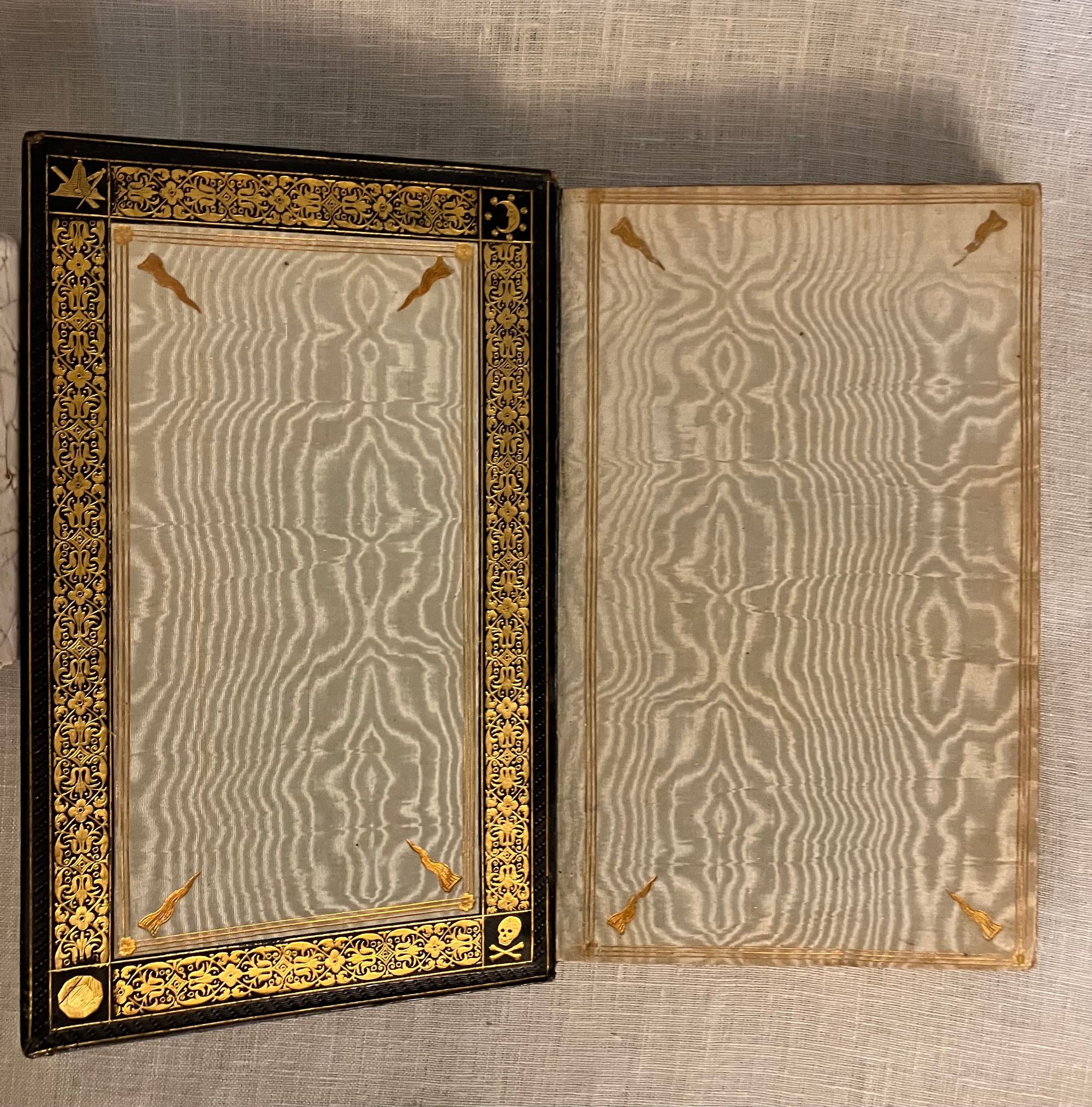
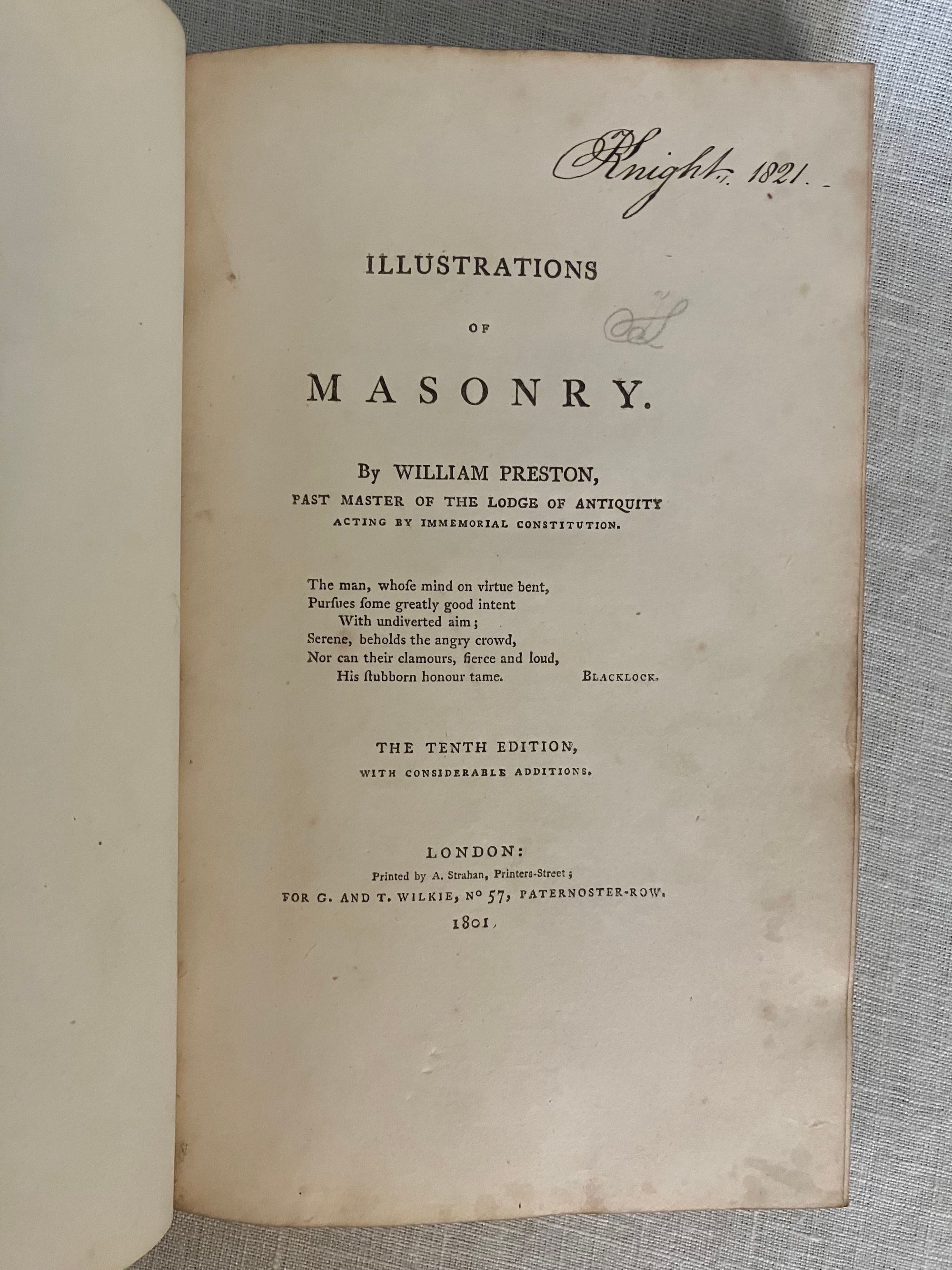
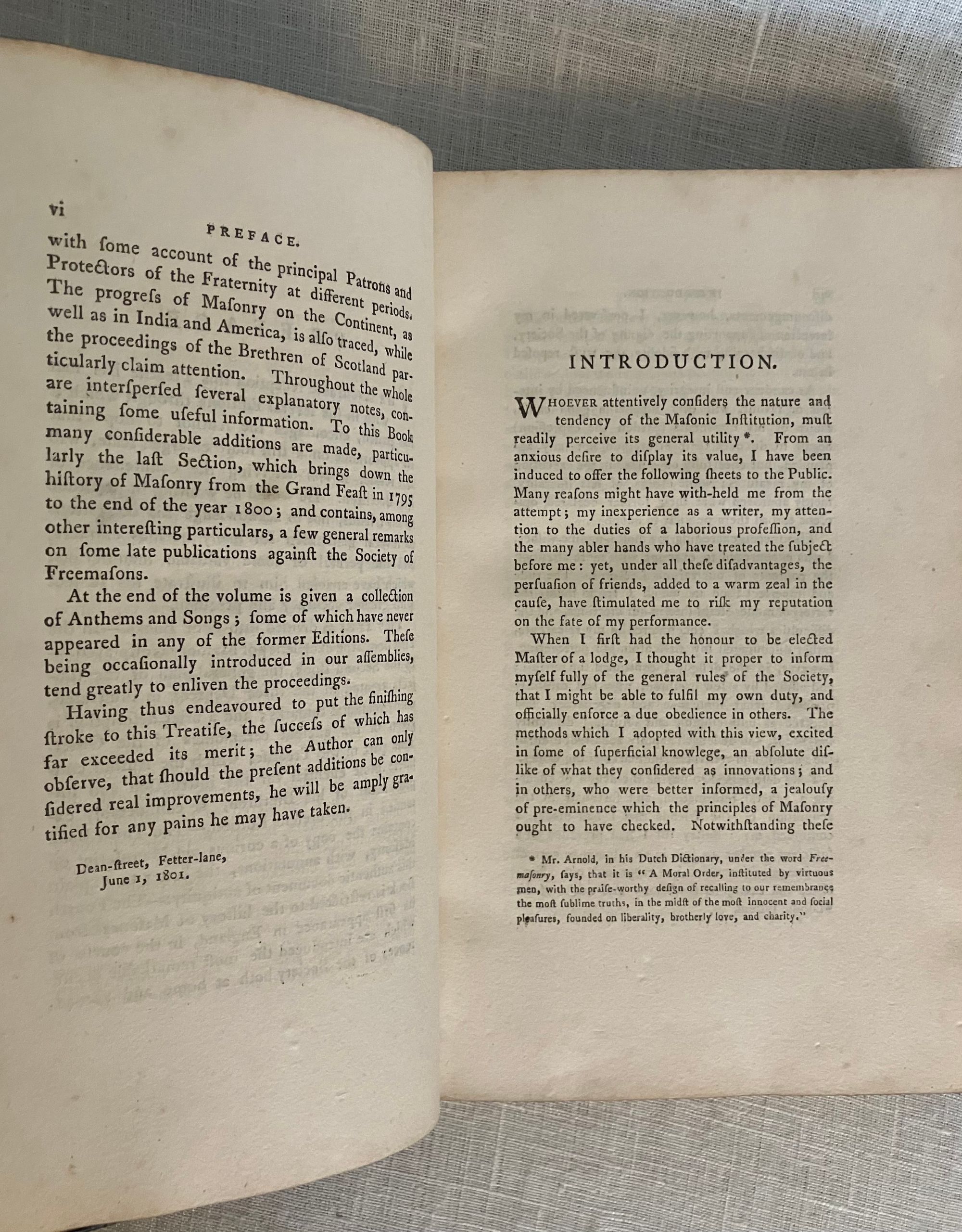
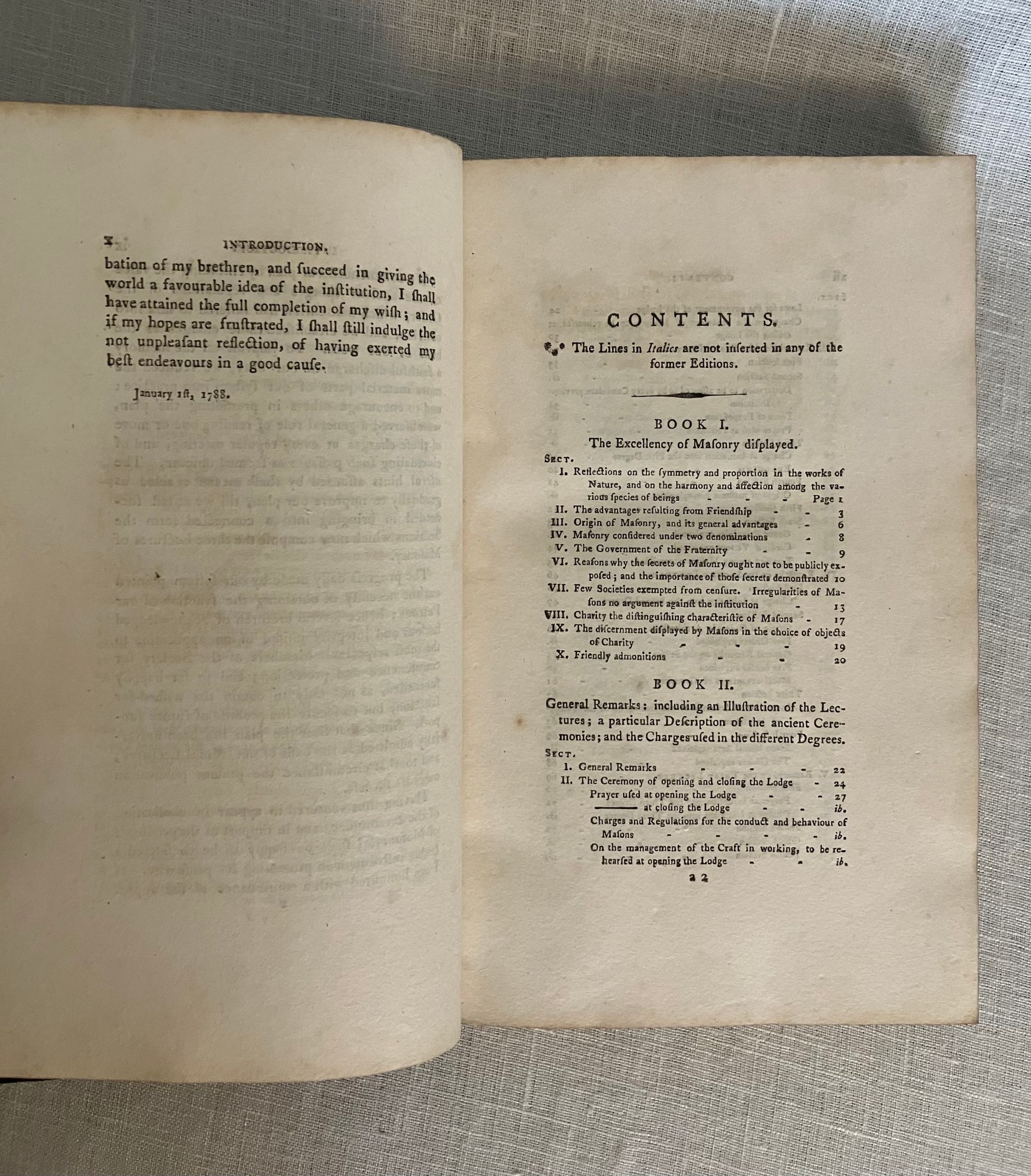
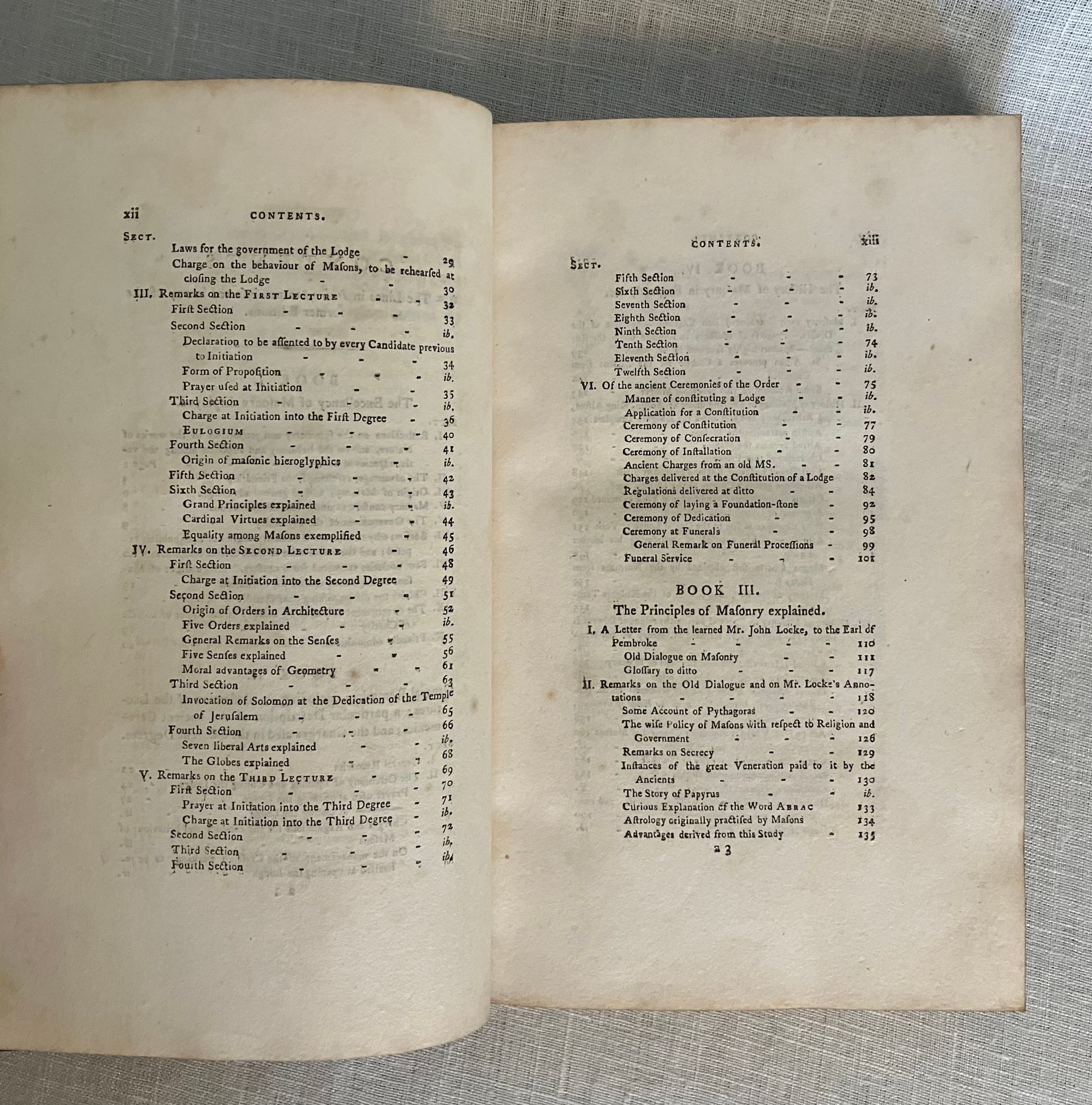
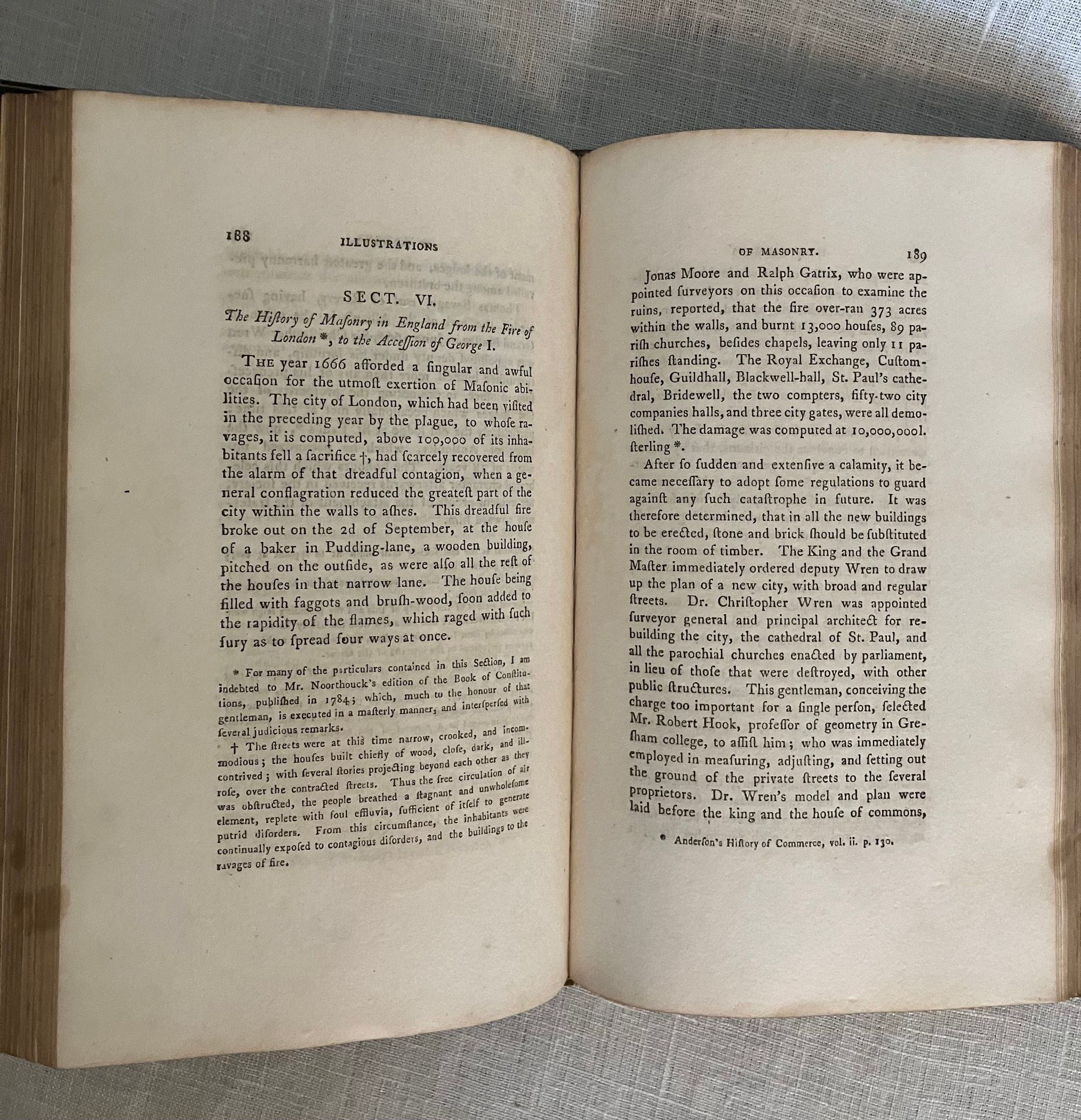
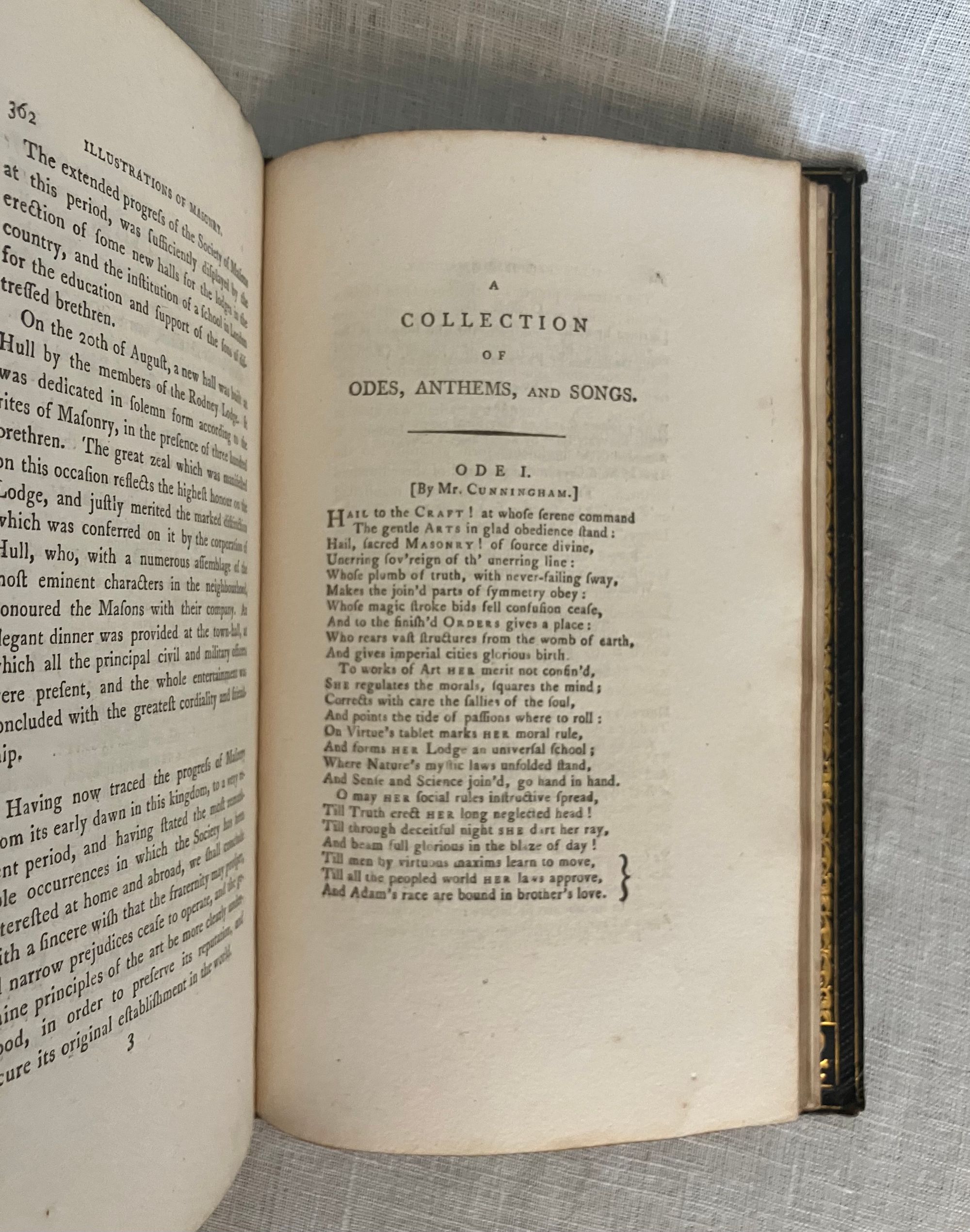
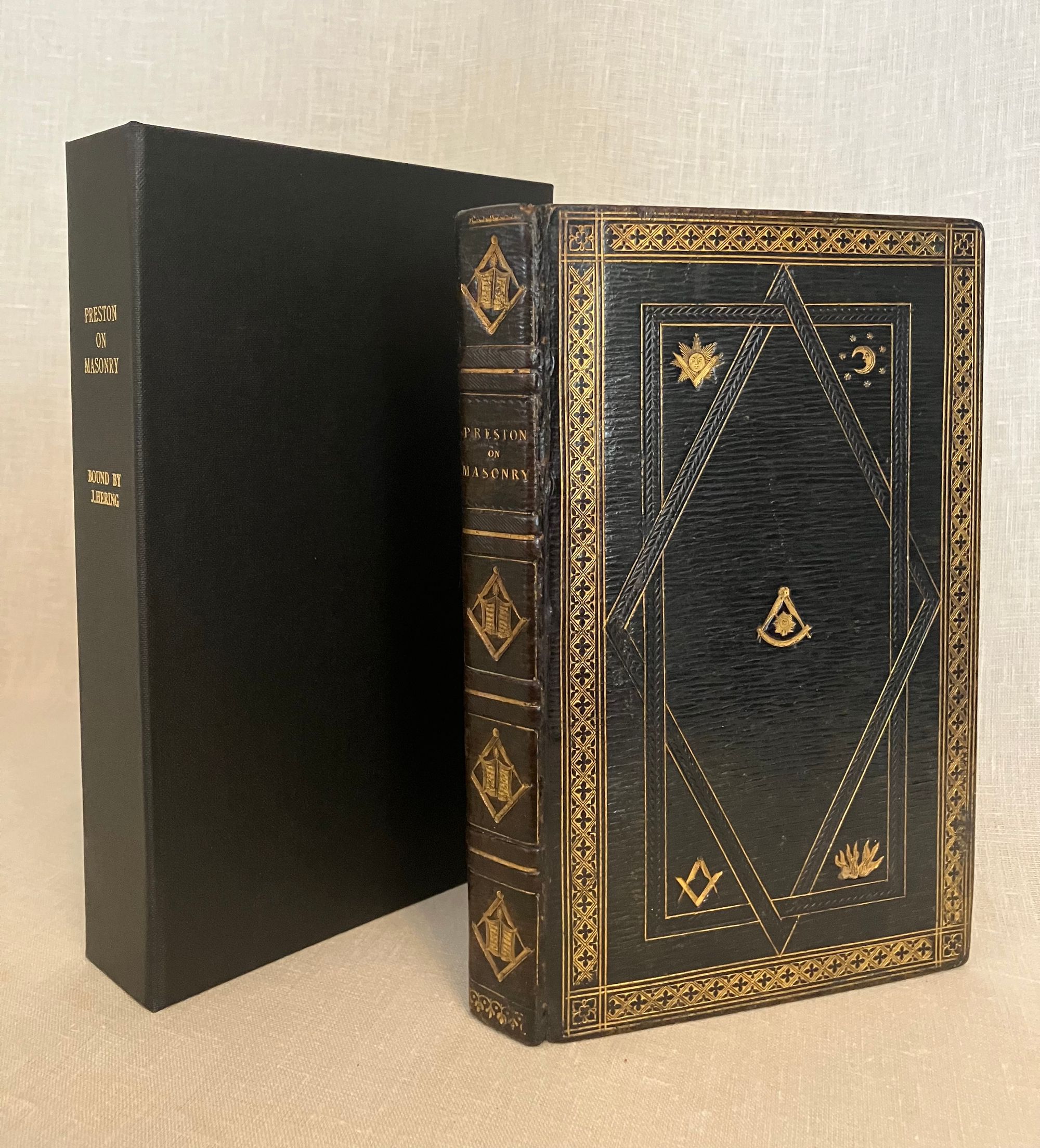
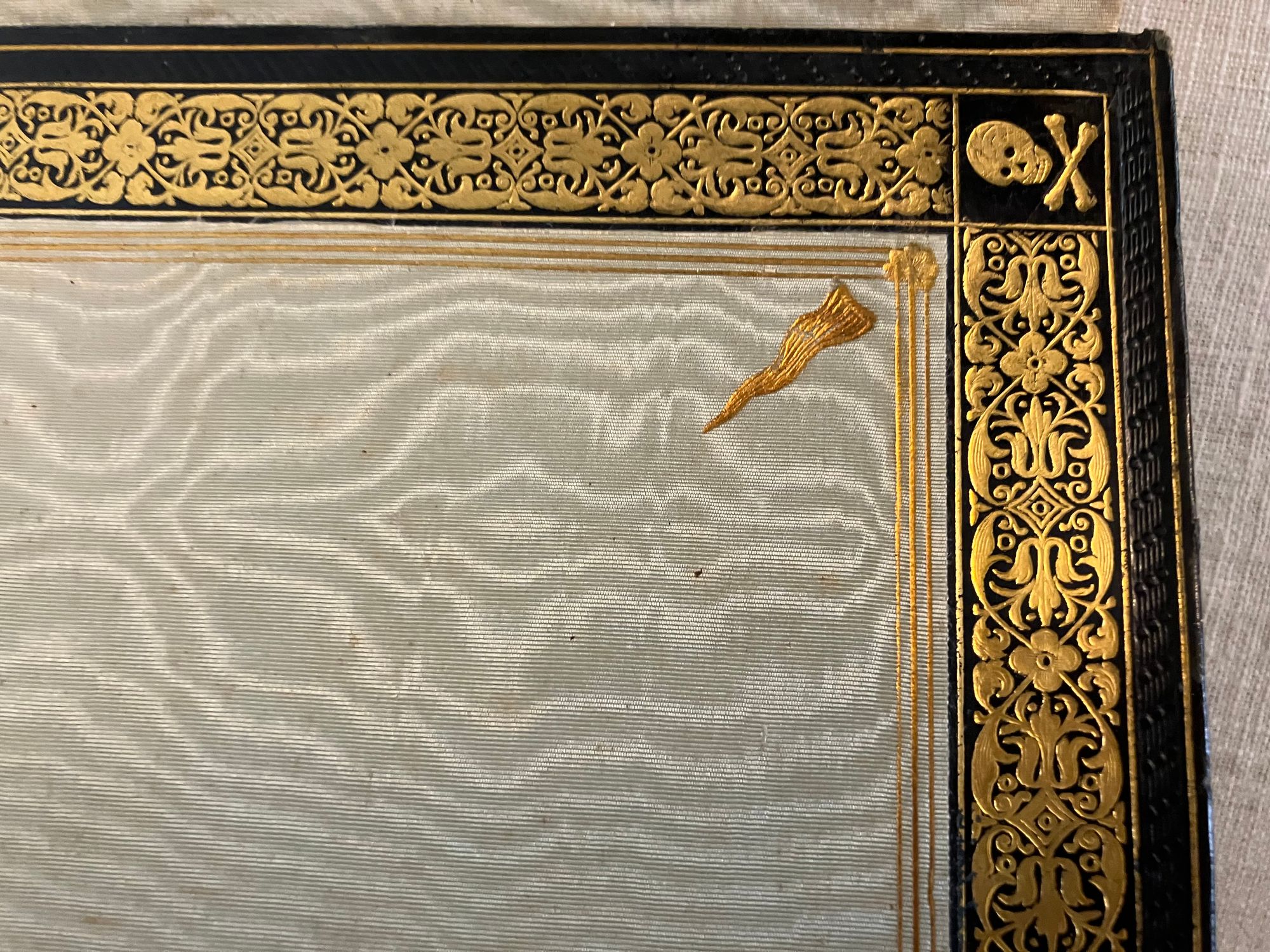
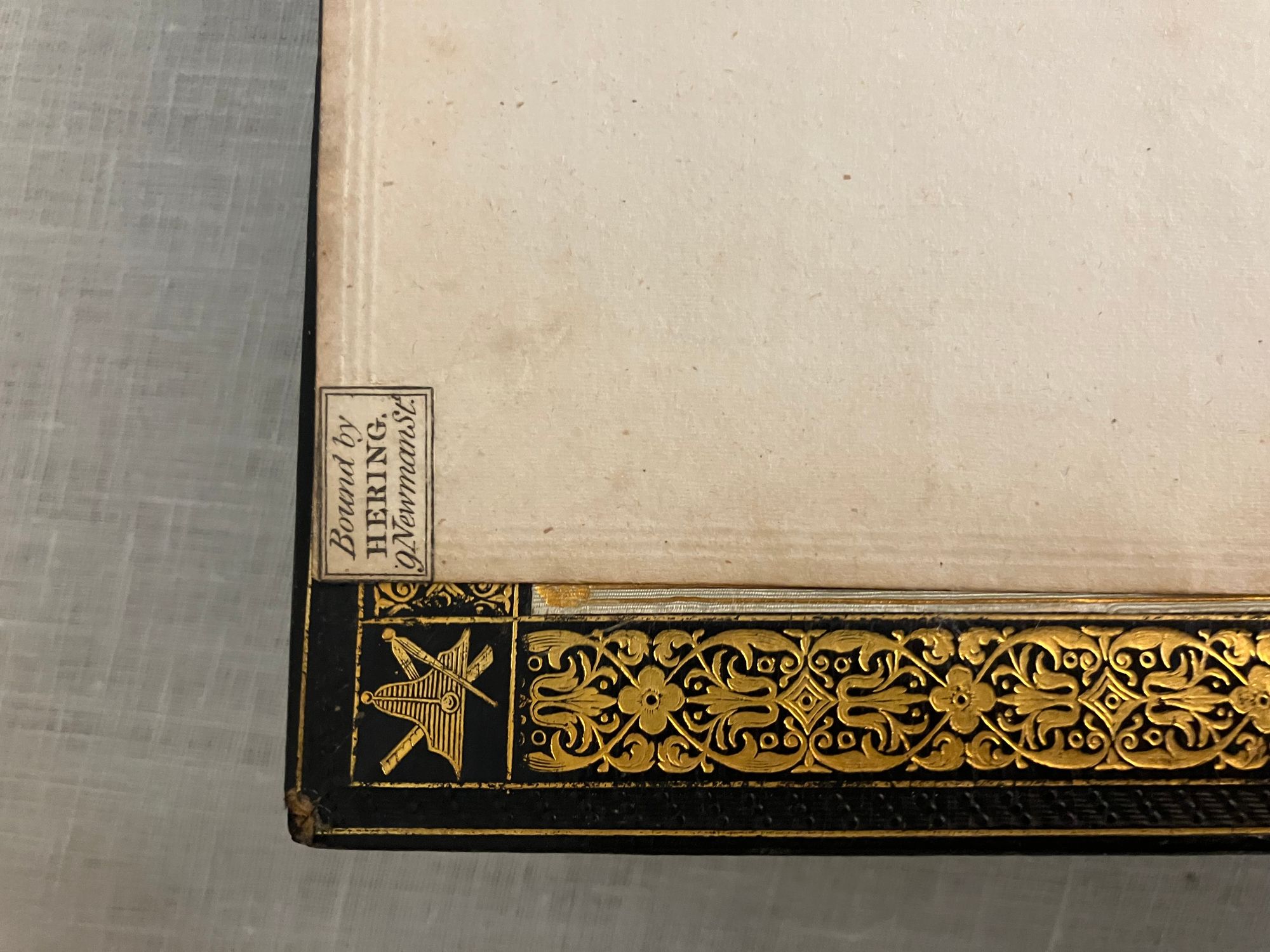

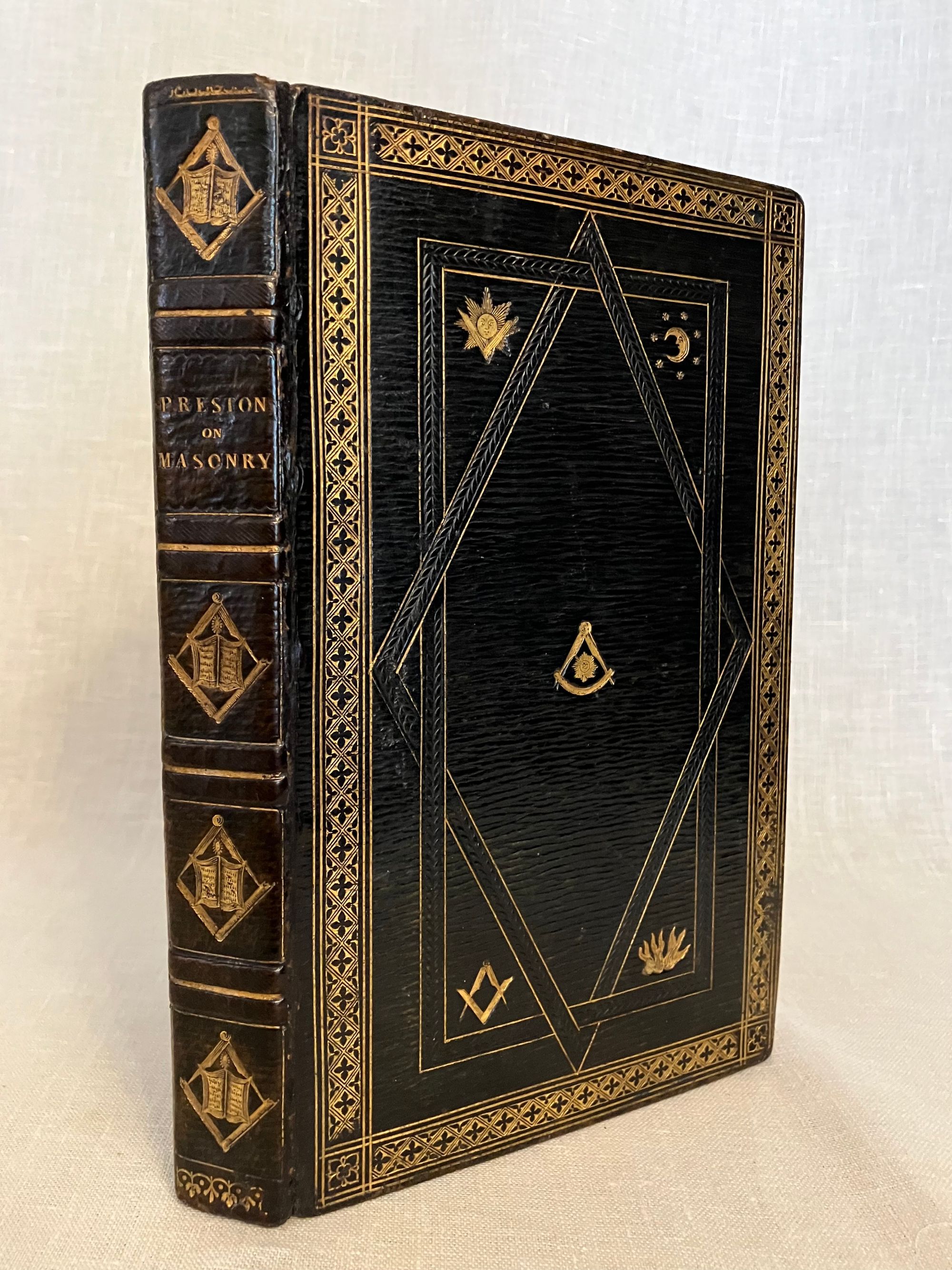
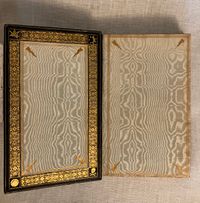
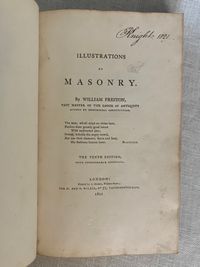
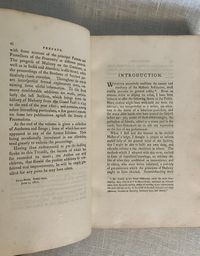
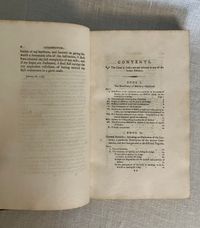
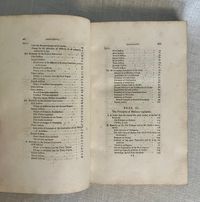
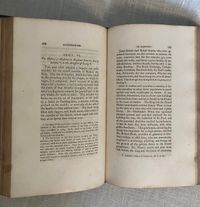
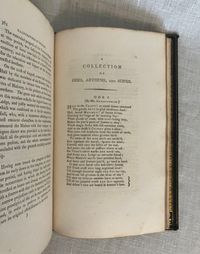
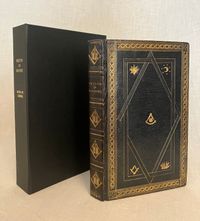
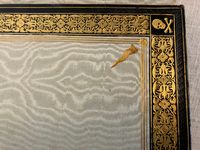
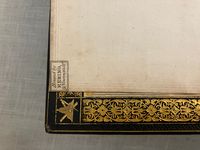
Tenth Edition with Considerable Additions. Hard cover, 8vo in black, straight-grain morocco with five gilt embossed symbols of masonic decoration to both boards (the blazing star, square-and-compass, flames, crescent moon-and-stars, and a square-and-blazing sun,) within a frame of a gilt ruled intersecting diamond and rectangle, the banding of which is embossed in blind with vine leaves. A gothic-style band of gilt tracery with quatrefoils decorates the outer edge of both boards, with double ruled gilt banding and narcissus-like flowers stamped at the corner intersections. The spine has four faux raised bands, double-ruled with five compartments, and title to the second of these. The remaining compartments are embossed with repeated masonic symbols: a square-compass-banner-on-pole. A.e.g. Inside, dove grey watered silk doublures feature embossed gilt lightning bolts at the four inner corners, while the dentelles feature additional embossed outer corners symbols (crescent-moon-and-stars, compass-rule-and-metronome, a geometrically detailed circle, and skull-and crossbones.) The wide dentelle is also embossed with a gilt banding of florentine arabesques and flowers. The book comes with a bespoke black cloth-covered clamshell box with gilt title to outer face. (2), xxiv, [1]-408 (4)pp. **Condition: at least Very Good Plus. Light wear of the gilt at corners and fore edge of top board, slight wear to joints. Front hinge cracked, yet holding firm. Rear board with one minor scuff. Edge gilding a bit dulled. Inside, pages are gently age toned, with intermittent mild foxing, some finger soiling at page margins, and the odd ink blotch. An imperfect erasure to prelim. Former owners' names and initials to title page, one in ink dated 1821. ** Edinburgh-born AUTHOR WILLIAM PRESTON (1742-1818) was a masonic scholar, who from the age of six attended the Royal High School and studied classical languages, among other topics. Orphaned at nine, he became the ward of the Edinburgh author, publisher and newpaper editor Thomas Ruddiman (1674-1757), whose brother, Walter Ruddiman, took him on as a printer's apprentice. Preston relocated to London around 1760. There he was instrumental in the formation of a new masonic lodge, the Caledonian Lodge No. 325, for whose sake he began studying Masonic history and preparing lectures to illuminate the members. (ODNB) ** The first edition of his oft-republished "Illustrations of Masonry" was released in 1769. Re-printings and emendations of what became a standard work on masonic customs, symbols, and ideas were re-released at least into the 1850's, both in Britain and in the United States. **The BOOKBINDER: small printed paper label affixed to the verso of the ffep.: " Bound by/ Hering/ 9 Newman St." Ramsden lists four family members of the Hering family as bookbinders at that address (p. 81), so it seems probable the father at least oversaw the work in hand before his death in 1815. WILLIAM PRESTON is credited with the re-introduction of brass die embossed tooling to England from France, utilizing French armory press technology to stamp the gilt designs such as those shown upon the center and corner boards and upon of the doublures of this book. The re-introduction of gilt embossing with the Restoration bookbindings of France--or a combination of that and hand tooling-- made the production of books easier and thus more affordable than the use of purely hand-tooled decoration. It also allowed for more variety of smaller book sizes, which became important from a popularizing, marketing point of view. (cf. Didbin, in S. Ellenport, "An Essay on the Development & Usage of Brass Plate Dies Including a Catalogue Raisonné ...of the Harcourt Bindery," Boston: Harcourt Bindery, 1980, p. 14.) The design characteristic of five detailed pictorial symbols distributed around the boards in gilt is also seen in another Charles Hering signed binding shown in Ramsden's Plate X1 , (p. 50) The Göttigen, Germany-born master bookbinder Charles Hering (1763-1815) was working in London by 1794. He soon gained the business of the 2nd Earl Spencer, and his friends, including Lord Byron, and was called the heir to the mantel of seventeenth- century London bookbinder, Roger Payne. Like Payne, he often employed the use of straight-grain morocco over other types of leather. The gothic banding with the quatrefoils on our book looks similar to, if not identical, to that pictured in Fig. 2 in Judith G. Marks's article "Bookbinding Practices of the Hering Family, 1794-1844," originally published in The British Library Journal, (Vol.6, No.1 Spring 1980, pp. 44-60.) R. Ackerman's "The History of Westminster Abbey," London 1812) luxuriously bound by Charles Hering in red velvet and silver gilt, (shown in Mark's article on page 51) was extolled by Thomas Didbin as having "nothing to equal it in any cabinet in Europe." (p. 50) The high standard of our volume's complicated and symbolic design makes this a really noteworthy example of the work of this master craftsman of early nineteenth century London. (AMJ)
Ref: FINE 8952
$2850.00