 |
 |
 |
 |
 |
 |
 |
 |
 |
 |
 |
 |
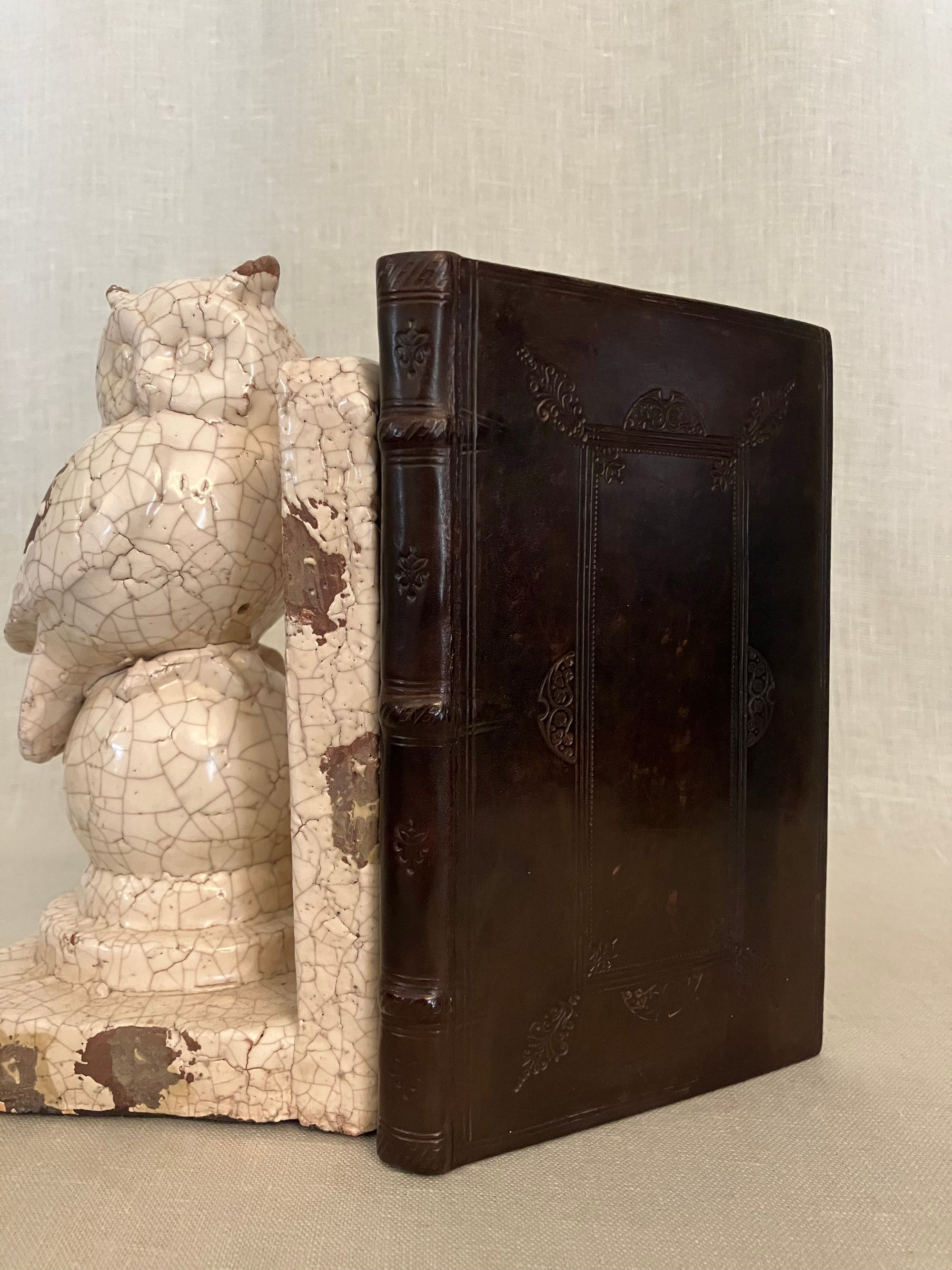
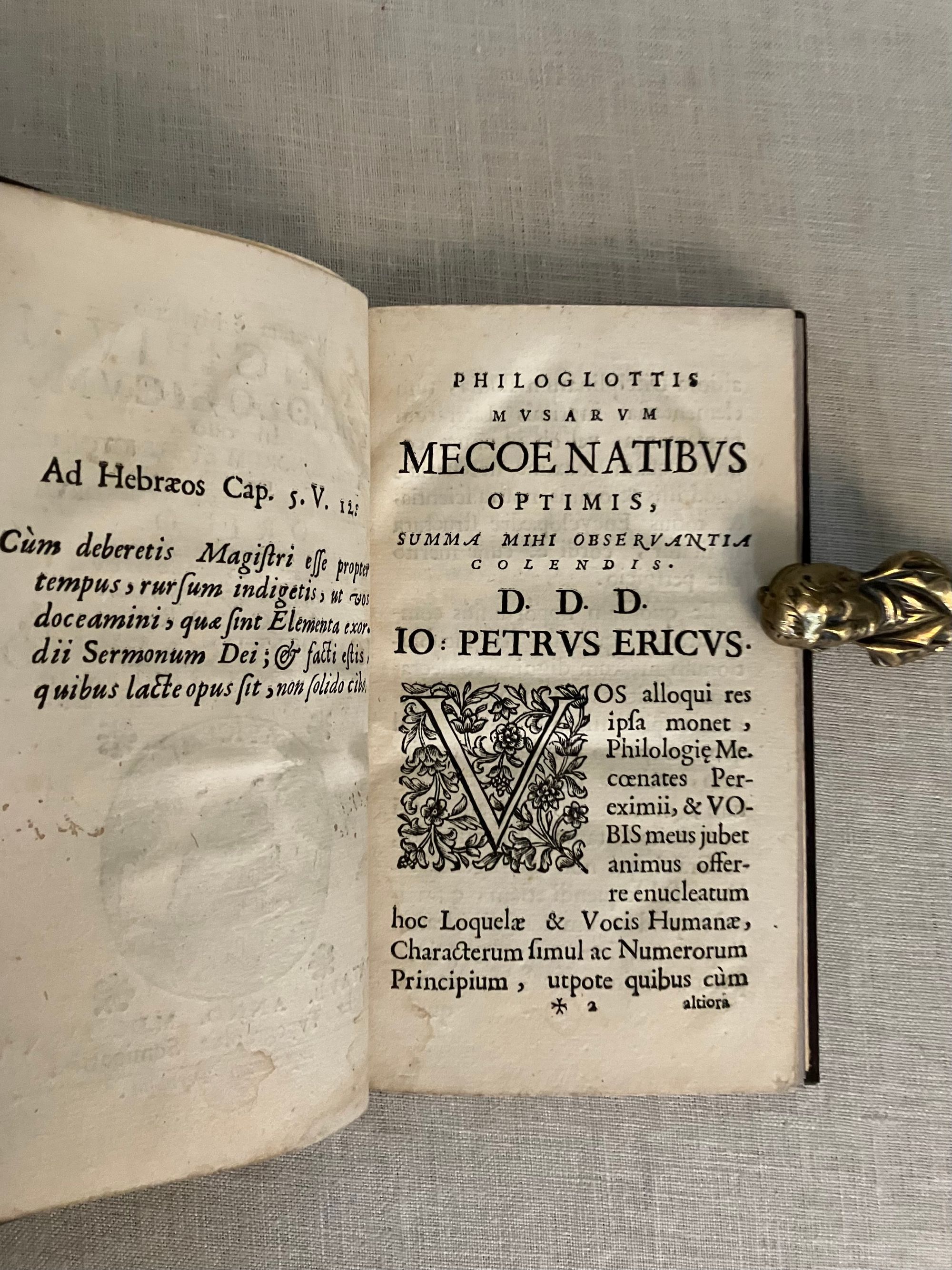
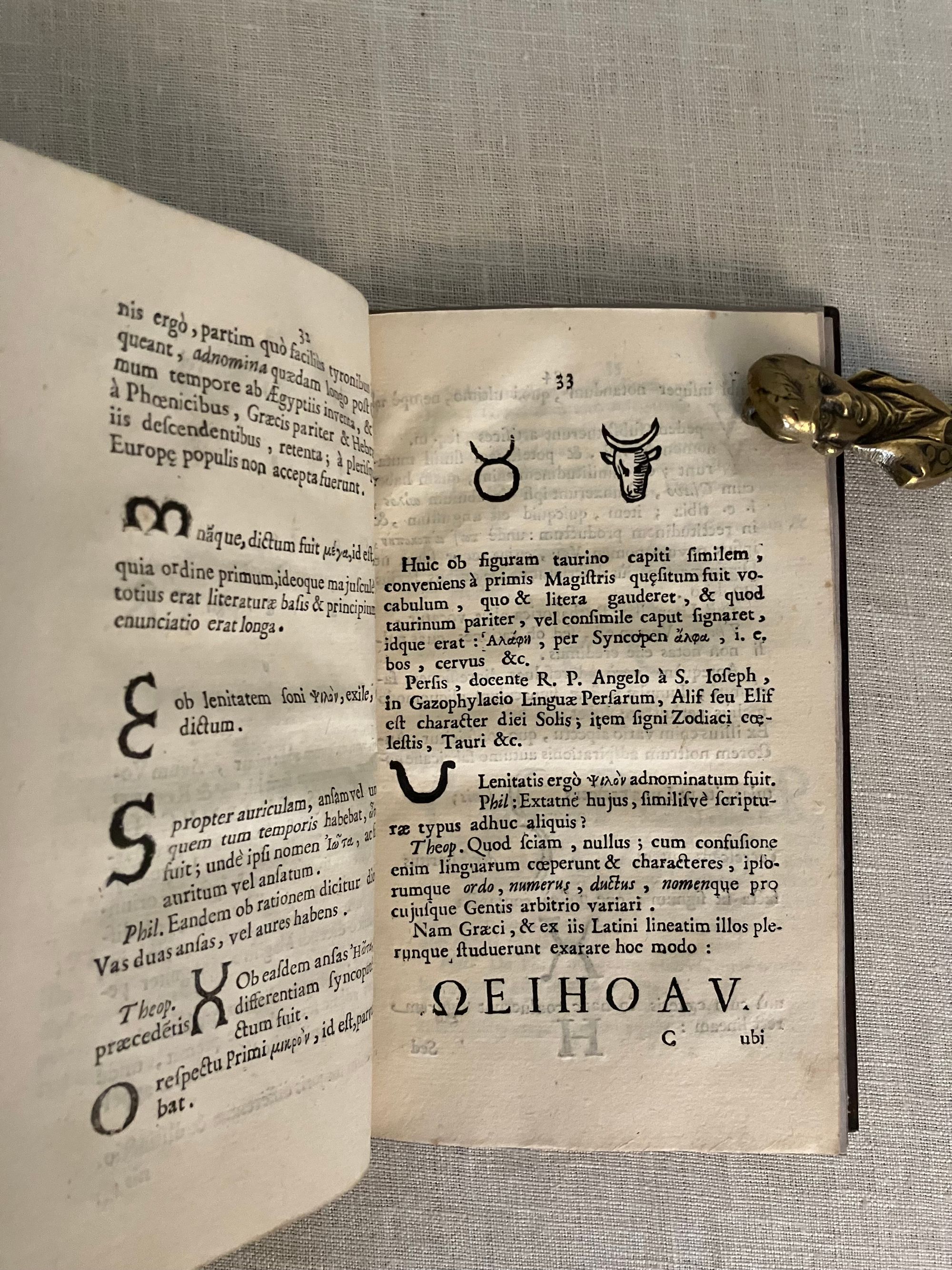
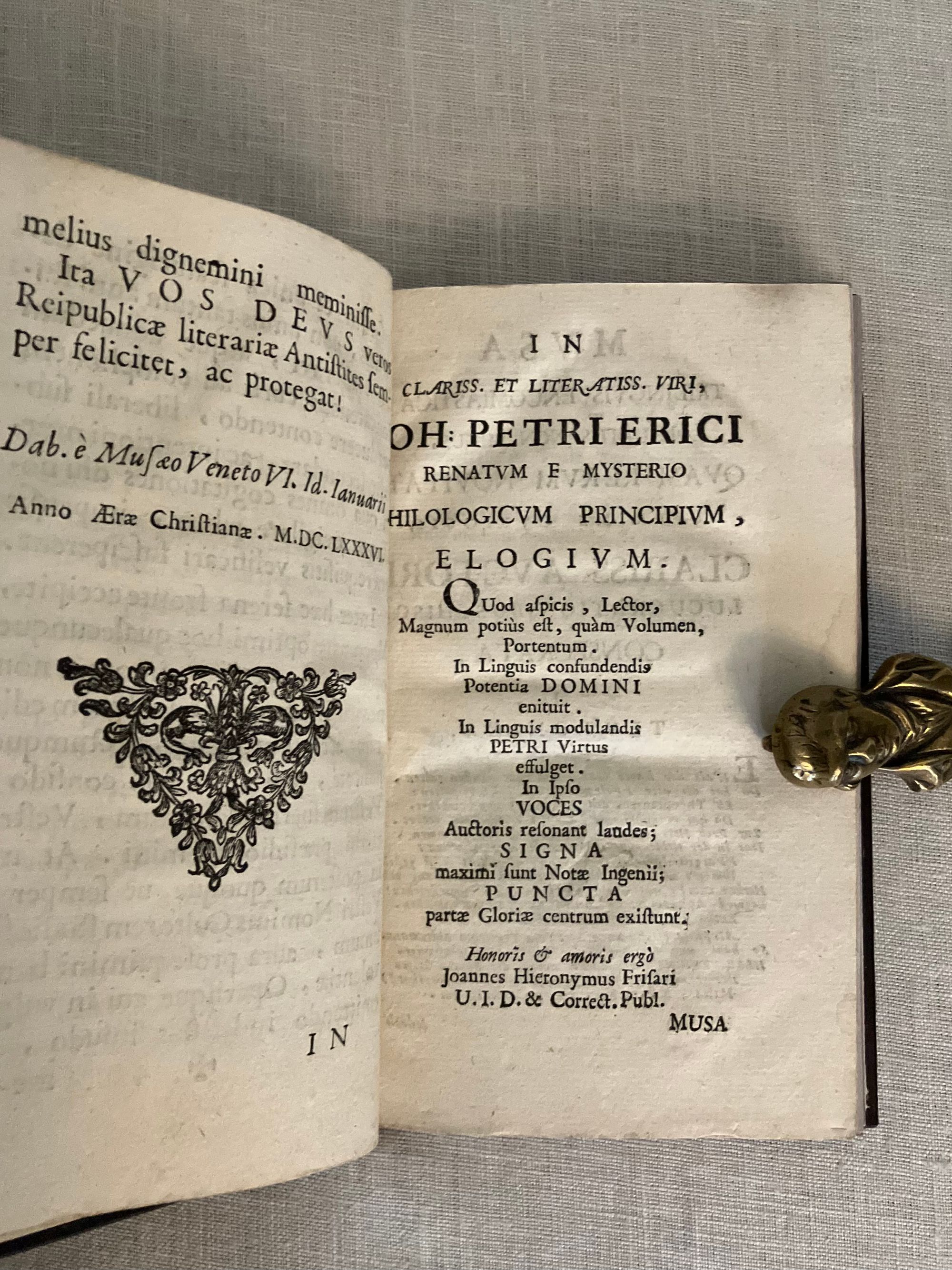


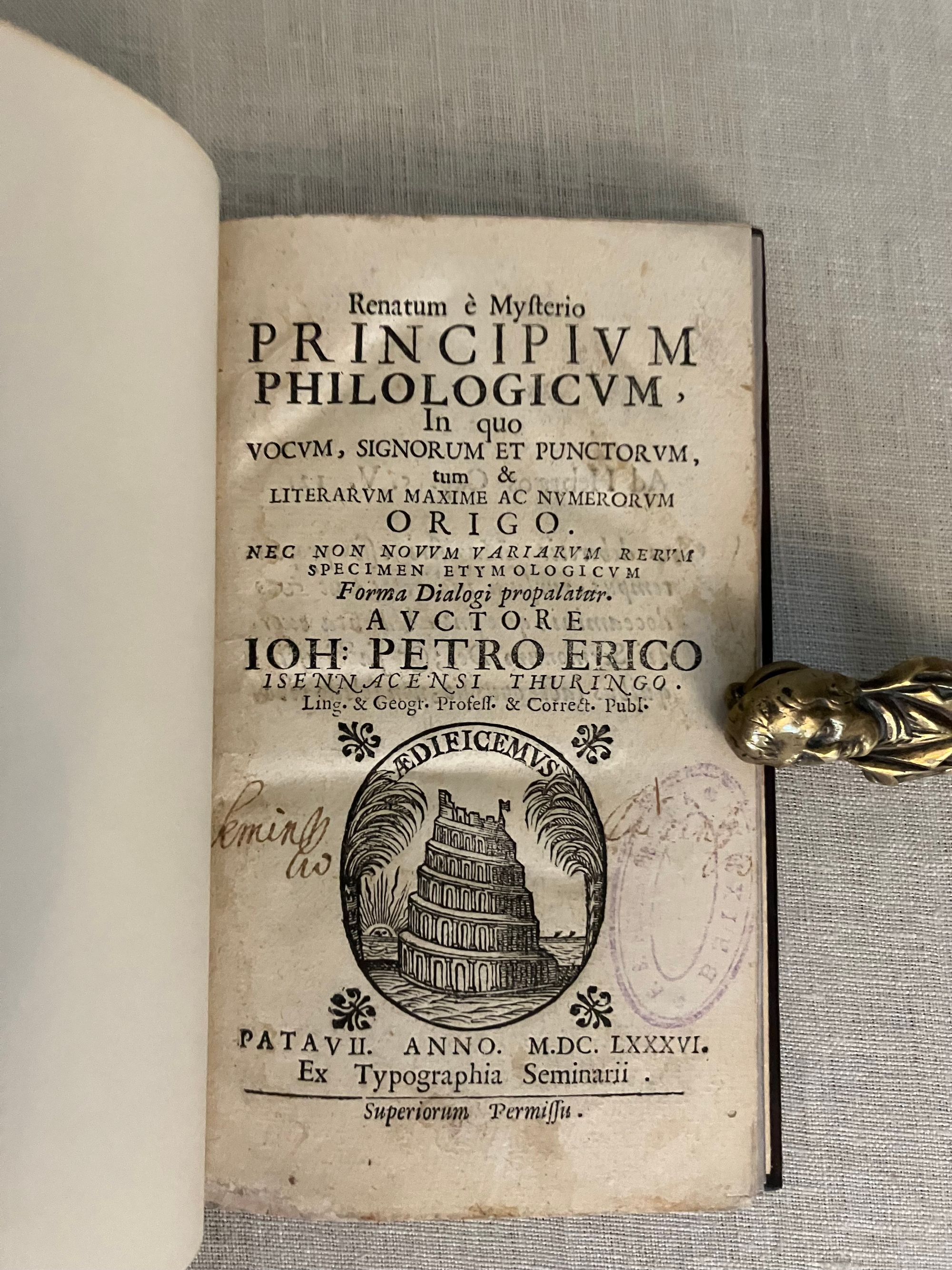
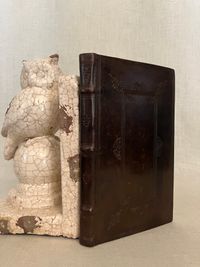
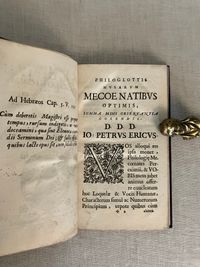
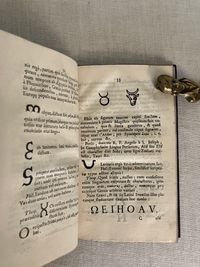
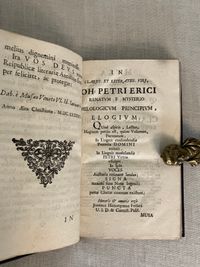
Hard Cover, 12mo.,in modern calf Cambridge style rebinding. Old library stamp and former owner's name to title page in old ink. Wood carved printer's device In Latin. Collation: pp [16] 137 [5] *8, A-H8, I7. Lacks D2,3,6,7, which are supplied as bound -in facsimile pages. Letter press fine printed upon mould-made paper featuring numerous wood-carved tailpieces, symbols, astrological signs, musical notation and decorated capitals. **CONDITION: Near Fine ** AUTHOR Johannes Petrus Ericus, (c.1641 - c.1706) was a Professor of Linguistics and Geography of Eisenach, and this work was based on the famed Elizabethan alchemist John Dee's "Monas Hieroglyphica" (1564), wherein Dee explains the meaning of a symbol [the Hieroglyphic Monad, see pages 9-11] which he himself invented. Dee believed study of this symbol led to enlightenment which would afford the user a transcendent knowledge of the universe.** Erich's work, then, extrapolates from John Dee's earlier work to prove that all alphabets can be derived from this special symbol, the Monad. It is in the form of a socratic dialogue between Theopranicus and Philologus, discussing the individual symbols, the alphabet, and a discussion on the seven notes in Western music (with a mention of Pythagorus). See p. 16-20.This book is mentioned in Umberto Eco's "The Search for the Perfect Language" (1995) in the chapter on John Dee titled "Dee's Magic Language". REFs: OCLC 1014581605. USTC 1702324. Author, CERL cnp02149572.
Ref: SCI 7531
$975.00